
On this pageTap to expand
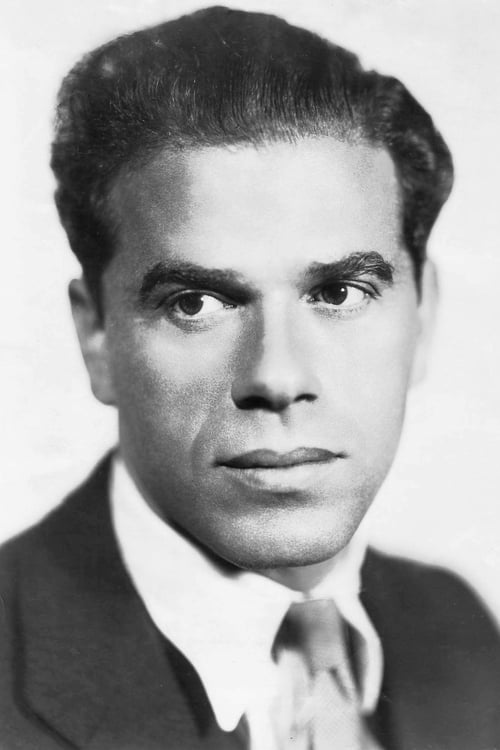
Frank Capra made films about ordinary people who refused to give up. In a career spanning four decades, he defined what Hollywood cinema could be at its most human — sentimental without being saccharine, populist without being shallow, and technically sophisticated in ways that are still studied today.
He won three Academy Awards for Best Director in five years (It Happened One Night, Mr. Deeds Goes to Town, You Can't Take It With You) — a record that stood for decades. His name became an adjective: Capraesque still means something — that warmth, that idealism, that faith in the ordinary person's essential decency.
Here are his 11 best films, and why they remain essential viewing.

Best Frank Capra Movies
Filmmaker quote“No saint, no pope, no general, no sultan, has ever had the power that a filmmaker has; the power to talk to hundreds of millions of people for two hours in the dark.”
Frank Capra
Films at a glance
| Film | Year |
|---|---|
| It's a Wonderful Life | 1946 |
| It Happened One Night | 1934 |
| Mr. Smith Goes to Washington | 1939 |
| Mr. Deeds Goes to Town | 1936 |
| You Can't Take It With You | 1938 |
| Meet John Doe | 1941 |
| Lost Horizon | 1937 |
| Lady for a Day | 1933 |
| Arsenic and Old Lace | 1944 |
| The Miracle Woman | 1931 |
| Pocketful of Miracles | 1961 |
It's a Wonderful Life (1946)
Genre: Drama, Fantasy | Rating: 8.6/10 | Studio: RKO/Liberty Films
Cast: James Stewart, Donna Reed, Lionel Barrymore, Thomas Mitchell
George Bailey, a man who has sacrificed his dreams for his community, is shown by his guardian angel what life would have been like had he never been born.
It's a Wonderful Life is one of the greatest films ever made, and Capra's masterpiece. It is darker than most people remember: George Bailey's despair is real, the villain Potter is genuinely menacing, and the life George has built is not a triumphant one — it is a life of quiet sacrifice.
What makes the film extraordinary is the precision of Capra's control. The Christmas sentimentality is earned because the previous two hours have been so honest about disappointment and thwarted ambition. James Stewart gives the performance of his career.
The film was a commercial failure on release and spent decades in the public domain. Its status as the definitive Christmas film only arrived in the 1970s, when TV stations discovered they could broadcast it for free. It is now indelible.

It Happened One Night (1934)
Genre: Comedy, Romance | Rating: 8.0/10 | Studio: Columbia
Cast: Clark Gable, Claudette Colbert, Walter Connolly
A runaway heiress makes a deal with a rogue newspaper reporter — and the mismatched pair find themselves unexpectedly in love.
It Happened One Night became the first film to win all five major Academy Awards (Picture, Director, Actor, Actress, Screenplay) — a record not matched until One Flew Over the Cuckoo's Nest in 1975.
The film invented the template for the screwball comedy: rapid-fire dialogue, a class-crossing romance, a hero who is competent and wise-cracking at once. Clark Gable and Claudette Colbert are magnetic together. The famous hitchhiking scene — where Colbert raises her skirt and stops a car in seconds — is one of the most quoted images in 1930s cinema.

Mr. Smith Goes to Washington (1939)
Genre: Drama | Rating: 8.1/10 | Studio: Columbia
Cast: James Stewart, Jean Arthur, Claude Rains, Edward Arnold
An idealistic young senator arrives in Washington and discovers that the democracy he believed in is thoroughly corrupt. He refuses to surrender.
Mr. Smith Goes to Washington is Capra's most explicitly political film — and the one that caused the most controversy on release. Washington insiders hated it; the public loved it. The filibuster sequence, in which Stewart's Jefferson Smith talks for over 23 hours to prevent a corrupt bill from passing, is one of the great sustained set pieces in American cinema.
The film is unambiguous about political corruption while remaining unambiguous about the possibility of individual virtue. That combination — clear-eyed about institutions, faithful about individuals — is the essence of Capra.

Mr. Deeds Goes to Town (1936)
Genre: Comedy, Drama | Rating: 7.7/10 | Studio: Columbia
Cast: Gary Cooper, Jean Arthur, George Bancroft
A small-town man inherits a fortune and is descended upon by the predators of New York City — who find him harder to exploit than expected.
Gary Cooper plays Longfellow Deeds with a combination of physical comedy and genuine moral clarity that is almost unique in 1930s cinema. The courtroom sequence at the film's end, in which Deeds is declared sane by the community that laughed at him, is pure Capra — and pure catharsis.

You Can't Take It With You (1938)
Genre: Comedy, Drama | Rating: 7.8/10 | Studio: Columbia
Cast: James Stewart, Jean Arthur, Lionel Barrymore, Edward Arnold
A wealthy young man falls in love with a girl from an eccentric, anarchic family who have built a life entirely on the principle of doing exactly what they want to do.
Based on the Pulitzer Prize-winning play by Moss Hart and George S. Kaufman, You Can't Take It With You is Capra's most joyful film. The dinner-party disaster sequence — where the two families meet for the first time amid maximum chaos — is a masterclass in ensemble comedy timing.
Meet John Doe (1941)
Genre: Drama | Rating: 7.5/10 | Studio: Frank Capra Productions/Warner Bros.
Cast: Gary Cooper, Barbara Stanwyck, Edward Arnold
A homeless man is hired to play a fictional everyman character invented by a newspaper — and a publisher tries to use that character to build a political movement under his control.
Meet John Doe is Capra's most complex and troubling film. Unlike Mr. Deeds or Mr. Smith, it does not offer easy redemption. The John Doe movement is corrupted and weaponised. The film's ending — which Capra reshot multiple times, unable to find a satisfying resolution — remains ambiguous. That unease gives the film a prophetic quality that makes it feel more contemporary, not less.

Lost Horizon (1937)
Genre: Drama, Adventure, Fantasy | Rating: 7.3/10 | Studio: Columbia
Cast: Ronald Colman, Jane Wyatt, John Howard, H.B. Warner
A group of plane crash survivors discover the hidden Himalayan utopia of Shangri-La.
Lost Horizon was the most expensive Columbia film ever made at the time of its production. It is an anomaly in Capra's filmography — a fantasy epic rather than a populist comedy-drama. The production design is extraordinary. Ronald Colman carries it with dignity. The final sequence, in which Robert Conway struggles through the snow to regain Shangri-La, is genuinely moving.

Sony Pictures
- A timeless masterpiece starring Ronald Colman and Jane Wyatt in the lavishly-produced vision of Shangri-La.
A timeless masterpiece starring Ronald Colman and Jane Wyatt in the lavishly-produced vision of Shangri-La.
View on AmazonLady for a Day (1933)
Genre: Comedy, Drama | Rating: 7.6/10 | Studio: Columbia
Cast: May Robson, Warren William, Guy Kibbee
New York City gangsters conspire to help an elderly apple seller pass as a socialite for one day, so her daughter will not know the truth about her poverty.
Lady for a Day was Capra's first major critical hit and his first Best Director nomination. It established the Capraesque template: a community of unlikely characters rallying together to protect someone's dignity. May Robson was nominated for Best Actress. The film holds up beautifully.
Arsenic and Old Lace (1944)
Genre: Comedy, Horror | Rating: 7.9/10 | Studio: Warner Bros.
Cast: Cary Grant, Priscilla Lane, Raymond Massey, Peter Lorre
A drama critic discovers, on his wedding day, that his sweet elderly aunts are serial murderers — and that his brother believes he is Boris Karloff.
Arsenic and Old Lace is Capra directing pure comedy chaos, and it is one of the funniest films ever made. Cary Grant's physical comedy — the eye-rolls, the double-takes, the doorframe collapses — is at its peak. It was filmed in 1941 while the play was still running on Broadway, and could not be released until the play closed; the actual shoot took nine weeks. The discipline shows.

The Miracle Woman (1931)
Genre: Drama | Rating: 7.0/10 | Studio: Columbia
Cast: Barbara Stanwyck, David Manners, Sam Hardy
A preacher's daughter, disillusioned by the congregation that let her father die in poverty, becomes the front for a cynical faith-healing racket.
Barbara Stanwyck's second collaboration with Capra is his darkest pre-code film. The faith-healing milieu is depicted with a savagery unusual for Capra, and Stanwyck is extraordinary — harder and more complex than she was allowed to be in later Hollywood. A film that was ahead of its time.

Pocketful of Miracles (1961)
Genre: Comedy, Drama | Rating: 7.0/10 | Studio: United Artists
Cast: Glenn Ford, Bette Davis, Hope Lange, Peter Falk
A remake of Lady for a Day in colour and scope, with Bette Davis taking the role of Apple Annie.
Capra's last film is a warm, generous comedy that knows it is a Hollywood farewell. Bette Davis is the revelation — funny and sad and completely committed. It is not the equal of Lady for a Day, but it is a fitting close to a career defined by affection for underdogs.

Frank Capra: Essential Films Reference Table
| Film | Year | Genre | IMDb | Best for | Capra hallmark |
|---|---|---|---|---|---|
| It's a Wonderful Life | 1946 | Drama/Fantasy | 8.6 | Anyone who has ever felt trapped | Earned sentiment; genuine despair |
| Mr. Smith Goes to Washington | 1939 | Drama | 8.1 | Political cinema fans | Individual virtue vs systemic corruption |
| It Happened One Night | 1934 | Romantic comedy | 8.0 | Classic Hollywood fans | Screwball template; pure charm |
| Arsenic and Old Lace | 1944 | Black comedy | 7.9 | Comedy fans | Physical chaos; Cary Grant at his peak |
| You Can't Take It With You | 1938 | Comedy/Drama | 7.8 | Ensemble comedy fans | Anarchic joy; Kaufman dialogue |
| Mr. Deeds Goes to Town | 1936 | Comedy/Drama | 7.7 | Gary Cooper fans | Small-town virtue vs big-city cynicism |
| Lost Horizon | 1937 | Adventure/Fantasy | 7.3 | Prestige epic fans | Scale and ambition; rare Capra darkness |
| Lady for a Day | 1933 | Comedy/Drama | 7.6 | Pre-code fans | Dignity, community, the Capra coalition |
| The Miracle Woman | 1931 | Drama | 7.0 | Stanwyck fans | Hard-edged pre-code; corruption unresolved |
| Meet John Doe | 1941 | Drama | 7.5 | Serious cinema fans | Fascism, mass media, ambiguous ending |
| Pocketful of Miracles | 1961 | Comedy/Drama | 7.0 | Bette Davis fans | Late-career warmth; a Hollywood farewell |
Capra's Lasting Influence
Frank Capra trained as an engineer before discovering cinema. That technical precision — the understanding of structure, cause and effect, what the audience needs to feel at each moment — underlies everything he made.
The Capraesque tradition did not end with him. It runs through Cinema Paradiso (Tornatore, 1988), The Shawshank Redemption (Darabont, 1994), About Schmidt (Payne, 2002), and dozens of films that take ordinary people seriously without condescending to them.
Capra's insight — that audiences want to see people like themselves acting with honour and being rewarded for it — is not naive. It is a clear-eyed understanding of what stories are for.
Further Reading
- Capra, Frank. The Name Above the Title: An Autobiography (Da Capo Press, 1997)
- McBride, Joseph. Frank Capra: The Catastrophe of Success (St. Martin's Griffin, 2000)
- Frank Capra on IMDb
- American Film Institute — Capra entry
Final Thoughts
Capra made films for people who needed to believe that goodness was possible. In doing so, he created some of the most technically accomplished and emotionally intelligent work in the history of American cinema.
Start with It's a Wonderful Life if you haven't seen it — not at Christmas, but in February, on an ordinary evening. It will mean more.
For more director deep dives, see our guides to the best Howard Hawks movies, the best Preston Sturges movies, and the best Billy Wilder movies.


New comments are not currently accepted.
Comments