
On this pageTap to expand
Agnès Varda remains a towering figure in world cinema, her career spanning over six decades and a body of work that defies easy categorization. Often hailed as the grandmother of the French New Wave, Varda carved her own distinctive path, blending fiction with documentary in ways that expand the language of film. Her oeuvre is suffused with a poetic sensibility, a deep empathy for women and outsiders, and a restless curiosity about the passage of time, memory, and identity.
Born in Belgium but a citizen of French cinema, Varda’s filmmaking is as much an exploration of lived experience as it is a political act. From the vibrant streets of Paris in Cléo from 5 to 7 to the rural landscapes of The Gleaners and I, her camera is a witness to intimate moments and social realities. Throughout her career, she used cinema as a tool for both personal storytelling and cultural critique, making her a singular voice in the history of film.

Varda’s work is characterized by a playful yet incisive visual style, often blurring boundaries between documentary and fiction, autobiography and social commentary. Her films invite viewers into a world where everyday encounters are imbued with meaning, where memories are fluid, and where marginalized perspectives are brought to the fore.
This blend of the personal and the political, carried by an unmistakably lyrical touch, is what secures her place as one of cinema’s most influential auteurs.
Early Life and Formative Influences
Filmmaker quote“This is what cinema is all about. Images, sound, whatever, are what we use to construct a way which is cinema, which is supposed to produce effects, not only in our eyes and ears, but in our "mental" movie theater in which image and sound already are there. There is a kind of on-going movie all the time, in which the movie that we see comes in and mixes, and the perception of all these images and sound proposed to us in a typical film narration piles up in our memory with other images, other associations of images, other films, but other mental images we have, they pre-exist. So a new image in a film titillates or excites another mental image already there or emotions that we have so when you propose something to watch and hear, it goes, it works. It's like we have sleeping emotions in us all the time, half-sleeping, so one specific image or the combination of one image and sound, or the way of putting things together, like two images one after another, what we call montage, editing - these things ring a bell. These half-asleep feelings just wake up because of that - that is what it is about. This is not to make a film and say: "Okay, let's get a deal, let's tell the story, let's have a good actress, good-bye, not bad," and we go home and we eat. What I am dealing with is the effects, the perception, and the subsidiary effects of my work as proposals, as an open field, so that you can get there things you always wanted to feel and maybe didn't know how to express, imagine, watch, observe, whatever. This is so far away from the strong screenplay, the beautiful movie, etc., that sometimes I don't know what I should discuss. You understand, this is really fighting for that "Seventh Art" which is making films.”
Agnes Varda
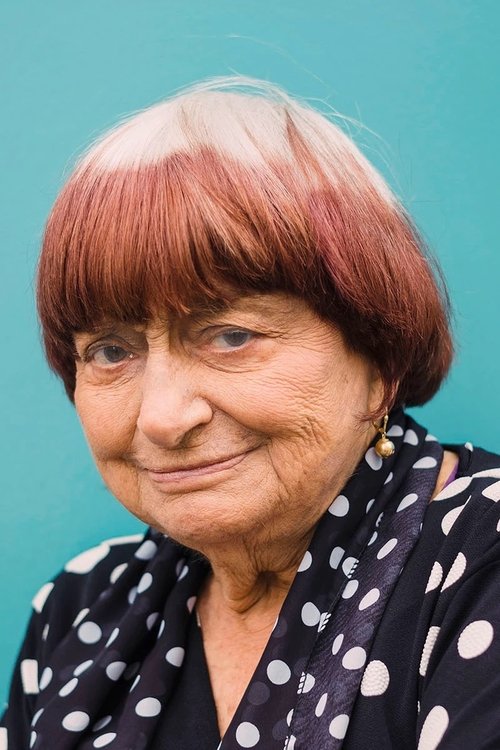
Agnès Varda was born in 1928 in Ixelles, a suburb of Brussels, Belgium, into a family of Greek and French descent. Her early exposure to the arts, especially photography, would become crucial to her sensibility as a filmmaker.
She studied at the École du Louvre in Paris and initially worked as a photographer, a background that profoundly shaped her cinematic eye.
Varda’s formative years coincided with a period of intense artistic experimentation in Europe. She was influenced by modernist painters and photographers, as well as by cinematic pioneers such as Abel Gance and Jean Vigo, whose lyrical realism resonates in her work.
Her films also bear the imprint of her engagement with feminist thought and leftist politics, which she absorbed during the post-war era.
Her transition to filmmaking in the mid-1950s was unorthodox. Without formal training in directing, she approached film from a visual artist’s perspective, emphasizing composition, texture, and the layering of images and sounds.
This approach distinguished her from many of her New Wave contemporaries and positioned her at a creative intersection between avant-garde art and narrative cinema.

Filmmaker quote“Making films is about having absolute and foolish confidence; the challenge for all of us is to have the heart of a poet and the skin of an elephant.”
Mira Nair

Place in National Cinema and Film History
Though often linked with the French New Wave, Varda’s position within French cinema is unique. Unlike contemporaries such as Godard or Truffaut, whose films often engaged with cinema history and auteur theory through a male-centric lens, Varda’s work foregrounds women’s experiences and a more personal, documentary-inflected approach.
Her debut feature, La Pointe Courte (1956), prefigures the New Wave aesthetic with its innovative narrative structure and naturalistic style, yet it also reflects her independent spirit. Over the years, Varda expanded the boundaries of French cinema by incorporating elements of ethnography, biography, and essay film, often centering on the lives of ordinary people overlooked by mainstream narratives.

Historically, she is credited not only with pioneering feminist cinema in France but also with shaping the documentary essay form internationally. Varda’s work challenges traditional cinematic forms and offers a model of filmmaking that is deeply engaged with social issues, memory, and place.
What Filmmakers Can Learn From Them
Agnès Varda’s career offers several invaluable lessons for filmmakers:
- Embrace hybridity: Varda’s seamless blend of documentary and fiction demonstrates the creative possibilities in crossing traditional genre boundaries.
- Center marginalized voices: Her films consistently highlight women, laborers, and outsiders, reminding filmmakers of cinema’s power to expand representation.
- Use personal narrative as political commentary: Varda’s work shows how the intimate and the political can coexist, enriching each other.
- Innovate visually: Her background in photography informs an acute visual sensibility, encouraging directors to think deeply about composition and texture.
- Persist and evolve: Varda’s career, active into her nineties, exemplifies a relentless curiosity and willingness to experiment with new forms and technologies.
Critical Reception and Reappraisal
Initially, some of Varda’s films received mixed reactions, partly because her approach did not fit neatly into established cinematic categories. However, her early work, notably Cléo from 5 to 7, was quickly recognized as a landmark of feminist and New Wave cinema. Over time, her reputation grew steadily, especially with the international success of documentaries like The Gleaners and I.

In recent decades, critical reappraisals have solidified her status as a visionary filmmaker. Scholars and critics emphasize her pioneering role in feminist cinema and her innovative narrative structures.
Retrospectives and major exhibitions have introduced her multifaceted work to new generations, underscoring her relevance not only in France but globally.
Her late-career documentaries, including Faces Places, co-directed with the artist JR, have been celebrated for their warmth and inventive form, appealing to both cinephiles and general audiences. This renewed appreciation confirms Varda’s enduring impact and the timeless quality of her artistry.
The Films That Best Represent Their Style
While Varda’s filmography is diverse, several works stand out as quintessential expressions of her style and concerns:
- Cléo from 5 to 7 (1962) – A real-time portrait of a woman confronting mortality, combining existential themes with feminist insight and New Wave aesthetics.
- Vagabond (1985) – A stark, haunting exploration of freedom, loneliness, and societal marginalization through the story of a young drifter.
- The Gleaners and I (2000) – A poetic documentary reflecting on waste, resourcefulness, and the human condition, blending personal voiceover and observational footage.
- Faces Places (2017) – A collaboration that mixes documentary, road movie, and street art, highlighting friendship and community in contemporary France.
- La Pointe Courte (1956) – Her debut, demonstrating early experimentation with narrative form and visual storytelling.
- The Beaches of Agnès (2008) – A self-reflective essay film that uses memory and place to trace the arc of her life and career.
The Signature Film, Revisited
Cléo from 5 to 7 is arguably Varda’s signature film, emblematic of her cinematic philosophy. Shot in the vibrant streets of Paris, it follows a young singer, Cléo, over two hours as she awaits medical test results. The film’s real-time structure and fluid camera work capture a woman’s psychological state with rare immediacy.
Varda’s innovative use of color and light amplifies the emotional landscape, while the film’s feminist undercurrents critique both societal pressures on women and existential anxieties. It’s a meditation on mortality and identity that intertwines personal vulnerability with broader cultural observations.
This film encapsulates Varda’s hallmark traits: an acute eye for detail, a compassionate gaze, and an ability to meld narrative experimentation with social critique. Its enduring influence is reflected in countless works that explore time, identity, and gender through similarly intimate lenses.
Influence on Later Filmmakers

Agnès Varda’s influence extends across generations and borders. Filmmakers such as Pedro Almodóvar, Mira Nair, and Kelly Reichardt have cited her work as formative in their approaches to storytelling, especially in foregrounding female perspectives and blending documentary with fiction.
Her commitment to exploring marginalized voices and her innovative use of form have inspired directors to rethink narrative conventions and embrace a more inclusive cinematic language. Varda’s playful yet politically engaged style has also encouraged a resurgence of essay films and hybrid documentaries worldwide.
Moreover, her late collaborations and digital experiments have shown younger filmmakers how to adapt to new technologies while maintaining a deeply personal vision, making her a model for artistic longevity and innovation.
Closing Notes
Agnès Varda’s legacy is immeasurable. Her films are not only artistic achievements but acts of cultural preservation and political engagement. She opened cinematic space for voices often silenced and transformed the way stories about time, memory, and identity are told.
Her work challenges filmmakers and audiences alike to look more closely at the world and to find poetry in the everyday. As both a pioneering female auteur and an endlessly inventive artist, Varda’s films continue to resonate, reminding us of cinema’s power to illuminate the human condition in all its complexity.
Ready for another director deep dive?


New comments are not currently accepted.
Comments