
On this pageTap to expand
Emerging from the tumultuous landscape of early 20th-century Eastern Europe, Aleksander Ford crafted a filmography that stands as a testament to cinema’s power to grapple with history, ideology, and the intricacies of human emotion. Born in 1908 in Kijów, then part of the Russian Empire and now Ukraine, Ford’s artistic life spanned nearly four decades, all while navigating the shifting political and cultural terrains of Poland.
Despite never achieving global fame on the scale of some contemporaries, his work remains a cornerstone of Polish cinema, a vivid chronicle of a nation and its people through war, occupation, and reconstruction.

Ford’s films are visually arresting and emotionally resonant, marked by a careful balance between grand historical canvases and intimate psychological portraits. His style is both bold and precise, revealing a deep commitment to character-driven storytelling that probes the human condition amidst social upheaval.
His oeuvre, enriched by a complex historical context, demands engagement not only for its narrative content but for the cinematic language that Ford developed to express the unspeakable traumas and resilient hopes of his era.
While he worked under varying conditions—from studio productions to more politically charged environments—Ford maintained a consistent pursuit of themes related to history, war, and moral complexity. His films such as Knights of the Teutonic Order and Border Street stand as cultural landmarks in Polish cinema, offering both sweeping historical narratives and nuanced explorations of identity and survival.
Themes That Keep Returning
Filmmaker quote“Regardless of the subject of my films … I am looking for a way of evoking in audiences feelings similar to my own: the physically painful impotence and sorrow that assail me when I see a man weeping at the bus stop, when I observe people struggling vainly to get close to others, when I see someone eating up the left-overs in a cheap restaurant, when I see the first blotches on a woman's hand and know that she too is bitterly aware of them, when I see the kind of appalling and irreparable injustice that so visibly scars the human face. I want this pain to come across to my audience, to see this physical agony, which I think I am beginning to fathom, to seep into my work.”
Krzysztof Kieślowski
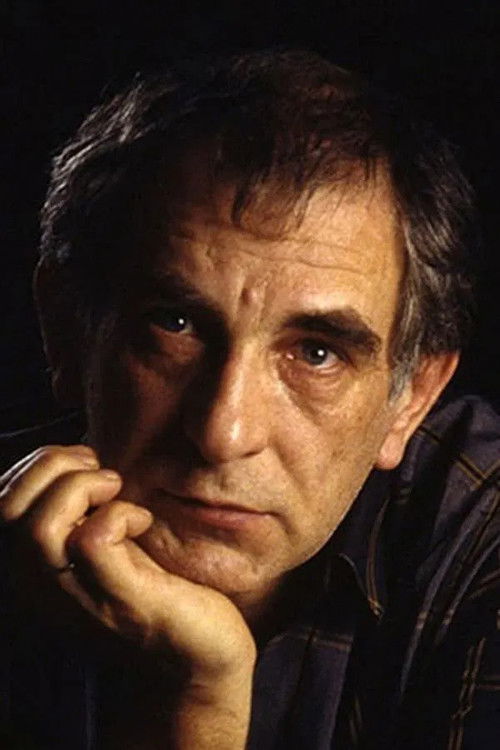
Ford’s work is anchored in a profound engagement with history and the human toll of conflict. War, in particular, functions as a recurring backdrop against which ethical dilemmas and personal tragedies unfold. His early Majdanek - Cemetery of Europe (1944) is a stark and unflinching documentary reflection on the Holocaust, setting the tone for a career deeply invested in the weight of memory and trauma.
Central to his films is the exploration of the human psyche under pressure. Ford’s characters are rarely one-dimensional heroes; they are complex figures marked by doubt, fear, and moral ambiguity. This psychological depth runs through works like The Eighth Day of the Week (1958), where personal desires clash with social constraints, and Five Boys from Barska Street (1954), which portrays the moral challenges faced by youth in postwar Poland.
Other persistent themes include collective identity and the relationship between individuals and history. Films like Knights of the Teutonic Order (1960) dramatize the forging of national mythologies, while Border Street (1949) captures the harrowing realities of the Warsaw Ghetto, reflecting on human endurance and ethical choices in the face of barbarity.
- War and its psychological impact
- Historical memory and national identity
- Moral ambiguity and ethical dilemmas
- The tension between individual desires and social pressures
- The resilience of youth and innocence under duress
Filmmaker quote“You have to want to make a film for other reasons - to say something, to tell a story, to show somebody's fate - but you can't want to make a film simply for the sake of it.”
Krzysztof Kieślowski
Studio Years vs Independent Years

Ford’s career witnessed two distinct phases that shaped his artistic production: the early studio years and his later, more independent period.
His prewar and immediate postwar studio work, including films like Legion of the Streets (1932) and The People of the Vistula (1938), showed a director honing his craft within the commercial and ideological frameworks of the time. These films often balanced entertainment with socially conscious themes, a duality that continued throughout his career.
After World War II, Ford’s position as a leading figure in Polish postwar cinema was solidified within state-supported studios. Notably, his 1949 film Border Street was produced under the auspices of the socialist realist regime, yet it transcended ideological constraints through its humanistic portrayal of suffering and resistance.

Later in his career, Ford sought a measure of independence, allowing for more overtly personal and artistically ambitious work. Films like The First Day of Freedom (1964) and The Doctor Speaks Out (1966) reveal a director increasingly engaged with nuanced social critique and psychological depth, even as political pressures mounted.
- Early work shaped by commercial studio demands and prewar cultural norms
- Postwar state-supported studio films with socialist realist influence
- Later works marked by greater artistic freedom and complexity
A Director’s Visual Grammar
Ford’s visual style is marked by a meticulous composition that fuses documentary realism with expressive cinematic language. His use of lighting and framing often emphasizes psychological states—shadows and light interplay to underscore inner conflicts or moral ambiguity. In Five Boys from Barska Street, for instance, urban settings loom large, their starkness mirroring the characters’ struggles.
His historical epics, such as Knights of the Teutonic Order, demonstrate a command of scale and spectacle, yet Ford never allows grandeur to overshadow emotional intimacy. Close-ups and carefully choreographed group shots work in tandem to create a dynamic visual rhythm that sustains narrative momentum without sacrificing character development.
Ford’s camera is both observant and empathetic, lingering on faces with a painterly attention that invites the viewer into the internal worlds of his characters. This approach aligns him with European directors who use visual storytelling to explore psychological landscapes as much as plot.
How to Start Watching Their Work
For newcomers to Aleksander Ford’s films, beginning with Border Street (1949) is an excellent entry point. This film encapsulates many of Ford’s central concerns: the intersection of personal and historical trauma, ethical complexity, and a powerful visual style. It is both accessible and deeply affecting.
Following that, Five Boys from Barska Street offers a poignant look at postwar youth grappling with the legacy of conflict and societal reconstruction. For those interested in grand historical narratives, Knights of the Teutonic Order showcases Ford’s ability to orchestrate large-scale productions without losing sight of character-driven drama.
To appreciate the breadth of his work, viewers might explore his wartime documentary Majdanek - Cemetery of Europe, which reveals Ford’s commitment to bearing witness through cinema, and his later film The First Day of Freedom, which delves into the moral uncertainties of postwar society.
- Border Street (1949) – for psychological depth and historical context
- Five Boys from Barska Street (1954) – for postwar social realism
- Knights of the Teutonic Order (1960) – for epic scale and national mythology
- Majdanek - Cemetery of Europe (1944) – for documentary urgency
Influence on Later Filmmakers
While not as internationally celebrated as some of his contemporaries, Aleksander Ford’s influence on Polish cinema is substantial. He helped establish a tradition of socially conscious filmmaking that combines historical reflection with a commitment to humanistic storytelling.
His psychological insights and visual rigor paved the way for subsequent generations of Polish directors who sought to balance political engagement with artistic innovation.
Directors such as Andrzej Wajda and Krzysztof Kieślowski, who rose to prominence in the decades following Ford’s prime, inherited a cinematic language that valued moral complexity and historical awareness. Ford’s blending of documentary realism with narrative drama can be seen as a precursor to the ethical cinema that would become a hallmark of Polish film in the latter half of the 20th century.
Editing Rhythm and Narrative Shape
Ford’s editing style is deliberate and often measured, allowing scenes to breathe while maintaining narrative tension. He employs a rhythmic balance between quiet, contemplative moments and more dynamic sequences, particularly in his war-related dramas.

This pacing reflects his interest in psychological development over spectacle alone.
His narrative structures often interweave individual stories with broader social contexts, creating a layered storytelling approach. For example, Five Boys from Barska Street uses multiple character arcs to probe different facets of postwar reality, while The First Day of Freedom unfolds in a way that gradually reveals the moral ambiguities facing its protagonists.
Worldview, Politics, and Subtext
Ford’s films are deeply embedded in the turbulent political history of 20th-century Poland. His worldview reflects a commitment to social justice and a keen awareness of the fragility of freedom and human dignity.
Even when operating within the constraints of socialist realism, Ford managed to inject subtle critiques and emphasize individual moral agency.
His work often wrestles with the tension between ideology and humanity, illustrating how political dogma can clash with personal conscience. This is evident in films like The Eighth Day of the Week, which examines the pressures of conformity, and his later works that question postwar political realities.

Moreover, Ford’s films carry a universal subtext about the resilience of the human spirit amid oppression and the complexities of memory and history. His persistent focus on moral ambiguity and psychological complexity challenges audiences to engage critically with the past and present.
The Breakthrough Moment
Ford’s breakthrough came with Border Street in 1949, a seminal film that established him as a leading voice in postwar Polish cinema. Its unflinching portrayal of the Warsaw Ghetto and the moral choices faced by its inhabitants resonated deeply in a society grappling with the aftermath of war and genocide.
This film marked a turning point by combining documentary authenticity with dramatic intensity, setting a new standard for Polish war cinema. It also demonstrated Ford’s ability to navigate political expectations while crafting a film that spoke to universal human concerns.
Recurring Actors and Creative Chemistry
Throughout his career, Ford collaborated with a number of actors who became regular fixtures in his films, cultivating a creative chemistry that enhanced the emotional depth of his work. These collaborations fostered trust and allowed for nuanced performances that complemented his directorial vision.
Though not as widely documented as some auteur-actor partnerships, Ford’s repeated work with performers skilled in conveying psychological complexity was crucial to the success of his character-driven narratives. This ensemble approach contributed to the authenticity and emotional resonance of films like Five Boys from Barska Street and The Eighth Day of the Week.
Final Thoughts
Aleksander Ford remains a vital figure in the history of Polish cinema, a director whose work reflects the fraught historical realities of his time while probing timeless questions about morality, memory, and the human psyche. His films are visually powerful and emotionally layered, offering a cinematic language that blends realism with psychological insight.
For students and cinephiles interested in cinema that confronts history without simplification, Ford’s oeuvre offers a rich and rewarding study. His legacy lies in a body of work that challenges viewers to consider the costs of war and the resilience of the human spirit, rendered through a distinctive visual style and profound humanity.
Want to keep going with more cinema craft?


New comments are not currently accepted.
Comments