
On this pageTap to expand
Bernardo Bertolucci’s cinematic oeuvre is a vivid tapestry woven from the intricate threads of political upheaval, sexual awakening, and historical reckoning. Emerging from post-war Italy, Bertolucci quickly established himself as a filmmaker unafraid to explore the psychological and societal fractures of his time through a lush, sensuous visual style.
His films are at once sweeping in their historical scope and intimate in their emotional depth, crafting narratives that challenge viewers to reconsider the boundaries between personal desire and political ideology.

Known internationally for his provocative storytelling and stylistic audacity, Bertolucci occupies a crucial position within Italian and world cinema. He was not merely a chronicler of historical moments but a poet of power’s intricate dynamics, frequently exploring how the political becomes personal and vice versa.
His work reflects an intense engagement with cinema’s visual potential, often incorporating grand panoramas and meticulously framed compositions that blend realism with dreamlike sensuality.
Spanning a career from the early 1960s into the second decade of the 21st century, Bertolucci’s films have become key reference points for understanding the evolution of European art cinema. His artistic lineage connects him to both neorealist predecessors and the intellectual ferment of the 1960s and 1970s, while his influence continues to ripple through contemporary filmmakers who grapple with similar themes of identity, power, and history.
A Director’s Visual Grammar

Bertolucci’s visual language is marked by opulent compositions and a painterly use of color and light. His collaboration with cinematographers such as Vittorio Storaro resulted in some of the most visually arresting imagery in modern cinema.
Storaro’s rich color palettes and dynamic lighting schemes enhance Bertolucci’s storytelling, embodying the emotional and political tensions of the narrative.
The director’s camera work often employs fluid tracking shots and elaborate mise-en-scène, heightening the sensuality and psychological complexity of his characters. Bertolucci’s framing frequently juxtaposes the vastness of historical events against the claustrophobia of personal desire or ideological conformity.

Spot red flags before you sign
Use the same prompts we use to catch vague briefs, scope creep bait, and timeline traps — all in one short discovery framework.
This contrast is integral to his visual grammar, where each frame is loaded with symbolism and emotional subtext.
His use of space is equally deliberate, often creating a cinematic dialectic between interior and exterior worlds. Whether it’s the oppressive, shadow-laden offices of The Conformist or the sun-drenched Tuscan landscape in Stealing Beauty, Bertolucci’s settings are never mere backdrops but active participants in the narrative.
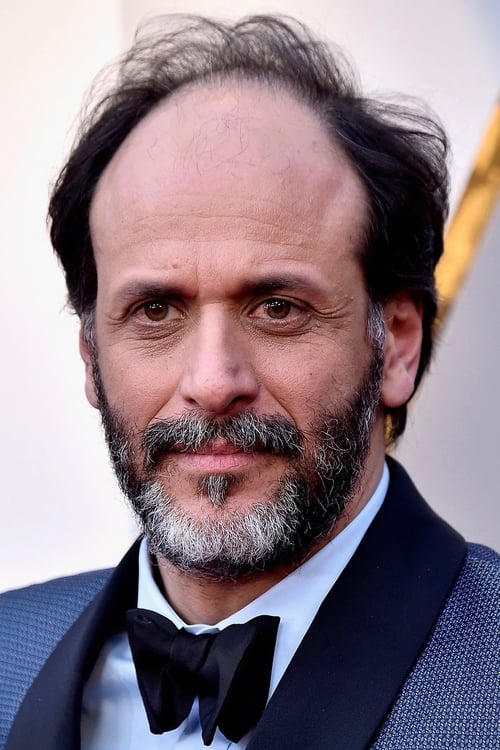
Filmmaker quote“The point is that filmmaking is a collaborative effort; it isn't about imposing your vision on other people. It's about the talking, you know?”
Luca Guadagnino
Themes That Keep Returning
Power, both political and interpersonal, courses through Bertolucci’s films. He persistently investigates how authority shapes, confines, and sometimes liberates individuals.

This exploration is often entwined with sexuality, which Bertolucci treats not just as physical intimacy but as a metaphor for broader forms of control and rebellion.
His films also grapple with history and memory, frequently blurring the lines between personal and collective pasts. Political upheaval and ideological conflict are not abstract forces but deeply personal experiences that inform his characters’ identities and choices.
This interweaving of the political and the personal is a hallmark of his storytelling.
Other recurring motifs include alienation, the construction of identity, and the tension between conformity and resistance. Bertolucci’s characters are often caught in existential struggles, negotiating their desires amid oppressive social or political systems.
- Political power and ideology as shaping forces
- Sexuality as both liberation and constraint
- Historical memory and personal trauma
- Alienation and identity formation
- Conformity versus rebellion
The Films That Best Represent Their Style
The Conformist (1971) stands as a pinnacle of Bertolucci’s style—a visually sumptuous exploration of fascism and psychological repression. The film’s chiaroscuro lighting and meticulous framing reflect the protagonist’s internal conflicts and the broader political malaise of 1930s Italy.
Last Tango in Paris (1972) pushed cinematic boundaries with its raw portrayal of sexual and emotional desolation, sparking international controversy. The film’s intense intimacy and exploration of grief and identity are emblematic of Bertolucci’s fearless engagement with taboo subjects.
The Last Emperor (1987), a grand historical epic, showcases his ability to marry personal narrative and sweeping historical events. This film’s opulent production design and visual richness underline the tragedy and transformation of China’s last imperial ruler.
Later works like The Dreamers (2003) revisit the intersection of political and sexual awakening, set against the backdrop of Parisian student unrest. Meanwhile, Stealing Beauty (1996) offers a more lyrical, coming-of-age meditation framed by the lush Tuscan countryside.
- The Conformist (1971)
- Last Tango in Paris (1972)
- The Last Emperor (1987)
- The Dreamers (2003)
- Stealing Beauty (1996)
- 1900 (1976)
Collaborators: Writers, DPs, Editors, Composers
Bernardo Bertolucci’s films bear the distinct imprint of his longtime collaborators, whose contributions helped shape the director’s unmistakable cinematic voice. Among these, cinematographer Vittorio Storaro stands out for his pioneering use of color theory and lighting, elevating films such as The Last Emperor and The Conformist into visual masterpieces.
Screenwriters like Franco Arcalli and Giuseppe Tornatore contributed to the narrative complexity of Bertolucci’s films, often adapting literary works or original scripts that melded political themes with intimate character studies. Their writing helped sustain the layered storytelling that defines his work.
The compositional scores, ranging from classical to experimental, were integral to the atmosphere Bertolucci cultivated. Composers such as Ryuichi Sakamoto and Ennio Morricone provided soundscapes that heightened emotional resonance and complemented his lush visuals.
- Vittorio Storaro (Cinematographer)
- Franco Arcalli (Screenwriter)
- Giuseppe Tornatore (Screenwriter)
- Ryuichi Sakamoto (Composer)
- Ennio Morricone (Composer)

Turn one job into three — a simple follow-up map
Referrals and repeat buyers are the quiet engine of great video companies. The free guide shows how to prompt them without feeling awkward.
The Breakthrough Moment
Bertolucci’s breakthrough arrived with The Conformist (1971), a film that crystallized his artistic ambition and thematic preoccupations. While his earlier work, such as Before the Revolution (1964), hinted at his interest in political and personal radicalism, it was The Conformist that fully realized his capacity to blend style and substance.
This film’s international success established him as a leading figure in European art cinema. It also positioned him as a filmmaker unafraid to confront Italy’s fascist past and its psychological legacies, employing a striking visual style that would become his signature.
The controversial Last Tango in Paris followed shortly after, cementing his reputation for provocative storytelling, though it also garnered notoriety for its explicit content. Together, these films marked Bertolucci’s ascent to global prominence.
How They Handle Performance

Bertolucci’s direction of actors is characterized by an emphasis on emotional vulnerability and complexity. He often cultivated an environment where performers could explore the raw, sometimes uncomfortable dimensions of their characters.
His films demand a willingness to inhabit contradictions—sensuality entwined with alienation, desire bound up with political consciousness.
His collaborations with actors such as Marlon Brando in Last Tango in Paris and John Lone in The Last Emperor demonstrate his ability to elicit nuanced performances that resonate on multiple levels. Bertolucci was known for encouraging improvisation and deep psychological immersion, which sometimes led to intense, boundary-pushing portrayals.
While his approach occasionally attracted criticism, particularly regarding the ethical implications of certain scenes, his commitment to authenticity and emotional truth is a defining aspect of his directorial identity.
Influence on Later Filmmakers
Bertolucci’s impact on subsequent generations is considerable, influencing filmmakers who seek to meld political inquiry with personal storytelling. His synthesis of lush visual aesthetics and provocative themes has inspired directors across Europe and beyond.
His exploration of sexual politics and historical trauma paved the way for more open cinematic discussions about identity and power. Directors such as Wong Kar-wai and Luca Guadagnino bear traces of his influence in their blending of sensuality, memory, and political subtext.

Moreover, Bertolucci’s willingness to engage explicitly with controversial subject matter expanded the scope of what art cinema could address, encouraging a more daring and introspective filmmaking style worldwide.
Related on Filmmaking Lifestyle

Read next: Alejandro Amenabar: How the Director Shapes Meaning, Alfonso Cuaron: How the Director Shapes Meaning, and Amat Escalante: How the Director Shapes Meaning.
Wrapping Up
Bernardo Bertolucci’s career is a testament to the power of cinema as a vehicle for both political reflection and personal exploration. His films remain vital for their rich visual textures and fearless examination of power’s manifold forms, from the intimate to the institutional.
While his work has sparked debate and sometimes controversy, it is precisely this willingness to confront complexity and discomfort that secures his place as one of the most influential filmmakers of his era. Bertolucci’s legacy endures in the way he redefined the possibilities of cinematic storytelling, blending the grand sweep of history with the fragile contours of human experience.
Want to explore more directors next?


New comments are not currently accepted.
Comments