
On this pageTap to expand
Edward Dmytryk was a prominent American film director and editor who made many significant contributions to the Golden Age of Hollywood.
He directed over 50 films throughout his career, and his work spanned a range of genres, from film noir to war dramas, westerns, and romantic comedies. Here are some of the best films directed by Edward Dmytryk:
Murder, My Sweet (1944) – A classic film noir starring Dick Powell as private detective Philip Marlowe, investigating the disappearance of a beautiful young woman.
Crossfire (1947) – A socially conscious film noir about anti-Semitism in post-World War II America, featuring an all-star cast including Robert Mitchum and Robert Ryan.
The Caine Mutiny (1954) – A gripping courtroom drama set aboard a U.S. Navy ship during World War II, featuring a standout performance by Humphrey Bogart.
Broken Lance (1954) – A western drama about a family feud over a cattle ranch, starring Spencer Tracy, Robert Wagner, and Richard Widmark.
The Young Lions (1958) – A World War II drama following the lives of three soldiers, played by Marlon Brando, Montgomery Clift, and Dean Martin.
Warlock (1959) – A western film starring Henry Fonda and Richard Widmark, exploring the themes of law and order in a small town.
Mirage (1965) – A mystery thriller starring Gregory Peck, who suffers from amnesia and attempts to uncover his past.
Best Edward Dmytryk Films
Dmytryk’s films were noted for their strong performances, visual style, and exploration of social and political issues of their time.
He was a versatile director who brought his unique vision and storytelling to a variety of genres, earning him a place in the pantheon of great Hollywood filmmakers.
1. Crossfire (1947)
Crossfire is a 1947 American film noir directed by Edward Dmytryk, and based on the novel The Brick Foxhole by Richard Brooks.
The film tells the story of a group of soldiers who become embroiled in a murder investigation after a man named Joseph Samuels is found dead in his apartment.
As the investigation unfolds, it becomes clear that the murder was motivated by anti-Semitism, and that one of the soldiers, Montgomery (played by Robert Ryan), was involved in the killing.
The other soldiers struggle to come to terms with the fact that they have been serving alongside a murderer, and must decide whether to turn him in to the authorities.
Crossfire is notable for its bold portrayal of anti-Semitism and its critique of American society in the aftermath of World War II.
The film was released at a time when there was growing concern about the rise of anti-Semitic sentiment in the United States, and was seen as a powerful indictment of prejudice and bigotry.
The film also features a talented cast, including Robert Ryan, Robert Mitchum, and Gloria Grahame, and is noted for its innovative cinematography and visual style.
Crossfire was a critical and commercial success upon its release, and was nominated for five Academy Awards, including Best Picture.
It remains a classic of American film noir and is widely regarded as an important and influential work of post-war cinema.
If you like Edward Dmytryk’s work, on our sister site AuteurGraph we have a profile page, a visual film timeline, and a ratings page that gives a tonne of info and data about their career in a visualized form.

2. The Sniper (1952)
The Sniper is a film-noir crime drama released in 1952, directed by Edward Dmytryk.
The movie follows the story of a mentally disturbed man named Eddie Miller, who is on a killing spree in San Francisco.
Miller is a skilled marksman, and he terrorizes the city by shooting women from rooftops.
The film deals with themes of violence, misogyny, and mental illness, and is notable for its gritty and realistic portrayal of urban life.
The Sniper was an early Hollywood film about a serial sniper, and it is considered a classic of the film-noir genre.
The movie also features strong performances from its lead actors, including Adolphe Menjou and Arthur Franz.
The film is a tense and suspenseful thriller that keeps the audience on the edge of their seats until the very end. Overall, The Sniper is a powerful and thought-provoking film that explores some of the darker aspects of the human psyche.

3. The Caine Mutiny (1954)
The Caine Mutiny is a 1954 American drama film directed by Edward Dmytryk and based on Herman Wouk’s 1951 novel of the same name, which won the 1952 Pulitzer Prize for Fiction.
The film stars Humphrey Bogart, Van Johnson, and Fred MacMurray, among others.
The film tells the story of a U.S. Navy crew on board the fictional minesweeper, the USS Caine, during World War II.
The ship’s captain, Lieutenant Commander Queeg (Bogart), is initially seen as an efficient and capable officer, but as the story progresses, his erratic behavior and questionable decisions begin to cause concern among his crew.
The crew, led by Lieutenant Maryk (Johnson), becomes increasingly disillusioned with Queeg’s leadership, and when the ship is caught in a typhoon, Maryk relieves Queeg of command.
Maryk is subsequently court-martialed for mutiny, and a dramatic trial ensues.
The Caine Mutiny is notable for its strong performances, particularly Bogart’s portrayal of Queeg, which earned him an Academy Award nomination for Best Actor.

The film also explores themes of leadership, responsibility, and the consequences of individual actions in times of war.
Overall, The Caine Mutiny is a classic American film that has stood the test of time and remains a compelling and thought-provoking exploration of the complexities of military life and leadership.

4. Warlock (1959)
Warlock is a 1959 Western film directed by Edward Dmytryk and starring Henry Fonda, Richard Widmark, and Anthony Quinn.
The film is based on a novel of the same name by Oakley Hall and tells the story of a hired gunslinger, Clay Blaisdell (Fonda), and his devoted friend Tom Morgan (Quinn), who are brought in to protect the town of Warlock from a gang of outlaws led by Abe McQuown.
The town's uneasy peace is tested further when reformed outlaw Johnny Gannon (Widmark) takes the job of sheriff and finds himself at odds with Blaisdell and Morgan's own brand of violent justice.
Here are a few key points about the film:
Unique approach to the Western genre: Warlock is notable for its unique take on the traditional Western genre.
The film explores themes of morality, justice, and the nature of violence in a nuanced and thought-provoking way, and it subverts many of the typical Western tropes and conventions.
Action-packed and suspenseful: Despite its thought-provoking themes, Warlock is also an action-packed and suspenseful film.
The climactic showdown between Blaisdell and Gannon is intense and gripping, and the film’s intricate plot keeps the viewer engaged throughout.
Overall, Warlock is a standout Western film that offers a unique take on the genre. With its thought-provoking themes, strong performances, and thrilling action sequences, it is a must-see for fans of Westerns and fans of cinema in general.

5. Broken Lance (1954)
Broken Lance is a 1954 Western film directed by Edward Dmytryk and produced by 20th Century Fox.
The film is a loose adaptation of Shakespeare’s play King Lear and tells the story of a powerful rancher named Matt Devereaux (played by Spencer Tracy) and his four sons.
When Matt’s youngest son, Joe (Robert Wagner), takes the blame for one of his father’s crimes and serves three years in prison, he returns home to find his resentful older half-brothers have frozen him out of the family ranch, and the family is torn apart as they must confront their differences and conflicts to overcome the obstacles in their way.
The film was well-received by critics and audiences. It won the Academy Award for Best Writing, Motion Picture Story, and Katy Jurado was nominated for Best Supporting Actress.
The film’s themes of family loyalty, betrayal, and redemption are explored through its striking visuals and powerful performances.
Broken Lance is notable for its use of CinemaScope, a widescreen film format that was gaining popularity at the time of the film’s release.
The film’s director, Edward Dmytryk, was known for his ability to balance action, drama, and character development in his films, and Broken Lance is no exception.
Overall, Broken Lance is a classic Western that explores complex themes and features excellent performances by its talented cast.
It remains a popular film for fans of the genre and a significant contribution to the history of American cinema.

6. The Young Lions (1958)
The Young Lions is a 1958 American war drama film directed by Edward Dmytryk and based on the 1948 novel of the same name by Irwin Shaw.
The film stars Marlon Brando, Montgomery Clift, and Dean Martin as three soldiers from different backgrounds who fight in World War II.
The film follows the personal journeys of the three soldiers as they experience the horrors of war and struggle to come to terms with the morality of killing.
Brando plays Christian Diestl, a German soldier who grows disillusioned with the Nazi cause and, in the end, throws his weapon away. Clift plays Noah Ackerman, a Jewish-American who faces discrimination and racism within his own unit.
Martin plays Michael Whiteacre, a womanizing Broadway performer who joins the army for his own personal reasons.
The Young Lions is notable for its exploration of the moral and psychological effects of war on its characters, as well as its frank portrayal of the realities of combat.
The film was a commercial and critical success, and is considered one of the best war films of the era.
The performances of the three lead actors have been particularly praised, with Brando in particular receiving acclaim for his nuanced portrayal of a conflicted German soldier.
Overall, The Young Lions is a powerful and thought-provoking film that examines the impact of war on individuals from different backgrounds, and remains a significant work of war cinema today.
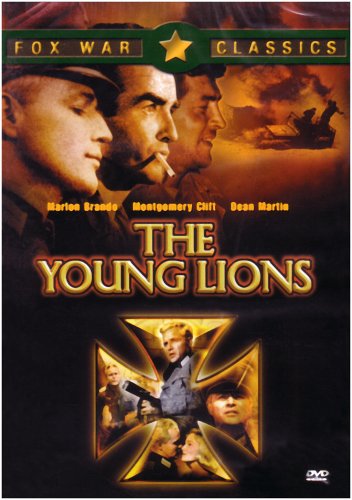
20th Century Fox
- The Young Lions - DVD Brand New
The Young Lions - DVD Brand New
View on Amazon7. Raintree County (1957)
Raintree County is a 1957 American drama film directed by Edward Dmytryk and starring Montgomery Clift, Elizabeth Taylor, and Eva Marie Saint.
The film is set mainly in Raintree County, Indiana, in the years before and during the Civil War, and tells the story of a young man named John Shawnessy (played by Clift) who dreams of finding a legendary golden raintree, a mythical tree said to hold the secret of life.
As John grows older, he becomes involved in a complicated love triangle with two women: the wealthy and refined Susanna Drake (played by Taylor) and the free-spirited Nell Gaither (played by Saint).
John’s idealism and romanticism are tested by Susanna’s instability, by slavery when the couple visits the South, and by the Civil War.
Raintree County is notable for its lush cinematography and its grand, epic scope. The film was one of the most expensive productions of its time, and features lavish costumes and sets, as well as an orchestral score by composer Johnny Green.
The performances of the cast, particularly Clift and Taylor, are also widely praised for their emotional depth and intensity.
Critics were largely unimpressed by the story, and the expensive production lost money. Raintree County is sometimes overshadowed by other films of the era, such as Gone with the Wind and The Searchers.
However, it remains a classic of American cinema, and is noted for its exploration of themes of love, idealism, and the struggle for personal fulfillment in the face of societal expectations.

8. The End of the Affair (1955)
The End of the Affair is a British-American romantic drama film released in 1955, directed by Edward Dmytryk.
The movie is based on the novel of the same name by Graham Greene, and it follows the story of an adulterous love affair between a writer named Maurice Bendrix and a married woman named Sarah Miles in London during World War II.
The film deals with themes of love, jealousy, and betrayal, and is notable for its powerful performances and beautiful cinematography.
The movie stars Deborah Kerr as Sarah Miles, and Van Johnson as Maurice Bendrix, and both actors deliver deeply moving and nuanced performances.
The film is also notable for its complex and multi-layered plot, which explores the inner lives and motivations of its characters.
The movie is a thought-provoking and emotionally resonant exploration of the nature of love and the human heart.
Overall, The End of the Affair is a beautifully crafted and powerful film that delves into the complexities of human relationships and the ways in which we can both hurt and heal each other.

9. Alvarez Kelly (1966)
Alvarez Kelly is a 1966 Western film directed by Edward Dmytryk and starring William Holden and Richard Widmark.
The film is set during the American Civil War and tells the story of Alvarez Kelly (Holden), a Mexican-Irish cattleman who is kidnapped by a group of Confederate soldiers led by Colonel Tom Rossiter (Widmark).
Rossiter plans to use Kelly’s herd to supply the Confederate army, but Kelly resists, and the two men engage in a battle of wills.
The film is notable for its strong performances, particularly from Holden and Widmark, who both bring intensity and depth to their characters.
The film also explores themes of loyalty, honor, and the cost of war, as the two men grapple with their conflicting loyalties and the difficult choices that they must make.
Overall, Alvarez Kelly is a well-crafted Western that combines action, drama, and character development to create a compelling and thought-provoking story.
It is a testament to the skill of its director and actors, and remains an entertaining and engaging film for fans of the genre.

10. Walk on the Wild Side (1962)
Walk on the Wild Side is a 1962 film directed by Edward Dmytryk and based on a novel by Nelson Algren.
The film stars Laurence Harvey, Capucine, Jane Fonda, and Anne Baxter, and tells the story of a drifter named Dove Linkhorn (Harvey) who comes to New Orleans in search of his lost love, Hallie Gerard (Capucine).
Here are a few key points about the film:
Exploration of taboo subjects: Walk on the Wild Side explores prostitution and an implied lesbian relationship, subjects Hollywood rarely treated this openly in 1962.
The film offers a candid and uncompromising look at the seedy underbelly of society, and it doesn’t shy away from showing the darker aspects of human nature.
Strong performances: The film features strong performances from its cast, with Laurence Harvey delivering a standout performance as Dove Linkhorn.
Capucine also shines in her role as the enigmatic Hallie Gerard, and Jane Fonda and Anne Baxter give memorable supporting performances.
Moody atmosphere: The film’s moody atmosphere and evocative visuals add to its dark and gritty tone, creating a haunting and immersive cinematic experience.
The film’s score, which features jazz and blues music, also adds to its overall atmosphere and helps to evoke the mood of the era and setting.
Overall, Walk on the Wild Side is a powerful and evocative film that explores taboo subjects and offers a candid and uncompromising look at the human experience.
With its strong performances, moody atmosphere, and evocative visuals, it is a must-see for fans of classic cinema and those interested in exploring the darker aspects of human nature.

3 Characteristics of Edward Dmytryk Films
Edward Dmytryk was an American film director and producer who had a prolific career spanning several decades. Here are three characteristics that are often associated with his films:
Psychological complexity: Dmytryk’s films often explore the complex and conflicting motivations of his characters.
He was particularly interested in the psychological aspects of crime and frequently made films that centered on detectives and criminals.
Use of location: Dmytryk was known for his use of location in his films, often shooting on location rather than in a studio.
He believed that shooting on location helped to create a more realistic and authentic atmosphere for the audience.
Social commentary: Dmytryk’s films often contained social commentary on issues such as racism, class conflict, and political corruption.
He was unafraid to tackle controversial subjects and often used his films to express his views on these topics. That is clearest in earlier films such as Crossfire. The big studio pictures he directed after the early 1950s were generally less politically charged.
3 Reasons Why You Should Watch Edward Dmytryk Films
Here are three reasons why you should watch films directed by Edward Dmytryk:
Versatile storytelling: Dmytryk’s films span a wide range of genres, from film noir to war dramas, westerns, and romantic comedies. This versatility in storytelling means that there is likely a Dmytryk film that will appeal to your personal taste.
Exploration of social issues: Many of Dmytryk’s films explored social and political issues of their time, such as anti-Semitism in Crossfire and the morality of war in The Young Lions.
These themes make his films not only entertaining, but also thought-provoking and relevant to contemporary issues.
Strong performances: Dmytryk worked with some of the greatest actors of his time, including Marlon Brando, Humphrey Bogart, and Spencer Tracy.
The performances of these actors in Dmytryk’s films have become iconic, and are a testament to his ability to direct and collaborate with actors to create memorable characters.
Overall, Dmytryk’s films are significant contributions to the Golden Age of Hollywood, and are notable for their storytelling, exploration of social issues, and strong performances.
If you are a fan of classic cinema or just looking for great films to watch, Dmytryk’s work is definitely worth checking out.
Related on Filmmaking Lifestyle
Read next: 10 Best Montgomery Clift Movies: The Sensitive and Intense Performances of a Hollywood Rebel, 10 Best Peter Fonda Movies: A Journey Through the Life of a Hollywood Rebel, and Edward Dmytryk: The Essential Breakdown.
Best Edward Dmytryk Films – Wrapping Up
Edward Dmytryk was a talented and influential American film director who worked in Hollywood from the 1940s through the 1970s. He directed over 50 films in a variety of genres, including film noir, war films, westerns, and dramas. Here are some of his most notable and acclaimed films:
Crossfire (1947) – This film noir classic about a murder investigation and anti-Semitism earned Dmytryk his only Academy Award nomination, for Best Director.
The Caine Mutiny (1954) – This gripping World War II drama about a mutiny aboard a Navy ship starred Humphrey Bogart and was a box office success.
Murder, My Sweet (1944) – Another film noir gem, this adaptation of Raymond Chandler’s novel Farewell, My Lovely helped establish Dmytryk’s reputation as a skilled director of suspenseful and moody thrillers.
Broken Lance (1954) – This western drama about a family of ranchers starred Spencer Tracy. It won the Academy Award for Best Writing, Motion Picture Story, and Katy Jurado was nominated for Best Supporting Actress.
Raintree County (1957) – This epic romance, set mainly in pre-Civil War Indiana, starred Montgomery Clift and Elizabeth Taylor, and was one of the most expensive productions of its time.
While these films are some of Dmytryk’s most celebrated works, he directed many other notable films throughout his career, including Cornered (1945), The Sniper (1952), The Left Hand of God (1955), and The Young Lions (1958).
Great films deserve serious analysis. Explore more Film Theory here.

Let's Get Lost: The Essential Breakdown

The Old Dark House: Context, Themes, and Style

Night and Fog: Themes, Mood, and Visual Language

Runaway Train: Key Ideas and Lasting Influence

Even the Wind Is Afraid: A Deep Dive Into Story and Style

Introducing The Big Combo: Why It Still Matters

A Fistful of Dollars: What to Notice on a Rewatch

Anima: A Guide to Watching It Like a Critic

Raging Bull: The Meaning Behind the Moments


New comments are not currently accepted.
Comments