
On this pageTap to expand
David Cronenberg’s name is synonymous with a certain brand of cinema that is as intellectually provocative as it is viscerally disturbing. Emerging from Toronto in the mid-1960s, Cronenberg has carved out a singular niche that probes the porous boundaries between flesh and machine, sanity and madness, technology and biology.
His films challenge not just the viewer’s comfort, but their very understanding of identity and transformation. Over the span of nearly six decades, Cronenberg’s work has evolved from cult horror to complex psychological drama, all the while maintaining an unflinching commitment to exploring the human condition through a lens that is both clinical and poetic.

While horror and science fiction serve as his primary canvases, Cronenberg’s approach to these genres is far from conventional. He infuses them with philosophical rigor and a relentless curiosity about the body’s vulnerabilities and potentials. His oeuvre is marked by unforgettable images—sometimes grotesque, sometimes hauntingly beautiful—that linger long after the credits roll. Films such as The Fly and Videodrome have become landmarks in speculative cinema, not merely for their shock value but for their deep engagement with themes of transformation, technology, and human fragility.
As a filmmaker, Cronenberg occupies a rare space where intellectual inquiry meets raw physicality, creating works that are as unsettling as they are enlightening. His influence extends well beyond Canada, inspiring a generation of directors who seek to marry genre storytelling with profound psychological insight.
To understand Cronenberg is to explore a cinematic universe where the body is both battleground and laboratory, a site of horror and revelation.
Early Life and Formative Influences

Born in 1943 in Toronto, Ontario, David Cronenberg grew up in a middle-class family that encouraged intellectual curiosity. His early exposure to literature and art provided fertile ground for a mind fascinated by both science and the surreal.
Cronenberg has cited a diverse array of influences ranging from classical horror to contemporary philosophy. These include the work of Franz Kafka and William S.
Burroughs, whose explorations of identity and reality resonated deeply with him.
Canadian culture and the urban landscape of Toronto also left an indelible mark on Cronenberg’s sensibility. The city’s cold modernity and fragmented social fabric found echoes in his early films, where isolation and alienation are recurring motifs.
Additionally, seminal directors like Alfred Hitchcock and Roman Polanski shaped his appreciation for psychological horror, while the body horror tradition owes much to the pioneering work of filmmakers like George A. Romero and David Lynch.

The intersection of technology and biology, which would come to define much of Cronenberg’s work, can be traced back to his childhood fascination with medical science. This curiosity evolved into a thematic obsession with the ways technology invades and transforms the human body and mind, a preoccupation that remains central to his filmography.
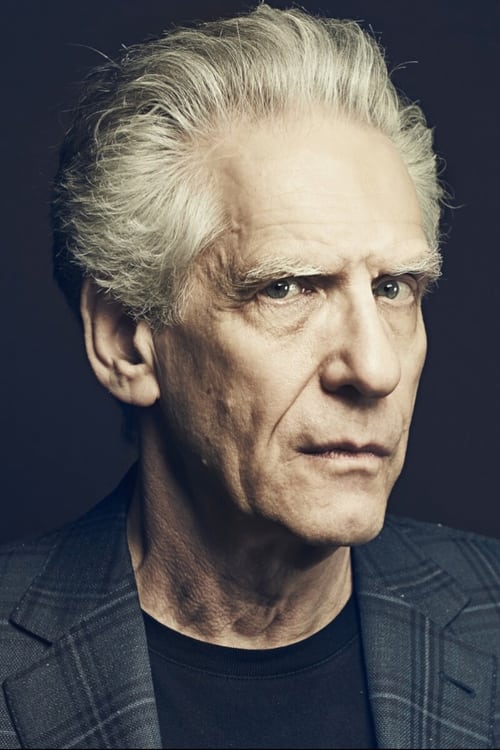
Filmmaker quote“As a filmmaker, I ask questions but don't have answers. Moviemaking is a philosophical exploration. I invite the audience to come on the journey and discover what they think and feel.”
David Cronenberg
Critical Reception and Reappraisal

David Cronenberg’s career has been marked by a complex critical trajectory. Early in his career, his boundary-pushing imagery and unorthodox narratives often polarized critics. Films like Crash (1996), with its controversial exploration of sexual fetishism and car accidents, elicited both admiration and outrage. Yet, even at his most divisive, Cronenberg earned respect for his fearless originality and intellectual depth.
Over time, a significant reappraisal has taken place. Contemporary critics increasingly recognize his work as pioneering and deeply influential, highlighting the psychological and philosophical layers beneath the visceral surface.
Films once dismissed as mere shock fodder are now viewed as prescient meditations on the body’s relationship to technology and identity.
Notably, his later works such as A History of Violence and Eastern Promises garnered widespread acclaim for their more restrained style and compelling character studies. These films demonstrated Cronenberg’s versatility, expanding his critical reputation beyond genre boundaries and securing his status as a major auteur in world cinema.
Recurring Actors and Creative Chemistry

Cronenberg’s collaborations with actors have been instrumental in shaping his cinematic world. Viggo Mortensen stands out as a frequent and trusted collaborator, delivering some of his most intense and nuanced performances in Eastern Promises and A History of Violence. Mortensen’s ability to inhabit complex, often morally ambiguous characters aligns perfectly with Cronenberg’s thematic interests.
Another notable partnership is with the twin actors Jeremy and Jason Irons in Dead Ringers, a film that required a profound exploration of identity and psychological decay. The twins’ performances underscore Cronenberg’s fascination with duality and the fragility of the human psyche.
Earlier in his career, actors like Jeff Goldblum in The Fly and James Woods in Videodrome helped define the visceral intensity that would become a Cronenberg hallmark. These collaborations demonstrate how Cronenberg cultivates a creative chemistry that brings out the psychological depth and physical vulnerability inherent in his characters.
Editing Rhythm and Narrative Shape
Cronenberg’s films are distinguished by a deliberate editing rhythm that mirrors the psychological states of his characters. Rather than conventional narrative pacing, his films often unfold with a creeping, clinical precision that heightens unease.
The editing frequently lingers on moments of physical transformation or psychological revelation, forcing the viewer to confront the grotesque and the sublime alike.
This controlled pacing serves to immerse the audience in the protagonist’s subjective experience. For example, The Fly uses increasingly fragmented editing to convey the protagonist’s deteriorating condition, while Videodrome employs hallucinatory cuts that blur the line between reality and media-induced madness.

Moreover, Cronenberg’s narrative structures often eschew linearity in favor of psychological complexity. Films like eXistenZ and Cosmopolis challenge temporal and spatial continuity, reflecting the disorientation experienced by their characters and reinforcing the director’s thematic preoccupations with transformation and identity dissolution.
The Breakthrough Moment

If there is a single film that marks David Cronenberg’s entry into international prominence, it is undoubtedly The Fly (1986). While he had already built a cult following with earlier works like Videodrome and Scanners, this adaptation of a classic science fiction horror story brought his distinctive vision to a broader audience.
The Fly epitomizes Cronenberg’s mature style—melding grotesque body horror with a tragic human story. The film’s groundbreaking special effects, combined with Jeff Goldblum’s vulnerable performance, captured the agony of physical transformation in a way that was both horrifying and deeply empathetic. This film solidified Cronenberg’s reputation as a master of his genre and opened doors to more mainstream projects while retaining his artistic integrity.
Genre Patterns and Left Turns
Throughout his career, Cronenberg has navigated the terrain of horror and science fiction with a distinctive signature, yet he has never been confined by genre conventions. His early films, such as Scanners and The Brood, embrace the body horror trope with unrelenting intensity, while later works introduce elements of psychological thriller and crime drama, as evidenced by Eastern Promises.
Notably, Cronenberg has frequently taken deliberate left turns that defy expectations. A Dangerous Method (2011), a period drama about the early days of psychoanalysis, marked a significant departure from his usual preoccupations with bodily transformation, focusing instead on intellectual and emotional turmoil. Similarly, Cosmopolis (2012) ventures into abstract, almost existential territory, centered on a day in the life of a billionaire navigating a collapsing world.
Even when exploring these varied genres, Cronenberg’s thematic core remains intact: the exploration of identity, control, and the often uneasy relationship between mind and body. This consistent thematic throughline ensures that even his most unexpected projects bear the unmistakable mark of his auteur signature.
The Films That Best Represent Their Style

- The Fly (1986) – A landmark in body horror, blending tragic romance with grotesque transformation.
- Videodrome (1983) – A prescient exploration of media’s impact on reality and the malleability of the human body.
- A History of Violence (2005) – A taut crime drama that delves into the duality of identity and the latent capacity for violence.
- Crash (1996) – A controversial meditation on technology, sexuality, and human fixation with trauma.
- Dead Ringers (1988) – Psychological horror that probes identity, dependency, and madness through twin gynecologists.
- eXistenZ (1999) – A surreal sci-fi thriller that blurs the lines between virtual reality and corporeal existence.
Influence on Later Filmmakers
Cronenberg’s impact on cinema is vast and multifaceted. His pioneering work in body horror has influenced directors across genres who seek to explore the physicality of human experience through unsettling imagery.
Filmmakers such as Guillermo del Toro and Alex Garland have acknowledged the inspiration drawn from Cronenberg’s fearless engagement with the grotesque and the philosophical.
Moreover, Cronenberg’s integration of psychological complexity into genre films has paved the way for auteurs like Darren Aronofsky and David Lynch, who similarly blend the cerebral with the visceral. His ability to navigate between cult and mainstream cinema has demonstrated a blueprint for maintaining artistic integrity while achieving broader recognition.
Beyond film, Cronenberg’s themes resonate in contemporary discussions about technology, identity, and the body, making his work increasingly relevant in an era of rapid technological change and bioethical debate.
A Final Note
David Cronenberg stands as a towering figure in the landscape of modern cinema, a filmmaker whose work challenges, disturbs, and ultimately enlightens. His relentless exploration of the body’s vulnerabilities and transformations has created a body of work that is both uniquely personal and universally resonant. From the grotesque mutations of The Fly to the quiet tension of A History of Violence, Cronenberg’s films invite us to confront the often uncomfortable truths about what it means to be human.
Far more than a master of horror or science fiction, Cronenberg is a philosopher of flesh and psyche, whose enduring influence continues to shape how filmmakers approach the complex interplay of body, technology, and identity. As his career advances, his work remains a vital touchstone for anyone interested in the power of cinema to probe the darkest and most profound corners of the human experience.
Want to keep going with more cinema craft?


New comments are not currently accepted.
Comments