
On this pageTap to expand
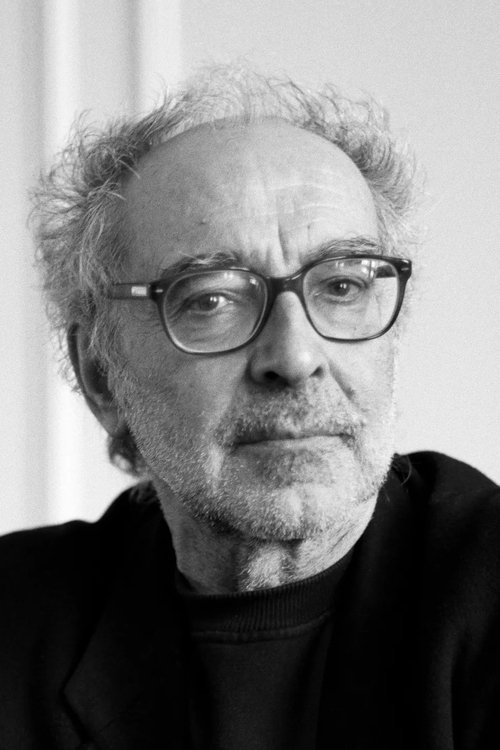
Jean-Luc Godard remains one of the towering figures in the history of cinema, a filmmaker whose work consistently challenged and expanded the language of film. Emerging in the early 1960s, Godard quickly distinguished himself as a revolutionary artist who defied the conventions of narrative and visual style.
His films are not only cinematic works but intellectual provocations, layered with philosophical inquiry and political fervor.

Born in Paris in 1930, Godard was a central figure in the French New Wave, a movement that redefined filmmaking with its embrace of improvisation, location shooting, and a raw, youthful energy. Yet, Godard’s influence extends far beyond this label. Over six decades of activity, from 1960 until his death in 2022, his oeuvre evolved dramatically. While he began with more accessible narratives, such as Breathless, he soon plunged into experimental territory, altering film grammar itself and inspiring generations of filmmakers worldwide.
Godard’s work is marked by an unparalleled intellectual rigor. His films invite viewers to question the nature of cinema, politics, language, and society.
Visually, he often broke the rules—abrupt jump cuts, fragmented editing, self-reflexive narration, and innovative sound design are all hallmarks of his style. This profile explores the persistent themes, formal experiments, and historical significance of Godard’s work, providing a comprehensive portrait of a true cinematic icon.
A Director’s Visual Grammar
Godard’s visual style is immediately recognizable for its audacious experimentation. He rejected classical continuity editing in favor of jump cuts and disjunctive montages, techniques that disrupt the viewer’s expectations and foreground the constructed nature of film.
His framing often feels unconventional—characters might enter or leave the frame abruptly, or scenes might be punctuated with sudden close-ups or off-kilter compositions.
Color usage, too, evolved throughout his career. Early films like A Woman Is a Woman display a playful, saturated palette, while later works like Weekend use color more symbolically. In his later experimental phases, Godard embraced digital technology and 3D, as in Goodbye to Language, using them to further explore spatial relationships and the materiality of the image.
Sound and image in Godard’s films often operate independently, with dialogue sometimes appearing as disembodied voiceover or the soundtrack featuring musique concrète and political speeches. His approach dismantles traditional immersive viewing, pushing audiences toward critical engagement.
Filmmaker quote“A story should have a beginning, a middle, and an end… but not necessarily in that order.”
Jean-Luc Godard
Studio Years vs Independent Years
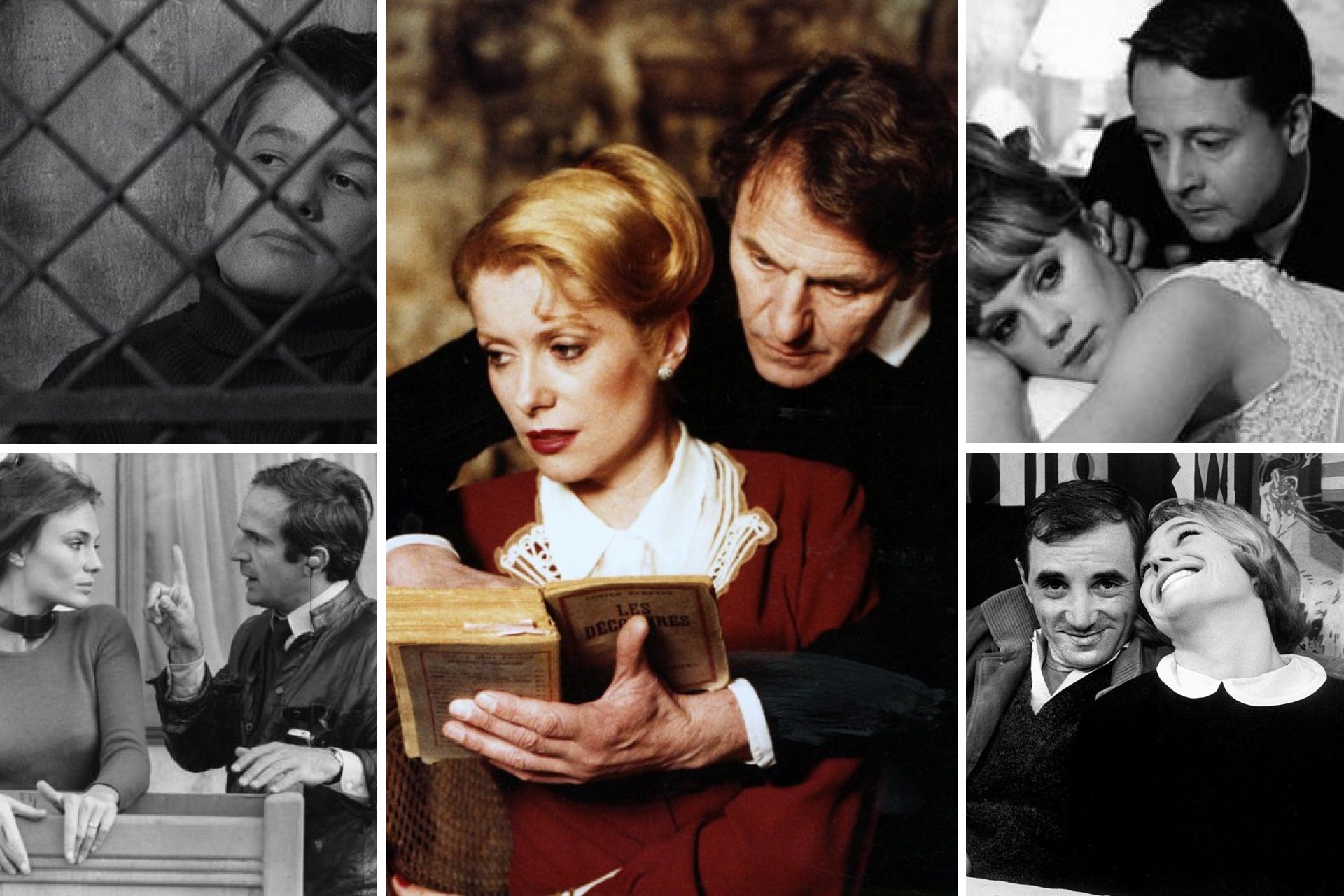
Godard’s career is often divided between his early "studio years" and his later, fiercely independent period. The 1960s, largely supported by traditional production and distribution systems, saw his breakthrough with films that, while innovative, were still accessible to international audiences and critics.

- During this period, films like Breathless, Contempt, and Band of Outsiders balanced narrative experimentation with genre conventions.
- Godard enjoyed collaborations with established actors and crew, allowing him to develop his signature style within a relatively stable framework.
- His political awakenings deepened but were still woven into formal cinematic narratives.
After the late 1960s, particularly following the release of Weekend, Godard’s work became increasingly radical and politically charged. He shifted away from the traditional studio system toward independent and self-financed projects, often produced with small crews and minimal budgets.
- This phase is typified by a looser, more essayistic approach to filmmaking.
- Films like La Chinoise and 2 or 3 Things I Know About Her embody his commitment to Marxist and Maoist ideologies.
- In his later years, Godard embraced digital media and multimedia installations, further distancing himself from commercial cinema.
The Films That Best Represent Their Style
Breathless (1960) stands as Godard’s cinematic manifesto, decisively rupturing classical film grammar with its jump cuts and improvisational feel. The film’s playful engagement with American noir and existential cool encapsulates the youthful rebellion of the French New Wave.

Alphaville (1965) represents a pivot toward more philosophical and stylistic experimentation, combining science fiction and noir with a dystopian critique of technocracy and dehumanization. Its stark black-and-white cinematography and deadpan performances underscore Godard’s cerebral concerns.
Weekend (1967) is perhaps Godard’s most confrontational work, a satirical epic that dismantles bourgeois society through a chaotic, violent road trip. Its long tracking shots, absurdist dialogue, and bleak political vision showcase his break with mainstream cinema.
In more intimate films like Vivre Sa Vie (1962) and Pierrot le Fou (1965), Godard blends personal narrative with formal innovations, focusing on alienation, love, and existentialism with a poetic and visual inventiveness that remains influential.
Themes That Keep Returning
Godard’s films are suffused with recurring thematic concerns that evolve but never disappear. Political engagement is central, especially a Marxist critique of capitalism and media. Films such as La Chinoise and 2 or 3 Things I Know About Her explicitly interrogate consumer culture and revolutionary politics.
Philosophy and language are also persistent themes. Godard often draws from existentialism, structuralism, and semiotics, making his films sites of intellectual inquiry. His works meditate on the limits and possibilities of communication, representation, and truth.

Love, alienation, and identity recur as emotional undercurrents, often explored through fragmented narratives and disjointed characters. The tension between individual desire and societal constraints forms a dramatic core in films like Contempt and Pierrot le Fou.
How They Handle Performance
Godard’s approach to performance often defies conventional acting methods. He favored spontaneity, allowing actors to improvise or deliver lines with a detached, sometimes awkward affect. This style resists emotional naturalism in favor of highlighting the artificiality of performance itself.
His collaborations with actors like Jean-Paul Belmondo, Anna Karina, and Jean-Pierre Léaud showcase this approach, where the actor’s presence becomes part of the film’s reflexive texture. In some cases, characters address the camera directly, breaking the fourth wall and engaging viewers as participants in the cinematic discourse.
Godard’s direction encourages an intellectualized form of acting, where the emotional and political stakes coexist with formal experimentation. This approach can be challenging but is integral to the films’ thematic and aesthetic ambitions.
The Deep Cuts Worth Your Time
Beyond his core classics, several lesser-known works provide illuminating glimpses into Godard’s restless creativity.
- Le Petit Soldat (1963) is a politically charged thriller that was banned upon release due to its critique of the Algerian War, revealing Godard’s early commitment to political cinema.
- The Married Woman (1964), a short film, explores alienation and gender roles with Godard’s characteristic intellectual playfulness.
- Ro.Go.Pa.G. (1963) is a collaborative omnibus that includes Godard’s segment, showcasing his experimental impulses alongside contemporaries.
- Hail, Sarajevo (1993) is a lesser-known documentary short reflecting Godard’s engagement with global political crises and media representation.
Place in National Cinema and Film History
Jean-Luc Godard is unquestionably a central figure in French cinema and one of the most influential directors in global film history. His early work spearheaded the French New Wave, a movement that revolutionized how films could be made and understood.
This movement broke away from the literary adaptations and studio-bound productions that dominated French cinema, infusing it with youthful energy, realism, and formal innovation.

Godard’s influence permeates countless filmmakers, from Martin Scorsese to Wong Kar-wai, and extends across genres and continents. His challenge to classical continuity editing and narrative coherence forced cinema to reconsider its relationship with time, space, and storytelling.
He was as much a theorist as a filmmaker, blending Marxist politics, philosophy, and film theory into a singular cinematic voice.
In France, Godard’s legacy is deeply interwoven with cultural and political shifts of the 20th century, reflecting post-war intellectual currents and revolutionary sentiments. Internationally, he remains a touchstone for avant-garde and independent cinema, a relentless innovator who refused to settle into complacency or commercial formulas.
The Last Word
Jean-Luc Godard’s career defies easy summary. His films demand active engagement, ask difficult questions, and unsettle audiences with their formal daring and ideological urgency. From the kinetic energy of Breathless to the digital experiments of Goodbye to Language, Godard’s oeuvre is a testament to cinema’s potential as an art form and a tool for social critique.
He was a filmmaker who never stopped interrogating the medium itself, pushing boundaries and inspiring generations to think beyond the screen. To study Godard is to enter an ongoing dialogue about what cinema can do—and what it can mean in a world always in flux.
Want to explore more directors next?
Related on Filmmaking Lifestyle
Read next: Damien Chazelle: What Makes the Work Instantly Recognisable, David O Russell: What Makes the Work Instantly Recognisable, and Djibril Diop Mambety: What Makes the Work Instantly Recognisable.


New comments are not currently accepted.
Comments