
On this pageTap to expand
Mathieu Kassovitz emerged from the vibrant Parisian cinema scene of the 1990s as a director whose films pulse with raw energy and social urgency. Though he has never quite achieved the global household name status of some contemporaries, his work commands respect and fascination, especially for its unflinching portrayal of urban strife and the fractures within French society.
Kassovitz’s films do not offer easy answers; instead, they challenge viewers to confront discomforting realities through a potent mix of gritty realism and striking visual storytelling.

Born in 1967 in Paris, Kassovitz grew up steeped in a rich cultural milieu, which is echoed in the eclectic and often restless spirit of his films. His oeuvre spans genres and styles, ranging from hard-hitting social dramas to psychological thrillers and even Hollywood-style genre fare.
Yet, what ties his films together is a consistent thematic concern with power, violence, and the structures that enable social alienation.
While Kassovitz’s name is most strongly associated with La Haine (1995), a film that remains a touchstone for urban realism and youth disaffection, his directorial journey reveals a restless artist willing to explore diverse modes of storytelling while maintaining a distinctive voice. His work is frequently compared to that of contemporaries and influences such as Martin Scorsese, Alan Clarke, and the Dardenne brothers, directors who similarly interrogate social realities with unvarnished intensity.
Critical Reception and Reappraisal
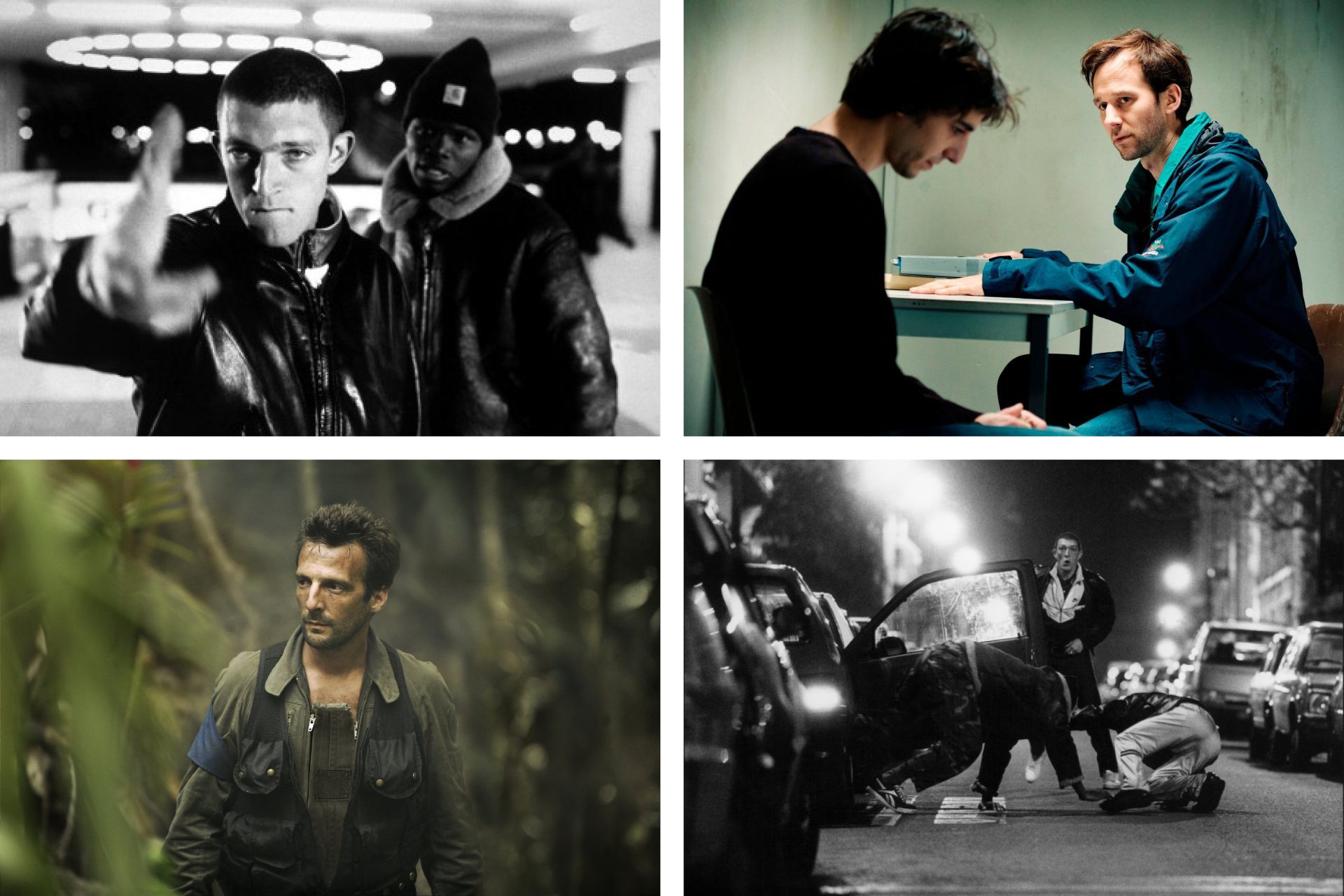
Upon its release, La Haine was met with critical acclaim for its raw, unfiltered look at the tensions simmering in the Parisian banlieues. The film’s stark black-and-white cinematography and innovative use of handheld cameras created a visceral immediacy that captivated audiences and critics alike. Kassovitz’s ability to distill the complex socio-political landscape into a compelling narrative marked him as a filmmaker of considerable promise.
However, subsequent projects like The Crimson Rivers (2000) and Gothika (2003) received mixed reactions, with some critics praising their craftsmanship but others lamenting the shift towards more commercial, genre-oriented filmmaking. Babylon A.D. (2008), an ambitious sci-fi thriller starring Vin Diesel, was particularly divisive, often criticized for its uneven tone and narrative incoherence.
In recent years, there has been a thoughtful reappraisal of Kassovitz’s career. Critics and cinephiles have begun to appreciate the risks he took, especially with his politically charged and socially conscious work.

The renewed interest highlights his early films’ enduring relevance, especially in light of ongoing debates about urban inequality and systemic violence in France.
The Deep Cuts Worth Your Time
Beyond his most visible features, Kassovitz’s lesser-known works offer valuable insight into his artistic evolution. Assassin(s) (1997), for example, stands as a grim meditation on violence and media sensationalism. This film reveals Kassovitz’s preoccupation with the cyclical nature of aggression, a theme that echoes throughout his career.
Another noteworthy entry is Rebellion (2011), a taut military drama based on true events, which diverges from the urban settings of his earlier films but retains a critical eye towards authority and the human cost of institutional power.
His early shorts like Fierrot le pou (1990) and White Nightmare (1992) are fertile ground for those interested in watching his style crystallize. These shorts demonstrate his facility with tension-building and character-driven narratives in miniature form.

- Assassin(s) (1997) – A raw exploration of violence and its social implications.
- Rebellion (2011) – A disciplined military drama examining the price of obedience.
- Fierrot le pou (1990) and White Nightmare (1992) – Early works showcasing his developing visual language.
How They Handle Performance
Kassovitz’s direction of actors is marked by a preference for naturalism and emotional immediacy. His casting often includes young, relatively unknown actors who bring a raw authenticity to their roles, as seen in La Haine where the performances crackle with genuine urgency and tension. He encourages improvisation and subtlety, avoiding melodrama in favor of nuanced character work.
In his genre films, such as The Crimson Rivers and Gothika, Kassovitz adapts his approach to suit the narrative demands, guiding actors towards a more stylized performance that complements the thriller atmosphere without sacrificing psychological depth. Even in the spectacle-heavy Babylon A.D., he strives to ground performances in believable human emotion amidst the futuristic chaos.
His collaborative style allows actors to inhabit complex characters who often grapple with moral ambiguity, reinforcing the social and political themes central to his work.
The Films That Best Represent Their Style

La Haine is unquestionably the film that most vividly encapsulates Kassovitz’s signature style: gritty realism combined with a sharply critical eye on the fractures within modern society. The use of stark black-and-white cinematography, handheld camera work, and a pulsating hip-hop-inflected soundtrack creates a tense atmosphere that immerses the viewer in the volatile banlieue environment.
The Crimson Rivers demonstrates his skill in balancing mood and narrative pace within a genre framework, blending thriller elements with a haunting visual palette. This film marks a more polished, mainstream side of his work yet retains his characteristic interest in the darker recesses of human nature.
Assassin(s) offers a more intimate and brutal perspective on violence, highlighting Kassovitz’s willingness to confront uncomfortable truths without concession. It complements La Haine in its uncompromising view of societal decay.
- La Haine (1995) – Urban tension and social critique through stark visual storytelling.
- The Crimson Rivers (2000) – Polished thriller with atmospheric depth.
- Assassin(s) (1997) – Intense exploration of the perpetuation of violence.
The Signature Film, Revisited
La Haine remains the cornerstone of Kassovitz’s career and a landmark in French cinema. Its depiction of three young men navigating the volatile environment of a housing project in the aftermath of a riot captures a moment of sociopolitical urgency that is as relevant today as it was in the mid-1990s.
The film’s narrative economy and stylistic austerity serve its themes impeccably. Kassovitz’s decision to shoot in black and white lends a documentary-like gravity, stripping away distractions and focusing attention on the characters’ struggles.

The iconic tracking shots and kinetic camerawork place the viewer in the midst of chaos and uncertainty.
La Haine is a film about the cyclical nature of violence and the marginalization that breeds it — themes that Kassovitz would revisit throughout his career, albeit in different guises and genres. Its cultural impact cannot be overstated, influencing not only French cinema but also inspiring filmmakers worldwide who wish to engage with social realities head-on.
Themes That Keep Returning
Kassovitz’s filmography is threaded with several recurring thematic concerns. The most prominent is the social and political marginalization of youth, particularly in urban settings.
His films often explore the alienation felt by those living on society’s fringes and the simmering tensions that can erupt into violence.
Another persistent theme is the critique of institutional authority — be it the police, the military, or media. Kassovitz interrogates the ways power is wielded and abused, often portraying it as impersonal, oppressive, or morally compromised.
Violence, both physical and psychological, is a central motif that Kassovitz refuses to sanitize. His work explores how aggression perpetuates itself and the personal as well as societal costs of such cycles.
- Urban alienation and youth disenfranchisement
- Institutional power and its abuses
- The cyclical nature of violence
- Social justice and political critique
How to Start Watching Their Work
For newcomers, beginning with La Haine is essential. It provides an immediate sense of Kassovitz’s aesthetic and thematic preoccupations. From there, The Crimson Rivers offers a taste of his ability to operate within genre cinema while maintaining depth.
To uncover the director’s more meditative and challenging side, Assassin(s) serves as a compelling follow-up, revealing the darker, more introspective aspects of his vision.
Those interested in observing his range should also consider Rebellion, which showcases his capacity to tackle historical and institutional subjects outside the urban milieu. Together, these films map a trajectory of an artist constantly probing the tensions between individual experience and broader societal forces.
What Filmmakers Can Learn From Them
Kassovitz’s work is a masterclass in balancing social engagement with cinematic style. Filmmakers can learn the importance of grounding political commentary in compelling character-driven stories, avoiding didacticism while still delivering a powerful message.
His use of visual language—especially in La Haine—demonstrates how stylistic choices like monochrome palettes and handheld camerawork can enhance narrative urgency and emotional impact.

Moreover, Kassovitz’s willingness to take risks—shifting genres, embracing imperfect projects, and confronting controversial themes—illustrates the value of creative courage and adaptability in an industry that often favors formulaic approaches.
- Integrate socio-political themes with authentic character development.
- Use visual style to amplify narrative tension and mood.
- Embrace risk and genre diversity to expand artistic range.
- Maintain a critical eye on societal structures without oversimplification.
Closing Notes
Mathieu Kassovitz remains a vital figure in contemporary French cinema, not because of consistent commercial success but due to his unwavering commitment to exploring the fractures within society. His films challenge viewers to witness uncomfortable truths and consider the human stories behind headlines and statistics.
Though his career has taken unexpected turns, the core of his work—its urgency, its moral questioning, and its stylistic intensity—continues to resonate. For those willing to look beyond the surface, Kassovitz offers a cinematic journey that is both intellectually stimulating and emotionally gripping.
Which filmmaker should we cover next?


New comments are not currently accepted.
Comments