On this pageTap to expand
Nicolas Roeg stands as one of British cinema’s most iconoclastic directors, a filmmaker whose work defies facile categorization yet remains deeply influential. Emerging in the 1970s, Roeg carved out a distinctive niche defined by fragmented storytelling, bold visual juxtapositions, and a capacity to fuse the mundane with the uncanny.
His films do not simply unfold stories; they immerse viewers in complex psychological landscapes where time and memory swirl unpredictably. Roeg’s mastery lies not only in what he shows but how he edits and interweaves images, forging a cinematic language that continues to inspire generations of directors.

Born in London in 1928, Roeg came of age during an era that saw the British film industry wrestling with its identity amidst American dominance and shifting cultural mores. Before stepping behind the camera, he honed his craft as a cinematographer, contributing his keen eye to films such as Far from the Madding Crowd and Fahrenheit 451. This background would prove invaluable, endowing his directorial efforts with a striking visual sensibility that often borders on the lyrical. From his debut feature, Performance (1970), through to his later works like The Witches (1990), Roeg maintained a restless inventiveness, challenging narrative conventions and exploring themes of identity, sexuality, and existential dislocation.
Roeg’s films occupy a fascinating intersection between avant-garde experimentation and popular appeal. Their enigmatic nature invites repeated viewing and deep analysis, rewarding audiences willing to engage with their puzzles.
His influence radiates across both British cinema and the wider international film community, with directors such as David Lynch and Danny Boyle drawing from his pioneering use of non-linear storytelling and psychological ambiguity.
The Breakthrough Moment
Cinematographer quote“I came up the old-fashioned way - tea boy, cutter, focus-puller, cinematographer - but I wasn't myself old-fashioned.”
Nicolas Roeg
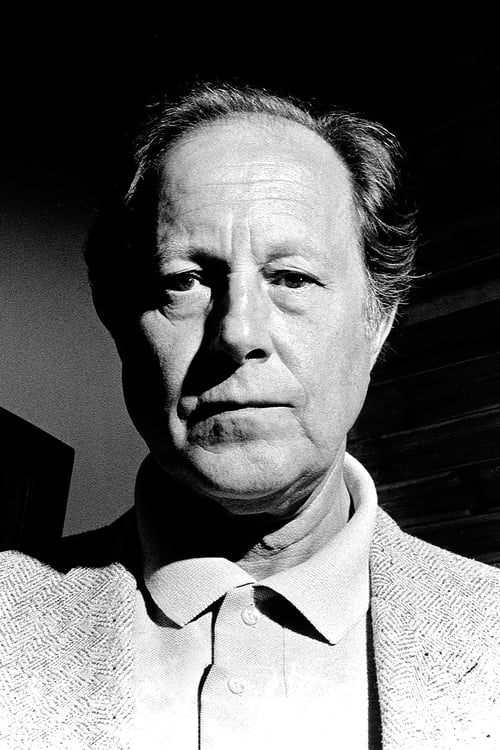
While Roeg’s first directorial effort, Performance (1970), co-directed with Donald Cammell, already showcased his daring style, it was his 1973 film Don't Look Now that marked his true breakthrough. Adapted from Daphne du Maurier’s short story, the film combines a chilling thriller with a haunting meditation on grief and perception. Its fragmented narrative structure and disorienting editing patterns were unlike anything mainstream British cinema had seen.
Don't Look Now established Roeg as a filmmaker unafraid to confront dark subject matter through a deeply personal lens. The movie’s use of color, especially the recurring motif of red, and its unsettling atmosphere became a blueprint for his subsequent work. Critics and cinephiles recognized the film’s innovative approach, which seamlessly blended psychological horror with poetic imagery.

Following this, The Man Who Fell to Earth (1976), starring David Bowie, further cemented Roeg’s reputation for crafting enigmatic narratives that resist easy interpretation. The film’s elliptical storytelling and exploration of alienation and consumerism resonate as prescient commentaries on modern society, even decades after its release.
Cinematographer quote“I was very glad later when I was directing that I wasn't in the hands of a cinematographer and hoping that he would do it well. I would know what he was doing, and we could discuss how that scene would look.”
Nicolas Roeg
Editing Rhythm and Narrative Shape
Roeg’s signature style lies in his radical approach to editing—a process he uses not just to tell a story but to evoke the fractured workings of human consciousness. His films often eschew linear chronology, instead weaving together moments from various points in time to create a mosaic of experience.
This method can be disorienting but is always purposeful. Editing in Roeg’s hands becomes a tool to explore memory, trauma, and desire as nonlinear, associative phenomena rather than straightforward events. Scenes are linked by visual motifs, sound bridges, and thematic parallels rather than mere plot progression.

- His use of jump cuts and spatial discontinuities disrupts conventional cinematic temporality.
- Sequences unfold through juxtaposition rather than causal logic, inviting active viewer interpretation.
- Roeg often employs close-ups and fragmented visuals to mimic subjective perception.
- Sound design complements editing with layers of diegetic and non-diegetic audio that deepen emotional resonance.
Films such as Bad Timing (1980) exemplify this editing philosophy, presenting an intense psychological drama through a non-linear narrative that mirrors the protagonist’s fractured psyche. Roeg’s manipulation of time and space invites audiences to piece together the story actively, making each viewing a new experience.
Worldview, Politics, and Subtext
Roeg’s films often probe beneath surface narratives to reveal unsettling truths about identity, mortality, and societal alienation. While not overtly political in the conventional sense, his work reflects a critical engagement with cultural anxieties and human vulnerability.
Walkabout (1971), for instance, contrasts the innocence of childhood with the harshness of modern civilization, using the Australian outback as a liminal space where traditional Western norms collapse. The film can be read as a critique of colonialism and a meditation on humanity’s estrangement from nature.
Similarly, Insignificance (1985) uses a fictionalized meeting between iconic 1950s figures to explore themes of celebrity, power, and scientific progress. Roeg’s fascination with myth and archetype permeates his work, underscoring a worldview that sees personal identity as fluid and often fragmented.
Underlying many of his films is a preoccupation with sexuality and desire, frequently portrayed as both a source of ecstasy and destruction. His treatment of these themes is complex, often challenging conventional morality without resorting to sensationalism.
Critical Reception and Reappraisal
Roeg’s career was marked by a sometimes polarized critical reception. While films like Don't Look Now garnered immediate acclaim, others such as Bad Timing faced controversy and divided opinions upon release. His refusal to conform to standard narrative norms meant his work was often misunderstood or underappreciated in its time.
Over the decades, however, Roeg has enjoyed significant critical reappraisal. Scholars and critics now recognize his contributions to the evolution of cinematic language and his pioneering role in psychological storytelling.
Retrospectives and academic studies have highlighted the enduring relevance of his themes and stylistic innovations.
- Initial responses to his films ranged from admiration for visual flair to frustration over narrative opacity.
- Later reassessments emphasize his influence on filmmakers exploring fragmented narratives.
- Key works have been restored and re-released, cementing their status as cult classics.
- His approach is seen as a bridge between British New Wave sensibilities and the more experimental cinema of the late 20th century.
Place in National Cinema and Film History
Within the context of British cinema, Nicolas Roeg occupies a singular place as one of the most visionary and formally inventive directors of his generation. Emerging alongside contemporaries who favored social realism, Roeg charted a more experimental course that expanded the possibilities of narrative and visual storytelling in the UK.
His work intersects with broader movements in international cinema, reflecting affinities with directors such as Michelangelo Antonioni and Andrei Tarkovsky in their exploration of alienation and temporal dislocation. At the same time, Roeg’s films retain a distinctively British sensibility, often grounded in psychological complexity and a subtle engagement with class and cultural identity.

Roeg’s legacy is evident in the work of filmmakers who followed, including figures in the British Invasion of the 1990s and beyond. His influence is felt not only in narrative structure but in the bold use of imagery to convey inner emotional states.
The Films That Best Represent Their Style

While Roeg’s oeuvre is diverse, certain films stand as definitive examples of his unique style and thematic concerns:
- Don't Look Now (1973): A masterclass in atmospheric tension, non-linear storytelling, and visual symbolism.
- The Man Who Fell to Earth (1976): An elliptical sci-fi meditation on alienation and human fragility.
- Walkabout (1971): A poetic exploration of cultural dislocation and the intersection of nature and modernity.
- Bad Timing (1980): A controversial and intense psychological drama that epitomizes Roeg’s narrative experimentation.
- Performance (1970): A boundary-pushing collaboration that melds crime thriller and psychedelic aesthetics.
These works showcase Roeg’s signature techniques—fragmented editing, evocative imagery, and thematic depth—making them essential viewing for understanding his impact on cinema.
Early Life and Formative Influences
Nicolas Roeg’s early life in London shaped his artistic sensibilities in profound ways. Beginning his career as a cinematographer during the post-war boom in British film, Roeg worked on visually ambitious projects that exposed him to diverse storytelling techniques.
This period was crucial in developing his eye for composition and editing rhythm.
His influences are wide-ranging and include figures such as Sergei Eisenstein, whose theories on montage likely informed Roeg’s own editing innovations. The psychological complexity found in the writings of psychoanalysts and the surrealist movement also permeated his worldview, encouraging a cinematic approach that privileges subjectivity and dream logic.

Interactions with contemporaneous directors and artists further shaped Roeg’s vision, situating him at the crossroads of British realism and European modernism.
Where It Leaves Us
Nicolas Roeg’s films remain vital touchstones for anyone interested in the evolution of cinematic language and the possibilities of storytelling beyond orthodox models. His work invites us to consider the fluidity of time, the elusiveness of memory, and the complexity of human experience through a kaleidoscopic lens.
Although his output slowed after the 1990s, Roeg’s influence endures, inspiring filmmakers who seek to push boundaries and explore narrative as an open-ended, dynamic process. His films challenge, provoke, and endure—reminding us that cinema’s power lies as much in how stories are told as in what stories are told.
For students and enthusiasts of film, Nicolas Roeg offers a gateway into a world where editing is not merely a technical craft but a profound form of artistic expression, where every cut and juxtaposition resonates with meaning beyond the frame.
Up for more film history and directors?
Related on Filmmaking Lifestyle
Read next: Aida Begic: A Visual Language Worth Studying, Alain Robbe Grillet: A Visual Language Worth Studying, and Ildiko Enyedi: A Visual Language Worth Studying.


New comments are not currently accepted.
Comments