
On this pageTap to expand
Stanley Kubrick remains one of the most singular and influential directors in cinema history, a filmmaker whose name alone conjures precision, innovation, and profound thematic inquiry. His career, spanning nearly five decades, reshaped the language of film and challenged audiences with dense visual storytelling and provocative subject matter.
Kubrick’s work is instantly recognizable not just for its technical mastery but for its unyielding interrogation of human nature and societal constructs.

Far from fitting comfortably into any single genre, Kubrick’s oeuvre ranges from war films to psychological horror, science fiction, and dark satire. Yet what unites these diverse projects is his rigorous attention to detail and a cerebral approach to narrative that often unsettles as much as it enlightens. From the haunting corridors of The Shining to the vast cosmic vistas of 2001: A Space Odyssey, Kubrick’s films boldly explore existential questions against visually arresting backdrops.
His reputation as a demanding perfectionist and a visionary auteur has grown steadily since his first feature work in the early 1950s. As a director, Kubrick’s legacy endures through films that not only pushed technical boundaries but also provoked discourse about violence, free will, and the human condition, ensuring his place in the pantheon of cinema’s greats.
Early Life and Formative Influences
Filmmaker quote“Perhaps it sounds ridiculous, but the best thing that young filmmakers should do is to get hold of a camera and make a movie of any kind at all.”
Stanley Kubrick
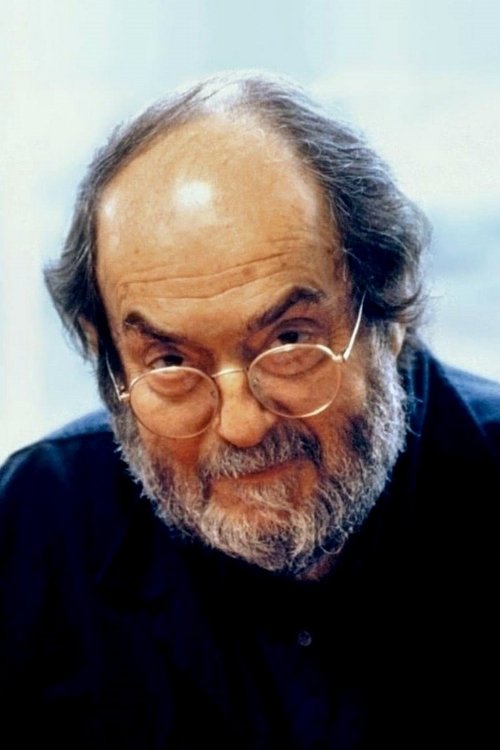

Born on July 26, 1928, in New York City, Stanley Kubrick’s early exposure to photography and the arts laid the foundation for his visual sensibility. As a teenager, he was a keen photographer for Look magazine, an experience that sharpened his eye for composition and detail. His transition from still photography to filmmaking was marked by an early fascination with storytelling through images.
Kubrick’s formative influences were eclectic, drawn from literature, painting, and other filmmakers whose work he deeply admired. These influences included the narrative realism of European cinema and the innovative techniques of directors like Sergei Eisenstein and Max Ophüls.
Thematically, Kubrick absorbed the existential and psychological concerns that permeated mid-20th-century art and literature.
- Early documentary shorts such as Day of the Fight (1951) and Flying Padre (1951) reflect his grounding in observational storytelling.
- His first narrative films, like Killer’s Kiss (1955) and The Killing (1956), already show a command of tension and narrative structure.
- Kubrick’s intellectual curiosity fueled his interest in exploring complex themes in later works.
Filmmaker quote“A film is – or should be – more like music than like fiction. It should be a progression of moods and feelings. The theme, what’s behind the emotion, the meaning, all that comes later.”
Stanley Kubrick
Themes That Keep Returning

Kubrick’s films repeatedly return to existential and psychological themes, probing the limits of human freedom, the nature of violence, and the fragility of civilization. His work is often concerned with how institutional forces shape or crush individual identity. Whether it is the mechanized brutality of war in Paths of Glory and Full Metal Jacket or the dystopian imposition of social control in A Clockwork Orange, Kubrick interrogates power structures with a clinical eye.

Technology and its impact on humanity loom large in his oeuvre, most famously in the ambiguous, awe-inspiring 2001: A Space Odyssey. Here, Kubrick explores the evolutionary trajectory of mankind alongside artificial intelligence, raising questions about consciousness and transcendence.
- Exploration of violence and its psychological consequences.
- The tension between free will and societal control.
- Human interaction with technology and the unknown.
- The fragility and absurdity of human existence.

Genre Patterns and Left Turns

While Kubrick’s career touches on multiple genres—war films, psychological horror, science fiction, historical epic—he consistently subverts conventional expectations within these categories. For instance, his war films resist glorification; Paths of Glory and Full Metal Jacket present war as bureaucratic madness and moral ambiguity rather than heroic adventure.
The Shining redefines the horror genre through a slow-burning, atmospheric dread rather than jump scares, while 2001: A Space Odyssey stands apart as a contemplative, experimental sci-fi film that prioritizes visual poetry over straightforward narrative.
His rare ventures into historical drama, such as Barry Lyndon and Spartacus, emphasize meticulous period detail with a detached, almost clinical perspective on human folly and ambition.
A Director’s Visual Grammar


Kubrick’s films are celebrated for their distinctive visual style, marked by symmetrical compositions, precise framing, and innovative camera techniques. His use of the Steadicam in The Shining transformed the way movement and space could be conveyed in cinema, creating a disorienting yet hypnotic atmosphere.
Color and lighting are carefully manipulated to evoke mood and psychological states. Kubrick’s collaborations with cinematographers like John Alcott resulted in painterly images, as seen in the candlelit scenes of Barry Lyndon that replicate 18th-century art.
Symbolism and recurring motifs—mirrors, labyrinths, and geometric shapes—serve as visual metaphors for the themes of isolation, madness, and the cyclical nature of history.
- Symmetrical and meticulously composed shots.
- Innovative camera movement and Steadicam use.
- Masterful control of lighting and color palettes.
- Symbolism embedded in visual motifs and set design.
The Films That Best Represent Their Style
A handful of Kubrick’s films crystallize his artistic vision and thematic preoccupations more than others. 2001: A Space Odyssey exemplifies his ambition to fuse art and science, creating a meditative experience that transcends genre. Its groundbreaking special effects and elliptical storytelling remain unparalleled.

A Clockwork Orange showcases Kubrick’s ability to shock and provoke, blending stylized violence with philosophical questions about free will and societal conditioning. Meanwhile, The Shining stands as a masterclass in psychological horror, with its claustrophobic setting and unnerving ambiguity.

Full Metal Jacket offers a brutally honest look at the dehumanizing effects of military training and war, combining stark realism with Kubrick’s signature visual rigor. These films collectively highlight his deft balance between intellectual inquiry and cinematic spectacle.
The Signature Film, Revisited
While opinions may vary on Kubrick’s definitive masterpiece, 2001: A Space Odyssey is widely regarded as his signature film. It redefined what cinema could accomplish, both technically and philosophically. Kubrick’s collaboration with Arthur C. Clarke resulted in a work that operates on multiple levels—scientific, spiritual, and artistic.
The film’s ambiguous narrative structure invites endless interpretation, from its portrayal of human evolution to its enigmatic final sequence. Its minimalist dialogue and reliance on classical music scores create an immersive sensory experience that challenges viewers to engage actively with its mysteries.
2001 encapsulates Kubrick’s obsession with the unknown and the eternal questions of existence, making it a touchstone for both cinephiles and scholars alike.
Constraints That Shaped the Work
Kubrick’s rigorous approach to filmmaking was shaped, in part, by constraints of time, technology, and production. Known for his painstaking attention to detail, he would often demand numerous takes to achieve the exact performance or shot he envisioned, which extended production schedules and budgets.
His early career was marked by working within the studio system’s limits, yet Kubrick gradually secured greater control, allowing him to innovate with new technologies such as the revolutionary special effects in 2001 or the candlelight cinematography in Barry Lyndon.
Despite these challenges, Kubrick embraced constraints as opportunities to push cinematic boundaries, often inventing new techniques or rethinking storytelling conventions to realize his vision.
How They Handle Performance
Kubrick was famously exacting with actors, eliciting performances ranging from chilling to tragic, often through repetition and psychological pressure. He was less interested in naturalistic acting than in achieving a specific emotional or tonal effect that served the film’s thematic core.
His direction could be demanding, sometimes leading to tension on set, but it produced some of cinema’s most memorable and unsettling performances. Jack Nicholson’s descent into madness in The Shining and Malcolm McDowell’s charismatic menace in A Clockwork Orange are prime examples of Kubrick’s ability to harness complex, volatile characters.
Kubrick’s use of actors was always in service of his larger vision, blending performance with the film’s visual and narrative rhythms to create a holistic aesthetic experience.
Wrapping Up
Stanley Kubrick’s enduring influence on cinema is a testament to his relentless pursuit of artistic perfection and his fearless engagement with difficult subjects. His films continue to spark debate, inspire filmmakers, and captivate audiences with their complexity and visual splendor.
Through a career that spanned nearly half a century, Kubrick demonstrated that film could be both an intellectual and a sensory experience, a medium capable of probing the deepest questions about humanity. His legacy is not only in the films themselves but in the very way we think about what cinema can achieve.
For students and cinephiles alike, studying Kubrick’s work is an invitation to explore the intersection of craft and philosophy, image and meaning—a journey into the heart of cinema as art.
Ready for another director deep dive?


New comments are not currently accepted.
Comments