
On this pageTap to expand
Women remain a minority of directors on top-grossing Hollywood films. In 2025, women accounted for 13% of directors on the 250 highest-grossing films and 10% on the top 100, according to San Diego State University’s Celluloid Ceiling report.
The question is: Why?
Female directors are an increasing minority in the film industry.
While there is a small number of female directors who have been able to make it big in Hollywood, such as Ava DuVernay and Kathryn Bigelow, many more struggle to get their films made or find funding for them.
The result is that women’s voices do not often reach the public through film.
There is still a long way to go before achieving gender parity in Hollywood, but with more female directors coming onto the scene we can hope that someday this will be an outdated conversation.

Female Film DIRECTORS
What Are Female Film Directors
A female director is a woman who directs films.
Female directors are not as well known or celebrated as their male counterparts, but they have produced many important and acclaimed films.
Filmmaker quote“The questions I want to ask will revolve around humans, connection, relationships, family, and stories – what are the stories we tell ourselves and each other?”
Lulu Wang

Female Directors Today
Filmmaker quote“Cinema is not only about making people dream. It’s about changing things and making people think.”
Nadine Labaki


Female directors have been playing a huge role in the film industry, and they are making some of the best films. The world of filmmaking has seen more than its fair share of gender inequality over the years.
In fact, women accounted for 4.3% of directors across 1,100 top-grossing films from 2007 to 2017, according to the USC Annenberg Inclusion Initiative. That study is separate from San Diego State’s Celluloid Ceiling, which found women were 11% of directors on the top 250 domestic-grossing films in 2017, up from 7% in 2016.
Best Female Directors List
There are many amazing talents on this list, including Jodie Foster, Kathryn Bigelow, Sofia Coppola, and Agnès Varda.
These women have proven that they can be just as successful as any man in their industry!
This list of the best female directors is my personal favorite. I am a big fan of independent films and these are some of the most well-known indie female directors. Some you may not know about, but they’re worth checking out!
I hope this list helps you find your new favorite director or at least someone to add to your Netflix watchlist!
Do you know of any female directors? There are many great ones!
The film list below runs from 1953 to 2019. It includes directors of color, among them Julie Dash, Ava DuVernay, Mati Diop, and Lulu Wang.
-Mia Hansen
-Ava DuVernay
-Kathryn Bigelow
-Claire Denis
Best Female Directors
It covers a wide range of genres including comedy, horror, and drama. The list includes some well-known female directors like Sofia Coppola, known for The Virgin Suicides, Lost in Translation, Marie Antoinette, and The Bling Ring.
Angela Robinson’s Professor Marston & the Wonder Women is a queer romance. Herbie: Fully Loaded, which she also directed, is a family racing comedy.
Female directors are finally getting their due in Hollywood. After years of being underrepresented and overlooked, women filmmakers have made a significant impact on the film industry.
In 2010, Kathryn Bigelow became the first woman to win an Academy Award for Best Director, for The Hurt Locker. Ava DuVernay’s Selma (2014) was a breakthrough, not her debut: she had already directed I Will Follow (2010) and Middle of Nowhere (2012).
With the success of these two directors, more women have directed major films, though parity is still a long way off.
San Diego State’s long-running count shows the share of women directors on the top 250 films rose from 9% in 1998 to 13% in 2025.
One reason for this phenomenon could be because Hollywood is becoming less male-dominated with time.
Here are the names you should know:
-Amma Asante (Belle);
-Alice Rohrwacher (The Wonders);
-Liz Garbus (What Happened, Miss Simone?);
-Maggie Betts (Novitiate).
Best Female Directed Movies
We’ll explore what they’re about, why you should watch them, and if there’s anything similar out there. Without further ado…
The full list
| Film | Year |
|---|---|
| The Hitch-Hiker | 1953 |
| Cléo from 5 to 7 | 1962 |
| Jeanne Dielman, 23 Quai du Commerce, 1080 Bruxelles | 1975 |
| Seven Beauties | 1975 |
| Daughters of the Dust | 1991 |
| Jane Campion’s The Piano | 1993 |
| Beau Travail | 1999 |
| Lost in Translation | 2003 |
| The Hurt Locker | 2008 |
| Fish Tank | 2009 |
| Winter’s Bone | 2010 |
| We Need to Talk About Kevin | 2011 |
| Selma | 2014 |
| The Diary of a Teenage Girl | 2015 |
| Toni Erdmann | 2016 |
| Lady Bird | 2017 |
| Capernaum | 2018 |
| Atlantique | 2019 |
| The Farewell | 2019 |
| Portrait of a Lady on Fire | 2019 |
The Hitch-Hiker (1953)
The Hitch-Hiker is a 1953 suspense thriller directed by Ida Lupino and written by Lupino and Collier Young, from a story by Daniel Mainwaring.
The Library of Congress notes that the budget was little more than $100,000. Edmond O’Brien and Frank Lovejoy play two vacationers; William Talman plays the hitch-hiker who terrorizes them.
The hitch-hiker has been a popular trope in horror films for decades. This film predates Alfred Hitchcock’s Psycho (1960). Charles Starkweather’s murderous spree began in late 1957.
In the 1950s, before there was a freeway system in the United States, you could find hitchhikers all over America. It was common to see people with their thumbs out along highways or on busy city streets.

Cléo from 5 to 7 (1962)
In the early 1960s, French director Agnès Varda set out to explore what it means to be a woman. Cléo from 5 to 7 (1962) is not her first feature — that was La Pointe Courte (1955) — but it is widely hailed as one of the most groundbreaking movies of its era.
The movie follows Cléo (Corinne Marchand), a young Parisian singer, in near real time from about 5 p.m. to 6:30 p.m. on June 21. She is waiting for biopsy results that may confirm stomach cancer, not living out a repeated daily routine from dawn to bedtime.

Jeanne Dielman, 23 Quai du Commerce, 1080 Bruxelles (1975)
The film Jeanne Dielman, 23 Quai du Commerce, 1080 Bruxelles (1975), directed by Chantal Akerman, is a masterpiece of feminist filmmaking. Over three days it follows a widow (Delphine Seyrig) who lives with her teenage son.
She cooks, cleans, and runs errands. In the afternoons, while her son is out, she receives male clients at home for sex. The film is quiet and routine-bound, but it is not without dialogue, and the routine breaks: on the third day she kills a client.

The Criterion Collection
- Shrink-wrapped
Shrink-wrapped
View on AmazonSeven Beauties (1975)
Seven Beauties is a 1975 Italian language film written and directed by Lina Wertmüller and starring Giancarlo Giannini, Fernando Rey, and Shirley Stoler.
Set during World War II, the film tells the story of an Italian everyman who is willing to do anything to survive after he is arrested for desertion and sent to a German prison camp.
Seven Beauties received four Academy Award nominations at the 1977 ceremony: Best Actor (Giannini), Best Director (Wertmüller), Best Original Screenplay, and Best Foreign Language Film. It was not nominated for Best Picture. Wertmüller was the first woman nominated for Best Director.

Pasqualino (Giancarlo Giannini) is a Neapolitan who will do almost anything to survive the war, including desertion and, in a concentration camp, seducing the commandant.

Daughters of the Dust (1991)
Daughters of the Dust, directed by Julie Dash, is a story that will speak to your heart and leave you in awe at its end. It was the first feature by an African-American woman to receive a general theatrical release in the United States.

Set in 1902, it follows the Gullah Peazant family at Ibo Landing in the Sea Islands as many of them prepare to leave for the mainland. Matriarch Nana Peazant wants the family to carry its West African traditions with them. The film is narrated in part by an unborn child. Queen Quet, a contemporary Gullah/Geechee leader, is not a character in the story.

Jane Campion’s The Piano (1993)
In 1993, Jane Campion directed The Piano. Ada (Holly Hunter) is a Scottish woman who has been mute since childhood and speaks through her piano and through her daughter Flora (Anna Paquin). She travels to colonial New Zealand for an arranged marriage to Alisdair Stewart (Sam Neill).
Stewart leaves the piano on the beach. Neighbor George Baines (Harvey Keitel) acquires it, and Ada bargains with him to play again. The film is a romance, not a story about arthritis or a husband abandoning them in Scotland. Campion was the first woman to win the Palme d’Or, for this film.

Beau Travail (1999)

Beau Travail (1999) is a French film directed by Claire Denis and loosely adapted from Herman Melville’s Billy Budd. In Djibouti, Foreign Legion sergeant Galoup (Denis Lavant) becomes obsessed with a new recruit, Sentain (Grégoire Colin).
There is little dialogue. The men train in the desert in peacetime, not in a war story about three soldiers on a six-month outpost. Parts of the soundtrack come from Benjamin Britten’s opera Billy Budd; the original score is by Eran Tzur, not Georges Delerue. The title means “good work.” It did not win Best Director or Best Actor at Cannes. Agnès Godard won the César for cinematography.

Artificial Eye
- Beau Travail (1999) ( Beau travail ) ( Good Work )
- Beau Travail (1999)
- Beau travail
- Good Work
Beau Travail (1999) ( Beau travail ) ( Good Work ) Beau Travail (1999)
View on AmazonLost in Translation (2003)
Lost in Translation is a 2003 American romantic drama film written and directed by Sofia Coppola.
Bill Murray plays Bob Harris, an aging actor in Tokyo to shoot a whiskey commercial. At the Park Hyatt he meets Charlotte (Scarlett Johansson), a young wife whose photographer husband is working in Japan. Bob is not searching for a former lover, and the film is not built on voice-over or a cast of non-professional actors.
The movie explores loneliness and disorientation in an unfamiliar city, felt by both Bob and Charlotte.

The Hurt Locker (2008)

The Hurt Locker is a 2008 American war film directed by Kathryn Bigelow. It tells the story of Staff Sergeant William James, an Army Explosive Ordnance Disposal (EOD) bomb technician who was part of a U.S. military Joint Task Force in Baghdad during the Iraq War and his struggles to save himself and others from the constant threat posed by improvised explosive devices (IEDs).
The Hurt Locker (2008) was an intense, heart-pumping movie about a three-man bomb disposal team fighting for their lives in Baghdad.
Directed by Kathryn Bigelow and written by Mark Boal, this underrated thriller is the perfect antidote to a boring Sunday afternoon.
Kathryn Bigelow became the first woman in history to win an Oscar for Best Director. Her film The Hurt Locker is a gripping account of a three-man bomb squad during the Iraq War.
The movie follows Staff Sergeant William James (Jeremy Renner) and the other members of his bomb squad, Sergeant Sanborn (Anthony Mackie) and Specialist Eldridge (Brian Geraghty).
The film’s intense action sequences are matched by its contemplative moments exploring how war changes people and their relationships. Bigelow won the Oscar for Best Director in 2010.
His team has to go into high-risk situations and disarm bombs while being exposed to extreme levels of stress. This movie gives viewers a glimpse into what it feels like for those living under this type of pressure and how they are able to cope with it.
Fish Tank (2009)
Fish Tank is a 2009 independent film written and directed by Andrea Arnold. Fifteen-year-old Mia (Katie Jarvis) lives on an East London council estate with her mother Joanne (Kierston Wareing) and younger sister Tyler. Her mother is alive. The relationship that upends the household is with Joanne’s boyfriend Connor (Michael Fassbender), not a friend named Lily.
Fish Tank won the Jury Prize at the 2009 Cannes Film Festival and the 2010 BAFTA for Outstanding British Film. Arnold was not among that year’s BAFTA Best Director nominees.

Winter’s Bone (2010)
The film was directed by Debra Granik and stars Jennifer Lawrence as Ree Dolly and John Hawkes as her uncle, Teardrop.
Ree is 17 and lives in the Missouri Ozarks. Her father has skipped bail and put the family house up as his bond. She has to find him, or the family loses the house. Her mother is alive but withdrawn. The film is based on Daniel Woodrell’s novel.
At the 2011 Oscars, Winter’s Bone was nominated for Best Picture, Best Actress (Lawrence), Best Supporting Actor (Hawkes), and Best Adapted Screenplay. It won none of them. Natalie Portman won Best Actress that year for Black Swan.
Winter’s Bone is a 2010 film that tells the story of 17-year-old Ree Dolly, who takes on her family responsibilities in order to ensure her younger siblings do not go hungry.
The movie was directed by Debra Granik and stars Jennifer Lawrence as Ree. It is based on Daniel Woodrell’s novel of the same name.
In this movie, the audience is introduced to a young girl named Ree who has just learned that her father has skipped bail and left for parts unknown.
She searches for him so the family will not lose the house. This film was directed by Debra Granik with Jennifer Lawrence starring Ree Dolly.
Ree searches through an Ozark winter, short on food and wary of the people who know where her father went. She still has the family house while she looks.
Not only does she have physical obstacles but also mental ones like hunger and fear, making it increasingly difficult for her not just physically but also emotionally.

We Need to Talk About Kevin (2011)
“We Need to Talk About Kevin” is a 2011 film directed by Lynne Ramsay. Based on the novel of the same name by Lionel Shriver, tells the story of Eva Khatchadourian, a mother who struggles with her son Kevin’s disturbing acts when he grows up.
It stars Tilda Swinton as Eva and Ezra Miller as Kevin. The movie explores themes such as how difficult raising children can be for parents and also how we value our own lives over other people’s lives. In addition, it discusses what responsibility adults have to their children if they know that their child will grow up to be dangerous or violent.
This is a movie about how the actions of one person, Kevin, can have an impact on others.
It follows through with his journey from childhood to adulthood and examines how people around him were affected by his decisions.
It’s been a few years since the release of “We Need to Talk About Kevin,” an indie film starring Tilda Swinton.
The movie was based on Lionel Shriver’s 2003 novel, and it is often cited as one of the most disturbing films in recent memory.
I’ve seen it twice now, and I think that anyone who hasn’t watched it ought to consider doing so.
It can be difficult to watch at times. Kevin, played by Ezra Miller, is Eva’s son, Kevin Khatchadourian, not a person named Kevin Karras.
This week we are going to explore a film that is not for the faint of heart.
We Need to Talk About Kevin (2011) is an adaptation of Lionel Shriver’s novel, which follows a mother and her relationship with her son who commits mass murder.
The story starts when Eva Khatchadourian sees herself on television being interviewed about the school shooting her son committed.
Eva tries to imagine what could have led up to this event by looking through old photo albums, journals she wrote during the pregnancy, and home videos she made when he was younger.
Selma (2014)
Selma is a 2014 American historical drama film directed by Ava DuVernay and written by Paul Webb.
The film dramatizes the 1965 Selma to Montgomery voting rights marches led by Martin Luther King Jr., James Bevel, Hosea Williams, John Lewis, Diane Nash, Ralph Abernathy, and others. Mickey Schwerner was murdered in Mississippi in 1964 and was not a leader of these marches.
Selma depicts Dr. Martin Luther King Jr.’s campaign to secure equal voting rights via an epic march from Selma to Montgomery, Alabama in 1965.
Along the way, they are met with violence and threats of death as well as people who join them along their journey for equality including white supporters.

The Diary of a Teenage Girl (2015)
The Diary of a Teenage Girl (2015) is an American coming-of-age film directed by Marielle Heller and based on Phoebe Gloeckner’s 2002 graphic novel.
Bel Powley plays 15-year-old Minnie Goetze. Kristen Wiig plays her mother, Charlotte, not Minnie. In 1976 San Francisco, Minnie begins a sexual relationship with her mother’s boyfriend, Monroe (Alexander Skarsgård). The story is told in part through Minnie’s diary and animated drawings. It is adapted from Gloeckner’s semi-autobiographical graphic novel, not from a stack of unedited diaries.

Toni Erdmann (2016)
Toni Erdmann is a 2016 German comedy-drama written and directed by Maren Ade. A father tries to reconnect with his daughter by inventing a persona, Toni Erdmann, complete with false teeth and a wig. That persona is not the daughter’s alter ego and not a character from one of her favorite movies.
Ines (Sandra Hüller) is a workaholic business consultant in Bucharest. Her father is Winfried Conradi (Peter Simonischek), not Winifred.
The film was nominated for the Golden Globe for Best Foreign Language Film and lost to Elle. It received one Academy Award nomination, for Best Foreign Language Film, and lost to The Salesman. It was not nominated for five Oscars or for Best Screenplay.
This movie has been met with critical acclaim from both critics and audiences alike, so it’s worth checking out.
Audiences who enjoy foreign films will appreciate the comedic nature of Toni Erdmann.
The film follows a divorced father, played by Peter Simonischek, who attempts to reconnect with his daughter (played by Sandra Hüller) through increasingly bizarre pranks and stunts.

Lady Bird (2017)

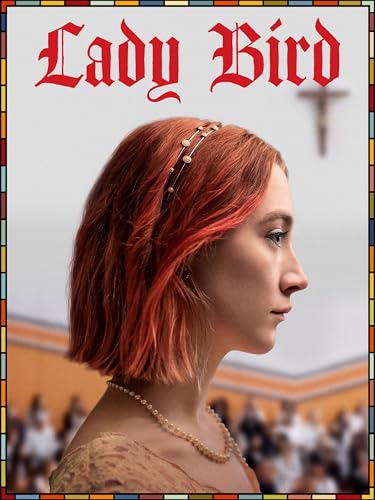
Lady Bird is a movie about a young girl’s coming-of-age journey during the turbulent time of her senior year in high school.
This film was written and directed by Greta Gerwig. She does not play Marion. Saoirse Ronan plays Christine “Lady Bird” McPherson, and Laurie Metcalf plays her mother.
Lady Bird has to deal with family drama, difficult friendships, and boys as she tries to make sense of this crazy world we live in.
The central themes are love and loss which are ever-present throughout the entire narrative. The film ends on an optimistic note that leaves you feeling slightly hopeful for Ladybird’s future.
Lady Bird is a coming-of-age story about 17-year-old Christine Lady Bird McPherson.
It’s filmed in Sacramento, California, and directed by Greta Gerwig. Lady Bird follows her experiences as an outcast at school, her relationship with her mother Marion (Laurie Metcalf), and how she navigates the world outside of Sacramento after graduating from high school.
The movie is set in Sacramento in 2002. It can be enjoyed as a coming-of-age story about a girl who wants to leave that city for the East Coast.
Capernaum (2018)
The film Capernaum, directed by Nadine Labaki, tells the story of a boy named Zain (Zain Al Rafeea) who lives in poverty in Beirut. He sues his parents for bringing him into the world without caring for him. His parents are not detained at work, and no older woman pays him to abandon them.
The film Capernaum is a Lebanese drama that tells the story of Zain, a 12-year-old boy who sues his parents for bringing him into this world and not caring about their children’s future.
The film was nominated for the Golden Globe Award for Best Foreign Language Film in 2019, but it lost to Roma.
The movie does an excellent job of showing how poverty affects people from childhood to adulthood.
It also gives insight into what life is like in Lebanon as well as illustrating the struggles of refugees living there.
One of the most compelling movies of 2018 is director Nadine Labaki’s Capernaum. The film takes place in a Lebanese slum and follows Zain, a 12-year-old boy who has been born into poverty.

Atlantique (2019)
Atlantics (French title Atlantique) is a 2019 film written and directed by Mati Diop. It is a French-Senegalese-Belgian production set in Dakar, not an American family drama, and Mélanie Laurent is not in it.
Ada (Mame Bineta Sane), 17, loves construction worker Souleiman, but she is promised to another man. Souleiman and his coworkers, unpaid for their work on a tower, leave by sea. They return as spirits. The film won the Grand Prix at Cannes in 2019.

The Farewell (2019)

The Farewell was written and directed by Lulu Wang, drawing on her own family. Billi (Awkwafina), a Chinese-American woman in New York, learns that her grandmother Nai Nai (Zhao Shuzhen) has terminal cancer. The family hides the diagnosis from Nai Nai and gathers in China around a fake wedding.
It also stars Tzi Ma and Diana Lin. There is no character named Henry Chang, and Billi is not the one who is dying.
Portrait of a Lady on Fire (2019)
Portrait of a Lady on Fire is a 2019 French film written and directed by Céline Sciamma. It is not a Daphne du Maurier novel, and it is not about Alzheimer’s disease or Le Petit Prince.
In Brittany in 1770, painter Marianne (Noémie Merlant) is hired to paint a wedding portrait of Héloïse (Adèle Haenel), who refuses to pose. Marianne pretends to be her companion and paints in secret. The two women fall in love. Sciamma won the Best Screenplay award at Cannes in 2019.

The Criterion Collection
- Portrait of a Young Woman in Flames (The Criterion Collection) [Blu-ray]
- PHYSICAL FILM
- The Criterion Collection
Portrait of a Young Woman in Flames (The Criterion Collection) [Blu-ray] PHYSICAL FILM
View on AmazonFemale Comedy Directors
Female comedy directors are an under-represented minority in Hollywood. Bridesmaids (Paul Feig) and Trainwreck (Judd Apatow) are female-led comedies directed by men. Rough Night (2017), directed by Lucia Aniello, is an example of a woman directing a studio comedy.
Women directors are still underrepresented. In 2025 they were 13% of directors on the top 250 grossing films.
This is not a trend that’s going away anytime soon, so it’s time to start taking female comedy directors seriously.
The world would be a better place if women were able to take on more roles as creators and leaders, but this isn’t happening in film production or any other industry for that matter.
There are many talented female comedians out there who can make you laugh your head off, but we need these ladies behind the camera too!
The next generation needs role models to look up to because most little girls don’t see themselves reflected anywhere in the media landscape today.
In the past, people have always automatically assumed that men are better directors for comedies.
This is not true anymore! Female comedy directors are just as talented- if not more so- than their male counterparts.
They can make a movie just as funny and unique to them, while also being mindful of staying within budget constraints.
Directors who have made well-known comedies include Elaine May (A New Leaf), Nora Ephron (Sleepless in Seattle), Penny Marshall (Big), and Lucia Aniello (Rough Night).
Girls Trip (2017) was directed by Malcolm D. Lee, not by a woman. Rough Night was directed by Lucia Aniello.
May, Ephron, Marshall, and Aniello are the directors in this section who show women making comedies. Girls Trip does not.
Who Is The Most Famous Female Director?
There is no single most famous woman director. Sofia Coppola is among the best-known American directors working today, and women are still less likely to be hired to direct top-grossing films.
Lillian Gish, born in 1893, was a leading actress, not a career director. She directed one feature, Remodeling Her Husband (1920). Broken Blossoms (1919) was directed by D. W. Griffith, with Gish in the cast. She died in 1993. Alice Guy-Blaché, who began directing in 1896, is widely credited as the first woman to direct a film. The Academy of Motion Picture Arts and Sciences was founded in 1927, not 1922, and Gish was not a founding board member.
Kathryn Bigelow is the first woman to win the Academy Award for Best Director.
Bigelow has already won an Academy Award for her work as a director of The Hurt Locker in 2010 – the first woman to do so.
She also directed Zero Dark Thirty, which was nominated for five Oscars in 2013, including Best Picture.
Bigelow’s other films include Strange Days, Point Break, and Near Dark. She has been described by some film critics as the most influential woman working in Hollywood today.”
There are many female directors who have had a profound impact on the film industry.
Some of these women are known for their work in Hollywood, while others have found success directing films in other countries like Iran and China.
Ready to learn about more Film History & Film Movements?
Understand cinema on a deeper level with these Film Theory guides.

Let's Get Lost: The Essential Breakdown

The Old Dark House: Context, Themes, and Style

Night and Fog: Themes, Mood, and Visual Language

Runaway Train: Key Ideas and Lasting Influence

Even the Wind Is Afraid: A Deep Dive Into Story and Style

Introducing The Big Combo: Why It Still Matters

A Fistful of Dollars: What to Notice on a Rewatch

Anima: A Guide to Watching It Like a Critic

Raging Bull: The Meaning Behind the Moments


New comments are not currently accepted.
12 comments