On this pageTap to expand
One of the things that makes martial arts movies so fun to watch is the choreographed fight scenes. If you have ever taken a martial arts class, you know what we are talking about.
No matter what style of martial arts you practice – karate, tae kwon do, judo, muay thai, MMA, et al – there is something about seeing a great fight scene that gets you excited.
In this article we are going to take a look at the best martial arts fight scenes.
We tried to be as diverse as possible in terms of both the genre, and the martial arts styles displayed in each scene. Enjoy!

Best Martial Arts Fight Scenes

The best martial arts fight scenes are ones that are short and sweet. They are short enough that they don’t outstay their welcome but long enough that they make an impact on the audience.
They are also the scenes that use martial arts in the most interesting and exciting ways.
Let’s bite down on the mouthguard and dive right into our list of the best martial arts fight scenes of all time.
Fist of Fury (1972)
Fist of Fury (Chinese: 精武門; pinyin: Jīngwǔ Mén) is a 1972 Hong Kong martial arts film directed by Lo Wei. It is Bruce Lee’s second major film after The Big Boss, not a remake of it. Lee and Nora Miao star, with James Tien as a Jingwu student. Golden Harvest released it in Hong Kong on 22 March 1972. In the United States the English titles were swapped with The Big Boss, so this film played as “The Chinese Connection” and The Big Boss played as Fists of Fury.
Lee plays Chen Zhen, a student of Huo Yuanjia. He returns to Shanghai’s Jingwu School expecting to marry and instead finds his master dead. A Japanese dojo in Hongkou insults the school, and Chen takes the fight to them — the nunchaku dojo sequence is the one this list is here for — after he learns Huo was poisoned. The real Ip Man, Lee’s Wing Chun teacher, was not killed by a rival student. He died of throat cancer in Hong Kong on 2 December 1972.
What the dojo scene still has is clarity. Chen walks into a room that has already called the Jingwu students weak, and Lee’s nunchaku work is the answer. There’s no speech doing the job for him. The sequence is short – mean, even – and built so you can see every hit. Later English-language posters scrambled the name. They didn’t scramble the fight.
Police Story (1984)
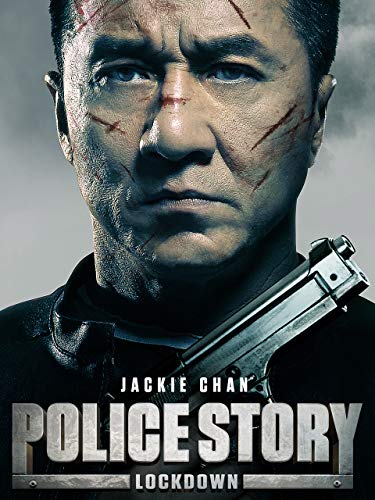
Hong Kong police officer Chan Ka-Kui (Chan) finds himself fighting the criminal element when the police department switches him from traffic duty to undercover work. At first, Chan resents the new assignment but soon realizes that he has a knack for it.
But even as he wins the admiration of his fellow officers, he finds out that his new partner is stealing money from the criminals they have arrested together.
When Chan refuses to go along with his corruption, his partner attempts to have him killed. In Police Story , Jackie plays an honest cop who’s teamed up with an ex-con (Biao).
It’s a buddy picture with a twist in that their relationship gets off to an adversarial start.The film was directed by Jackie and was shot in Hong Kong and Thailand.
Kill Zone (2005)
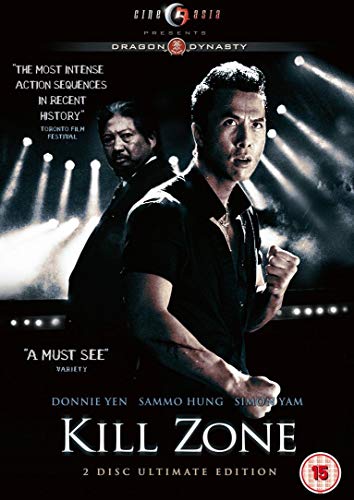
Kill Zone, also known as SPL: Sha Po Lang, is a 2005 Hong Kong crime film directed by Wilson Yip. Simon Yam plays Inspector Chan Kwok-chung, who’s dying of a brain tumor and is willing to bend the rules to jail triad boss Wong Po (Sammo Hung). Donnie Yen is Ma Kwun, the officer assigned to replace Chan. Wu Jing plays Jack, Wong’s assassin.
It isn’t a thriller about a detective hired to kill a lawyer, and it doesn’t stash a second movie inside the first. Chan knows he’s running out of time. Ma is the officer who will inherit the case. Wong is the man both of them want. The story is a straight line toward a fight, which is the right shape for a list like this. You aren’t waiting on a twist to tell you what you just watched.
Two fights carry it. In a back alley, Ma’s baton meets Jack’s knife. The space is tight, the weapons aren’t the same length, and you can follow whose hand is ahead without a cut that cheats the exchange. After that, Ma and Wong finish it in the office. There’s no crowd, and there’s no speech that softens the last minute. Yen’s speed against Hung’s weight is the whole argument. You don’t leave remembering a puzzle. You leave remembering who was still standing.

What Are Martial Arts Fight Scenes?
Martial arts films have been popular for decades. The films, which feature hand-to-hand combat, have been a staple of movie theaters since the 1970s.
Martial arts films usually tell the story of an underdog martial artist who seeks revenge or is trying to save someone in need.
While martial arts films are typically filled with fighting scenes, they also include cultural aspects of various Asian countries.
It might seem reductive, but more often than not, martial arts movies are defined by their fight scenes.
When they’re good — and they can be very, very good — the fights in these movies do things that no other genre can touch.
The Raid (2011)
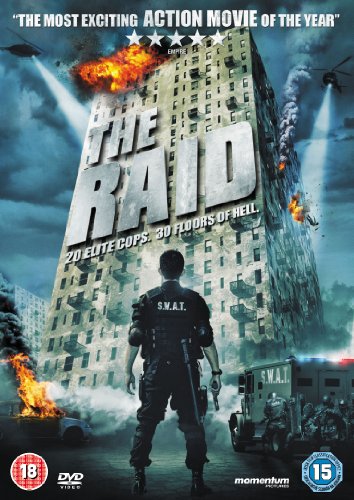
The Raid (Indonesian: Serbuan Maut; released in the United States as The Raid: Redemption) is a 2011 Indonesian action film written and directed by Gareth Evans and produced by Ario Sagantoro. Iko Uwais stars as Rama, a rookie on an elite squad sent into a Jakarta apartment block to capture a drug lord. Donnie Yen isn’t in it, and it isn’t shot like Cloverfield.
Once the building locks down, the film barely leaves the stairwells. There’s no cutaway to a command center that explains the plan, and there’s no subplot that pauses the climb. The corridor battles are the movie: narrow, repeated, and harder on each floor. Rama’s bout with Mad Dog (Yayan Ruhian) is the one people still quote, because it drops the guns and lets two fighters settle a floor by hand. That’s why it turns up on lists of the best action movies. Evans made it for about $1.1 million, which is part of the shock. It doesn’t look like a film that had to save its one good fight for the last reel. The whole building is the set piece.

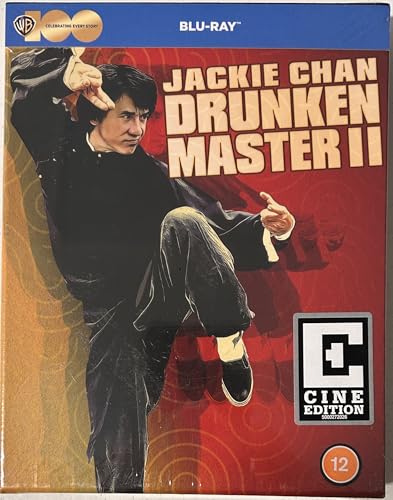
Drunken Master II (1994)
Drunken Master II (醉拳二) is a 1994 Hong Kong action comedy directed by Lau Kar-leung and starring Jackie Chan as Wong Fei-hung, with Anita Mui, Ti Lung, and Lau himself in the main supporting roles. It’s a sequel to Drunken Master (1978). Drunken Master III, released the same year with Andy Lau, is a different film, and The Legend of Drunken Master isn’t a 2011 follow-up. That’s the title Miramax used when this film opened in North America on 20 October 2000.
Wong Fei-hung is caught between his father and British agents who are smuggling Chinese artifacts out of the country. The fight that earns the place here is the steel-foundry finale against Ken Lo. Chan’s drunken boxing, late in a film that has already spent him, is the joke and the weapon at once. He sways, he misses, and then he doesn’t. The foundry gives him heat, chains, and a floor that won’t stay polite. That 2000 North American run grossed $11,555,430. The foundry is the scene the film is remembered for – not a treasure hunt, and not a pair of statues standing in for good and evil.
Warner Archive
- The disk has English audio and subtitles.
The disk has English audio and subtitles.
View on AmazonFist of Legend (1994)
Fist of Legend is a 1994 Hong Kong martial arts film directed by Gordon Chan, with fights choreographed by Yuen Woo-ping. Jet Li stars as Chen Zhen, not as Huo Yuanjia. It’s a loose remake of Bruce Lee’s Fist of Fury. The Chinese title, 精武英雄, means Jingwu Hero.
Chen is studying in Kyoto when he learns that his master, Huo Yuanjia, has died after a match. He returns to Japanese-occupied Shanghai, shows that Huo was poisoned, and the story builds to his duel with General Fujita. Li’s Chen is cooler than Lee’s, and Woo-ping’s choreography is why the remake still gets named beside the original. The fights are cleaner, longer, and more willing to let an opponent look skilled before he loses. Legend of Fong Sai-yuk (1993) is a separate Jet Li film, not a 2006 prequel to this one. The film’s own last duel is the finish, and it’s the scene you’ll rewind.

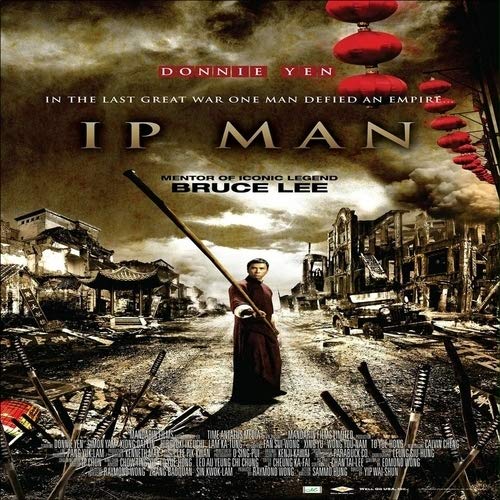
Ip Man (2008)
Ip Man is a 2008 Hong Kong biographical martial arts film directed by Wilson Yip and starring Donnie Yen as Wing Chun grandmaster Ip Man, later a teacher of Bruce Lee. Sammo Hung designed the fights, with Tony Leung Siu-hung. Raymond Wong produced it; he didn’t play the lead, and Yuen Woo-ping didn’t choreograph this one.
The film stays in Foshan during the Sino-Japanese War. It doesn’t move him to Hong Kong in the 1930s, and it doesn’t send him to Guangzhou in the 1950s. What it gives you is the cotton-mill brawl – one man against a crowd that has his neighbors’ work in its hands – and the dojo duel with a Japanese officer. The mill fight is the crowd scene. The dojo fight is the formal one. Hong Kong, and a young Bruce Lee, are the story of Ip Man 2. This film’s fights are the Foshan ones.
Redeemer (2014)
Redeemer is a 2014 Chilean martial arts film directed by Ernesto Díaz Espinoza and starring Marko Zaror as a former cartel hitman who goes after the gangs he used to serve. Noah Segan plays a drug lord who crosses his path. It isn’t a Nicolas Cage movie, and it isn’t the American thriller that this title sometimes gets confused with. It premiered at Fantastic Fest in September 2014 and had a limited U.S. release on 12 June 2015.
Zaror’s close-quarters fights — working through a criminal crew, then a rival assassin — are the reason it’s here. The rooms don’t open into a wide showcase, and the camera stays near the shoulders. There’s no wirework asking you to forgive a miss. If you’re coming for a star vehicle, this isn’t it. If you’re coming for a fighter who looks like the hits cost him something, it is. The crew fight is the one that shows the job. The assassin fight is the one that shows the price.
Ong Bak: Muay Thai Warrior (2003)
Ong-Bak: The Thai Warrior is a 2003 Thai film directed by Prachya Pinkaew, with action choreography by Panna Rittikrai. Tony Jaa plays Ting, a village fighter who’s already trained in Muay Thai. He volunteers to go to Bangkok and recover the stolen head of the Buddha statue Ong-Bak. He doesn’t learn the art in a month, and the amulet doesn’t give him magical powers. That version of the story is a different movie than the one Jaa actually made.
The underground bout, the street chase, and the temple finish are all practical stunts. Jaa’s knees and elbows are the selling point, and the film lets you see the landings. There’s a reason people who don’t care about the statue still rewind the chase: the city is the obstacle, and Ting doesn’t get a cut that hides the jump. He isn’t a student discovering a style in a training montage. He’s a fighter using one he already has. Jaa’s later film The Protector (Tom-Yum-Goong, 2005) came after this one. Start here if you want the fight that made his name.

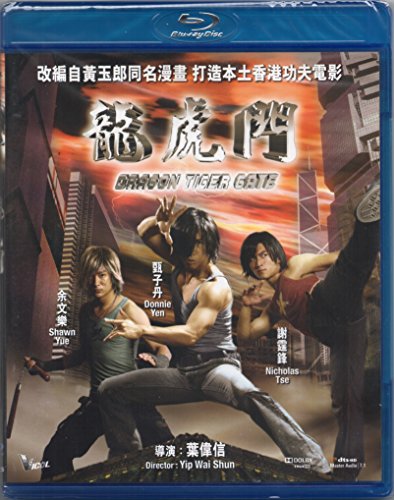
Dragon Tiger Gate (2006)
Dragon Tiger Gate is a 2006 Hong Kong martial-arts fantasy directed by Wilson Yip and adapted from Tony Wong’s long-running manhua Oriental Heroes. Donnie Yen, who also designed the action, plays Dragon Wong; Nicholas Tse is his estranged brother Tiger Wong; and Shawn Yue plays the nunchaku-wielding Turbo Shek.
The restaurant confrontation is the clearest reason for this fight-scene list. Tiger and Turbo collide with Dragon before they understand their shared interests, allowing Yen's choreography to separate three personalities inside one crowded space: Tiger's direct kicks, Turbo's weapon work, and Dragon's controlled attempts to contain both men. Furniture, stairways, and multiple levels keep changing the geometry instead of leaving the performers in an empty arena.
The film later escalates into comic-book wire work and effects-heavy power moves, so viewers seeking grounded combat may prefer the restaurant sequence. Its value lies in how cleanly movement introduces the future allies before exposition catches up.
The Prodigal Son (1981)
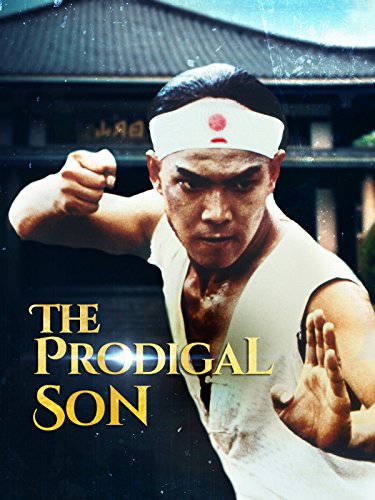
The Prodigal Son (敗家仔) is a 1981 Hong Kong martial arts film directed by Sammo Hung. It isn’t a retelling of the biblical parable, and it isn’t a movie about students making a movie. Yuen Biao plays Leung Jan, a rich young fighter whose father has been paying opponents to lose. Lam Ching-ying plays Leung Yee-tai, the opera performer who beats him and then teaches him Wing Chun. Hung plays Wong Wah-bo.
The opera-house fight is the humiliation that makes the rest of the film matter. Leung Jan walks in unbeaten and walks out knowing the wins weren’t his. The Wing Chun lessons that follow are the other half of the set piece: slow, technical, and funnier because he’s been a fraud in public. You watch a man relearn distance, structure, and what his hands were actually doing when the matches were fixed. The film won Best Action Choreography at the 2nd Hong Kong Film Awards, which fits. The comedy is in the fighting, not in a cutaway from it.
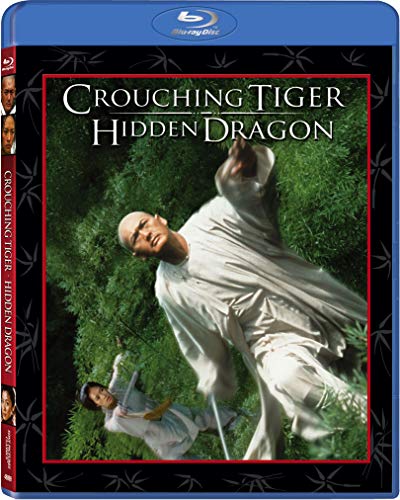
Crouching Tiger, Hidden Dragon (2000)
Crouching Tiger, Hidden Dragon is a 2000 wuxia film directed by Ang Lee. Chow Yun-fat plays Li Mu Bai, Michelle Yeoh plays Yu Shu Lien, and Zhang Ziyi plays Jen Yu. In Qing-dynasty China, Mu Bai asks Shu Lien to deliver his sword, the Green Destiny, to Sir Te in Beijing. Jen steals it. Shu Lien isn’t Jen’s servant. She’s a warrior and Mu Bai’s peer, and a lot of the film is what those two won’t say to each other.
The nighttime rooftop chase after the theft is the fight people mean when they talk about the film’s lightness: tiles, walls, and a sword that keeps changing hands. The bamboo-forest duel is the other one, a conversation fought up in the trees. Neither scene works if you treat Shu Lien as staff waiting on the real plot. She’s in the chase because the sword was in her care, and she’s in the forest because Mu Bai’s fight is also hers. The wirework is famous. The reason it belongs here is that you can still read the argument underneath it.
Sony Pictures
- An epic set against the breathtaking landscapes of ancient China, Crouching Tiger, Hidden Dragon combines the exhilarating martial arts choreography by Yuen Wo-Ping (The Matrix) with the sensitivity and classical storytelling of an Ang Lee film. The result is something truly unexpected: romantic, emotionally powerful entertainment.
An epic set against the breathtaking landscapes of ancient China, Crouching Tiger, Hidden Dragon combines the exhilarating martial arts choreography by Yuen Wo-Ping (The Matrix) with the sensitivity and classical storytelling of an Ang Lee film. The result is something truly unexpected: romantic, emotionally powerful entertainment.
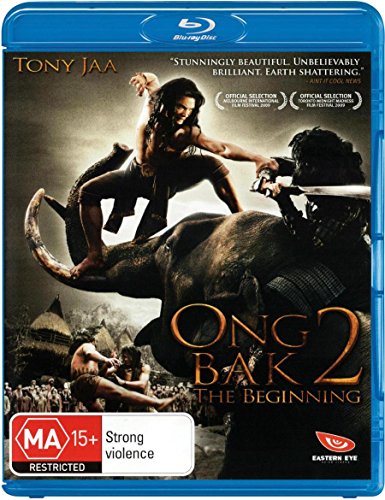
View on AmazonOng Bak 2 (2008)
Ong Bak 2 is a 2008 Thai period film co-directed by Tony Jaa and Panna Rittikrai. It’s a standalone prequel set in the 15th century, not a modern Bangkok hunt for three Buddha statues. Jaa plays Tien, the son of a murdered noble, who’s taken in by the Pha Beek Khrut bandits, trained as a fighter, and sent against Lord Rajasena, the man behind his parents’ deaths.
The fights are the film. Elephant-yard combat asks Tien to work around animals that don’t care about the choreography, and the last stand against Rajasena’s men is a run of weapons rather than one signature move. It isn’t trying to repeat the Bangkok chase from the first film, and it doesn’t pretend the sacred-statue quest is this story. It ends on a cliffhanger continued in Ong Bak 3, so the last bout doesn’t even pretend to close the plot. What it does close is the question of whether Jaa could build a fight film out of a period setting. He can, and the yard fight is the proof.
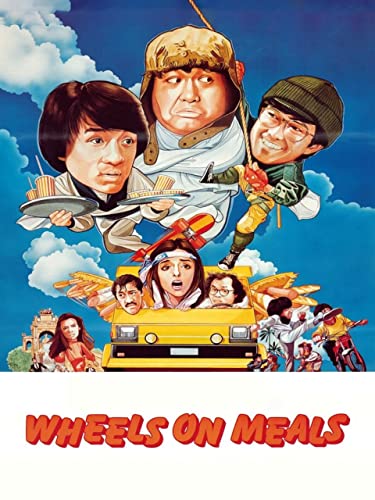
Wheels on Meals (1984)
Wheels on Meals (快餐車) is a 1984 Hong Kong martial arts comedy directed by Sammo Hung and shot in Barcelona. Jackie Chan and Yuen Biao play cousins who run a food truck; Hung plays their friend, a private detective. The three get pulled into trouble around a missing heiress. It isn’t a music album, and it isn’t a band’s early record that happens to share a loose title with something else. It’s a location comedy that keeps stopping so somebody can fight.
The scene that belongs on this list is the castle fight between Jackie Chan and kickboxer Benny Urquidez. Neither man looks like he’s waiting for the joke to land. The room is small, the kicks are full, and Chan’s reactions sell hits he doesn’t actually take. If you only know the food-truck chases, skip ahead to the castle. That’s the martial arts scene, and it’s the reason the film is here instead of on a list of albums.
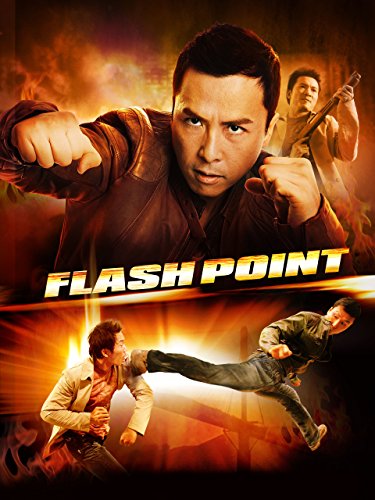
Flash Point (2007)
Flash Point (導火綫) is a 2007 Hong Kong action film directed by Wilson Yip. Donnie Yen, who also choreographed the fights, plays Detective Sergeant Ma Jun. Louis Koo is an undercover officer inside a triad led by brothers played by Collin Chou, Lui Leung-wai, and Xing Yu. It isn’t an American television series about a firehouse, and there isn’t a network schedule hiding in the credits.
The closing brawl between Yen and Collin Chou is why the film is on this list. It’s staged like a mixed-martial-arts match: a ring of sorts, a crowd, and two men who stop using the plot as an excuse to pause. Yen’s Ma has spent the film as a cop who’s already past patience. The last fight is where that impatience gets a clock and a set of rules you can follow without a subtitle. That’s the test this list keeps using. If the scene still makes sense with the sound down, it stays.
Ready to learn about some other Film Movements or Film History?
Ready to learn about some other Film Movements or Film History?

Let's Get Lost: The Essential Breakdown

The Old Dark House: Context, Themes, and Style

Night and Fog: Themes, Mood, and Visual Language

Runaway Train: Key Ideas and Lasting Influence

Even the Wind Is Afraid: A Deep Dive Into Story and Style

Introducing The Big Combo: Why It Still Matters

A Fistful of Dollars: What to Notice on a Rewatch

Anima: A Guide to Watching It Like a Critic

Raging Bull: The Meaning Behind the Moments

New comments are not currently accepted.
Comments