
On this pageTap to expand
Cameron Crowe emerged from the late 20th century American cinematic landscape as a distinct voice with an acute sensitivity for the intricacies of human relationships. His films are not merely stories — they are nuanced explorations of identity, emotional longing, and the power of music to bind personal and cultural memory.
Crowe’s signature blend of heartfelt character-driven narratives and meticulously curated soundtracks has secured him a unique place in Hollywood, where few directors manage to marry commercial appeal with genuine emotional resonance so effectively.

Born in 1957 in Palm Springs, California, Crowe’s early years as a teenage rock journalist for Rolling Stone profoundly shaped his cinematic worldview. This foundation in music journalism enriched his storytelling with an authenticity that continues to inform his work. Crowe’s films often feel autobiographical, brimming with a vibrant sense of time, place, and mood that evoke the coming-of-age odysseys of young adults searching for meaning in a complex world.
Across a career spanning more than three decades, Crowe has navigated the shifting currents of studio filmmaking and independent production, maintaining a consistent focus on stories that dissect relationships — romantic, familial, and between friends — with a tenderness that avoids mawkishness. His hallmark works like Almost Famous, Jerry Maguire, and Say Anything... have become cultural touchstones, while later films such as We Bought a Zoo and Aloha reveal a director grappling with maturity and the complexities of adult life.
Editing Rhythm and Narrative Shape
Filmmaker quote“Well it kind of is project to project because as a writer I think you always write to some degree about things that you know or things that happened - but my favourite filmmakers, my favourite movies of theirs tend to be the personal movies.”
Cameron Crowe
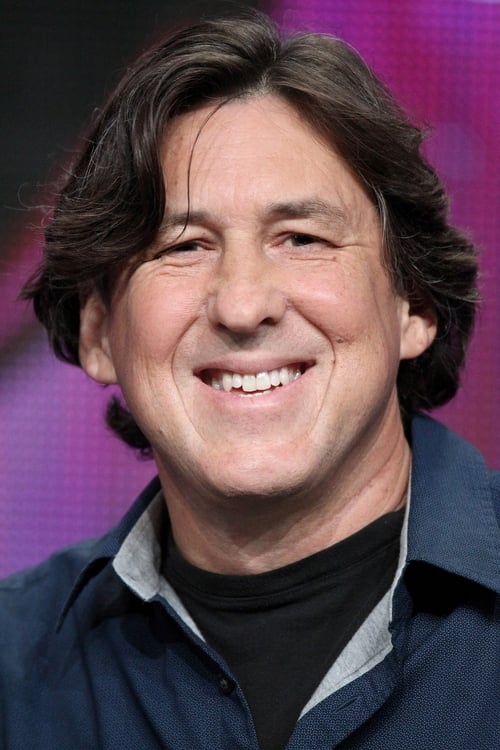
Crowe’s films exhibit a rhythmic pacing that feels organic, ebbing and flowing with the emotional tides of the characters. Unlike directors who rely heavily on rapid montage or fragmented storytelling, Crowe favors an editing style that allows scenes to breathe.
This approach facilitates a deeper immersion into the characters’ internal worlds, often through long takes or sustained dialogue sequences that reveal subtle shifts in mood and intention.
In Almost Famous, the editing mirrors the protagonist’s coming-of-age journey with a balance of energetic concert footage and quieter, introspective moments. The narrative unfolds gradually, building emotional stakes in a way that feels both nostalgic and immediate. Similarly, Jerry Maguire employs a measured rhythm that underscores the protagonist’s professional and personal transformation, letting moments of vulnerability linger without rushing to resolution.

Stay creative while the business side keeps up
You didn’t start a company to live in spreadsheets. This guide keeps client growth practical so you can protect time on set and in the edit.
The narrative structures Crowe favors are often linear but layered with flashbacks, voiceovers, or musical interludes that enhance the emotional texture. His films resist conventional plot mechanics in favor of character-driven arcs that emphasize growth and self-discovery.
This subtle shaping invites audiences to engage deeply with the characters rather than focusing solely on plot twists or spectacle.
Filmmaker quote“In the future, everybody is going to be a director. Somebody’s got to live a real life so we have something to make a movie about.”
Cameron Crowe
A Director’s Visual Grammar
Cameron Crowe’s visual style is deliberate yet understated, focusing on naturalistic compositions and evocative use of light to capture the intimate moments that define his characters’ lives. His camera work is often unobtrusive, designed to foreground performance and dialogue rather than showcase technical bravura.

However, this restraint is itself a form of visual poetry, allowing the emotional undercurrents in each frame to surface organically.
In films like Say Anything... and Elizabethtown, Crowe employs a warm color palette that evokes a sense of nostalgia and optimism. His framing often isolates characters in wide shots to convey their emotional solitude or, conversely, places them in tight close-ups to reveal vulnerability and connection. The use of real locations, rather than soundstage sets, enhances the authenticity and grounding of the stories.
Musical sequences in Crowe’s films are often shot with a documentary-style immediacy that recalls his roots in music journalism. This technique injects a kinetic energy into the films, balancing the quieter dramatic moments. The concert scenes in Almost Famous and the band dynamics in Singles exemplify this blend of realism and stylization, capturing the spirit of an era without romanticizing it excessively.
Collaborators: Writers, DPs, Editors, Composers
As a writer-director, Crowe has maintained a strong hand in shaping his films’ narratives and scripts, often drawing upon personal experience. This creative control allows him to craft deeply autobiographical films like Almost Famous, which is rooted in his own youth as a teenage rock journalist.
- Directors of Photography: Crowe has worked with cinematographers such as Janusz Kamiński on Vanilla Sky, whose expressive lighting and fluid camera movements helped Crowe explore the film’s surreal psychological landscape. Similarly, John Toll’s naturalistic style in Jerry Maguire complemented Crowe’s focus on intimate human drama.
- Editors: The rhythm of Crowe’s films benefits greatly from his collaboration with editors like Joe Hutshing and Mark Livolsi, who have helped balance pacing and emotional depth, especially in dialogue-heavy scenes.
- Composers and Music Supervision: Music is arguably Crowe’s most vital collaborator. His soundtracks, often featuring classic rock, indie gems, and carefully curated songs, act as emotional signposts. The soundtrack of Almost Famous remains iconic, blending period-accurate music with original scoring that elevates the narrative’s emotional highs and lows.

Crowe’s approach to collaboration values trust and creative synergy, particularly in music and casting, to deliver films that feel both meticulously crafted and organically alive.
Studio Years vs Independent Years
Cameron Crowe’s career traverses the often conflicting demands of studio expectations and independent filmmaking sensibilities. His early work, including Say Anything... and Singles, benefited from the freedom of smaller budgets and more intimate storytelling. These films established Crowe’s reputation for nuanced portraits of youth and relationships within compact narratives.
With the success of Jerry Maguire and Almost Famous, Crowe entered the mainstream Hollywood arena, which brought larger budgets and greater visibility but also heightened commercial pressures. Almost Famous stands as a rare example of a commercial studio film that fully embodies Crowe’s personal vision and passion for music culture. Conversely, films like Vanilla Sky and Aloha illustrate the challenges he faced reconciling artistic ambition with studio mandates and audience expectations.
In the 2010s, Crowe’s work such as We Bought a Zoo and his documentary Pearl Jam Twenty reflect a return to more intimate storytelling and personal interests outside the studio system’s commercial imperatives. His television series Roadies further exemplifies this shift, blending his love of music and character-driven narrative in a format allowing for more episodic exploration.
How They Handle Performance
Crowe’s direction of actors is marked by a gentle insistence on authenticity and emotional truth. He creates an environment where performers can inhabit their characters fully without the pressures of overdirection or artifice.
This approach yields naturalistic performances that often capture the awkwardness, vulnerability, and joy of human connection.

Discovery calls that win corporate & branded work
Align with marketing stakeholders faster: stakeholder map, success metrics, and approval paths — distilled into a practical checklist.
His films frequently feature ensemble casts that balance star power with emerging talent. In Almost Famous, Crowe coaxed career-defining performances from both veteran actors and newcomers, crafting believable dynamics that feel lived-in rather than theatrical. Similarly, the chemistry between Tom Cruise and Cuba Gooding Jr. in Jerry Maguire feels spontaneous and heartfelt, a testament to Crowe’s skill in nurturing collaborative energy on set.
Crowe is particularly adept at directing young actors, evident in films like Say Anything... and Singles, where the performances convey a rawness and immediacy that align perfectly with the themes of youth and self-discovery.
Worldview, Politics, and Subtext

At its core, Crowe’s filmography is less about overt political statements and more about the politics of human connection and personal integrity. His worldview champions empathy, openness, and the redemptive power of love and understanding.
This can be interpreted as a subtle counterpoint to the cynicism often prevalent in contemporary cinema.
Many of his films explore the tension between personal ideals and societal pressures. Jerry Maguire critiques the commodification of personal relationships and business ethics, while Almost Famous examines the exploitative and sometimes predatory nature of the rock ’n’ roll lifestyle from a tender, coming-of-age perspective.
Though not overtly political, Crowe’s work often subtly addresses generational divides, the search for meaning in a fractured culture, and the impact of celebrity and media on identity. His consistent emphasis on kindness and human complexity distinguishes his films in an industry often dominated by spectacle and cynicism.
Constraints That Shaped the Work
Budget limitations and studio interference have shaped Crowe’s career trajectory at various points, influencing both the scale and tone of his films. Early independent projects like Say Anything... benefited from modest budgets, which necessitated a focus on character and dialogue rather than spectacle.
Conversely, Crowe’s studio films sometimes faced constraints that complicated his vision. Vanilla Sky grappled with the challenge of adapting a European psychological thriller into a Hollywood context, requiring Crowe to balance commercial appeal with narrative complexity. Meanwhile, Aloha faced critical challenges, partly due to tonal inconsistencies and casting controversies that spotlighted the difficulties directors face within the studio system.
Despite these constraints, Crowe has consistently found ways to embed his personal stamp within projects, using music, character nuance, and emotional honesty to circumvent limitations. His persistent commitment to storytelling rooted in human experience has allowed him to transcend obstacles that might have derailed less resolute filmmakers.
Wrapping Up
Cameron Crowe remains a director whose work resonates because it captures the delicate and often messy truths of life and love with sincerity and style. His films are enduring because they offer a rare combination of sharp observation, emotional depth, and a heartfelt celebration of music’s power to articulate what words cannot.

From the earnest idealism of Say Anything... to the nostalgic grandeur of Almost Famous, Crowe’s oeuvre is a testament to the vitality of character-driven cinema in a landscape frequently dominated by blockbuster spectacle. His unique ability to interweave autobiographical insight with universal themes ensures his films continue to speak to audiences seeking affirmation of their own hopes, fears, and dreams.
As he moves forward — including with projects like the anticipated Untitled Joni Mitchell Biopic — Crowe’s deep engagement with music and personal storytelling suggests his future work will remain both emotionally compelling and culturally relevant, a beacon for those who value cinema’s capacity to illuminate the human spirit.
Ready for another director deep dive?


New comments are not currently accepted.
Comments