
On this pageTap to expand
Frederick Wiseman’s work stands as a towering achievement in the realm of documentary filmmaking, a genre he transformed through a singular dedication to observational rigor and social inquiry. Since his debut in 1967, Wiseman has carved out a vast cinematic oeuvre that eschews conventional narration and interviews, instead immersing viewers in the environments of institutions and communities with unflinching detail.
His films are less about storytelling in the traditional sense and more about opening a window into the complex workings of social structures, revealing the nuanced lives of the people within them. This approach has earned him a unique place in cinema, where his quiet, methodical gaze compels audiences to reconsider the ordinary and the systemic alike.

Born in Boston in 1930, Wiseman came to filmmaking after a background in law, which perhaps instilled in him a meticulous attention to systems and power relations. His early career coincided with the flowering of direct cinema and cinéma vérité, yet his work diverged markedly in tone and intention.
Rather than seeking vérité’s often intimate or confrontational moments, Wiseman’s documentaries are longer, denser, and more contemplative. Over more than five decades, he has produced a rich catalogue that probes education, welfare, health care, the arts, and beyond.
His films are not just exposés but open-ended inquiries, inviting reflection rather than prescribing judgment.
Few filmmakers have sustained such a rigorous and distinctive vision for so long. While not a household name outside cinephile circles, Frederick Wiseman’s influence permeates documentary practice and remains a vital touchstone for understanding how cinema can engage with the social world.
His work challenges viewers to slow down, absorb complexity, and witness the rhythms of institutional life with empathy and critical distance.
The Films That Best Represent Their Style

Wiseman’s style crystallizes most potently in his early and mid-career films, many of which remain essential viewing for anyone wishing to grasp his method. Titicut Follies (1967) remains one of his most controversial and powerful works, documenting the conditions inside a Massachusetts institution for the criminally insane. The film’s stark, unvarnished observation of institutional cruelty and neglect set a precedent for his career-long focus on places where power and vulnerability intersect.
Following this, High School (1969) and Welfare (1975) continued his examination of social structures, shifting the lens toward education and public assistance systems. These films avoid sensationalism, instead patiently observing daily routines and interactions with a disciplined camera that never intrudes but never shirks from difficult realities.
More recent works such as National Gallery (2014) and Ex Libris: The New York Public Library (2017) demonstrate a subtle evolution in his subjects. Here Wiseman’s attention turns to cultural institutions, highlighting the interplay between public service and institutional bureaucracy with his characteristic complexity and nuance. These films reveal his continued interest in how public spaces shape and reflect the societies they serve.
Other films like Crazy Horse (2011) and In Jackson Heights (2015) explore more specific cultural milieus and communities, expanding his documentary canvas while maintaining his hallmark observational detachment and thoroughness.
- Titicut Follies (1967)
- High School (1969)
- Welfare (1975)
- National Gallery (2014)
- Ex Libris: The New York Public Library (2017)
- Crazy Horse (2011)
- In Jackson Heights (2015)
- Hospital (1970)
Less frequently discussed but equally revealing are films like Juvenile Court (1973) and Monrovia, Indiana (2018), which underscore Wiseman’s commitment to exploring the margins of American social life.
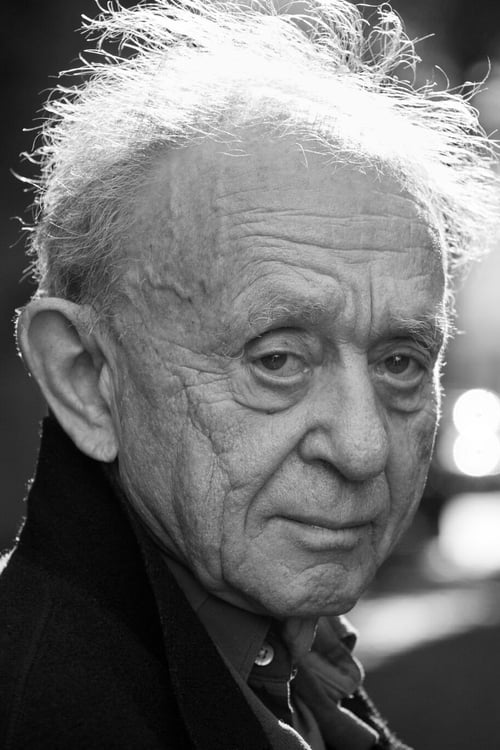
Filmmaker quote“You have to edit the material. That assumes that some kind of a mind is operating in relation to the material. Not all minds are the same. Every aspect of filmmaking requires choice. The selection of the subject, the shooting, editing and length are all aspects of choice.”
Frederick Wiseman
Editing Rhythm and Narrative Shape
Wiseman’s editing is perhaps the most distinctive hallmark of his filmmaking. Unlike traditional documentaries that rely on voice-over narration, talking heads, or explanatory captions, Wiseman’s films construct meaning purely through the juxtaposition of images and sounds.
His editing rhythm is deliberately uneven and dense, demanding patience from the viewer but rewarding close attention with rich, layered insights.

The narrative shape of Wiseman’s films is markedly non-linear and episodic. He assembles sequences of observational footage into thematic clusters rather than chronological or plot-driven arcs.
This approach mirrors the complexity and sometimes chaotic nature of institutional life, resisting neat conclusions or moralizing judgments. The absence of explicit commentary leaves interpretive space, turning the viewer into an active participant in making sense of what unfolds on screen.
For example, in Welfare, the film’s rhythm moves through a tapestry of offices, meetings, and personal encounters that collectively build a portrait of the welfare system’s challenges and inefficiencies. The editing creates a sense of immersion in the bureaucratic machinery, capturing moments of frustration, compassion, and routine.
Similarly, in National Gallery, the editing crafts a visual and auditory flow that balances the grandeur of the art with the human labor and institutional concerns behind its presentation. Wiseman’s editing is never merely functional; it is a form of authorial expression that shapes the viewer’s experience through careful construction of space and time.
Genre Patterns and Left Turns
While Wiseman’s oeuvre firmly resides within documentary cinema, it resists easy categorization. His films share traits with direct cinema and cinéma vérité but often subvert their conventions.
He eschews the “fly-on-the-wall” spontaneity for a more deliberate, sculpted form of observation. His films are institutional ethnographies, deeply rooted in the specificities of place and policy.
Most of Wiseman’s work revolves around social institutions: schools, hospitals, courts, cultural organizations, and public services. This focus creates a consistent thematic thread that interrogates the mechanisms of power, control, and care. Yet within this framework, Wiseman occasionally takes surprising turns. Crazy Horse, for example, explores the world of a Parisian cabaret, blending spectacle with backstage realities in a way that feels quite different from his social service documentaries.
Likewise, At Berkeley (2013) uses a university campus as a microcosm for debates about education, politics, and social change, expanding his institutional focus into a space of intellectual ferment rather than bureaucratic routine.
These left turns show Wiseman’s flexibility and curiosity while maintaining a core commitment to observing institutional life with rigor and nuance.
Constraints That Shaped the Work
Wiseman’s work has been shaped by both practical and ethical constraints. His refusal to use voice-over narration or interviews stems from a desire to avoid imposing authorial interpretation directly, trusting the footage to speak for itself.
This constraint demands a rigorous shooting and editing process, often requiring hundreds of hours of footage to be distilled into films that still run over two or three hours.
Legal and ethical challenges have also influenced his work. Titicut Follies was banned for decades in Massachusetts due to concerns over privacy and the portrayal of mentally ill inmates, highlighting the tension between documentary transparency and subjects’ rights. This early controversy underscored the risks and responsibilities inherent in Wiseman’s approach.
Additionally, the institutional access that underpins his films requires negotiation and trust, which can limit or shape what is shown. Yet Wiseman’s persistence and reputation have enabled him to gain entry to a remarkable range of environments, from hospitals to libraries to courts, allowing an unprecedented breadth of social observation.
- Legal restrictions, as seen with Titicut Follies
- Ethical commitment to non-intervention
- Long shooting schedules and extensive footage
- Dependence on institutional access and cooperation
What Filmmakers Can Learn From Them
Frederick Wiseman’s work offers invaluable lessons on the power of patience, restraint, and immersive observation in documentary filmmaking. His films demonstrate how narrative can be constructed without conventional storytelling devices, relying instead on the careful composition of moments and sequences.
His commitment to depicting institutions in all their complexity encourages filmmakers to resist simplification and to embrace ambiguity. Wiseman’s work is a masterclass in discovering drama and meaning in the mundane, showing how the everyday reveals broader social truths.
Moreover, his ethical stance—respecting subjects’ autonomy and shunning explicit commentary—challenges filmmakers to trust their audience’s intelligence and to consider the implications of their presence behind the camera.

Finally, Wiseman exemplifies the importance of long-term dedication and consistency in one’s artistic vision, proving that a singular, rigorous approach can yield a body of work both artistically rich and socially resonant.
Place in National Cinema and Film History
Within American cinema, Frederick Wiseman occupies a unique position as a chronicler of the nation’s institutions and social fabric. His films provide an indispensable visual archive of American public life across decades, from the late 1960s through the present.

Historically, Wiseman is often linked to the direct cinema movement alongside figures like Robert Drew and the Maysles brothers. Yet his style is distinctively more formal and less reactive than many of his contemporaries, positioning him as a bridge between cinéma vérité’s immediacy and a more reflective ethnographic cinema.
Internationally, Wiseman’s influence can be seen in documentary filmmakers who prioritize observational depth and institutional critique. His work resonates with directors such as Frederick Wiseman’s contemporaries and successors who explore social systems with nuance and empathy.
His films have contributed to expanding the possibilities of documentary form, demonstrating that cinema can serve as a tool for social understanding without resorting to didacticism. This legacy cements his stature as one of cinema’s foremost documentarians, a filmmaker whose career is as much about cultural anthropology as it is about art.
A Final Note
Frederick Wiseman’s films are challenging, demanding, and profoundly enlightening. They ask viewers to engage deeply with the textures of institutional life and to consider the human stories often obscured by bureaucracy and routine.
His refusal to simplify, narrate, or moralize sets him apart as a filmmaker of exceptional integrity and vision.
For those willing to immerse themselves in his work, Wiseman offers a rare cinematic experience: one where observation becomes a form of contemplation, and where the everyday reveals the extraordinary complexity of social existence. In an era of quick cuts and immediate gratification, his films remind us that cinema’s true power lies in patience, attention, and an unflinching gaze.
Ready for another director deep dive?
Related on Filmmaking Lifestyle
Read next: A Christmas Story: The Essential Breakdown, Alfred Hitchcock: The Essential Breakdown, and Bad Boy Bubby: The Essential Breakdown.


New comments are not currently accepted.
Comments