
On this pageTap to expand
Few filmmakers have shaped the language of cinema and popular culture as indelibly as Alfred Hitchcock. Born in London at the close of the 19th century, Hitchcock emerged as a towering figure in the art of suspense, crafting narratives that continue to captivate audiences and scholars alike.
His mastery of tension, coupled with a pioneering visual style, set a benchmark for thrillers and psychological dramas that few have equaled.

Hitchcock’s films are a unique blend of technical innovation and deep psychological insight. He was a director who understood the mechanics of storytelling down to the minutest detail, using camera angles, editing rhythms, and sound design not merely as ornamental tools but as essential components of narrative suspense.
This precision, combined with his fascination with ordinary people thrust into extraordinary circumstances, defines his cinematic legacy.
From the shadows of British sound cinema to the bright lights of Hollywood, Hitchcock’s career spanned over five decades, during which he crafted some of the most enduring films in the thriller genre, including Psycho, Rear Window, and Vertigo. His work remains a vital point of reference for any serious study of film and is a testament to storytelling that appeals both intellectually and viscerally.

Studio Years vs Independent Years
Filmmaker quote“Drama is life with the dull bits cut out.”
Alfred Hitchcock
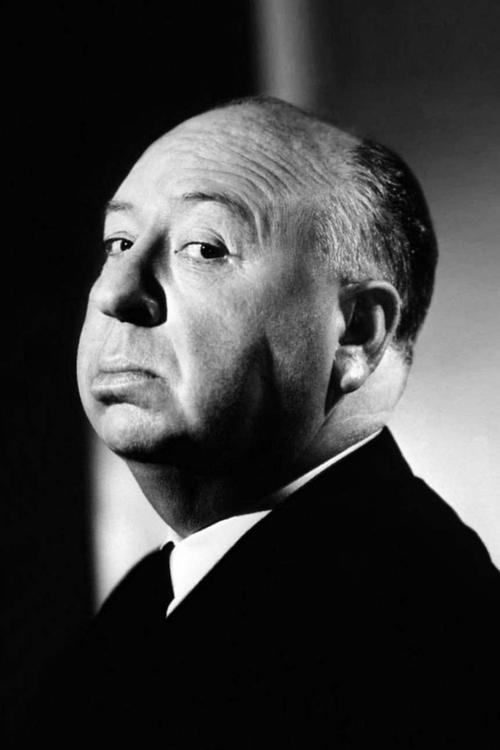
Alfred Hitchcock’s career can be broadly divided into his British studio years and his subsequent American period, each marked by distinct characteristics yet united by his unmistakable directorial personality. His early work in the UK, notably with studios like Gainsborough Pictures and Gaumont-British, saw him experimenting with narrative form and genre conventions, creating suspenseful dramas such as The 39 Steps (1935) and The Lady Vanishes (1938).
After relocating to Hollywood in 1939, Hitchcock entered a new phase characterized by larger budgets and the backing of major studios like Selznick International and later Warner Bros and Universal. This period includes many of his most famous works that combined commercial appeal with artistic ambition. Films like Notorious (1946) and Strangers on a Train (1951) showcase his evolving visual style and narrative complexity; Hollywood peaks such as Vertigo (1958) pushed psychological depth further still.
Hitchcock’s studio years were defined by a collaborative model typical of the classical Hollywood system, where he thrived by exerting meticulous control over each element of production. He also carved out room for formal risk: Rope (1948), made through his Transatlantic Pictures venture, experimented with long-take illusion, while later Universal-era films such as The Birds (1963) and Marnie (1964) show the freer, more idiosyncratic late style often associated with his post-1960 work.
- British studio years: emphasis on suspense, early experimentation with narrative and style
- Hollywood studio years: polished craftsmanship, larger scale productions, refinement of his suspense techniques
- Late period: increased formal experimentation and psychological complexity
The Breakthrough Moment

If Hitchcock’s career had several high points, the breakthrough that cemented his international reputation was undoubtedly the release of Rebecca in 1940. This film marked his first American production and won the Academy Award for Best Picture, propelling him into the Hollywood elite.
Rebecca is a study in atmospheric tension, gothic romance, and the psychological unraveling of its protagonist. It displayed Hitchcock’s ability to blend genre elements with a sophisticated narrative style, making clear that his work transcended simple thrills. This success opened the door for Hitchcock to direct multiple projects under his own name, giving him the clout to shape Hollywood suspense cinema for decades.
Following Rebecca, Hitchcock honed his craft with a series of critically and commercially successful films, such as Notorious and Strangers on a Train, each pushing the boundaries of storytelling, camera work, and audience engagement.
Early Life and Formative Influences

Born on August 13, 1899, in Leytonstone, London, Hitchcock’s upbringing in a strict, working-class family instilled in him a complex relationship with authority and control—themes that would permeate his films. His early interest in art and design led him to work as a title-card designer during the silent film era, where he gained an intimate understanding of visual narrative.
Hitchcock was deeply influenced by the burgeoning European cinema of the 1920s, including German Expressionism, which is evident in his use of shadows and distorted perspectives to evoke psychological tension.

Directors such as F.W. Murnau and Fritz Lang left a notable imprint on his cinematic vocabulary, as did the narrative complexity and emotional depth of D.W. Griffith’s work.
His fascination with crime fiction and psychological thrillers—literary and cinematic—shaped his thematic concerns. Hitchcock’s films frequently explore guilt, voyeurism, and the duality of human nature, subjects that reflect both his personal preoccupations and the zeitgeist of his era.
- Early work as a graphic designer for silent films
- Influenced by German Expressionism and the films of Fritz Lang and F.W. Murnau
- Interest in psychological thrillers and crime fiction
Place in National Cinema and Film History
Alfred Hitchcock holds a unique place in both British and American cinema. In the UK, he was a pioneer who elevated British filmmaking with suspenseful narratives that combined popular appeal with artistic ambition.
His early British films helped establish the thriller as a legitimate and respected genre within the national cinema.
Once in Hollywood, Hitchcock became emblematic of the classical studio system’s potential to marry commercial success with auteur-driven storytelling. His work embodies many characteristics of classical Hollywood cinema—narrative clarity, genre blending, and star-driven marketing—while retaining an unmistakably personal imprint.
Historically, Hitchcock’s contributions extend beyond mere genre filmmaking. He innovated numerous technical and narrative techniques, such as the use of subjective camera angles to put audiences in the protagonist’s psychological position, and his films often probe social anxieties about identity, morality, and surveillance.
His influence is visible in the tension-filled narratives of modern cinema, making him a foundational figure in film history.
Influence on Later Filmmakers
Filmmaker quote“If it’s a good movie, the sound could go off and the audience would still have a pretty clear idea of what was going on.”
Alfred Hitchcock
Alfred Hitchcock’s legacy endures largely through the filmmakers who have drawn inspiration—sometimes explicit, sometimes subliminal—from his work. Directors such as Brian De Palma, Martin Scorsese, and David Fincher have acknowledged Hitchcock’s profound impact on their approach to suspense, visual storytelling, and thematic exploration.
His pioneering use of camera movement and editing to create psychological tension continues to inform contemporary filmmaking practice. The concept of the MacGuffin, popularized by Hitchcock, remains a staple narrative device, influencing how suspense and mystery are structured across genres.
- Brian De Palma: stylistic homages and narrative complexity
- Martin Scorsese: use of suspense and psychological depth
- David Fincher: meticulous crafting of tension and atmosphere
- Influence evident in the thriller and horror genres broadly
Critical Reception and Reappraisal
During his lifetime, Hitchcock was often seen primarily as a commercial director, a master of popular entertainment rather than a serious artist. However, over the decades, critical scholarship has repositioned him as a profound auteur whose films merit rigorous analysis for their thematic richness and formal innovation.
Films like Vertigo and Psycho have undergone significant critical reappraisal, now considered among the greatest films ever made. Vertigo, in particular, has risen in esteem for its intricate exploration of obsession and identity, with many critics and cinephiles ranking it above more famous contemporaries.
Hitchcock’s television work, including Alfred Hitchcock Presents, also contributed to his reputation by demonstrating his ability to adapt his suspense techniques to shorter formats, expanding his influence and reach.
Closing Notes

Alfred Hitchcock remains a cinematic colossus whose work continues to resonate with audiences and filmmakers alike. His extraordinary ability to manipulate audience expectations and cinematic form places him among the most influential directors in film history.
More than just a master of suspense, Hitchcock was a storyteller deeply attuned to the complexities of human psychology and social anxieties. His films endure not only as thrilling entertainment but as rich texts that invite continual reinterpretation and study.
For students and lovers of cinema, Hitchcock’s oeuvre offers an unparalleled education in the art of suspense, narrative economy, and visual innovation—an essential chapter in the story of film itself.
Want to keep going with more cinema craft?
Related on Filmmaking Lifestyle
Study the masters — explore our Director profiles.

Kei Ishikawa: The Art of Directing, In One Career

Osamu Dezaki: A Visual Language Worth Studying

Ermanno Olmi: Themes, Technique, and Legacy

Juraj Herz: The Essential Breakdown

Orson Welles: A Visual Language Worth Studying

Zoltan Fabri: The Career That Changed the Medium

Barry Jenkins: A Complete Introduction

Tom Tykwer: A Complete Introduction

Ari Aster: A Director's Style in Focus


New comments are not currently accepted.
Comments