
On this pageTap to expand
David Lean was born in Croydon, England, on 25 March 1908. He left Leighton Park School at 18, spent a short time in his father’s accountancy firm, and in the late 1920s joined Gaumont Studios, rising from teaboy and clapper boy to film editor.
He cut newsreels and features through the 1930s. Noël Coward then invited him to co-direct In Which We Serve (1942), his first film as a director.

Who Is David Lean**?**
David Lean was an English film director, screenwriter, and editor. Films he directed include Brief Encounter (1945), Great Expectations (1946) and Oliver Twist (1948).
Actor quote“Work hard, do the best you can, don’t ever lose faith in yourself and take no notice of what other people say about you.”
Noel Coward
Best David Lean Films

David Lean’s best films are a series of masterpieces, each one more memorable than the last.
His ability to capture the essence of a character through naturalistic acting and subtle cinematography is unparalleled in any other film-maker.
All picks in one table
| Film | Year |
|---|---|
| Lawrence of Arabia | 1962 |
| The Bridge on the River Kwai | 1957 |
| Doctor Zhivago | 1965 |
| Brief Encounter | 1945 |
| Great Expectations | 1946 |
| Oliver Twist | 1948 |
| Hobson’s Choice | 1954 |
| The Passionate Friends | 1949 |
| Money for Speed | 1933 |
| Ryan’s Daughter | 1970 |
| A Passage to India | 1984 |
| Summertime | 1955 |
| In Which We Serve | 1942 |
| Blithe Spirit | 1945 |
| This Happy Breed | 1944 |
| Major Barbara | 1941 |
| Madeleine | 1950 |
| The Sound Barrier | 1952 |
| The Greatest Story Ever Told | 1965 |
1. Lawrence of Arabia (1962)
Lawrence of Arabia is a masterpiece of cinema that transports the audience to a different era and landscape.
The film follows the journey of T.E. Lawrence, a British officer who becomes a key player in the Arab revolt against the Ottoman Empire during World War I.
The film is visually stunning, with breathtaking desert landscapes and epic battle scenes that leave a lasting impression.
Peter O’Toole delivers a career-defining performance as the enigmatic Lawrence, capturing the character’s contradictions and complexities with nuance and depth.
The film’s themes of imperialism, identity, and loyalty are explored with great care, adding a thought-provoking layer to the already gripping story.
The supporting cast, including Alec Guinness and Omar Sharif, also deliver standout performances that add to the film’s overall impact.
At over three and a half hours long, Lawrence of Arabia is an epic in every sense of the word.
But with its masterful direction by David Lean and unforgettable score by Maurice Jarre, it never feels like a slog. Instead, it is a cinematic journey that leaves the viewer in awe of its scope and beauty.

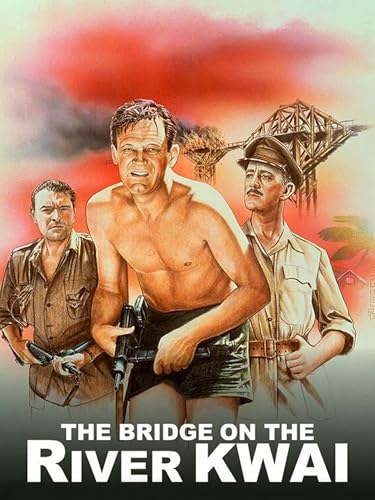
2. The Bridge on the River Kwai (1957)
The Bridge on the River Kwai is a film that truly stands the test of time.
Directed by David Lean and released in 1957, it tells the story of British prisoners of war who are forced to build a bridge for their Japanese captors during World War II.
What sets this film apart is the way it explores themes of duty, honor, and patriotism in the face of extreme adversity.
The performances in this film are outstanding. Alec Guinness is particularly impressive as Colonel Nicholson, the British officer who becomes obsessed with building the bridge to prove his superiority over the Japanese.
Sessue Hayakawa is equally captivating as Colonel Saito, the Japanese officer in charge of the prisoners.
The cinematography is breathtaking, with sweeping shots of the jungle and the bridge that serve to emphasize the scale of the project and the enormity of the task facing the prisoners.
If you like David Lean’s work, on our sister site AuteurGraph we have a profile page, a visual film timeline, and a ratings page that gives a tonne of info and data about his career in a visualized form.
The score, composed by Malcolm Arnold, is also notable for its use of traditional Japanese instruments to create an otherworldly atmosphere.

What really makes The Bridge on the River Kwai such a great film, however, is its exploration of the complexities of war and the morality of those who fight in it.
The film raises important questions about duty, loyalty, and sacrifice, and leaves the viewer with a sense of unease about the way in which we as a society glorify war.
Overall, The Bridge on the River Kwai is a masterpiece of filmmaking that is not to be missed.
It is a powerful and thought-provoking exploration of the human experience during wartime that is as relevant today as it was when it was first released over 60 years ago.
3. Doctor Zhivago (1965)
Doctor Zhivago is a sweeping epic that beautifully captures the complexities of love, war, and revolution in early 20th century Russia.
Directed by David Lean and starring Sharif and Julie Christie, this film is a true masterpiece of cinema.
The cinematography is stunning, with breathtaking landscapes and intricate set designs.
The performances are equally impressive, with Sharif delivering a subtle and nuanced portrayal of the titular character, and Christie bringing depth and complexity to her role as Lara.
What sets Doctor Zhivago apart, however, is its ability to capture the political upheaval and social unrest of the time period.
The film explores the tensions between the wealthy and the working class, the struggles of the Bolshevik revolution, and the impact of war on ordinary citizens.

4. Brief Encounter (1945)
David Lean’s Brief Encounter is a stunning masterpiece that will leave you breathless.
The film follows the story of a married woman, played brilliantly by Celia Johnson, who falls in love with a doctor, played by Trevor Howard, while waiting for her train at a station.
The film’s simplicity is its strength, as it explores the complexities of human emotions and the consequences that come with them.
The cinematography is gorgeous, with each shot carefully crafted to evoke the characters’ inner turmoil. The score, built on Rachmaninoff’s Piano Concerto No. 2, perfectly complements the film’s melancholic tone.
Johnson and Howard’s performances are outstanding, capturing the desperation and longing of their characters with elegance.
Brief Encounter is a timeless classic that will leave a lasting impression on anyone who watches it.
5. Great Expectations (1946)
Great Expectations is a stunning adaptation of Charles Dickens’ classic novel, directed by David Lean.
The film follows the story of Pip, a young orphan who dreams of becoming a gentleman, and his experiences with the wealthy Miss Havisham and her beautiful but cold-hearted ward, Estella.
The cinematography in this film is absolutely breathtaking with sweeping shots of the English countryside and intricate details in the opulent sets of Miss Havisham’s decaying mansion.
The black and white film adds to the overall moody and atmospheric tone of the story, creating a sense of foreboding and unease.
The performances by the cast are superb, with John Mills giving a nuanced and emotional portrayal of Pip, Valerie Hobson as Estella, and Martita Hunt as the enigmatic and tragic Miss Havisham.
Alec Guinness also shines in a smaller but impactful role as Pip’s friend, Herbert Pocket.


6. Oliver Twist (1948)
Oliver Twist is a timeless classic that brings to life the beloved Dickens novel with stunning visuals and an unforgettable performance by young John Howard Davies as titular character.
Director David Lean masterfully captures the gritty and harsh reality of Victorian England, immersing the audience in the squalor and poverty of Oliver’s life on the streets.
The film’s attention to detail and authenticity is truly remarkable, making it a must-see for fans of historical dramas.
But what truly sets this adaptation apart is the exceptional cast, including Alec Guinness as the manipulative Fagin, Robert Newton as the menacing Bill Sikes, and Kay Walsh as the fiercely protective Nancy.
Their performances are nothing short of remarkable, bringing to life some of Dickens’ most iconic characters with nuance and depth.

7. Hobson’s Choice (1954)
Hobson’s Choice is a delightful British comedy-drama that explores the themes of independence, family dynamics, and romance.
The film showcases the incredible talents of Charles Laughton, who delivers a flawless performance as the stubborn and alcoholic cobbler, Henry Hobson.
The story revolves around Hobson’s three daughters, Maggie, Alice, and Vicky, who are all eager to leave their father’s shop and start their own lives.
However, Hobson is determined to keep them under his thumb and prevent them from marrying or pursuing their dreams.
Enter Maggie, played brilliantly by Brenda de Banzie, who decides to take matters into her own hands and sets her sights on Hobson’s best employee, Will Mossop, played by John Mills.
Together, they hatch a plan to start their own shoe business, which ultimately leads to Hobson’s downfall and the liberation of his daughters.
The film’s witty script and sharp dialogue keep the audience engaged throughout, while the charming performances of the cast bring the characters to life.
Director David Lean’s keen eye for detail and his ability to capture the essence of Victorian-era England make Hobson’s Choice a visual delight.

8. The Passionate Friends (1949)
The Passionate Friends is a romantic drama that explores the complexities of love and relationships—directed by David Lean from H.G. Wells’s novel, with Ann Todd, Trevor Howard, and Claude Rains.
The film is beautifully shot with stunning cinematography that captures the essence of the story.
The performances by the cast, especially Ann Todd and Trevor Howard, are exceptional and bring the characters to life in a way that is both believable and captivating—Lean shaping the triangle with the precision of his postwar British period.
The story is told through a series of flashbacks and present-day narratives, which add depth and complexity to the characters and their relationships.
The film explores themes such as love, passion, regret, and the choices we make in life. The writing is intelligent and thought-provoking, making the audience question their own experiences and choices.

9. Money for Speed (1933)
Money for Speed (1933) is a British speedway drama directed by Bernard Vorhaus—David Lean’s credit here is as editor (and an uncredited on-screen reporter), not as director. Treat any “cross-country American West race” synopsis as wrong-film paste.
The story follows daredevil motorcycle speedway riders competing for glory and a cash prize on British tracks—Lean already cutting action with the craft that later defined his epics. It belongs on a Lean list as formative editing work, not a Lean-helmed road race.
10. Ryan’s Daughter (1970)
Ryan’s Daughter is a visually stunning film that transports you to a remote Irish village in the early 20th century.
David Lean’s direction is masterful, capturing the beauty and brutality of the landscape, as well as the complex emotions of the characters who inhabit it.
The performances are uniformly excellent, with Sarah Miles in particular giving a standout portrayal of Rosy Ryan, a young woman trapped in a loveless marriage who seeks solace in an affair with a British officer played by Christopher Jones.
The chemistry between the two is palpable, and their scenes together are some of the movie’s most powerful.
The film is not without its flaws, however. At nearly three hours long, it can feel ponderous at times, and some of the characters feel underdeveloped.
Additionally, the portrayal of the Irish characters as simple-minded and superstitious can be off-putting to modern audiences.

11. A Passage to India (1984)
A Passage to India is a visually stunning and emotionally complex film that captures the essence of E.M. Forster’s novel.
Set in the backdrop of colonial India, the film explores the tensions and prejudices that exist between the British and Indians, and the complexities of human relationships.
The performances in the film are outstanding, with Judy Davis delivering a powerful performance as the conflicted and vulnerable Adela Quested, and Victor Banerjee bringing depth and nuance to his role as Dr. Aziz.
The chemistry between the two leads is palpable and adds to the tension and drama of the film.
Director David Lean’s masterful direction is evident in every frame of the film, with stunning cinematography that captures the beauty and complexity of India.
The use of light and shadow, as well as the vibrant colors, add to the visual appeal of the film.
The film’s themes of cultural clash and human connection are as relevant today as they were when the novel was written.
A Passage to India is a must-watch for anyone interested in exploring the complexities of human relationships and the impact of colonialism on a society.
It is a cinematic masterpiece that will stay with you long after the credits roll.

12. Summertime (1955)
Summertime is a charming and delightful romantic drama that showcases the beauty of Venice and the captivating performance of Katharine Hepburn.
Set during the summertime, the film follows the story of Jane Hudson, a middle-aged American secretary who travels to Venice for her dream vacation.
As Jane explores the city, she meets Renato, a handsome Italian antiques dealer, and they fall in love.
The chemistry between Hepburn and her co-star Rossano Brazzi is palpable, and their romance is both heartwarming and heartbreaking.
Director David Lean captures the essence of Venice with stunning visuals and a romantic musical score.
The film’s pacing is slow but steady, allowing the audience to immerse themselves in the beauty of the city and the emotions of the characters.

Summertime is a classic Hollywood romance that stands the test of time. Hepburn’s portrayal of Jane is both vulnerable and strong, and her journey of self-discovery and love is inspiring.
This film is a must-watch for anyone who loves classic Hollywood romances or wants to experience the beauty of Venice on the big screen.
13. In Which We Serve (1942)
In Which We Serve is a wartime drama that tells the story of the crew of HMS Torrin, a British destroyer that is sunk during the early days of World War II.
The film is an impressive feat of storytelling, boasting a powerful script, exceptional performances, and stunning cinematography.
Noel Coward, who co-directed the film and starred in it, delivers a powerful performance as Captain Kinross, the leader of the crew.
The film is a testament to the bravery and sacrifice of the men and women who fought in the war, and it is a poignant reminder of the human cost of conflict.
The film’s direction is top-notch, with Coward and David Lean creating a sense of urgency and tension that never lets up.
The scenes of the ship sinking are particularly impressive, and the film’s use of flashbacks to show the crew’s lives before the war adds depth and complexity to the characters.
14. Blithe Spirit (1945)
Blithe Spirit is a delightful and whimsical comedy that is sure to leave audiences in high spirits.
Directed by David Lean and based on the play by Noël Coward, the film tells the story of Charles Condomine (Rex Harrison), a writer who invites a medium to his home in the hopes of gathering material for his new book.
However, things take a turn for the supernatural when the medium accidentally summons the spirit of Charles’ deceased wife, Elvira (Kay Hammond), who proceeds to wreak havoc on Charles’ life.
The film’s strength lies in its witty script and pitch-perfect performances from the cast.
Rex Harrison is charming as the hapless Charles, while Kay Hammond steals the show as the mischievous and flirtatious Elvira.
Margaret Rutherford also shines as the eccentric medium, Madame Arcati, delivering some of the film’s funniest moments.
The film’s special effects, which were cutting-edge for their time, still hold up remarkably well today.
The scenes in which Elvira appears and disappears into thin air are particularly impressive.
15. This Happy Breed (1944)
This Happy Breed is a cinematic masterpiece that beautifully captures the essence of post-World War I Britain.
Directed by David Lean, the film tells the story of the Gibbons family, who move into a new home in London and face the challenges of rebuilding their lives in the aftermath of the war.
The film’s strength lies in its ability to create a vivid and authentic portrayal of the era.
From the costumes and set design to the dialogue and mannerisms of the characters, every detail is carefully crafted to transport viewers back in time.
The film also features a stellar cast, including Robert Newton and Celia Johnson, who deliver powerful performances that bring the characters to life.
This Happy Breed’s slow pace may not be for everyone, but its deliberate approach allows for a deep exploration of the characters and their relationships.
The film tackles themes of family, love, and patriotism, making it both a heartwarming and poignant viewing experience.

Network
- Polish Release, cover may contain Polish text/markings. The disk has English audio.
Polish Release, cover may contain Polish text/markings. The disk has English audio.
View on Amazon16. Major Barbara (1941)
Major Barbara is a thought-provoking drama that delves into the complex issues of poverty, morality, and capitalism—produced and directed by Gabriel Pascal from Shaw’s play, with David Lean as editor and an uncredited director, not the sole director.
The film follows the story of Barbara Undershaft, a major in the Salvation Army who is torn between her faith and her family’s wealth and power.
Wendy Hiller delivers a powerful performance as Barbara, portraying her character’s inner conflict with nuance and depth—Lean’s montage work sharpening the industrial climax.
Rex Harrison plays Adolphus Cusins, while Robert Morley is her father, a wealthy munitions manufacturer who challenges Barbara’s beliefs and values. The film’s themes are as relevant today as they were in 1941, and the script is both intelligent and engaging.
The production design and cinematography also deserve special mention, capturing the stark contrast between the Salvation Army’s humble home and the opulence of the Undershaft estate, with Lean already in the cutting room shaping pace.

Second Sight
- Major Barbara ( George Bernard Shaw's Major Barbara )
- Major Barbara
- George Bernard Shaw's Major Barbara
Major Barbara ( George Bernard Shaw's Major Barbara ) Major Barbara
View on Amazon17. Madeleine (1950)
Madeleine is a gripping and emotionally charged historical drama that tells the tragic story of Madeleine Smith, a young woman accused of poisoning her lover in Victorian-era Scotland.
The film masterfully captures the complex relationships and societal pressures of the time, as well as the intense courtroom drama that ensues.
Ann Todd delivers a powerful and nuanced performance as Madeleine, perfectly conveying the character’s conflicted emotions and inner turmoil.
The supporting cast, particularly Ivan Desny as Madeleine’s lover Emile, also deliver impressive performances that add depth and complexity to the story.
Director David Lean’s stunning visuals and attention to detail transport the audience back in time to 19th century Scotland, immersing them in the world of the film.
The film’s score is also noteworthy, perfectly complementing the dramatic and emotional moments.
18. The Sound Barrier (1952)
The Sound Barrier is a heart-pumping drama that explores the world of aviation and the human spirit’s unrelenting quest for progress.
Director David Lean delivers yet another cinematic masterpiece that is both visually stunning and emotionally compelling.
The film follows the struggles of a British aircraft manufacturer, John Ridgefield (Ralph Richardson), and Tony Garthwaite (Nigel Patrick), the test pilot who marries Ridgefield’s daughter.
Their quest to break the sound barrier leads to a series of thrilling test flights, which ultimately puts their lives and their relationships at risk.
The Sound Barrier is a true gem of British cinema, with stunning aerial footage that captures the beauty and danger of flying.
The performances are top-notch, with Richardson and Patrick delivering powerful and nuanced portrayals of their characters.
The supporting cast, including Ann Todd and Denholm Elliott, also shines in their respective roles.
The film’s themes of ambition, sacrifice, and the pursuit of progress are timeless and resonate with audiences today.
It’s a testament to Lean’s skill as a filmmaker that a movie made more than 70 years ago still feels relevant and impactful.

19. The Greatest Story Ever Told (1965)
The Greatest Story Ever Told is a sweeping epic that attempts to tell the story of Jesus Christ in a grandiose manner—directed by George Stevens, with David Lean as uncredited additional director on sequences including Herod the Great (Claude Rains), not as the film’s sole auteur.
The film boasts an all-star cast, including John Wayne, Charlton Heston, and Max von Sydow as Jesus.
While the film’s intentions are noble, the execution falls flat. The pacing is slow, and the film’s length (over three hours) only adds to the tedium.
The performances, while star-studded, are often over-the-top and melodramatic.
The film’s attempts at recreating iconic biblical moments are visually impressive, with stunning landscapes and intricate sets—Lean’s Herod material a footnote favor to Stevens, not a Lean feature credit.
However, the visuals alone cannot carry the film.

METRO GOLDWYN MAYER
- Factory sealed DVD
Factory sealed DVD
View on AmazonCharacteristics of David Lean Films
David Lean is one of the most successful and respected film directors in history.
He has directed films such as Lawrence of Arabia, Bridge on the River Kwai and Doctor Zhivago,
which have won him numerous awards including an Oscar.
His films are characterized by their excellent camera work, powerful performances and sensitive treatment of the subject matter.
Lean was born in Croydon in 1908. He trained as a film editor, cutting newsreels and features such as Pygmalion (1938) and Major Barbara (1941), before co-directing In Which We Serve (1942).
Brief Encounter (1945) was nominated for Best Director, Best Actress, and Best Screenplay, not Best Picture.
He followed this with many other films including The Sound Barrier (1952), Ryan’s Daughter (1970) and A Passage to India (1984).
Best David Lean Films – Wrapping Up
David Lean’s Lawrence of Arabia is a classic for a reason. It’s a film that not only stands the test of time, but also continues to be relevant today.
With its sweeping desert vistas, sweeping romantic scenes and an unforgettable lead performance by Peter O’Toole, Lawrence of Arabia has been called one of the greatest love stories ever told.
It’s hard to imagine another director who could have brought this complex story to life as well as Lean did.
The film won seven Oscars, including Best Picture, Best Director, and Best Cinematography (Color).
Ready to learn about some other Film Movements or Film History?
Understand cinema on a deeper level with these Film Theory guides.

Let's Get Lost: The Essential Breakdown

The Old Dark House: Context, Themes, and Style

Night and Fog: Themes, Mood, and Visual Language

Runaway Train: Key Ideas and Lasting Influence

Even the Wind Is Afraid: A Deep Dive Into Story and Style

Introducing The Big Combo: Why It Still Matters

A Fistful of Dollars: What to Notice on a Rewatch

Anima: A Guide to Watching It Like a Critic

Raging Bull: The Meaning Behind the Moments


New comments are not currently accepted.
Comments