
On this pageTap to expand
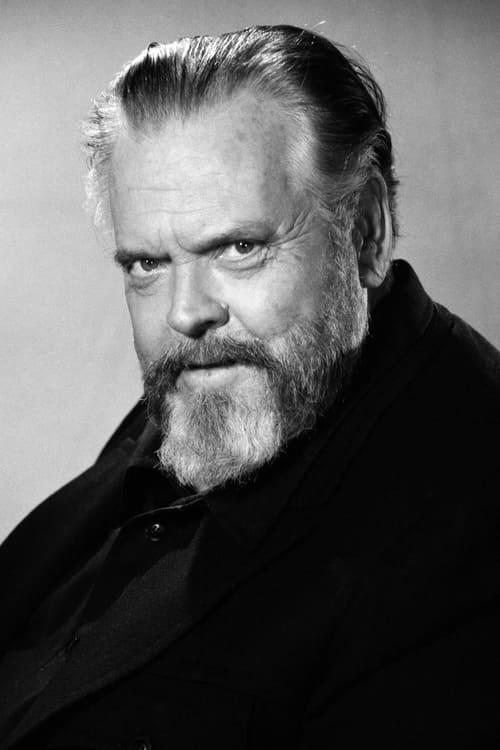
Orson Welles is one of the most famous actors and filmmakers who ever lived.
Even if you’ve never seen any of his movies, you’ve probably at least heard of a few.
He starred in classics like Citizen Kane and The Third Man, but he also directed some fantastic films of his own like Kane and others.
The best Orson Welles movies prove that he was one of the greatest filmmakers of all time.
After his incredible debut in Citizen Kane, Welles continued to push the boundaries of film by making bold political statements and redefining the way stories were told on screen.
Many of these films – especially Chimes at Midnight and Touch of Evil – have benefited from modern restorations, allowing them to be seen closer to the form Welles intended. The Other Side of the Wind, unfinished at his death, was completed and released in 2018.
Best Orson Welles Movies
Here’s our list of the awesome films of Orson Welles. Bit of a tongue twister, that!
Without further ado, here’s the best Orson Welles movies.
Filmmaker quote“Create your own visual style… let it be unique for yourself and yet identifiable to others.”
Orson Welles
The full list
Filmmaker quote“The enemy of art is the absence of limitations.”
Orson Welles
| Film | Year |
|---|---|
| F for Fake | 1973 |
| The Magnificent Ambersons | 1942 |
| Touch of Evil | 1958 |
| Citizen Kane | 1941 |
| Macbeth | 1948 |
| The Immortal Story | 1968 |
| The Stranger | 1946 |
| Mr. Arkadin | 1955 |
| Othello | 1952 |
| The Lady from Shanghai | 1947 |
| The Trial | 1962 |
| Chimes at Midnight | 1965 |
| The Other Side of the Wind | 2018 |

F for Fake (1973)
F for Fake is a riveting and masterful work of art from the legendary filmmaker Orson Welles.
This documentary-style film explores the concepts of truth, authenticity, and deception through the lives and stories of several fascinating characters, including famous art forger Elmyr de Hory and his biographer Clifford Irving.
Welles weaves together a complex and intriguing narrative that blurs the lines between fact and fiction, leaving the viewer questioning what is real and what is fabricated.
The stunning visuals and captivating storytelling keep the audience engaged from start to finish, with Welles effortlessly switching between different styles and techniques.
The film is a true masterpiece of the genre, showcasing Welles’ unparalleled talent and creativity as a filmmaker.
It is a must-watch for anyone interested in the art of cinema, as well as those curious about the complexities of human nature and the power of storytelling.

The Criterion Collection
- Factory sealed DVD
Factory sealed DVD
View on AmazonThe Magnificent Ambersons (1942)
The Magnificent Ambersons is a masterpiece of classic Hollywood filmmaking. Directed by the legendary Orson Welles, this film tells the story of a once-great family’s decline in a rapidly changing world.
The beautiful cinematography and exquisite set design transport the audience to a bygone era, and the top-notch performances by the cast bring the characters to life with all their flaws and complexities.
The film’s haunting score adds an extra layer of emotional depth to the already powerful storytelling.
RKO took the film away from Welles, cut about 44 minutes, and replaced his ending. Even in that studio version, it remains a powerful and thought-provoking piece of cinema more than 75 years after its initial release.
The Magnificent Ambersons is a must-see for any film lover looking for a poignant and beautifully crafted story.
If you like Orson Welles’s work, on our sister site AuteurGraph we have a profile page, a visual film timeline, and a ratings page that gives a tonne of info and data about their career in a visualized form.

The Criterion Collection
- Movie dvd
Movie dvd
View on AmazonTouch of Evil (1958)

Touch of Evil is a classic film noir masterpiece that delivers suspense, intrigue, and a powerful message about corruption and justice.
From the opening shot, director Orson Welles plunges the audience into a gritty and dangerous world, where the line between good and evil is blurred.
The film follows the investigation of a murder in a border town between the US and Mexico, and the complex web of deceit and manipulation that surrounds it.
Charlton Heston gives a strong and convincing performance as the Mexican detective trying to solve the case, but it is Welles himself who steals the show as the corrupt and manipulative police captain.
The cinematography is stunning, with long tracking shots and unconventional camera angles that add to the film’s tension and atmosphere.
The use of light and shadow is particularly effective, creating a sense of claustrophobia and unease.
Touch of Evil is a film that demands multiple viewings, as the intricacies of the plot and the layers of meaning become more apparent with each watch.
It is a testament to the power of cinema and a must-see for anyone interested in the film noir genre.

Citizen Kane (1941)


Citizen Kane is a true masterpiece of American cinema, directed by the legendary Orson Welles.
The film tells the story of Charles Foster Kane, a wealthy and powerful newspaper magnate whose life is explored through a series of flashbacks after his death.
The film’s innovative use of non-linear storytelling, deep focus cinematography, and striking visual imagery make it a true cinematic tour de force.
Welles delivers a career-defining performance as the enigmatic Kane, whose rise to power and subsequent downfall is both captivating and tragic.
The supporting cast, including Joseph Cotten and Dorothy Comingore, are equally impressive, bringing depth and nuance to their respective roles.
The film’s themes of power, wealth, and the corrupting influence of both are as relevant today as they were in 1941.
Citizen Kane is a film that demands multiple viewings to fully appreciate its brilliance, and it remains a towering achievement in the history of cinema. Highly recommended.

Macbeth (1948)
Macbeth is a haunting adaptation of Shakespeare’s classic tragedy, directed by Orson Welles.
Welles’ signature style is on full display here, with the use of shadows and light creating a dark and eerie atmosphere that perfectly suits the story.
The performances are top-notch, with Welles himself delivering a powerful and magnetic portrayal of the titular character.
His Macbeth is both ruthless and vulnerable, a man consumed by his own ambition and haunted by the ghosts of his past.
Jeanette Nolan is also excellent as Lady Macbeth, bringing a fiery intensity to the role that perfectly complements Welles’ performance.
The cinematography is stunning, with Welles and cinematographer John L. Russell using innovative camera techniques to create a sense of unease and foreboding.
The use of deep focus and long takes adds to the film’s immersive quality, drawing the viewer deeper into the story.

The Immortal Story (1968)
The Immortal Story is a hauntingly beautiful film that tells the story of a wealthy merchant who hires a young sailor to help him fulfill his lifelong dream of creating his own version of a legend.
Directed by the legendary Orson Welles, this film is a masterpiece of atmospheric storytelling, with every frame filled with rich symbolism and poetic beauty.
The performances in The Immortal Story are absolutely mesmerizing, with Jeanne Moreau delivering a stunning portrayal of Virginie, the woman the merchant hires to enact an old sailors’ legend, and Welles himself giving a powerful performance as the enigmatic and mysterious merchant.
It was Welles’ first color film, and he uses that color, along with light and shadow, to create a powerful sense of atmosphere and mood.
The Immortal Story is not a film for everyone, as its slow pace and dreamlike narrative may not appeal to those looking for a more straightforward story.

The Criterion Collection
- Shrink-wrapped
Shrink-wrapped
View on AmazonThe Stranger (1946)
The Stranger is a classic film noir that delivers a gripping tale of deception, betrayal, and redemption.
This Orson Welles directed film follows the story of a war crimes investigator who tracks down a notorious Nazi war criminal who has taken on a new identity in a small town in Connecticut.
The film boasts of brilliant performances from its cast, particularly from Edward G. Robinson who plays the relentless investigator and Loretta Young who plays the unsuspecting wife of the Nazi.
Orson Welles himself delivers a chilling performance as the Nazi war criminal, showcasing his acting prowess and his directorial talent.
The cinematography of the film is another standout feature, with its use of shadows and lighting to create a sense of tension and danger.
The suspenseful score also adds to the film’s overall atmosphere, keeping the audience on the edge of their seats until the very end.

Olive
- The Stranger [Bluray]
- Product Type: PHYSICAL_MOVIE
- Brand: Olive
The Stranger [Bluray] Product Type: PHYSICAL_MOVIE
View on AmazonMr. Arkadin (1955)
Mr. Arkadin is an enigmatic and captivating film that leaves you guessing until the very end.
Directed by Orson Welles, the film follows the story of Guy Van Stratten, a small-time smuggler who is hired by the mysterious and wealthy Mr. Arkadin to investigate his own past.
As the story unfolds, we are taken on a thrilling journey through Europe, as Van Stratten uncovers secrets and lies that lead him deeper into the heart of Arkadin’s world.
The cinematography is stunning, with Welles’ signature use of light and shadow creating a sense of unease and tension throughout.
The performances are top-notch, with Welles himself delivering a masterful turn as the enigmatic and charismatic Arkadin.
The supporting cast is equally impressive, with Michael Redgrave and Robert Arden delivering standout performances.
The film is not without its flaws, however.
At times the plot can be convoluted and difficult to follow, and some of the characters are thinly drawn.
Othello (1952)
Iago’s machinations are brought to life in this stunning adaptation of Shakespeare’s Othello.
The film showcases the incredible talents of its lead actors, with Orson Welles delivering a powerful and nuanced performance as the tragic titular character.
The black and white cinematography adds a layer of depth to the film’s themes of jealousy and betrayal, while the score enhances the emotional impact of each scene.
Director and star Welles masterfully captures the essence of Shakespeare’s play, delivering a timeless and unforgettable cinematic experience.
Othello is a must-watch for fans of Shakespeare and classic cinema alike.
The Lady from Shanghai (1947)
The Lady from Shanghai is a classic film noir that moves from New York and the Mexican coast to a hall of mirrors in San Francisco.
Orson Welles, who also directed the film, stars as Michael O’Hara, a cynical sailor who falls for the seductive charms of Rita Hayworth’s character, Elsa Bannister.
The film is a visual feast, with stunning cinematography that captures the shadows and light of the city.
The iconic scene in the hall of mirrors is a masterclass in filmmaking, with Welles using every trick in the book to create a disorienting and unsettling atmosphere.
The plot is convoluted and twisty, with double-crosses and betrayals at every turn.
The characters are all flawed and morally ambiguous, making it hard to know who to trust. But it’s the chemistry between Hayworth and Welles that really makes the film shine.
Their scenes together are electric, with a palpable tension that keeps the audience on edge.

The Trial (1962)
The Trial is an enigmatic and surreal adaptation of Franz Kafka’s novel of the same name, brought to the screen by the visionary director Orson Welles.
Set in an unspecified time and place, the film follows the protagonist Joseph K. (Anthony Perkins), a bank clerk who is arrested and put on trial for an unknown crime.
From the first frame to the last, the film is a haunting and disorienting journey into the mind of a man trapped in a labyrinthine bureaucracy that seems to have no end.
Welles’ signature style is on full display here, with elaborate camera movements, chiaroscuro lighting, and distorted angles that create a sense of unease and paranoia.
Perkins, too, is perfectly cast as the bewildered and anguished Joseph K., whose descent into madness is both tragic and inevitable.
While the film’s plot may be frustratingly opaque at times, it is the mood and atmosphere that make The Trial a masterpiece of existential dread.
Themes of alienation, powerlessness, and the absurdity of modern life are all present, and Welles delivers them with a sense of urgency and intensity that is unmatched.
In short, The Trial is a must-see for fans of Kafka, Welles, or anyone who appreciates cinema as an art form that can challenge and provoke its audience.
It is a film that will stay with you long after the credits roll, haunting your thoughts and sparking endless discussions and debates.

STUDIOCANAL
- The Trial (1962) ( Le procès ) ( Der Prozess (Il processo) )
- The Trial (1962)
- Le procès
- Der Prozess (Il processo)
The Trial (1962) ( Le procès ) ( Der Prozess (Il processo) ) The Trial (1962)
View on AmazonChimes at Midnight (1965)
Chimes at Midnight is a masterful work of art that showcases the sheer brilliance of director Orson Welles.
This Shakespearean adaptation features incredible performances by the entire cast, with Welles himself delivering a powerful turn as the conflicted Falstaff.
The film’s visual style is stunning, with Welles using inventive camera angles and stark lighting to create a haunting and atmospheric tone.
The battle scenes are particularly impressive, with the chaotic and brutal nature of warfare captured in visceral detail.
At its core, Chimes at Midnight is a tragic tale of loyalty and betrayal, with Welles deftly exploring themes of honor, duty, and friendship.
The film’s final moments are heart-wrenching, leaving a lasting impression on the viewer.

The Other Side of the Wind (2018)
The Other Side of the Wind is a cinematic masterpiece that finally saw the light of day after decades of being trapped in limbo.
Directed by the legendary Orson Welles, the film is a satirical look at Hollywood and the filmmaking industry, told through the perspective of an aging director trying to make a comeback.
The film’s editing style, with its jump cuts and rapid-fire pacing, is a nod to the French New Wave movement, while its themes of ambition, power, and ego are timeless and universal.
The performances by the cast, particularly John Huston as the lead character, are exceptional and bring a sense of authenticity to the story.
What makes The Other Side of the Wind truly remarkable is its meta-narrative.
Welles shot the film in the 1970s and was still editing it when he died in 1985. A completion team finished it in 2018 from his existing footage, with only limited effects and stock shots added.
This process not only allowed for the preservation of a lost masterpiece but also added an extra layer of commentary on the nature of filmmaking itself.

Who Is Orson Welles?
Orson Welles was born on May 6, 1915, in Kenosha, Wisconsin, to Beatrice Ives, a pianist, and Richard Head Welles, an inventor and businessman. His parents separated when he was four, and his mother died when he was nine.
He graduated from the Todd School in Woodstock, Illinois, in 1931, then talked his way into Dublin’s Gate Theatre. He toured with Katharine Cornell’s company and made his New York debut in 1934. With producer John Houseman he staged plays for the Federal Theatre Project, including the Harlem Macbeth, and in 1937 they founded the Mercury Theatre, whose modern-dress Julius Caesar became a famous anti-fascist production.
On October 30, 1938, the Mercury Theatre on the Air broadcast his adaptation of H.G. Wells’ War of the Worlds, staged as news bulletins about a Martian landing in New Jersey. Some listeners thought the attack was real. Newspaper reports of a national panic were greatly exaggerated, and the broadcast made Welles famous.
What Is Orson Welles Best Film?
Citizen Kane (1941) is the usual answer. On release it drew strong reviews, won a single Oscar for screenplay, shared with Herman J. Mankiewicz, and lost money. Its reputation as a greatest-film contender came later. The Sight & Sound critics’ poll placed it 11th in 1952 and first in 1962, then kept it at number one through the 2002 poll.
This list opens with F for Fake. Othello (1952), a major Shakespeare adaptation, sits further down the ranking.
Where Do I Start Orson Welles?
Start with Citizen Kane (1941). For a straighter studio thriller, go to The Lady from Shanghai or The Stranger. Touch of Evil is the great late noir, and the restored cut is the one to see. Among the Shakespeare films, Chimes at Midnight is the fullest; Macbeth and Othello are starker, more experimental adaptations.
The Magnificent Ambersons belongs near the front of any Welles list, with the warning that RKO recut it. F for Fake, ranked first on this list, makes the most sense once you already know the earlier films.
What Is Orson Welles Best Known For?
Orson Welles is best known for his radio adaptation of War of the Worlds, broadcast on October 30, 1938.
The broadcast told listeners that Martians had landed in Grover’s Mill, New Jersey, and were engaged in a battle with Earth’s military forces.
It was staged as news bulletins. Some listeners who missed the opening thought the invasion was real. Newspaper reports of a national panic were greatly exaggerated.
When Welles was 25 years old, he directed his first film, Citizen Kane. Later critics have cited it as one of the greatest films ever made, a standing that dates from the 1962 Sight & Sound poll.
Welles had a notable acting career that included roles in several movies such as Touch of Evil, Chimes at Midnight, The Long, Hot Summer and Kane.
He married three times: Virginia Nicolson (1934–1940), Rita Hayworth (1943–1948), and Paola Mori (from 1955 until his death). Hayworth had divorced her first husband, Edward Judson, before the marriage. Mori acted in some of his films, and the two lived largely separate lives in his final years.
Welles died in 1985 at age 70 from a heart attack.
Ready to learn about some other Film Movements or Film History?

Ready to learn about some other Film Movements or Film History?

Let's Get Lost: The Essential Breakdown

The Old Dark House: Context, Themes, and Style

Night and Fog: Themes, Mood, and Visual Language

Runaway Train: Key Ideas and Lasting Influence

Even the Wind Is Afraid: A Deep Dive Into Story and Style

Introducing The Big Combo: Why It Still Matters

A Fistful of Dollars: What to Notice on a Rewatch

Anima: A Guide to Watching It Like a Critic

Raging Bull: The Meaning Behind the Moments


New comments are not currently accepted.
Comments