
On this pageTap to expand
Walter Salles stands as one of Brazil’s most internationally revered filmmakers, a director whose work bridges the intimate and the epic with a rare emotional acuity. From the dusty roads of South America to the bustling streets of Rio de Janeiro, his films explore the complexities of identity, migration, and social justice, consistently portraying characters caught in the flux of personal and political transformation.
Salles’ cinema is marked by a poetic realism that both reflects and transcends its cultural context, making him a vital voice in contemporary world cinema.

Over nearly four decades, Salles has crafted a filmography that balances tender, character-driven stories with broad, sweeping narratives. His films often feel like journeys—both literal and metaphorical—that probe the human condition with sensitivity and insight.
Beautifully photographed and deeply felt, his work resonates far beyond the borders of Brazil, engaging global audiences with universal themes of displacement, longing, and resilience.
While often compared to auteurs who explore the terrain of social and personal upheaval, Salles maintains a distinct style grounded in his own cultural and cinematic lineage. His films synthesize influences ranging from the French New Wave to Latin American literature, producing an aesthetic that is both contemplative and kinetic.
His commitment to social justice and the dignity of his characters has made him a vital figure in the ongoing conversation around migration and identity in cinema.
The Breakthrough Moment
Walter Salles’ breakthrough came with Central Station (1998), a quietly powerful narrative that announced the arrival of a major new voice in Brazilian cinema. The film follows Dora, a retired schoolteacher who reluctantly helps a young boy search for his father across Brazil’s vast landscape. With its mix of social realism and humanist storytelling, Central Station earned critical acclaim worldwide and brought Salles to international prominence.

This film crystallized Salles’ signature approach: deeply empathetic character studies set against socially and geographically expansive backdrops. The success of Central Station paved the way for more ambitious projects, most notably The Motorcycle Diaries (2004). This film, chronicling the early travels of Che Guevara, further cemented Salles’ reputation as a director capable of blending historical narrative with profound personal insight.
The Motorcycle Diaries is often regarded as the film that introduced Salles to a global cinephile audience. Its poetic and evocative portrayal of a young man’s transformation into a revolutionary icon reflected Salles’ talent for marrying intimate character arcs with broader socio-political commentary. The film’s lush cinematography and contemplative pacing are emblematic of his mature style.
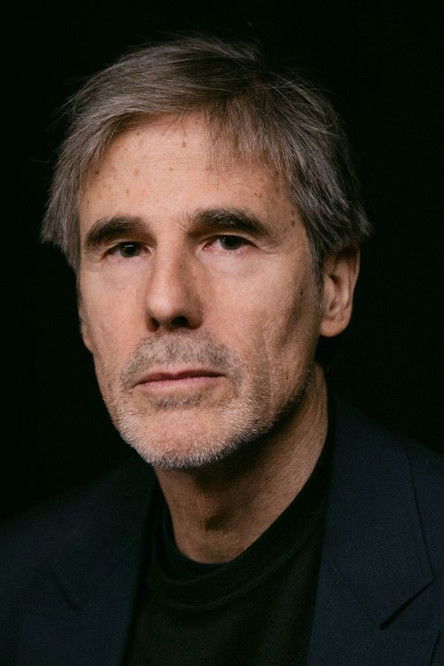
Filmmaker quote“So I feel a responsibility to help first-time filmmakers in Brazil, but also to increase the dialogue between film cultures which are really wonderful and so much closer to us than what we do see on our screens.”
Walter Salles
The Deep Cuts Worth Your Time
Beyond the well-known landmarks of his career, Walter Salles’ filmography contains a number of lesser-known works that reveal the breadth of his artistic vision. Films like Foreign Land (1996) and Behind the Sun (2001) delve into themes of exile, violence, and familial bonds with a subtlety that rewards close viewing.

His earlier documentaries and shorts, such as Chico, or the Country of the Lost Delicacy (1989) and Circuladô (1992), provide fascinating insights into Salles’ evolving aesthetic and thematic interests. These films explore cultural identity and Brazil’s social fabric, laying the groundwork for his later narrative work.
Another underappreciated gem is Adão ou Somos Todos Filhos da Terra (1999), a visually arresting meditation on human origin myths that highlights Salles’ continued interest in the intersection of history, myth, and identity. These deep cuts are essential for anyone seeking a fuller understanding of Salles’ artistic trajectory.
A Director’s Visual Grammar

Salles’ visual style is defined by a careful balance between lyrical beauty and grounded realism. His compositions often favor wide, expansive landscapes that underscore his characters’ vulnerability and isolation, yet he also embraces intimate close-ups that capture subtle emotional shifts.
This duality—between the vastness of the external world and the inner life of his characters—is a hallmark of his visual grammar.
Natural light and warm color palettes frequently dominate his films, lending them an earthy, tactile quality. The camera tends to move fluidly, often following characters on journeys that feel both physical and spiritual.
Salles’ use of long takes and deliberate pacing invites audiences to inhabit the emotional landscapes of his protagonists, fostering empathy through visual immersion.
In collaborations with cinematographers such as César Charlone, Salles has created some of the most memorable images in contemporary Latin American cinema, particularly in The Motorcycle Diaries and Central Station. His framing often incorporates elements of the environment as active participants in the narrative, reinforcing themes of displacement and belonging.
Early Life and Formative Influences
Born in Rio de Janeiro in 1956, Walter Salles grew up during a period of significant political and social upheaval in Brazil. This context deeply informed his worldview and, by extension, his cinematic concerns.
Early exposure to literature, music, and film shaped his sensibility, nurturing an interest in stories that straddle the personal and the political.
Salles has cited a diverse range of filmmakers and artists as influences, including the poetic humanism of Robert Bresson, the political engagement of Costa-Gavras, and the lyrical immediacy of the French New Wave. This eclectic set of inspirations is evident in the way his films blend narrative realism with moments of poetic abstraction.
His formative years also included time abroad, notably in the United States and Europe, which broadened his perspective on migration and cultural identity. This international exposure is reflected in his films’ ability to speak both locally and globally, making him a bridge between Brazilian cinema and the wider world.
Genre Patterns and Left Turns
Though best known for his intimate dramas and road movies, Salles has demonstrated a willingness to experiment with genre throughout his career. For instance, Dark Water (2005) marked a striking departure into psychological horror, adapting a Japanese source material with a unique blend of atmospheric tension and emotional depth.
Similarly, his segment in the anthology film Paris, Je T’aime (2006) showcased his ability to distill complex emotions into brief, poetic vignettes. This openness to genre hybridity reflects Salles’ refusal to be pigeonholed, continually exploring new narrative forms while retaining his thematic core.
His films often resist conventional closure, favoring ambiguity and open-endedness that invite contemplation. This tendency challenges audience expectations and aligns Salles with directors who prioritize mood and character psychology over formulaic storytelling.
Recurring Actors and Creative Chemistry
Salles has worked multiple times with a select group of actors who have become key collaborators in bringing his nuanced characters to life. Fernanda Montenegro, whose performance in Central Station is widely celebrated, remains a figure closely associated with his work. Her ability to convey quiet strength and complexity epitomizes the kind of performances Salles values.
Gael García Bernal is another frequent collaborator, notably starring in The Motorcycle Diaries and On the Road (2012). Bernal’s youthful energy and introspective depth align well with Salles’ interest in journeys of self-discovery and social consciousness.
These repeated partnerships foster a creative chemistry that allows for deeply layered performances, as the actors and director develop a shared language and understanding over time.
Collaborators: Writers, DPs, Editors, Composers
- Writers: Salles often co-writes his projects, working closely with screenwriters such as Daniela Thomas and Alessandra Mahler to develop scripts that balance political urgency with emotional resonance.
- Directors of Photography: The partnership with César Charlone stands out, especially in The Motorcycle Diaries and Central Station, where Charlone’s evocative cinematography amplifies Salles’ thematic concerns.
- Editors: Salles favors editors who can maintain a film’s rhythm while allowing space for reflection, contributing to the contemplative pacing characteristic of his work.
- Composers: The musical scores in his films, often understated and atmospheric, support the emotional landscape without overwhelming it. Collaborations with composers like Antonio Pinto have been particularly effective.
How They Handle Performance

Salles’ directorial approach to actors is marked by a focus on emotional truth and naturalism. He encourages performances that feel lived-in rather than theatrical, fostering an environment where subtlety and nuance can flourish.

His actors often inhabit their roles with a quiet intensity that invites audiences to engage deeply with their struggles and transformations.
He is known for creating a collaborative atmosphere on set, allowing actors the freedom to explore their characters’ motivations and vulnerabilities. This method often results in performances that are understated but profoundly affecting, capturing the complexity of human experience without resorting to melodrama.
Where It Leaves Us
Walter Salles’ body of work occupies a unique space in contemporary cinema—one that bridges local histories and global concerns, the intimate and the epic, the political and the poetic. His films remind us that journeys, whether across continents or within the self, are never just physical but deeply transformative experiences.
As a filmmaker, Salles continues to evolve, embracing new challenges while maintaining a consistent commitment to stories that foreground human dignity and social justice. His career offers valuable lessons in how cinema can navigate complexity without sacrificing emotional resonance, making his work essential viewing for students and lovers of film alike.
In an era defined by displacement and cultural flux, Walter Salles stands as a cinematic guide to the terrain of identity and belonging, crafting films that are both timely and timeless.
Ready for another director deep dive?
Related on Filmmaking Lifestyle
Read next: A Separation: How It Works and Why It Hits, Barton Fink: How It Works and Why It Hits, and 11 Best Walter Salles Films: The Soul of Latin American Cinema.


New comments are not currently accepted.
Comments