
On this pageTap to expand
Wanted to break this down for you guys because I think it’s a massively beneficial mindset shift that can help you all out!
We talk a lot about becoming a good storyteller. Fair enough. If you want a filmmaker career that isn’t just pretty pictures in a row, you need stories. But “be a better storyteller” is vague. It turns into more theory. What I’m talking about here is slightly different. I want you to become a story maker — someone who goes into the world hunting for the raw material, not someone who sits at a desk waiting for the muse to email a perfect plot.
A Little On Outcome Dependency
I wrote to a friend recently that it’s best to go into any filmmaking exercise with zero outcome dependency. This means not expecting anything out of any one project.
Well, this is standard stuff that we all know to be true.
But here’s the thing: I do go out with intention! But it’s not what you’d expect.
One thing I’m loving right now is going out with the intention of getting good stories! I don’t go into any set looking for anything other than a fun time and a good story.
Sometimes I feel like I’m a narrator or storyteller searching for the next great adventure! I’m on the lookout for the next great story in my life!
It’s a really powerful paradigm shift and a great skill for all filmmakers to develop.
That combination — no outcome dependency, but a very clear intention — is the whole post, really. People hear “don’t be attached to the outcome” and think it means wander around hoping something cinematic happens. It doesn’t. You’re not a tourist with a camera. You’re a hunter. You’re just not hunting a specific trophy that has to show up or the day is a failure.

Spot red flags before you sign
Use the same prompts we use to catch vague briefs, scope creep bait, and timeline traps — all in one short discovery framework.
Hunting Stories On Real Client Jobs
This gets real the second somebody is paying you.
A client job is not a student film. There is a brief. There is a logo. There is a person who will watch the cut and say “can we have more of the product.” Cool. Do the brief. I’m not telling you to ignore the brief and “find yourself” in their factory.
I am telling you to walk in with a second job in your head: where is the story?
On a real job, stories hide in boring places. The owner who started the company in a garage and still has the first tool on the wall. The apprentice who is terrified of the camera until you ask what they actually do with their hands. The five seconds between takes when two colleagues take the mickey out of each other and suddenly the company has a pulse. The light in the loading bay at 4pm that makes the place look like a film instead of a brochure.
You get those by being present, not by demanding that the day produce a masterpiece. Zero outcome dependency on “this will be my best commercial.” Full intention on “I will leave with something that feels like a human being was here.”
Practically, that looks like this:
You do the talking-head they asked for. Then you ask one extra question that isn’t on the list. You hang back after the official shots and grab the hands, the door, the walk to the van. You listen in the car park. You notice the thing everyone in the building has stopped noticing.
You’re not tricking the client. You’re doing your job and collecting story. Later, in the edit, that extra material is often what makes the film watchable. The brief gives you structure. The hunt gives you life. If you want a reminder of how stories are usually shaped on the page, three-act structure is useful — but on a Tuesday in a warehouse, you’re not outlining acts. You’re collecting moments that could become acts.
This is also how you start a video production business that doesn’t feel like a sausage factory. Same gear as the next guy. Different eyes. You’re the one who came back with a story.
Plenty Of Adventure Out There
If things don’t work out on any one filmmaking project or exercise…move on! Next adventure! Next! If it isn’t making a good story…move on! Plenty more adventures out there. If it’s going to make a boring story…move on!
It’s still most definitely a great learning experience.
The point is that you, as a story maker, are looking for nothing other than the next great story and adventure to tell!
No outcome dependency.
Just fun and adventure!
What a way to live!
When To Walk Away From A Dead Project
Move on is easy to say on a blog. It’s harder when you’ve already spent three weekends on a short that isn’t breathing.
I’m not telling you to quit every time it gets difficult. Hard and dead are different. Hard is the scene that won’t cut, the actor who needs another take, the client who needs a clearer brief. You stay. You solve it. That’s craft.

Solo shooter? Here’s how to steady the month
Built for freelancers who sell and shoot: simple pipeline habits, reminders, and language tweaks from our free Get More Video Clients playbook.
Dead is when the story itself has no pulse and you keep poking it because you already told people you were making it. Dead is when every conversation about the project makes you smaller. Dead is when you’re protecting an idea that stopped being interesting six months ago, and the only reason it’s still alive is sunk cost and ego.
Walk-away signs I actually use:
The core of the thing bores you when you describe it out loud. Not “this bit is tricky” — bored. You cannot name what the film is about in a sentence that a mate would care about. The collaborators have checked out and you’re the only one still performing enthusiasm. You’ve recut the same lifeless middle twice and the problem isn’t the cut, it’s that nothing happened.
Then you move on. You take the lesson. You do not hold a funeral for three months. Next adventure.
Walking away is not the same as being flaky with a client. If you booked the job, you finish the job or you have an honest conversation and make it right. Story-maker mindset is not a get-out clause for professionalism. It’s a filter for your projects, your practice, the films you choose to keep feeding.
And if you’re early and you need volume, start now on the next thing instead of polishing a corpse. The ceramics class doesn’t keep one cracked pot on the wheel forever. They make another pot.
This Is Not Just Wing It
I need to be blunt here, because “go out and have an adventure” can sound like I’m telling you to turn up with no plan and hope.
Winging it is: no shot list, no questions, no idea who is in the room, “we’ll find it on the day,” and then you find nothing because you weren’t looking with any skill. Winging it is laziness dressed up as jazz.
Story-making is: you did the homework, you know the brief, you know the names, you have a rough shape in mind — and you are willing to drop the shape the second a better story walks in. You have intention. You don’t have a death-grip.
On a documentary-style day, that might mean three questions you will ask, and permission to follow a fourth you didn’t plan. On a narrative day, it might mean you know the scene’s job in the film, and you’re still watching the actors for the take that isn’t the one you storyboarded. On a corporate day, it might mean you protect the product shots and you steal ten minutes for the thing that actually makes the company feel real.
The difference is attention. Winging it is hoping. Story-making is hunting.
You can commit to the practice — the days, the camera time, the people skills — without needing any single project to be The One. That’s the shift. Zero outcome dependency. Full intention. Next great story. Next.
If it isn’t making a good story… you already know what to do.
From structure to dialogue — everything a screenwriter needs.

What Is the Ticking Time Bomb Scenario? Crafting Suspense in Literature

What Is A Narrative? Definition, Examples & How To Write Them Effectively
![What Is Fiction-Writing Mode? Crafting Immersive Narratives [Definitive Guide]](https://filmlifestyle.b-cdn.net/wp-content/uploads/2024/02/861-What-is-Fiction-writing-mode-in-writing.png)
What Is Fiction-Writing Mode? Crafting Immersive Narratives [Definitive Guide]
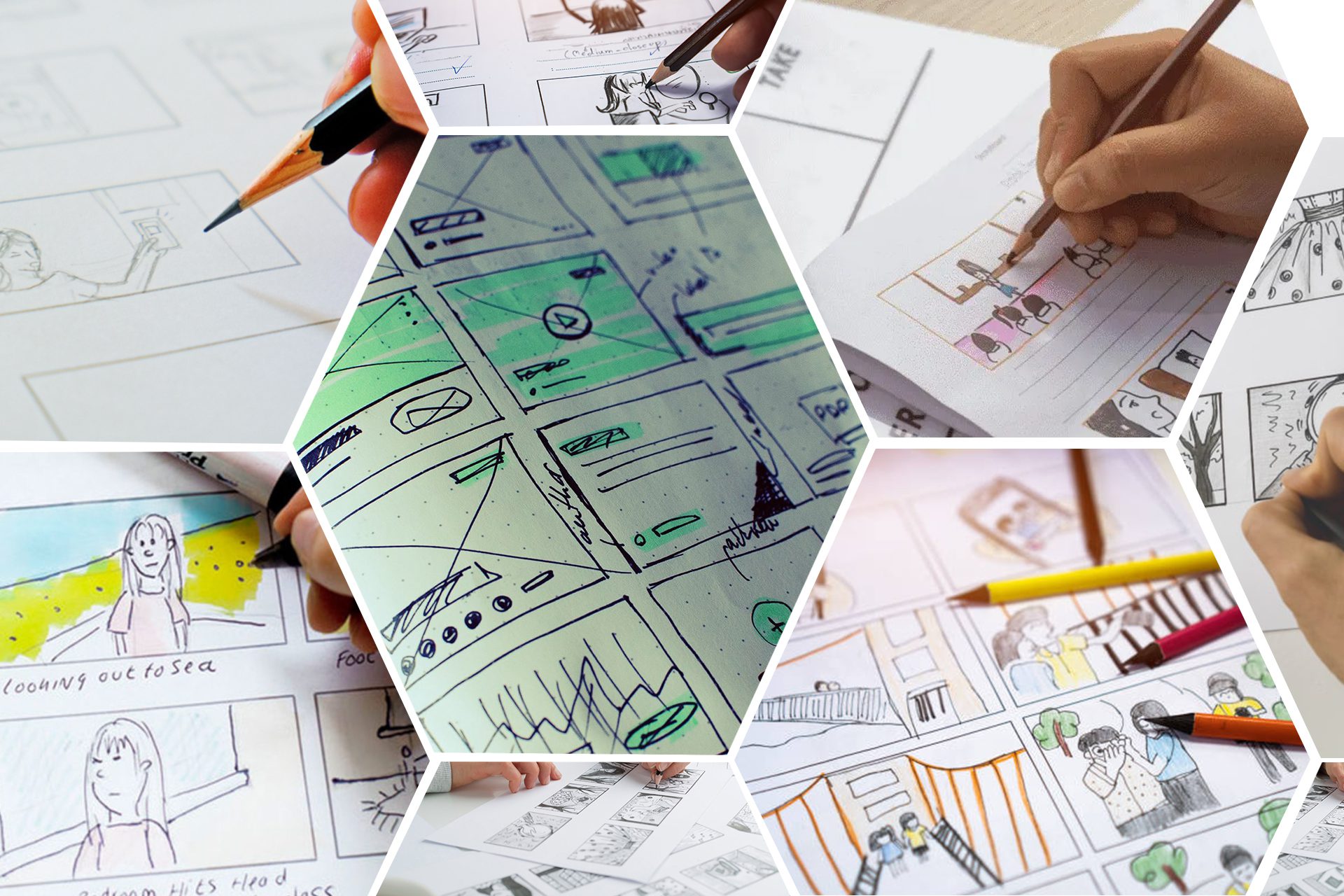
Storyboard Template: The Complete Guide
![What Is a Dead Metaphor? Unveiling the Evolution of Language [Definitive Guide]](https://filmlifestyle.b-cdn.net/wp-content/uploads/2024/02/769-What-is-a-Dead-Metaphor.png)
What Is a Dead Metaphor? Unveiling the Evolution of Language [Definitive Guide]

What Is A Mary Sue Character? Meaning, Examples & Tips
![9 Best Final Draft Alternatives in 2026 [Ranked & Reviewed]](https://filmlifestyle.b-cdn.net/wp-content/uploads/2022/08/Best-Final-Draft-Alternatives.jpg)
9 Best Final Draft Alternatives in 2026 [Ranked & Reviewed]

Best Screenwriting Websites in 2026: 9 Top Screenplay Resource Websites

Blake Snyder Beat Sheet: The Complete Guide


New comments are not currently accepted.
4 comments