On this pageTap to expand
With so many amazing, iconic death scenes in film, it’s hard to say which one truly deserves to be called the greatest of all time.
The most memorable death scenes are often ones that leave an audience shocked, horrified, or laughing their butts off at the pure absurdity.
There are so many different ways a character can die in a film, but the greatest death scenes are ones that complete the story being told.
Some of these great death scenes are funny because the character’s behavior is so unexpected.
Other great movie deaths on this list are sad because we grew attached to the characters throughout the movies.
From the gory violence of The Shining to the bitter sadness of Old Yeller, this is a list of the best movie deaths ever.

Feel free to add any great scenes that we may have missed from this list.
Best Movie Death Scenes
Here are the best movie death scenes. Spoiler alert!
What Are movie death scenes?
Death is a part of life, but it’s also a part of movies. From the earliest silent films to the latest action flick, film has been filled with death scenes.
And while some deaths are more memorable than others, they’re all pretty spectacular in their own right.
Truly great movie deaths capture your attention and get you excited about what’s going to happen next.
They give you goosebumps and make you jump out of your seat. They turn your world upside down and make you feel like anything could happen.
And when that scene finally ends, it feels like a piece of your soul has been stolen from you.
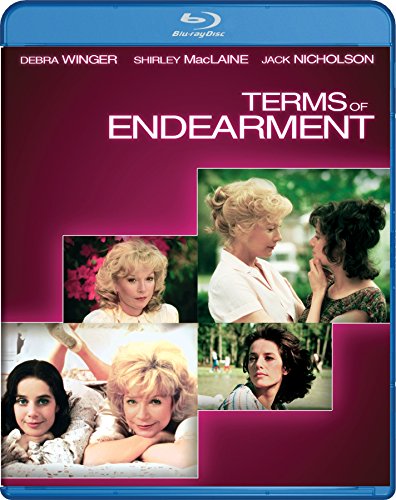
Emma Greenway, Terms Of Endearment
In Terms of Endearment (1983), Debra Winger plays Emma Greenway-Horton, daughter of Aurora Greenway (Shirley MacLaine). Emma is a wife and mother. When her cancer becomes terminal, Aurora and Emma’s husband, Flap, stay with her through the hospital stay in Nebraska.
The scene people remember is Aurora demanding that the nurses give Emma her pain shot, then Emma’s goodbye to her children. She entrusts them to Aurora and dies in the hospital room. The loss lands because the film has already spent years on that mother and daughter.
The mother–daughter fight is the whole movie, and the hospital is where it stops. Emma’s husband, ‘Flap,’ can sit through the vigil, and he still is not the person she chooses for the children. She is done bargaining with the cancer. Aurora can rage at the nurses and still can’t take the illness herself — a mother with all that force, and no deal left to make. What’s lost is the daughter who spent years pushing Aurora away and, in that room, trusts her with the rest of a childhood. People remember “the goodbye” because it is not a speech about courage. It is a mother handing over a life she does not get to finish.
Tony Stark, Avengers: Endgame
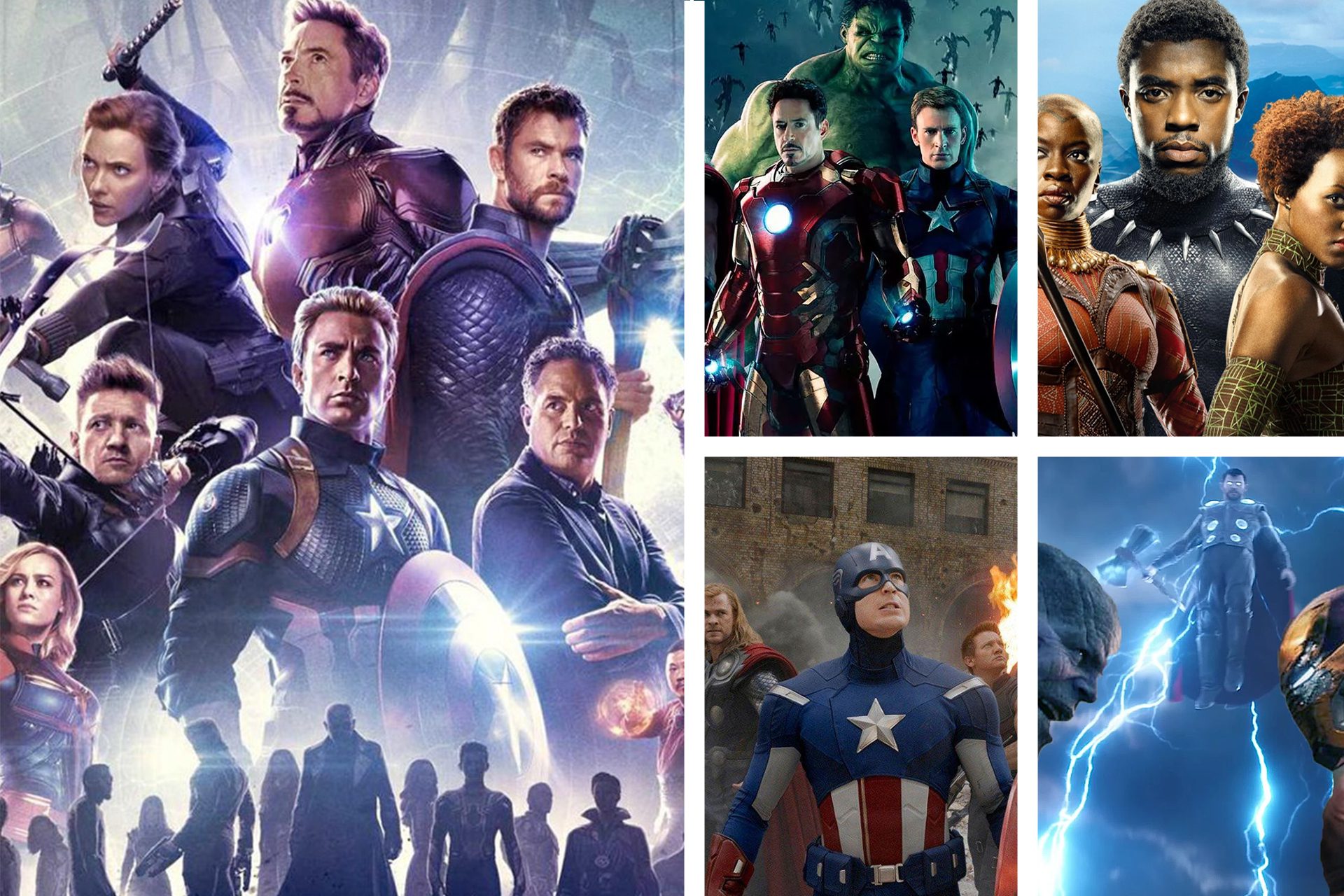
Tony Stark (Robert Downey Jr.) dies at the end of Avengers: Endgame, in the battle with Thanos, after the Avengers have already undone the earlier snap.
Thanos has the Infinity Stones and is about to use them. Tony pulls the stones onto his own gauntlet and snaps, wiping out Thanos and his army. A mortal cannot survive that power. Pepper Potts tells him, “You can rest now.” The film then gives him a funeral with the people he spent the story trying to protect.
It is the last move of a man who spent the story trying to engineer his way out of dying. He won’t pass the stones along — not while he can close his own hand on them — and a human body does not survive that power. The people he spent the story protecting are the ones who remain. He is not among them. Pepper’s “You can rest now” is permission to stop, not a cure. The funeral gathers the people he chose, because the man in the suit finally ran out of ways to save them and stay.

Disney
- Fourth film in the AVENGERS series. (unofficial)
Fourth film in the AVENGERS series. (unofficial)
View on Amazon
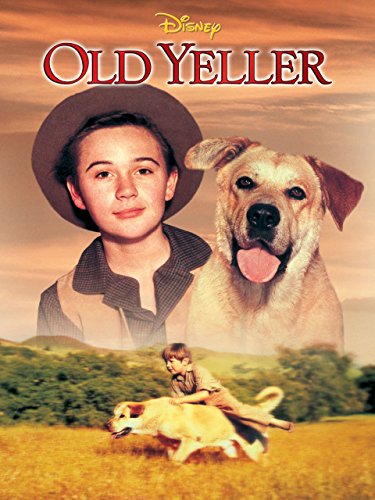
Old Yeller, Old Yeller
In Old Yeller (1957), a stray yellow dog becomes the protector of the Coates family on a Texas homestead while the father is away. Old Yeller fights off a rabid wolf and is bitten. Travis quarantines him in the corn crib, hoping the dog escaped infection.
When Old Yeller shows hydrophobia and lunges at Travis’s little brother, their mother brings a rifle. Travis takes it, because Old Yeller is his dog, and shoots him off-screen. The death is remembered because the boy has to kill the animal that saved his family.
You don’t get a noble speech from the dog, and you do not get to watch the shot land. The film looks away — Travis is the one who has to remember it — and it keeps the killing “off-screen,” because the cruelty is not the bullet. It is the order of events. Old Yeller has already done the brave thing in the fight with the wolf. The hydrophobia is what’s left of him, lunging at a child, and Travis’s mother is right that someone has to end it. He takes the rifle because the dog is his. That’s the part that stays unfair: the right choice, made by the boy who loved him most.
Beth March, Little Women
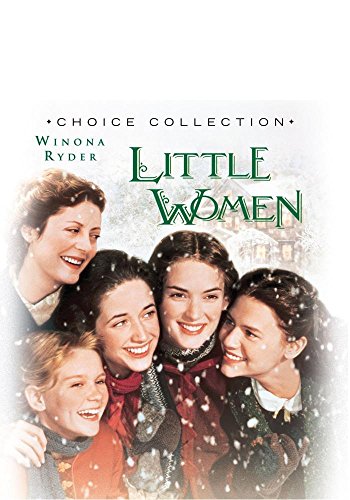
In the 1994 film of Little Women, Claire Danes plays Beth March, the shy third March sister and the family’s pianist. Meg is the eldest, and Meg is the one who marries John Brooke.
Beth catches scarlet fever while nursing a poor family. She lives through the acute illness, but it weakens her heart. Jo is called home years later, and Beth dies of the after-effects, at eighteen. She does not leave children behind. The quiet death is the loss that changes Jo.
Jo’s life is the one the story keeps writing, and “the quiet death” is the loss it cannot soften. The scarlet fever itself is survived — what’s fatal is the heart it leaves behind, and the end comes at eighteen, with no marriage and no children of her own. Meg’s wedding to John Brooke belongs to Meg. Beth’s place was the piano and the quiet middle of that family, and her death is what changes Jo. There is no nursery waiting in another room. Jo is called home for that ending. She can sit with Beth, and she still can’t keep her.
Bambi’s Mother, Bambi
In Bambi (1942), Bambi’s mother is voiced by Paula Winslowe. During Bambi’s first winter she takes him out to find food, and the hunter the animals call Man returns. She tells Bambi to run. A shot kills her off-screen.
Bambi searches for her and cannot find her. The Great Prince of the Forest, his father, leads him home. Bambi II (2006) picks up after that death and follows Bambi with his father. The original scene stays with people because the killing is never shown, only the empty snow and the fawn left behind.
There is no body in the frame and no goodbye she gets to finish. The Great Prince, Bambi’s father, leads him off, and the trail behind them is only snow. The animals already have a name for the hunter, ‘Man,’ and he never has to step into view to take a parent. “Bambi II” can spend a whole film on the father–son years that follow. It can show the fawn how to live in that forest. It can’t rewrite the winter when his mother told him to run and then was not there.

Noah Calhoun And Allie Hamilton, The Notebook
The Notebook (2004), directed by Nick Cassavetes, follows Noah Calhoun and Allie Hamilton as young lovers (Ryan Gosling and Rachel McAdams) and as an elderly couple (James Garner and Gena Rowlands). Jeremy Leven and Jan Sardi wrote the screenplay from Nicholas Sparks’s novel.
Allie has dementia. Noah reads their story from a notebook so she will remember him. After a brief recognition, and after Noah’s heart attack, he goes to her room at night. She knows him again. They die in their sleep holding hands. Gosling and McAdams won the MTV Movie Award for Best Kiss. The film did not win the Golden Globe for Best Motion Picture.
The death is not a twist laid over a courtship. It is the older couple, James Garner’s Noah and Gena Rowlands’s Allie, reaching the same night after the younger story has already been told. The notebook did what he needed it to do: she knew him again. That’s the recognition the reading was for. Ryan Gosling and Rachel McAdams can have the MTV award for “Best Kiss,” and the film can do without a Golden Globe for “Best Motion Picture – Drama.” The scene does not borrow prestige from either prize. It ends on two people holding hands in their sleep, the story finally finished.
Jackie Harrison, Stepmom
In Stepmom (1998), Susan Sarandon plays Jackie Harrison, divorced mother of Anna and Ben. Her ex-husband Luke (Ed Harris) is with photographer Isabel Kelly (Julia Roberts), who is about to become the children’s stepmother.
Jackie has been living with lymphoma, and the latest scans show it is terminal. On Christmas morning she is bedridden. She tells Anna and Ben that she will stay with them as long as they remember her. The film ends on a family photograph that includes Isabel, with Jackie’s death still ahead. The sadness is that goodbye, and the fact that she will not see her children grow up.
What the film withholds is the moment of death. There is no funeral and no last breath played for shock. Jackie’s illness has already given the answer — the latest scans are terminal, and Christmas morning is the scene it offers instead. She’s in bed. Anna and Ben are with her. She is not giving them a date. She’s giving them a way to keep her, for as long as they remember. The last photograph can include Isabel, the stepmother Jackie has spent the movie resisting, because the children will still need someone in the years Jackie won’t see. That is not a trick ending. It is the cost, said while she can still say it to them herself.

Bubba Blue, Forrest Gump
In Forrest Gump (1994), Mykelti Williamson plays Benjamin Buford “Bubba” Blue, Forrest’s friend from Army basic training. Bubba’s plan is to captain a shrimp boat, and he asks Forrest to be his first mate.
In Vietnam, Bubba is shot in an ambush. Forrest carries him out to the river. Bubba asks why it happened and says he wants to go home, and he dies there. Forrest later says Bubba was going to be a shrimping-boat captain, but instead he died by that river.
Forrest can get him to the river. He can’t get him the life after it. Bubba’s plan was a shrimp boat and a first mate, and the ambush ends that future in a few minutes — a captain who never gets the boat, while Forrest is still holding on. The words that matter are not a battle speech. They are a dying man asking why it happened and saying he wants to ‘go home.’ Forrest’s later telling of it stays plain. Bubba was going to be a shrimping-boat captain. He died by that river instead.
Hillary Whitney, Beaches
In Beaches (1988), Barbara Hershey plays Hillary Whitney, the childhood friend of singer C.C. Bloom (Bette Midler). They meet under a boardwalk as girls and stay in each other’s lives through careers, marriages, and Hillary’s daughter, Victoria.
When Victoria is a girl, Hillary is diagnosed with viral cardiomyopathy and needs a heart transplant she is unlikely to get. She collapses in San Francisco. C.C. leaves a Hollywood Bowl rehearsal, brings Hillary and Victoria back to the beach house, and Hillary dies there after leaving Victoria in C.C.’s care.
There is no rescue waiting after the collapse. Hillary’s diagnosis is viral cardiomyopathy, the transplant she’s waiting on is not coming, and the collapse in San Francisco only hurries an ending the film has already chosen. C.C. leaves the Hollywood Bowl rehearsal for the beach house, and that is where the performance stops. A friendship that started under a boardwalk ends with a mother who can’t stay — and with Victoria left to the friend Hillary trusts to finish raising her.
What Is The Saddest Movie Death Ever?
What is the saddest movie death ever?
It’s a hard question to answer. After all, there are so many contenders! Not just in film, but in literature and real life. The death of a beloved character is often a sad occasion, even in comedies.
What makes it so sad? Is it their dying words? Their manner of death? Their relationship with other characters?
Let’s look at some popular picks for the saddest deaths in film.
The first one is Jack Dawson in Titanic. He gets Rose onto a piece of floating debris and stays in the freezing water. He makes her promise to survive and never let go of that promise. After he dies, she says, “I’ll never let go, Jack,” and lets his body sink. Years later the elderly Rose dies in her sleep, and the film returns to Jack.
Professor Charles Xavier dies in X-Men: The Last Stand when Jean Grey, as the Dark Phoenix, disintegrates him in her childhood home. A post-credits scene shows a comatose patient speaking in Xavier’s voice, the film’s way of saying his consciousness survived the body.
They’re sad for different reasons, which is why this question does not settle on one winner. With Jack, the hurt is the promise and the water: he can put Rose on the debris, and he can’t follow her onto it. The line after he’s gone belongs to her. With Xavier, there is not even that exchange. Jean, as ‘the Dark Phoenix,’ disintegrates him inside a childhood home, and the only softness afterward is his voice in someone else’s body. Dying words, manner, relationship — those are the questions this section already asked, and they land differently in each death.
Ready to learn about some other Film Movements or Film History?
Deepen your understanding of Cinema — explore more Film Theory.

Let's Get Lost: The Essential Breakdown

The Old Dark House: Context, Themes, and Style

Night and Fog: Themes, Mood, and Visual Language

Runaway Train: Key Ideas and Lasting Influence

Even the Wind Is Afraid: A Deep Dive Into Story and Style

Introducing The Big Combo: Why It Still Matters

A Fistful of Dollars: What to Notice on a Rewatch

Anima: A Guide to Watching It Like a Critic

Raging Bull: The Meaning Behind the Moments


New comments are not currently accepted.
Comments