On this pageTap to expand
The best stop-motion movies are some of the most creative and inspiring films to ever be created.
The artists who create these masterpieces put their hearts and souls into their work, often spending years on a single feature-length film.
What makes a good stop motion movie?
If you’re not familiar with stop-motion animation, it’s a process where real objects are moved in tiny increments and photographed one frame at a time.
Most of the time, these objects are puppets that have been handcrafted by the artists themselves.
They look nothing like regular humans, but they’re usually some kind of animal or fantastical creature.
The best stop motion movies aren’t just great stories; they’re also visual marvels.
These are the kinds of films that take you to a world that’s different from anything you’ve seen before — where the characters feel real and the environment is so vivid that it feels like it really exists.
Best Stop Motion Movies
The term stop motion is often used interchangeably with clay animation, puppet animation and stop-frame animation.
While similar techniques can be used in all three types of animation, each has its own unique qualities which make them different from one another.
A lot of stop motion films feature characters that have been built from scratch using various materials such as clay, wood, metal, or plasticine.
Let’s take a look at our list of the best stop motion movies of all time.
Every film in this guide
| Film | Year |
|---|---|
| The Tale Of The Fox | 1937 |
| Chicken Run | 2000 |
| Fantastic Mr. Fox | 2009 |
| Jason And The Argonauts | 1963 |
| Coraline | 2009 |
| Anomalisa | 2015 |
| Mary And Max | 2009 |
| Isle of Dogs | 2018 |
| Kubo And The Two Strings | 2016 |
| The Nightmare Before Christmas | 1993 |
The Tale Of The Fox (1937)
The Tale of the Fox (French: Le Roman de Renard) is a puppet-animated feature directed by the Russian-French animator Ladislas Starevich, working with his daughter Irène Starevich, and produced in Paris over roughly eighteen months in 1929 and 1930.
It was Starevich’s first fully animated feature and one of the earliest animated features ever made, adapting the medieval European fable cycle of Reynard the Fox, a cunning trickster who repeatedly outwits the animal kingdom’s lion king and the nobles who try to bring him to justice.
Starevich animated intricately carved puppets with real fur, cloth and tiny props rather than silhouettes, giving the film a tactile, handmade texture that still looks remarkable today.
Financing troubles and difficulty securing a synchronized soundtrack delayed the film’s release for years; it finally premiered in Germany in 1937 before reaching French audiences.
Its meticulous puppet work and expressive character animation influenced generations of later stop-motion filmmakers, and it remains a landmark of early animated cinema.
Chicken Run (2000)
Chicken Run is a 2000 stop-motion clay animated comedy film from the Aardman Animations studio. The plot centers around a group of chickens who plan to escape from their farmer owner, and their paranoid and incompetent coop guard dog.
The voice cast includes Mel Gibson, Timothy Spall, Jane Horrocks, Miranda Richardson, Tony Haygarth and Tom Wilkinson.
The film was directed by Peter Lord and Nick Park (in Park’s feature directorial debut), creators of Wallace & Gromit. The film was released on 17 July 2000 by DreamWorks Pictures.
Chicken Run grossed $224.7 million worldwide on a $32 million budget, becoming the fourth highest-grossing stop motion animated film at the time of its release.
The Academy Award for Best Animated Feature did not yet exist in 2000, and Chicken Run went home from that year’s Oscars without a nomination — a snub that, along with the previous year’s exclusion of Toy Story 2, helped push the Academy to create the Best Animated Feature category in time for the following year’s ceremony.
Chicken Run fared better at home, receiving six nominations at the 56th British Academy Film Awards, including Best Actress in a Supporting Role for Miranda Richardson and Best Film Music for John Powell and Harry Gregson-Williams.
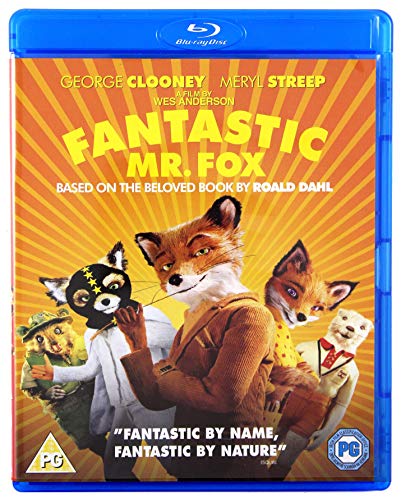
Fantastic Mr. Fox (2009)
Fantastic Mr. Fox is a 2009 stop-motion comedy directed by Wes Anderson, adapted from Roald Dahl’s 1970 children’s novel of the same name.
George Clooney and Meryl Streep voice Mr. and Mrs. Fox, a couple trying to settle into a safer, more respectable life after years of Mr. Fox’s chicken-thieving ways.
When his old instincts get the better of him, Mr. Fox’s raids on three vicious farmers, Boggis, Bunce and Bean, put his family and the entire animal community underground in danger, forcing the animals to band together against the farmers’ siege.

The voice cast also includes Jason Schwartzman as the Foxes’ son Ash, Bill Murray, Willem Dafoe, Michael Gambon and Owen Wilson.
Anderson’s stop-motion style, with its handcrafted textures, deadpan humor and meticulous production design, gives the film a distinct look that stands apart from the smoother CGI animation dominating the genre at the time.
Jason And The Argonauts (1963)
Directed by Don Chaffey, Jason and the Argonauts follows Jason (Todd Armstrong) as he leads a crew of heroes aboard the ship Argo in search of the Golden Fleece, guided and tested along the way by the gods Zeus and Hera.
Ray Harryhausen’s stop-motion effects bring the film’s mythological dangers to life, including a giant bronze statue called Talos, the harpies tormenting the blind prophet Phineas, and a seven-headed Hydra guarding the Fleece in Colchis.
After Jason and his crew retrieve the Fleece, King Aeëtes sows the Hydra’s teeth to summon an army of skeleton warriors, leading to Harryhausen’s legendary skeleton-army swordfight, one of the most celebrated set pieces in stop-motion history.
The princess Medea, drawn to Jason through the influence of the gods, helps him survive Colchis, setting up the pair’s fateful partnership from Greek mythology.

Coraline (2009)

Coraline is a 2009 American stop-motion animated fantasy film based on Neil Gaiman’s 2002 novel of the same name. The film was produced by Laika and distributed by Focus Features.
It was released in theaters on February 6, 2009.
Produced by Portland, Oregon’s Laika (the studio that grew out of Will Vinton Studios), Coraline was the first stop-motion feature conceived and photographed in stereoscopic 3D. The film received generally positive reviews and was nominated for the Academy Award for Best Animated Feature at the 82nd Academy Awards; Up took the win.
Screenwriter and director Henry Selick adapted Gaiman’s novel for the screen. Composer Carter Burwell wrote the film score, which includes two songs written by Black Francis: Falling and Windstorm.
The film premiered at the Ziegfeld Theatre on February 5, 2009, and it opened in wide release on February 6, 2009.

Understanding Stop Motion
What Are stop motion movies?
Stop motion animation involves shooting a series of images or frames in rapid succession and arranging them to create the illusion of movement when the frames are played back.
The technique predates the mid-20th century by decades; Norman McLaren later popularized related pixilation techniques, and animators such as Will Vinton and Phil Tippett refined clay and creature work for film and television.
This type of animation usually involves subjects that are physically manipulated to appear as if they are moving on their own, as opposed to using traditional animation techniques where objects are drawn or computer-generated and made to move or talk.
Stop motion films can be made using clay figures, puppets, dolls, action figures, stuffed animals, toys and even photographs.
Creating a stop motion film often requires a lot of time and effort from the animator as it can take hours or days just to shoot a few seconds of footage.
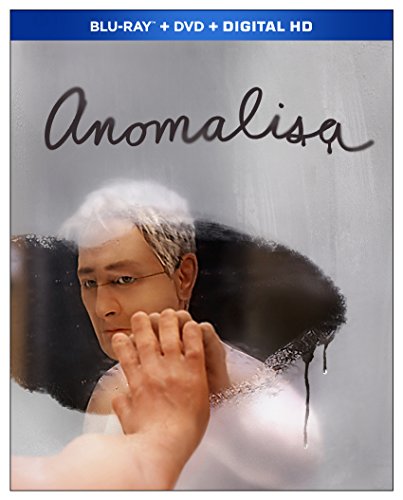
Anomalisa (2015)

Anomalisa is a 2015 American stop-motion animated drama film directed and produced by Charlie Kaufman and Duke Johnson. It adapts Kaufman’s 2005 “sound play” of the same name, written for Carter Burwell’s Theater of the New Ear evenings of staged radio-style performances.
Anomalisa is a stop motion movie that deals with human connection and loneliness. Directed by Charlie Kaufman (Being John Malkovich, Adaptation) who also wrote the screenplay.
Co-director Duke Johnson, a partner at Starburns Industries known for stop-motion work including Community’s “Abed’s Uncontrollable Christmas,” led the animation side of the production.
It tells a story about a man who is tired of his life and has nothing but meaningless business trips to look forward to. He doesn’t feel connected to anyone anymore and he’s desperate for some human contact. One night while staying in Cincinnati he meets a woman at a bar and they have an instant connection.
He invites her to his hotel room where they spend an intense night together that changes his life forever. The next morning he wakes up to find that the fragile connection he felt with her has already begun to fade, and the film closes on his uncertain return to his everyday routine.
Mary And Max (2009)

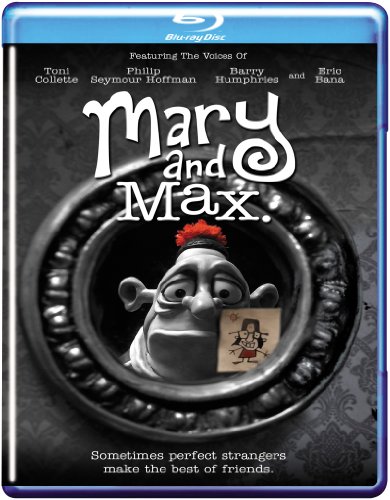
Mary and Max is about the unlikely friendship between Mary Daisy Dinkle (a Jewish 8-year-old girl living in Melbourne, Australia) and Max Horovitz (an obese 44-year-old man living with Asperger syndrome in New York City).
In 1979, when Mary is eight and Max is forty-four, they begin exchanging letters after each receives the other’s name in their divorced parents’ address books.
Isle of Dogs (2018)

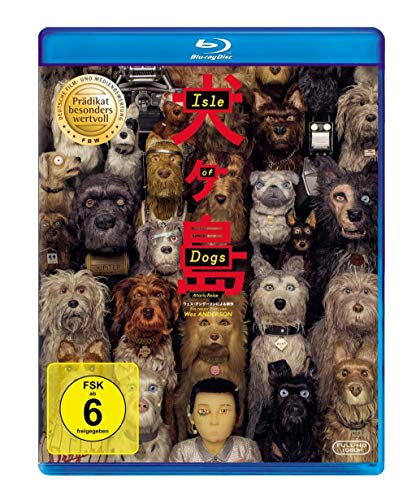
Isle of Dogs is a 2018 stop-motion animated film directed by Wes Anderson. This is Anderson’s second animated film, following Fantastic Mr Fox (2009).
It was released in the United Kingdom on March 23, 2018 and in the United States on March 24, 2018. The film received critical acclaim and has grossed over $59 million against a $55 million budget.
Set in Japan, Isle of Dogs tells the story of Atari Kobayashi, 12-year-old ward to corrupt Mayor Kobayashi. When all the canine pets of Megasaki City are exiled to a vast garbage dump, Atari sets off alone in a miniature Junior-Turbo Prop and flies to Trash Island in search of his bodyguard-dog, Spots.
There, with the assistance of a pack of newly-found mongrel friends, he begins an epic journey that will decide the fate and future of the entire Prefecture.
Disney
- The disk has English audio.
The disk has English audio.
View on AmazonKubo And The Two Strings (2016)
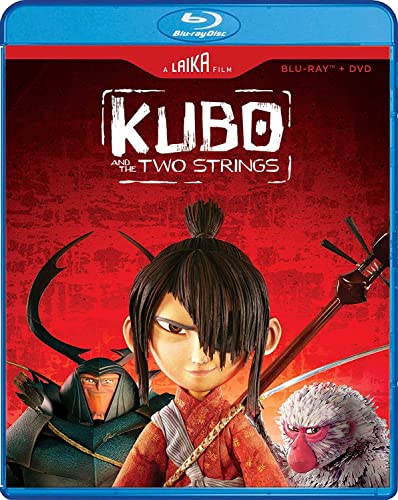
Kubo and the Two Strings (2016) is a Laika stop-motion fantasy that was a pleasure to watch. It had a good story with great animation, but I think it could have been better.
The voice acting in Kubo And The Two Strings (2016) was good. Art Parkinson played the main character, Kubo. Charlize Theron voiced Monkey (tied to Kubo’s mother), and Matthew McConaughey voiced Beetle.
Each character had their own unique voice, so it was easy to tell who was speaking at any given time.
The plot follows young Kubo, who uses a magical shamisen to bring origami to life while caring for his ailing mother — until vengeful spirits connected to his grandfather, the Moon King, force him onto a quest for his late father’s armor, joined by Monkey and Beetle.
The plot was interesting because it introduced mystical elements like ghosts and other creatures I’ve never seen before in other movies. There were some surprising twists as well.
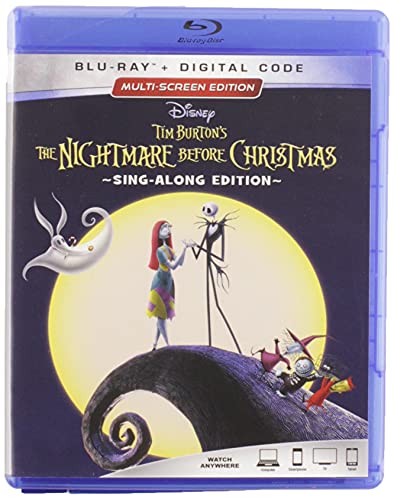
The Nightmare Before Christmas (1993)

Director: Henry Selick Writers: Tim Burton (story), Caroline Thompson (screenplay) Starring: Danny Elfman, Chris Sarandon, Catherine O’Hara, William Hickey, Jeffrey Jones, Paul Reubens, Robert Grossmith, Ed Ivory
The Nightmare Before Christmas is a 1993 American stop-motion musical fantasy film directed by Henry Selick and produced/co-written by Tim Burton. The film tells the story of Jack Skellington, the Pumpkin King of Halloween Town, who discovers Christmas Town and decides his town should take over Christmas for a year.
He orders Santa Claus kidnapped so he can play “Sandy Claws,” then has to rescue Santa and undo the damage after his well-meant takeover goes disastrously wrong.
The Nightmare Before Christmas began life as a three-page poem Burton wrote in 1982, while working as an animator at Disney, drawing on the rhythms of A Visit from St. Nicholas and the spirit of TV specials like How the Grinch Stole Christmas!
Disney considered developing it as a short film or television special around the same time as Burton’s stop-motion short Vincent (1982), but the project stalled for years while Burton went on to direct Pee-wee’s Big Adventure, Beetlejuice, Batman and Edward Scissorhands.
Disney finally struck a development deal with Burton in 1990, and production on the feature began in 1991 under director Henry Selick, with Burton serving as producer and co-writer of the story.
First Stop Motion Movies
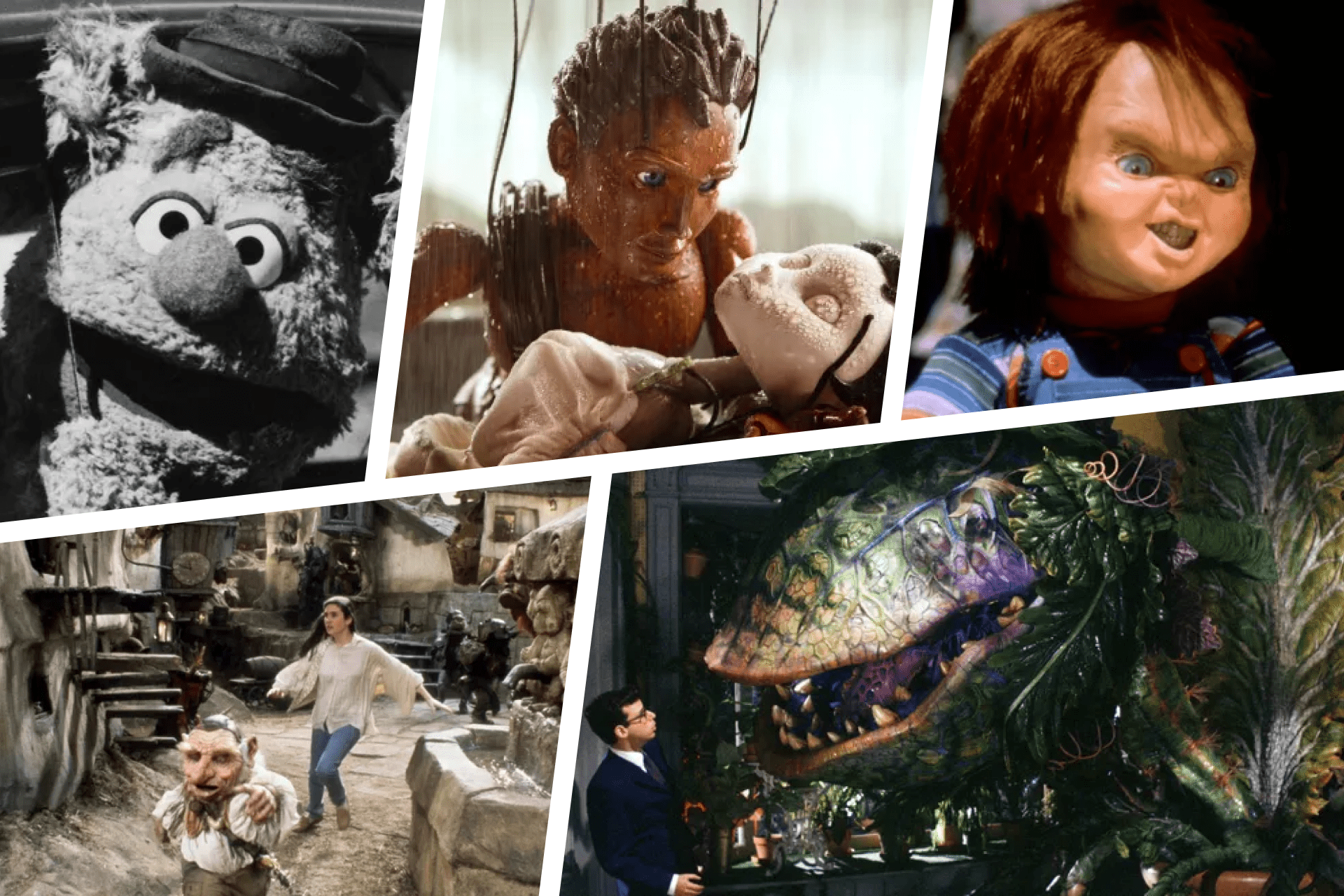
Early stop-motion and related trick photography appear by the late 1890s and early 1900s — for example in the work of Georges Méliès and in J. Stuart Blackton’s The Haunted Hotel (1907), which used stop-camera techniques to animate objects on screen. Charles-Émile Reynaud’s earlier Théâtre Optique programs (such as Pauvre Pierrot, 1892) were pioneering projected animation, but they were drawn image bands, not puppet stop-motion features.
Puppet and model animation developed through the early 20th century in shorts and effects work, then in feature-length projects, with Ray Harryhausen’s 1963 film Jason and the Argonauts among the best-known showcases.
One of Harryhausen’s most famous creations is the skeleton fight scene from Jason and the Argonauts. The sequence pits live-action fighters against seven stop-motion skeletons and took about four and a half months to animate, with Harryhausen often managing only about 13 or 14 frames on a difficult day.
Stop Motion Movie Feats
There are many different ways to create stop motion movies. In the article below we will review some of the more classical methods and their advantages and drawbacks.
The first thing that you need is a camera, obviously.
There are several types of cameras that can be used for stop-motion animation, but most people prefer to use a digital camera for its ease of use and its ability to record high quality images at a relatively low cost.
You will probably want to buy a tripod for your camera so that it remains steady during the recording process. If you do not have one, a stack of books can also work well if you do not plan on making very long movies (the books should be at least as tall as your camera).
You may also want to invest in a remote shutter release so that you can take pictures without actually touching the camera.
Now that you have your equipment, you need something to animate! A puppet can work great, but there are other options as well.
Ready to learn about some other Film Movements & Film History?
Deepen your understanding of Cinema — explore more Film Theory.

Incendies: Context, Themes, and Style

No Fear, No Die: Symbolism and Interpretation

Frances Ha: The Meaning Behind the Moments

Lola: A Guide to Its Meaning and Impact

A Bay of Blood: Visual Style, Ideas, and Impact

Once Upon a Time in Anatolia: A Modern Appreciation

Demon Seed: A Guide to Watching It Like a Critic

Lone Wolf and Cub: The Final Conflict: A Modern Appreciation

Ex Machina: What Makes It a Classic


New comments are not currently accepted.
Comments