
On this pageTap to expand
David Lean stands as one of the towering figures of British cinema, a director whose name is synonymous with the epic film genre yet whose work spans a remarkable range of styles and themes. Born in Croydon, Surrey in 1908, Lean’s career stretched from the early 1940s to the mid-1980s, during which he crafted films notable for their monumental scope and emotional depth.
His meticulous craftsmanship and ability to weave individual human dramas into vast historical tapestries mark him as a filmmaker of extraordinary vision and technical skill.

Lean’s films are immediately recognizable for their sweeping landscapes, carefully composed shots, and a profound narrative ambition. From the sun-scorched deserts of Lawrence of Arabia to the icy Russian expanses of Doctor Zhivago, his work explores how personal and political histories collide. Yet beneath that grandeur lies a director deeply invested in character psychology and moral complexity, inviting audiences not only to see but to feel the weight of his stories.
Though often categorized as a master of cinema’s grand spectacle, Lean’s early and lesser-known works reveal the subtler side of his artistry. Films like Brief Encounter and Great Expectations showcase his sensitivity to intimate human emotion and the social realities of mid-century Britain. The breadth of Lean’s oeuvre—from intimate dramas to monumental epics—illustrates a restless creative spirit continually striving to balance scale with nuance.
Such a career cannot be divorced from its cinematic influences. Lean drew inspiration from a diverse array of filmmakers whose own explorations of human drama and visual storytelling informed his aesthetic.
His work shares affinities with directors known for both technical rigor and emotional resonance, placing Lean in a lineage of filmmakers devoted to cinema as a powerful narrative and artistic medium.
Genre Patterns and Left Turns
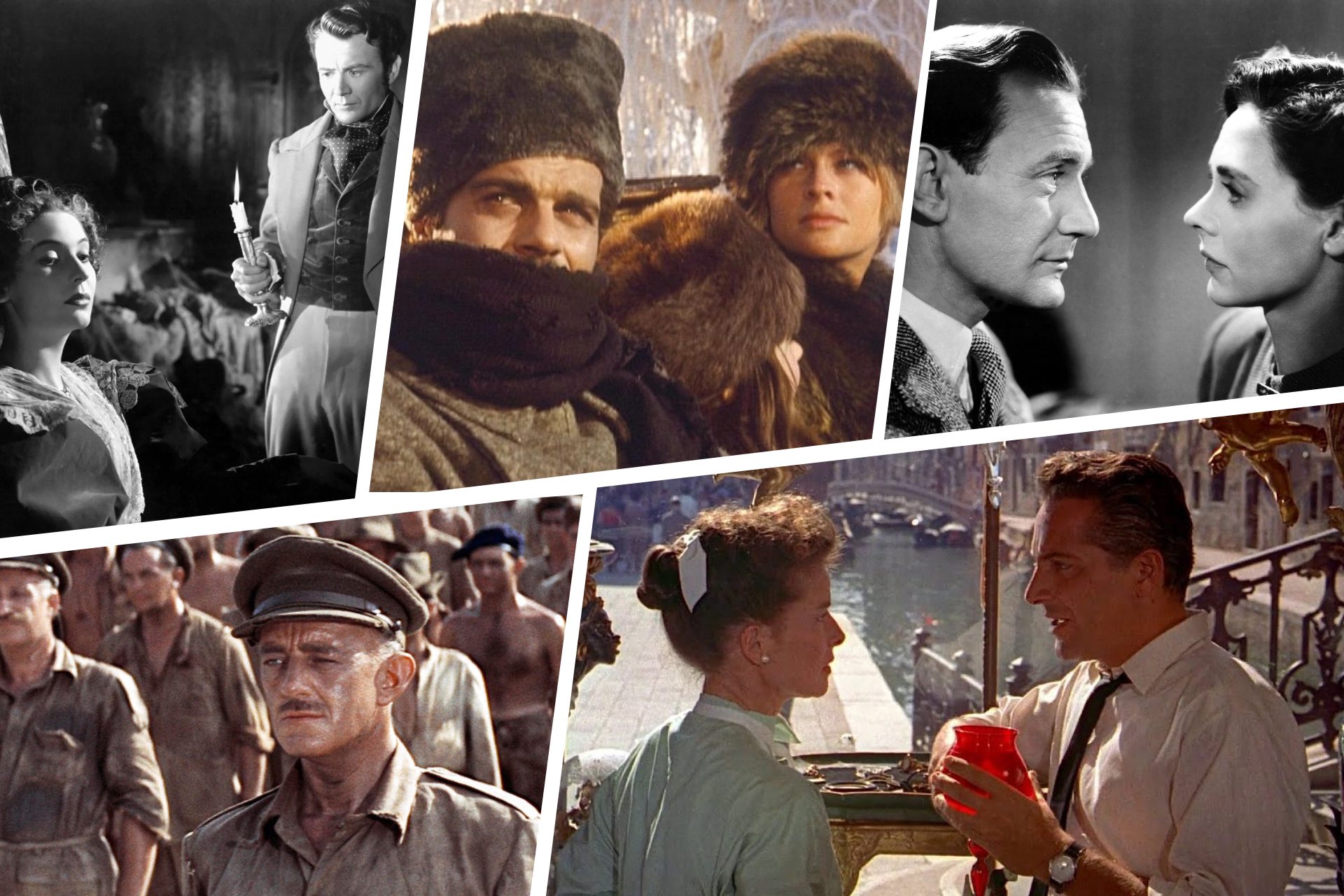
David Lean’s filmography reveals a director comfortable with a variety of genres but most often drawn to historical drama and literary adaptations. His early career was rooted in British social realism and melodrama, as evidenced by films like Brief Encounter (1945) and Great Expectations (1946). These works showcase his ability to probe personal relationships with psychological subtlety, often focusing on themes of love, loss, and social constraints.

By the 1950s and 60s, Lean transitioned toward large-scale epics, a shift that would define his global reputation. Films such as The Bridge on the River Kwai (1957) and Lawrence of Arabia (1962) exemplify his command of the war film and adventure epic, where grand narrative arcs unfold against meticulously recreated historical settings. Even within these sprawling narratives, Lean’s interest in character complexity remains central.
Despite this pattern, Lean occasionally took unexpected turns. Summertime (1955) offers a romantic drama set in Venice, markedly different from his epics but no less engrossing, exploring loneliness and the search for connection. Similarly, Blithe Spirit (1945) delves into comedy and the supernatural with a lightness rarely associated with his later work. These genre diversions underscore Lean’s versatility and refusal to be pigeonholed.

Build trust before you talk price
The checklist includes rapport builders and clarifying questions so prospects feel heard — and you leave with what you need to quote accurately.
Recurring Actors and Creative Chemistry
While David Lean did not consistently rely on a fixed troupe of actors, certain performers became closely associated with his work, contributing to the emotional resonance of his films. Notably, Alec Guinness appears in multiple Lean projects, including his portrayal of Colonel Nicholson in The Bridge on the River Kwai. Guinness’s capacity for both intensity and subtlety made him an ideal collaborator for Lean’s complex character studies.

Peter O’Toole’s iconic performance as T.E. Lawrence in Lawrence of Arabia is another cornerstone of Lean’s actor-director collaborations. O’Toole’s enigmatic charisma perfectly matched Lean’s vision of a conflicted and mythic hero, creating a portrait of enduring power. Similarly, Omar Sharif’s work with Lean in Lawrence of Arabia and Doctor Zhivago helped define the emotional heart of those films.
Lean’s relationships with actors were marked by an exacting but respectful approach. He demanded precision and depth but allowed space for performances to breathe within his carefully constructed frames. This balance helped elicit some of the most memorable acting in mid-20th-century cinema.
What Filmmakers Can Learn From Them
- Meticulous Preparation: Lean’s dedication to historical accuracy and detailed set design demonstrates the power of preparation in creating immersive worlds.
- Balancing Scale and Intimacy: His work shows that even the largest epics benefit from a focus on character-driven storytelling.
- Visual Storytelling: Lean’s compositions often convey narrative information and emotional subtext without reliance on dialogue.
- Editing as Narrative Sculpting: His careful control over pacing and rhythm provides lessons in how editing shapes audience engagement.
- Flexibility Across Genres: Lean’s career illustrates the value of versatility and the courage to explore different storytelling modes.
Place in National Cinema and Film History
David Lean occupies a pivotal role in British cinema, representing both its postwar maturity and its aspirations on the global stage. Emerging from the wartime film unit with In Which We Serve (1942), Lean helped define a distinctly British cinematic voice—one that combined social realism with formal innovation.
His adaptations of Dickens with Great Expectations and Oliver Twist helped elevate literary adaptations to new artistic heights, influencing countless filmmakers in Britain and beyond. By the 1950s and 60s, Lean’s epics brought British cinema international acclaim, placing it in conversation with Hollywood spectacles while retaining a unique aesthetic sensibility.
In the broader history of film, Lean’s legacy is as a master of the epic form, whose technical prowess and narrative ambition set standards for the genre. His influence can be seen in the work of later directors who combine grand historical canvases with intimate storytelling.
Worldview, Politics, and Subtext
Lean’s films often grapple with themes of empire, identity, and the human cost of history. Lawrence of Arabia is not only a biographical epic but also a meditation on colonialism and the contradictions of heroism. Similarly, The Bridge on the River Kwai explores the complexities of duty, honor, and madness within a wartime context.
Though Lean rarely imbued his films with overt political polemics, a subtle critique of power structures and imperial legacies permeates his work. His characters frequently confront the weight of history and the ambiguities of moral choice, reflecting a worldview attuned to complexity rather than ideology.
This nuanced approach avoids simplistic binaries, instead presenting history as a contested space where personal and political dramas intertwine.
Collaborators: Writers, DPs, Editors, Composers
Lean’s creative partnerships were crucial to the realization of his vision. He frequently collaborated with screenwriters who could adapt complex source material with clarity and emotional insight. For example, Robert Bolt’s screenplay for Lawrence of Arabia was instrumental in shaping the film’s layered narrative.
The director’s relationship with cinematographers was equally vital. Freddie Young, the cinematographer on several of Lean’s epics, including Lawrence of Arabia and Doctor Zhivago, helped define the visual grandeur and luminous color palettes that characterize these films.

Film editing, often overseen by Lean himself or trusted editors, was approached with a sculptor’s precision, ensuring that pacing and rhythm enhanced the storytelling rather than merely serving technical needs. Music also played a defining role, with composers such as Maurice Jarre providing sweeping scores that matched the emotional and narrative scale.
Editing Rhythm and Narrative Shape
Lean’s editing style is marked by deliberate pacing and a clear narrative structure. He favored long takes and measured cuts, allowing the audience to fully immerse in the environment and emotional landscape. This is particularly evident in scenes that emphasize the vastness of setting, such as the desert sequences in Lawrence of Arabia.

A practical playbook for people who sell & shoot
Short chapters you can skim between jobs: how to stay visible to buyers, follow up without cringe, and keep the pipeline honest.
At the same time, Lean employed montage and cross-cutting where dramatic tension demanded it, such as in the construction sequences of The Bridge on the River Kwai. His editing choices often mirror the psychological states of characters, using rhythm to underscore themes of isolation, conflict, or revelation.
The result is a cinematic experience that feels both grand and intimate, where narrative momentum is balanced with contemplative moments.
The Breakthrough Moment
While Lean’s career began with solid wartime dramas like In Which We Serve, his breakthrough as a major international director came with The Bridge on the River Kwai in 1957. This film marked a turning point, garnering widespread acclaim for its combination of epic storytelling, technical mastery, and psychological complexity.
The success of The Bridge on the River Kwai opened doors for Lean to undertake even more ambitious projects, culminating in Lawrence of Arabia, which solidified his reputation as a filmmaker capable of shaping history into mythic cinema. This period represents Lean’s ascendance to the highest ranks of international auteurs.
The Films That Best Represent Their Style

- Lawrence of Arabia (1962) – The epitome of Lean’s epic vision, blending breathtaking visuals with a profound character study.
- The Bridge on the River Kwai (1957) – A war film that balances intense human drama with a critical look at honor and madness.
- Doctor Zhivago (1965) – Combining romance and revolution, this film showcases Lean’s skill in adapting complex literary material.
- Brief Encounter (1945) – A tender, restrained exploration of forbidden love, revealing Lean’s early mastery of intimate drama.
- Great Expectations (1946) – An atmospheric adaptation of Dickens that demonstrates Lean’s gift for mood and character.
- A Passage to India (1984) – His final film returns to themes of empire and cultural conflict, rendered with mature sensitivity.
Related on Filmmaking Lifestyle

Read next: A Separation: How It Works and Why It Hits, Barton Fink: How It Works and Why It Hits, and 19 Best David Lean Films: The English Master Filmmaker.
Wrapping Up
David Lean’s cinematic legacy is one of ambition, precision, and humanity. His films continue to inspire filmmakers and audiences alike with their fusion of epic scale and intimate storytelling.
Throughout a career that spanned over four decades, he demonstrated that grand spectacle need not overshadow character complexity, and that historical narratives can carry profound psychological insight.
From the intimate emotional terrain of Brief Encounter to the vast deserts of Lawrence of Arabia, Lean’s work remains a masterclass in filmmaking craft. His meticulous attention to detail, narrative rhythm, and collaborative spirit offers invaluable lessons for directors seeking to blend art and spectacle. Ultimately, Lean’s films endure as testaments to cinema’s capacity to illuminate the human condition in all its grandeur and subtlety.
Which filmmaker should we cover next?


New comments are not currently accepted.
Comments