
On this pageTap to expand
Southeast Asia is a diverse region with a rich cultural heritage and a rapidly growing film industry. The region is home to a wide range of languages, religions, and traditions, and its cinema reflects this diversity.
Southeast Asian cinema is known for its unique storytelling styles, blending traditional storytelling techniques with modern filmmaking technology. Many Southeast Asian films are known for their emphasis on visual storytelling, with filmmakers relying on symbolism, metaphor, and visual imagery to convey complex ideas.
Some of the most well-known Southeast Asian films include The Scent of Green Papaya from Vietnam, The Raid from Indonesia, and Uncle Boonmee Who Can Recall His Past Lives from Thailand. These films have been praised for their innovative storytelling techniques, unique cultural perspectives, and stunning visual aesthetics.
In recent years, Southeast Asian cinema has been gaining international recognition, with films from the region being selected for prestigious film festivals around the world. The growth of digital technology has also made it easier for filmmakers in the region to create and distribute their work, leading to a flourishing independent film scene.
Best Southeast Asian Films
Overall, Southeast Asian cinema offers a unique perspective on the region's history, culture, and contemporary issues, and is a vital part of the global film industry.
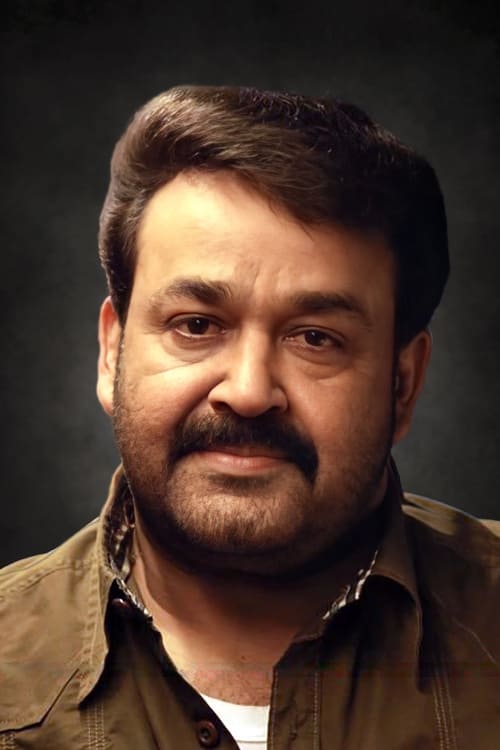
Filmmaker quote“In the Indian system of filmmaking, you don't plan well in advance, stick to a storyboard, or deliver only the scripted lines.”
Mohanlal
Every film in this guide
Cinematographer quote“I thought of learning cinematography, so I assisted a cinematographer for an ad.”
Fatima Sana Shaikh

| Film | Year |
|---|---|
| The Act of Killing | 2012 |
| The Look of Silence | 2014 |
| The Raid | 2011 |
| Marlina the Murderer in Four Acts | 2017 |
| Uncle Boonmee Who Can Recall His Past Lives | 2010 |
| Tropical Malady | 2004 |
| Ong-Bak | 2003 |
| Nang Nak | 1999 |
| The Scent of Green Papaya | 1993 |
| Cyclo | 1995 |
| The Vertical Ray of the Sun | 2000 |
| Buffalo Boy | 2004 |
| Insiang | 1976 |
| Himala | 1982 |
| Metro Manila | 2013 |
| Norte, the End of History | 2013 |
| Sepet | 2004 |
| Bunohan | 2011 |
| Ilo Ilo | 2013 |
| 12 Storeys | 1997 |
| A Land Imagined | 2018 |
| The Missing Picture | 2013 |
| S21: The Khmer Rouge Killing Machine | 2003 |
| The Road to Mandalay | 2016 |
| The Rocket | 2013 |
1. The Act of Killing (2012)
The Act of Killing is a 2012 Indonesian-Danish-British documentary directed by Joshua Oppenheimer. The film follows former Indonesian death-squad leaders from the 1965-66 anti-communist purges as they re-enact their killings in the style of their favorite Hollywood genres, from gangster films to musicals.
The result is a surreal and deeply unsettling meditation on impunity, memory, and the stories perpetrators tell themselves. The film was praised for its formal daring and its refusal to offer easy moral distance from its subjects.
The Act of Killing won the BAFTA Award for Best Documentary and was nominated for the Academy Award for Best Documentary Feature in 2014. It remains one of the most influential documentaries of the 21st century and helped push Indonesia's national conversation about the 1965 killings into the open.
2. The Look of Silence (2014)
The Look of Silence is Joshua Oppenheimer's 2014 companion piece to The Act of Killing, again set in Indonesia. The film follows Adi Rukun, an optometrist whose brother was murdered during the 1965-66 purges, as he confronts the men responsible while conducting eye examinations on them.
Where The Act of Killing focused on the perpetrators' fantasies, this film centers the quiet, devastating courage of a survivor's family seeking acknowledgment. It won the Grand Jury Prize at the Venice Film Festival and was nominated for the Academy Award for Best Documentary Feature.
Together, the two films form one of the most significant documentary examinations of state violence and its unresolved aftermath ever made.
3. The Raid (2011)
The Raid (released internationally as The Raid: Redemption) is a 2011 Indonesian action film written and directed by Welsh filmmaker Gareth Evans. The film follows a Jakarta SWAT team trapped in a high-rise tenement controlled by a ruthless crime lord, forced to fight their way up floor by floor.
Built around Indonesian martial art pencak silat and star Iko Uwais, the film became an instant genre landmark for its relentless, inventive choreography and practical stunt work.
The Raid was a breakout critical and commercial success internationally, winning the Midnight Madness People's Choice Award at the Toronto International Film Festival and launching Uwais and co-star Yayan Ruhian to global action-cinema recognition. It spawned the 2014 sequel The Raid 2 and helped put contemporary Indonesian action cinema on the world map.
4. Marlina the Murderer in Four Acts (2017)
Marlina the Murderer in Four Acts is a 2017 Indonesian film directed by Mouly Surya. Set on the arid island of Sumba, it follows a widow who kills a gang of men who come to rob and assault her, then sets out on a surreal journey to turn herself in while carrying the severed head of the gang's leader.
Blending Indonesian folklore with the visual language of the Western, the film was widely praised for its feminist reworking of genre conventions and its striking, sun-bleached cinematography.
Marlina premiered in the Directors' Fortnight at Cannes and was selected as Indonesia's official entry for the Academy Award for Best Foreign Language Film.
5. Uncle Boonmee Who Can Recall His Past Lives (2010)
Uncle Boonmee Who Can Recall His Past Lives is a 2010 Thai film written and directed by Apichatpong Weerasethakul. The film follows a dying man in rural Thailand who is visited by the ghost of his late wife and the spirit of his long-lost son, now returned in the form of a red-eyed "monkey ghost," as he reflects on his past lives.
The film blends naturalistic rural life with quiet, matter-of-fact supernaturalism, refusing to distinguish between the mundane and the mystical.
Uncle Boonmee won the Palme d'Or at the 2010 Cannes Film Festival, the first Thai film to do so, cementing Weerasethakul's reputation as one of the most singular voices in world cinema.
6. Tropical Malady (2004)
Tropical Malady is a 2004 Thai film written and directed by Apichatpong Weerasethakul. The film splits into two halves: the first a tender, understated romance between a soldier and a village man, the second a hallucinatory fable in which a soldier stalks a shape-shifting tiger spirit through the jungle.
The film's formal split and its fusion of everyday tenderness with folkloric myth made it one of the defining works of the Thai New Wave.
Tropical Malady won the Jury Prize at the 2004 Cannes Film Festival, another major international breakthrough for Weerasethakul and for Thai art cinema more broadly.
7. Ong-Bak (2003)
Ong-Bak is a 2003 Thai martial arts film directed by Prachya Pinkaew and starring Tony Jaa. The story follows a young man from a rural village who travels to Bangkok to retrieve the stolen head of his village's sacred Buddha statue, battling his way through the city's criminal underworld along the way.
The film is built around Muay Thai and showcases stunt work performed without wires, CGI, or camera trickery, which became its signature selling point.
Ong-Bak was a major international hit that turned Tony Jaa into a global action star and renewed worldwide interest in Thai martial arts cinema, leading to two sequels.
8. Nang Nak (1999)
Nang Nak is a 1999 Thai horror film directed by Nonzee Nimibutr, based on one of Thailand's most enduring ghost legends. Set in 19th-century Siam, it tells the story of Mak, a soldier who returns home from war to his wife Nak and their newborn child, unaware that both died in childbirth while he was away and that Nak's ghost has been keeping up the illusion of their life together.
The film was a sensitive, restrained take on a story that had previously been adapted dozens of times for Thai cinema, and it became the highest-grossing Thai film of its era.
Nang Nak is widely credited with helping kick off the late-1990s revival of the Thai film industry and remains a touchstone of Thai horror.
9. The Scent of Green Papaya (1993)
The Scent of Green Papaya is a 1993 Vietnamese-French film written and directed by Tran Anh Hung, largely shot on a soundstage in France. Set in 1950s and 1960s Saigon, it follows Mui, a young servant girl who grows up in a merchant household and later falls in love with her employer's son.
The film is prized for its patient, sensory attention to domestic ritual and its lush, painterly cinematography of everyday Vietnamese life.
The Scent of Green Papaya won the Caméra d'Or at Cannes for best first feature and was nominated for the Academy Award for Best Foreign Language Film, becoming Vietnam's first Oscar-nominated production.
10. Cyclo (1995)
Cyclo is a 1995 Vietnamese-French film directed by Tran Anh Hung, starring Le Van Loc and Tony Leung Chiu-wai. Set in Ho Chi Minh City, it follows a young cyclo (pedicab) driver who is drawn into the criminal underworld after his cyclo is stolen, and his sister, who is pushed toward prostitution by a local gangster-poet.
The film is a far grittier, more violent companion to The Scent of Green Papaya, using saturated color and fragmented editing to convey the chaos of contemporary Vietnamese urban life.
Cyclo won the Golden Lion, the top prize, at the 1995 Venice Film Festival.
11. The Vertical Ray of the Sun (2000)
The Vertical Ray of the Sun is a 2000 Vietnamese-French film written and directed by Tran Anh Hung, completing an informal trilogy with The Scent of Green Papaya and Cyclo. Set in contemporary Hanoi, it follows three sisters over the course of a single summer as long-held family secrets slowly surface.
The film is noted for its meditative pacing and its lush, tropical visual texture, continuing Tran's preoccupation with domestic ritual and the sensory rhythms of Vietnamese life.
The film premiered in competition at the Cannes Film Festival and further established Tran Anh Hung as Vietnamese cinema's most internationally recognized auteur.
12. Buffalo Boy (2004)
Buffalo Boy is a 2004 Vietnamese film written and directed by Minh Nguyen-Vo, set in the flood-prone Mekong Delta during the French colonial period. It follows a teenage boy sent by his family to graze their water buffalo on higher ground during the annual floods, where he encounters violence, exploitation, and his own coming of age.
The film is notable for being shot on location amid the region's real seasonal floods, giving it a documentary-like physical authenticity.
Buffalo Boy won the top prize at the Locarno International Film Festival's Filmmakers of the Present section and was submitted as Vietnam's entry for the Academy Award for Best Foreign Language Film.
13. Insiang (1976)
Insiang is a 1976 Filipino film directed by Lino Brocka. Set in the slums of Tondo, Manila, it follows a young woman who is raped by her mother's lover and, betrayed by nearly everyone around her, engineers a quiet, devastating revenge.
The film is a landmark of Philippine social-realist cinema, using its melodrama to indict poverty, patriarchy, and the cruelty bred by both.
Insiang was the first Filipino film selected to screen at the Cannes Film Festival, where it played in the Directors' Fortnight, and it remains one of the most influential films in Philippine cinema history.
14. Himala (1982)
Himala is a 1982 Filipino film directed by Ishmael Bernal and written by Ricky Lee, starring Nora Aunor. Set in a drought-stricken rural village, it follows a young woman who claims to have witnessed an apparition of the Virgin Mary and is soon hailed as a faith healer, drawing pilgrims and controversy as the village is transformed by religious fervor and exploitation.
The film is a sharp, skeptical examination of faith, spectacle, and mass hysteria, anchored by Aunor's widely acclaimed lead performance.
Himala is consistently ranked among the greatest Filipino films ever made and was restored and re-released internationally decades after its original release.
15. Metro Manila (2013)
Metro Manila is a 2013 Tagalog-language film written and directed by British filmmaker Sean Ellis. It follows a rice farmer who relocates his family from the provinces to Manila in search of a better life, only to be drawn into an armored-truck heist scheme after taking a job as a security guard.
The film was praised for its clear-eyed depiction of urban poverty and its slow-burn thriller structure.
Metro Manila won the World Cinema Dramatic Audience Award at the Sundance Film Festival and was selected as the United Kingdom's official submission for the Academy Award for Best Foreign Language Film.
16. Norte, the End of History (2013)
Norte, the End of History is a 2013 Filipino film directed by Lav Diaz, loosely inspired by Dostoevsky's Crime and Punishment. Running over four hours, it follows a disillusioned law-school dropout who commits a brutal murder for which an innocent man is wrongly imprisoned, tracing the diverging moral paths of both men over the following years.
The film is characteristic of Diaz's long-take, slow-cinema style, using extended duration to sit with guilt, poverty, and the failures of the Philippine justice system.
Norte premiered in the Un Certain Regard section at the Cannes Film Festival and is widely regarded as one of the essential works of contemporary Philippine cinema.
17. Sepet (2004)
Sepet is a 2004 Malaysian film written and directed by Yasmin Ahmad. The title, a Malay slang term referring to slanted eyes, sets up the story of a Malay girl and an ethnic-Chinese boy who fall in love across Malaysia's often-unspoken racial divides.
The film's warm, understated approach to interethnic romance was seen as quietly radical in the Malaysian context, and it helped launch Yasmin Ahmad's reputation as one of the country's most important filmmakers.
Sepet won Best Film at the Malaysian Film Festival and remains a touchstone of the "new Malaysian cinema" movement of the 2000s.
18. Bunohan (2011)
Bunohan is a 2011 Malaysian film written and directed by Dain Said. Set in the lawless mangrove borderlands between Malaysia and Thailand, it follows three estranged brothers, a kickboxer, a hitman, and a businessman, whose paths converge around their dying father's land.
The film blends crime thriller mechanics with Malay folklore and magical realism, and was praised for its atmospheric photography and genre-bending structure.
Bunohan premiered at the Toronto International Film Festival and was selected as Malaysia's official entry for the Academy Award for Best Foreign Language Film at the 85th Academy Awards.
19. Ilo Ilo (2013)
Ilo Ilo is a 2013 Singaporean film written and directed by Anthony Chen. Set during the 1997 Asian financial crisis, it follows a Singaporean family who hires a Filipino domestic helper to care for their unruly young son, and the fraught, ultimately tender bond that forms between them as the family's finances unravel.
The film was widely praised for its restrained, unsentimental honesty about class and domestic labor in Singapore.
Ilo Ilo won the Caméra d'Or for best first feature at the Cannes Film Festival, the first Singaporean film to win a prize at Cannes, and swept Singapore's own film awards.
20. 12 Storeys (1997)
12 Storeys is a 1997 Singaporean film written and directed by Eric Khoo. The film weaves together several interlocking stories of residents in a single Singaporean public-housing block, including a controlling older brother, an unhappy interracial marriage, and two directionless young men.
Shot with a spare, observational style, the film was an unflinching look at alienation and generational tension behind Singapore's orderly public facade.
12 Storeys was the first Singaporean film selected for the Cannes Film Festival, screening in the Un Certain Regard section, and is widely credited with launching the modern Singaporean film industry.
21. A Land Imagined (2018)
A Land Imagined is a 2018 Singaporean neo-noir film written and directed by Yeo Siew Hua. The film follows a sleep-deprived police investigator searching for a missing migrant construction worker last seen at a land-reclamation site, as the boundaries between investigation, memory, and dream begin to blur.
The film uses Singapore's literal land reclamation as a metaphor for the erasure of migrant labor from the city-state's official story of progress.
A Land Imagined won the Golden Leopard, the top prize, at the Locarno Film Festival, the first Singaporean film to do so, and later won Best Asian Feature Film at the Singapore International Film Festival.
22. The Missing Picture (2013)
The Missing Picture is a 2013 Cambodian-French documentary directed by Rithy Panh. Because no footage exists of his own family's suffering under the Khmer Rouge, Panh reconstructs his childhood memories using hand-carved clay figurines set against archival footage and narration.
The film is a deeply personal act of testimony from a survivor of the Cambodian genocide, using an unconventional form to give shape to an unrepresentable history.
The Missing Picture won the Un Certain Regard prize at Cannes and was nominated for the Academy Award for Best Foreign Language Film, becoming the first Cambodian film nominated for an Oscar.
23. S21: The Khmer Rouge Killing Machine (2003)
S21: The Khmer Rouge Killing Machine is a 2003 Cambodian-French documentary directed by Rithy Panh. The film brings surviving guards and prisoners from Tuol Sleng, the notorious S-21 prison where thousands were tortured and killed under the Khmer Rouge, back to the site to re-enact and confront what happened there.
The film is regarded as one of the most important documentary records of the Cambodian genocide, forcing perpetrators to physically re-experience their own actions in front of survivors.
S21 won the François Chalais Prize at Cannes and has been widely used in Cambodia itself as a tool for public reckoning with the Khmer Rouge era.
24. The Road to Mandalay (2016)
The Road to Mandalay is a 2016 Taiwanese-Myanmar co-production written and directed by Midi Z, a Myanmar-born filmmaker based in Taiwan. The film follows two undocumented Myanmar migrants who cross illegally into Thailand in search of factory work, and the increasingly desperate choices they make trying to build a life without papers.
The film is part of Midi Z's ongoing body of work chronicling Myanmar migrant labor across Southeast Asia, shot with a naturalistic, unhurried style.
The Road to Mandalay premiered in the Venice Days section of the Venice Film Festival and was selected as Myanmar's submission for the Academy Award for Best Foreign Language Film.
25. The Rocket (2013)
The Rocket is a 2013 Australian-Laotian co-production written and directed by Kim Mordaunt, shot entirely on location in Laos and performed in Lao. The film follows Ahlo, a boy believed by his superstitious family to be cursed with bad luck, who sets out to prove them wrong by building and competing in a dangerous homemade rocket festival.
Filmed with a largely non-professional Laotian cast, the film balances a child's-eye adventure story with a clear-eyed look at rural poverty and unexploded ordnance left behind by the Vietnam War.
The Rocket won three awards at the Tribeca Film Festival, including Best Narrative Feature, and was selected as Australia's official entry for the Academy Award for Best Foreign Language Film.
3 Characteristics of Southeast Asian Movies
It is difficult to generalize about the characteristics of Southeast Asian movies as the region is culturally diverse and each country has its own unique film industry. However, there are a few common characteristics that are often associated with Southeast Asian movies:
Social commentary: Many Southeast Asian movies are known for their social commentary and exploration of social issues such as poverty, corruption, and political upheaval. These films often tackle sensitive topics and provide a critical look at the social and political realities of the region.
Family-centric narratives: Family is an important theme in many Southeast Asian movies, and family-centric narratives are common in films from the region. These films often explore the complex relationships and dynamics within families and highlight the importance of family ties and traditions.
Magical realism: Magical realism is a common element in Southeast Asian movies, particularly in the cinema of countries such as Thailand and Indonesia. These films often blend fantasy and reality, creating a dreamlike atmosphere and exploring supernatural elements such as ghosts and spirits.
3 Reasons To Watch Southeast Asian Movies
Diverse Cultures and Perspectives: Southeast Asian movies offer a unique opportunity to explore the rich and diverse cultures of the region, which encompasses countries like Thailand, Indonesia, Vietnam, Malaysia, and the Philippines. These movies often provide a nuanced and authentic look at the region's history, traditions, and contemporary issues, from a range of perspectives that are different from what one may be used to.
Unique Storytelling and Cinematography: Southeast Asian movies are known for their distinct storytelling and cinematography styles, which are often influenced by the region's culture and traditions. From the colorful and vibrant visual language of Thai cinema to the raw and gritty realism of Filipino films, there is a wealth of cinematic artistry and creativity to explore.
Rising Global Recognition: Southeast Asian cinema is increasingly gaining recognition on the global stage, with movies from the region garnering critical acclaim and winning awards at prestigious international film festivals. By watching Southeast Asian movies, audiences can not only enjoy some of the best cinematic offerings from the region but also contribute to the recognition and appreciation of these films worldwide.
Related on Filmmaking Lifestyle
Read next: Best Adventure Movies: Thrilling Cinematic Journeys Worth Taking, Academy Award For Best Original Screenplay — Celebrating Cinematic Genius: Top, and List of Anamorphic Format Trade Names in Film: Exploring Cinematic Optics [With Examples].
Best Southeast Asian Films – Wrap Up
Southeast Asia is a region that is rich in culture, history, and diversity, and its cinema is no exception. Over the years, Southeast Asian cinema has produced many outstanding films that have garnered critical acclaim and have been widely celebrated around the world.
From Vietnam's The Scent of Green Papaya to Thailand's Uncle Boonmee Who Can Recall His Past Lives and Indonesia's The Act of Killing, Southeast Asian cinema has offered a wide range of genres and themes, from art-house dramas to political documentaries and horror films.
These films have explored a range of topics, including the legacy of colonialism, political oppression, social inequality, and the impact of globalization on traditional ways of life. They have also showcased the region's rich cultural heritage, from its myths and legends to its music and dance traditions.
Overall, the best Southeast Asian movies are a testament to the region's artistic and cultural richness, and they offer a unique perspective on some of the most pressing issues facing the world today. Whether it is through the lens of history, politics, or culture, Southeast Asian cinema has something to offer for everyone.
From Expressionism to New Wave — dive deeper into Film History.

Incendies: Context, Themes, and Style

No Fear, No Die: Symbolism and Interpretation

Frances Ha: The Meaning Behind the Moments

Lola: A Guide to Its Meaning and Impact

A Bay of Blood: Visual Style, Ideas, and Impact

Once Upon a Time in Anatolia: A Modern Appreciation

Demon Seed: A Guide to Watching It Like a Critic

Lone Wolf and Cub: The Final Conflict: A Modern Appreciation

Ex Machina: What Makes It a Classic


New comments are not currently accepted.
Comments