
On this pageTap to expand
Dziga Vertov stands as one of the most visionary and radical figures in the history of cinema, a director whose experimental zeal reshaped the documentary form and expanded the very possibilities of film as a medium. Born in 1896 in Bialystok, then part of the Russian Empire, Vertov’s career spanned from the early Soviet post-revolutionary period into the mid-20th century, a time when cinema was emerging not only as entertainment but as a tool for ideological expression and social transformation.
His work, often uncompromising and relentlessly innovative, remains a cornerstone in the study of documentary film and cinematic theory.

Vertov is best known for pioneering the concept of the “kino-eye”, a theory that championed the camera’s ability to capture reality more truthfully than the human eye. This conviction propelled him to experiment with montage, unconventional editing rhythms, and the use of non-actors, all aimed at creating a new cinematic language that could reveal the social and political truths hidden in everyday life. His landmark film, Man with a Movie Camera (1929), epitomizes this ethos: a kinetic, self-reflexive exploration of urban Soviet life that dissolves the boundary between filmmaker, camera, and viewer.
Though often associated with the avant-garde, Vertov’s work was deeply embedded in the political fabric of his time. He sought not just to represent reality but to shape the consciousness of a nascent Soviet society.
His films were experimental manifestos, blending documentary rigor with rhythmic montage and visual poetry. This unique approach set him apart from many contemporaries and continues to influence filmmakers and scholars who interrogate the relationship between cinema and truth.
Worldview, Politics, and Subtext
Dziga Vertov’s cinema is inseparable from the revolutionary context of early Soviet Russia. He approached filmmaking as a form of socialist activism, committed to using the medium to educate, mobilize, and transform society.
His worldview was rooted in Marxist ideology, championing the working class and the collective spirit, while opposing the theatricality and narrative fiction of traditional cinema, which he considered bourgeois and deceptive.
The subtext in Vertov’s films often centers on the idea of progress and human potential unlocked through technology. The camera, for him, was a machine that could transcend human limitations, offering a scientifically objective vision of the world.

Your first paying video clients — where to look first
If you’re early in the journey, start here: realistic channels, simple outreach, and what to say when someone says “send me a quote.”
This belief underpinned the experimental editing techniques he employed, as montage was not merely aesthetic but an intellectual tool to reveal hidden connections and social truths.

His films such as Three Songs About Lenin (1934) and A Sixth Part of the World (1926) go beyond documentation to create a mythic vision of the Soviet Union. However, they also reflect the complexities and contradictions of the era, balancing propaganda with a genuine search for cinematic authenticity.
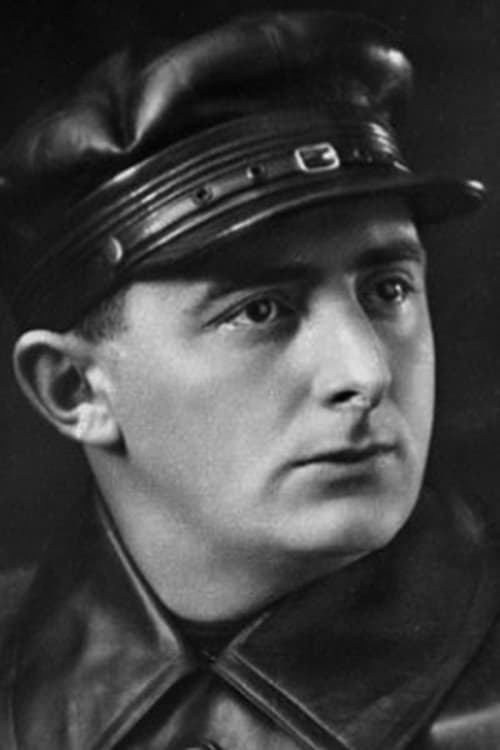
Filmmaker quote“For his inability to control his movements, WE temporarily exclude man as a subject for film. Our path leads through the poetry of machines, from the bungling citizen to the perfect electric man. In revealing the machine's soul, in causing the worker to love his workbench, the peasant his tractor, the engineer his engine— we introduce creative joy into all mechanical labor, we bring people into closer kinship with machines, we foster new people. The new man, free of unwieldiness and clumsiness, will have the light, precise movements of machines, and he will be the gratifying subject of our films.”
Dziga Vertov
How They Handle Performance

Vertov famously rejected staged acting, favoring the unmediated capture of real life. His commitment to authenticity meant working primarily with non-professional actors and ordinary people engaged in everyday activities.
This approach aligned with his kino-eye theory, which posited that the camera’s mechanical eye could perceive truths inaccessible to human perception.
In films like Man with a Movie Camera, there are no scripted performances; instead, the rhythm of city life becomes the 'performer.' Vertov’s editing transforms mundane actions—factory workers at their machines, children playing, crowds moving through streets—into a dynamic visual symphony. The director’s role shifts from orchestrating actors to orchestrating the camera and the editing table, constructing performance through montage rather than dialogue or theatrical gesture.
The Breakthrough Moment
The breakthrough for Vertov came with Kino-Pravda No. 1 (1922), the first installment in his newsreel series that sought to capture Soviet reality with unflinching immediacy. This project laid the groundwork for his later theoretical work and experimental documentaries. However, it was Man with a Movie Camera that truly cemented his legacy, showcasing the full maturity of his cinematic language.
Released in 1929, Man with a Movie Camera is often cited as a radical departure from narrative conventions, blending documentary footage with avant-garde montage techniques. This film encapsulated Vertov’s vision of cinema as a tool for social awakening, combining rapid editing, double exposures, and split screens to create a vibrant portrait of Soviet modernity.
Studio Years vs Independent Years
Vertov’s early career was marked by close association with Soviet studios and state-sponsored projects, which provided resources but also imposed ideological strictures. His newsreel series Kino-Pravda operated within this framework, balancing experimental impulses with the demands of state messaging.
Later, especially in the 1930s and beyond, Vertov faced increasing pressure to conform to Socialist Realism, the official Soviet artistic doctrine. Films like Three Songs About Lenin illustrate a more traditional, celebratory style that contrasted with his earlier radicalism. Despite this, Vertov maintained a commitment to innovation where possible, though his independent projects were fewer and subject to censorship and ideological scrutiny.
Collaborators: Writers, DPs, Editors, Composers
Vertov’s collaborative network was critical to his groundbreaking work. His brother, Mikhail Kaufman, served as the cinematographer on some of his most celebrated films, including Man with a Movie Camera. Kaufman’s daring camerawork—shooting from moving trains, rooftops, and city streets—was integral to Vertov’s visual experimentation.
Editors played a pivotal role in Vertov’s process, as montage was the core of his aesthetic and narrative strategy. The rapid, rhythmic cutting of images was a joint effort between Vertov and his editing team, carefully designed to provoke intellectual and emotional responses.
- Key collaborators included Mikhail Kaufman (cinematography)
- Editors who helped realize his vision through innovative montage techniques
- Musical composers who sometimes contributed to the sound accompaniments in later sound films, enriching the sensory experience
Place in National Cinema and Film History
Dziga Vertov occupies a singular place in Soviet cinema as a pioneer of the documentary form and a theorist of cinematic realism. His work helped define the aesthetic and ideological contours of early Soviet film production, distinct from the more narrative-driven approaches of contemporaries like Sergei Eisenstein.

Discovery calls that win corporate & branded work
Align with marketing stakeholders faster: stakeholder map, success metrics, and approval paths — distilled into a practical checklist.
Internationally, Vertov’s influence extends far beyond his era. His innovations presaged many developments in documentary and experimental film worldwide.

The concept of the camera as an eye and the power of montage to construct meaning has become foundational in film theory and practice. Vertov’s films continue to be studied in film schools globally as exemplars of avant-garde activism.
Early Life and Formative Influences
Born David Abelevich Kaufman in 1896, Vertov was raised in a Jewish family in Bialystok, a multicultural and politically turbulent region. His early exposure to radical politics and intellectual circles shaped his worldview and artistic ambitions.
The Russian Revolution of 1917 was a defining historical moment that propelled him into cinema as a medium for social change.

His early work in film began with documentary newsreels during the revolutionary years, where he experimented with the language of cinema as a means of representing the upheaval and hope of the era. Influences on his work included the Constructivist art movement, futurist ideas about technology, and Marxist theory, all of which informed his belief in cinema’s social function.
Themes That Keep Returning
- The search for cinematic truth: Vertov’s relentless pursuit of an objective, unmediated representation of reality.
- Everyday life as spectacle: Elevating mundane activities through dynamic visual treatment.
- The role of technology: Emphasizing the camera as an extension of human perception and a tool of progress.
- Collectivism and social change: Celebrating the Soviet project and the power of communal labor.
- Self-reflexivity: Films that reveal their own construction, making the filmmaking process visible.
What Filmmakers Can Learn From Them
Vertov’s work is a masterclass in the power of editing and the political potential of cinema. His films demonstrate how form and content can be fused to create meaning that transcends conventional storytelling.
For filmmakers interested in documentary, experimental, or political cinema, Vertov offers a blueprint for innovation grounded in ideological commitment.
His emphasis on the camera’s autonomous vision encourages directors to rethink the role of the filmmaker—not as an auteur imposing narrative, but as a mediator who harnesses the rhythms of real life. Vertov’s work challenges filmmakers to question their assumptions about reality, performance, and the ethics of representation.
Closing Notes
Dziga Vertov’s legacy is that of a cinematic revolutionary, a director whose restless experimentation and ideological fervor changed the way we think about film and reality. While his work is deeply rooted in the Soviet context, its formal innovations and conceptual rigor continue to inspire filmmakers and scholars worldwide.
His films remain essential viewing for anyone interested in the history of documentary, montage theory, and the political possibilities of cinema. Vertov’s testament that the camera can be a tool for social truth and transformation is as relevant now as it was nearly a century ago.
Want to keep going with more cinema craft?
Related on Filmmaking Lifestyle
Read next: Abbas Kiarostami: What It Teaches About Cinema, Andras Kovacs: What It Teaches About Cinema, and Billy Wilder: What It Teaches About Cinema.


New comments are not currently accepted.
Comments