
On this pageTap to expand
Ridley Scott’s career is a towering testament to the power of visual storytelling infused with grand thematic ambition. Emerging from the industrial landscapes of South Shields, County Durham, England, Scott carved an indelible niche in cinema by melding meticulous production design with genre filmmaking. His films are instantly recognizable for their sweeping aesthetics and immersive worlds—whether the claustrophobic horror of space in Alien or the dystopian noir of Blade Runner. Across decades, Scott’s work has defined and redefined the possibilities of science fiction, historical epics, and modern thrillers.
Scott’s directorial signature is not only his visual grandeur but also his unflinching engagement with complex themes: survival, identity, power, and morality. His oeuvre spans the intimate and the epic, often bridging classical storytelling with cutting-edge cinematic technology.

This duality has allowed him to maintain relevance in a rapidly evolving industry, influencing generations of filmmakers and captivating audiences worldwide.
While many directors become associated with a single genre or style, Scott’s versatility is remarkable. From the tense, pioneering science fiction horror of Alien to the sprawling, emotionally charged gladiatorial epic of Gladiator, he navigates different cinematic languages with confidence and flair. Yet, the throughline remains his unwavering dedication to immersive, atmospheric worlds where detail is paramount and spectacle serves story.

Critical Reception and Reappraisal
Ridley Scott’s films have often polarized critics during their initial releases but have frequently undergone significant reappraisal over time. Blade Runner, for example, was met with a mixed reception in 1982, with audiences and critics divided on its dense narrative and gloomy tone. Yet today, it stands as one of the most influential sci-fi films, revered for its visionary production design and philosophical depth.
Similarly, his biblical epics like Exodus: Gods and Kings and Kingdom of Heaven faced criticism for their narrative pacing and historical liberties but have since found a more appreciative audience for their visual craftsmanship and earnest thematic explorations. Meanwhile, films like Gladiator and Black Hawk Down were lauded immediately, earning Scott a reputation as a master of large-scale, visceral storytelling.
In recent years, Scott’s later sci-fi efforts, such as Prometheus and Alien: Covenant, have sparked debate for their ambitious worldbuilding and narrative complexity, demonstrating his ongoing willingness to take creative risks. This pattern of initial critical ambivalence followed by deeper appreciation underscores Scott’s status as a filmmaker who challenges audiences and critics alike.
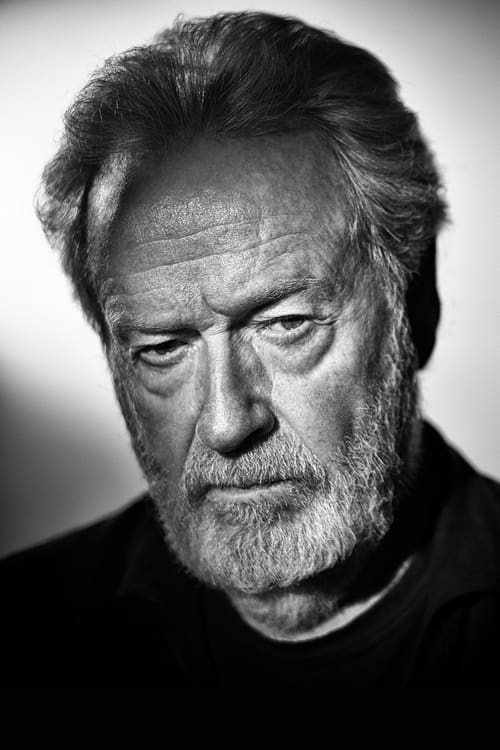
Filmmaker quote“People say I pay too much attention to the look of a movie but for God’s sake, I’m not producing a Radio 4 Play for Today, I’m making a movie that people are going to look at.”
Ridley Scott
What Filmmakers Can Learn From Them
Filmmaker quote“I think, at the end of the day, filmmaking is a team, but eventually there’s got to be a captain.”
Ridley Scott
- Visual Storytelling as Narrative: Scott’s films exemplify how design, lighting, and composition can carry story and mood as powerfully as dialogue.
- Genre Blending: He adeptly combines elements from horror, sci-fi, historical drama, and action to create films that defy easy categorization.
- Attention to Detail: Whether it’s the gritty textures of a spaceship or the authenticity of a Roman arena, meticulous production design elevates the immersive experience.
- Balancing Spectacle and Substance: Scott shows how epic scale can coexist with intimate character moments, ensuring emotional resonance amid grand visuals.
- Adaptability: His ability to work across different genres and decades offers a blueprint for longevity in a rapidly changing industry.
The Breakthrough Moment
Scott’s breakthrough was undoubtedly Alien (1979), a science fiction horror film that revolutionized both genres. Before its release, Scott was known primarily for his work in commercials, where his knack for striking imagery was already evident. Alien married this visual instinct with a taut narrative, introducing audiences to one of cinema’s most iconic monsters alongside a tense, claustrophobic atmosphere rarely seen in sci-fi.

The film’s success was multifaceted: it launched the career of Sigourney Weaver, established Scott’s authority as a director capable of managing high-concept, effects-heavy productions, and set a new standard for female protagonists in action and horror genres. Crucially, it marked Scott’s move into feature filmmaking with an instantly iconic title that would define much of his future work.
How They Handle Performance
Scott’s direction of actors is characterized by a clear emphasis on nuance within epic settings. He often places performers in environments that feel vast and frequently hostile, yet he encourages subtle, grounded performances to anchor the spectacle. Sigourney Weaver’s Ripley in Alien is a prime example: a character defined as much by quiet resilience as by action.
Actors under Scott’s guidance often deliver performances that balance physicality with emotional complexity. In Gladiator, Russell Crowe’s Maximus is a warrior but also a man haunted by loss and honor, a duality that Scott carefully nurtures through intimate close-ups and restrained moments amidst large battle scenes.
Moreover, Scott’s work with ensemble casts, such as in Black Hawk Down and American Gangster, reveals his skill in managing multiple character arcs while preserving a coherent narrative focus. His approach tends to avoid melodrama in favor of authenticity, trusting actors to convey internal conflict within sweeping narratives.
Studio Years vs Independent Years

Ridley Scott’s career began in an era when studio control was significant, and he quickly made a name directing big-budget studio films. His early successes—Alien, Blade Runner, and Legend (noted though less commercially successful)—were products of complex collaborations with major studios. During these years, Scott often balanced his visionary impulses with the commercial demands of large-scale productions.
As his career progressed into the late 1990s and 2000s, Scott operated increasingly with greater creative control, especially post-Gladiator. While still largely working within the studio system, he demonstrated an ability to assert distinctive visual and thematic signatures on franchise films and historical dramas alike.
In the 2010s and beyond, Scott embraced projects that blurred the line between studio and independent filmmaking, such as the cerebral Prometheus and the intimate yet sprawling The Last Duel (2021). The rise of streaming platforms has also allowed him to engage in more diverse storytelling, evident in the science fiction series Raised by Wolves. These projects showcase a director capitalizing on both scale and narrative nuance without the constraints of traditional studio formulas.
The Deep Cuts Worth Your Time
Beyond his signature blockbusters, Scott’s lesser-known works offer rich rewards for cinephiles keen to explore his evolving style and thematic interests.
- The Duellists (1977): Scott’s debut feature is a meticulously crafted historical drama exploring obsession and honor. Its painterly visuals and tight narrative foreshadow his later epic sensibilities.
- Thelma & Louise (1991): As producer and occasional director, Scott contributed to this landmark feminist road movie, which balances character-driven storytelling with social commentary.
- Raised by Wolves (2020): This science fiction TV series marks a return to speculative themes, showcasing Scott’s vision in a long-form narrative that interrogates faith, humanity, and survival.
- The Last Duel (2021): A return to historical drama, this film combines Scott’s mastery of period detail with a modern interrogation of truth and justice.
Related on Filmmaking Lifestyle

Read next: Abbas Kiarostami: What It Teaches About Cinema, Andras Kovacs: What It Teaches About Cinema, and Billy Wilder: What It Teaches About Cinema.
Final Thoughts
Ridley Scott’s enduring legacy is anchored in his ability to fuse epic storytelling with a deeply immersive visual language. His films are more than just spectacles; they are worlds that invite audiences to explore complex questions about humanity, technology, power, and survival.
Few directors have shaped the visual and thematic vocabulary of modern cinema as profoundly.
Scott’s influence is apparent not only in the genres he has helped define but also in the generation of filmmakers who seek to balance commercial appeal with artistic ambition. His career, spanning over four decades, reveals a restless creativity that refuses to be confined by genre or industry trends.
For anyone serious about film, studying Ridley Scott’s body of work is essential—not merely for its iconic moments but for the lessons embedded in his craft: how to create worlds, tell stories with scale and intimacy, and, above all, push cinema toward new frontiers without losing sight of its human core.

Want to explore more directors next?


New comments are not currently accepted.
Comments