
On this pageTap to expand
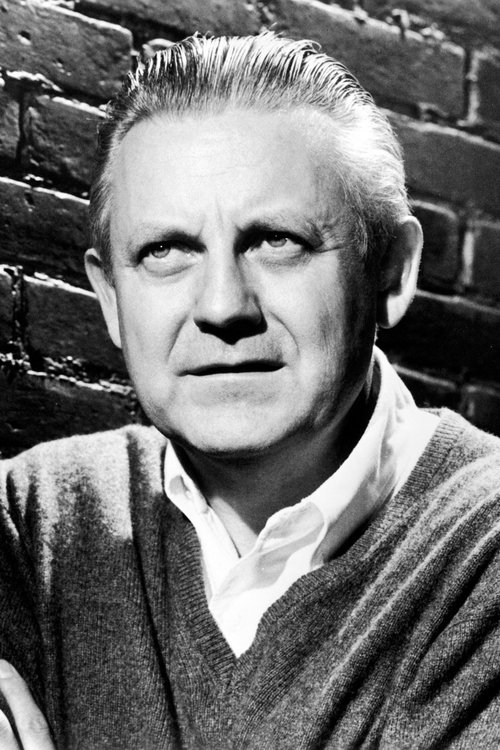
Robert Wise stands as one of Hollywood’s most versatile and unheralded craftsmen, a director whose career spans nearly half a century and traverses a remarkable array of genres. Born in Winchester, Indiana, in 1914, Wise’s trajectory from film editor to director reflects the classic Hollywood studio system’s capacity to cultivate talent behind the camera.
Yet unlike many of his contemporaries, Wise refused to be pigeonholed, moving fluidly from science fiction to musicals, from noir to epic drama with an assuredness that marks his work as the product of deliberate, intelligent artistry rather than mere studio expediency.

Wise’s legacy is often anchored by two towering musicals: West Side Story (1961) and The Sound of Music (1965). These films brought him widespread acclaim, the former notable for its gritty urban energy and the latter for its sweeping emotional resonance and classic Hollywood romanticism. However, to reduce Wise to just a musical director is to overlook a vital filmmaker whose hallmarks include meticulous craftsmanship and a mastery of narrative clarity. His films consistently reveal a deep understanding of cinematic form, focusing on character-driven stories that engage audiences emotionally without sacrificing sophistication.
While not often elevated to the same auteur pedestal as his contemporaries like Alfred Hitchcock or Orson Welles, Wise’s work shares a kinship with directors known for their narrative precision and stylistic adaptability. His name is frequently mentioned alongside figures such as William Wyler, Robert Aldrich, and John Frankenheimer, all of whom navigated multiple genres with equal conviction.
Like them, Wise’s influence is subtle but pervasive, shaping the conventions of genre filmmaking while never conforming fully to any.
Editing Rhythm and Narrative Shape

Wise’s formative years as a film editor, particularly under the tutelage of editor-editor collaborations at RKO Pictures, profoundly shaped his directorial sensibility. His precise control over rhythm and pacing is evident throughout his oeuvre, where the editing crafts not just the flow of the story but the emotional beats of the characters themselves. In films like The Set-Up (1949), Wise’s editing amplifies tension with a near-theatrical economy, reflecting the confined world of a boxer’s last fight. The film’s real-time narrative unfolds with razor-sharp timing, an approach that keeps viewers almost breathless.
Similarly, in The Day the Earth Stood Still (1951), Wise’s editing balances a meditative pace with moments of sudden urgency, a duality that mirrors the film’s Cold War anxieties and hopeful humanism. His editing choices shape the film’s tone, allowing the science fiction elements to coexist with a profound social commentary. Throughout his career, Wise’s narrative shapes are often classical but never mechanical; his sense of timing is always in service to character psychology rather than spectacle alone.

Build a realistic wedding-day timeline
How to align with planners and photographers so you’re in the right place for key moments — without burning out.
Filmmaker quote“My three Ps: passion, patience, perseverance. You have to do this if you've got to be a filmmaker.”
Robert Wise
Studio Years vs Independent Years
Wise’s career neatly divides into two broad phases: his early studio years and later independent endeavors. His tenure at studios like RKO, MGM, and Warner Bros. marked a time when directors were often assigned projects rather than choosing them.
Yet, even under these constraints, Wise delivered films that stand out for their craftsmanship and subtle directorial touches.
During his studio years, Wise helmed genre films such as The Body Snatcher (1945), a chilling horror piece that stands apart for its atmospheric tension, and Somebody Up There Likes Me (1956), a boxing biopic that combines gritty realism with humanist drama. These works reveal Wise’s capacity to elevate standard material through a nuanced understanding of mood and character.

In contrast, his independent years afforded him greater creative latitude, evident in ambitious projects like The Andromeda Strain (1971), a taut adaptation of Michael Crichton’s techno-thriller, and Star Trek: The Motion Picture (1979), which, despite mixed reception, reflects Wise’s willingness to embrace the challenges of science fiction spectacle. These films underscore his career-long tendency to engage with contemporary themes through genre conventions, blending cerebral narratives with visual precision.
How to Start Watching Their Work
For newcomers to Robert Wise’s filmography, the best entry points are undoubtedly West Side Story and The Sound of Music, both films that display his ability to marry narrative momentum with emotional depth. These musicals are not only iconic but also reveal Wise’s deft handling of ensemble casts and complex staging.
For those interested in his science fiction and thriller work, The Day the Earth Stood Still offers an essential glimpse into his early directorial style, blending genre elements with social urgency. Meanwhile, The Haunting (1963) is a masterclass in psychological horror, with its use of sound and shadow showcasing Wise’s command over atmospheric tension.
- West Side Story (1961) – for musical and narrative mastery
- The Day the Earth Stood Still (1951) – for genre-defining science fiction
- The Haunting (1963) – for psychological horror and mood
- The Andromeda Strain (1971) – for techno-thriller precision
The Signature Film, Revisited
While it is tempting to single out West Side Story as Wise’s signature film due to its cultural impact and critical acclaim, it is his approach to characterization and storytelling in this film that truly defines his style. Wise transformed a challenging and complex musical into a cinematic experience that balances spectacle with intimate human drama. His direction allowed the raw energy of the source material to shine without reducing it to mere choreography or visual flair.

At the same time, The Sound of Music serves as an indispensable companion piece, illustrating a different facet of Wise’s directorial personality—one that embraces warmth, nostalgia, and the theatrical sweep of classic Hollywood musicals. The emotional clarity and narrative economy in these films remain influential benchmarks for directors working within and beyond the musical genre.
Genre Patterns and Left Turns
One of Robert Wise’s most remarkable traits is his refusal to specialize in only one genre. His filmography is a tapestry of diverse work, from horror (The Haunting), to war dramas (The Sand Pebbles, 1966), to science fiction (The Day the Earth Stood Still, Star Trek: The Motion Picture), and musicals. This versatility was both a product of the studio system and Wise’s own adaptive intelligence.
Yet within this broad palette, Wise consistently favored stories rooted in human conflict and moral complexity. Even in genre fare like Run Silent, Run Deep (1958), a submarine warfare drama, Wise focuses on themes of pride, duty, and the psychological cost of war rather than spectacle alone. His films often reflect a tension between individual desires and larger societal forces, a recurring theme that unifies his seemingly disparate projects.
Less well-known but equally fascinating are his noir-inflected films like Born to Kill (1947) and Odds Against Tomorrow (1959), which reveal a darker, more cynical side of Wise’s storytelling. These films explore the moral ambiguity and existential dread lurking beneath postwar America’s surface, expanding our understanding of Wise as a director unafraid to engage with complex, uncomfortable truths.
How They Handle Performance
Wise’s approach to directing actors is subtle but effective. Rather than imposing a signature acting style, he tailored his direction to the demands of the story and the strengths of his performers. His musicals demonstrate his ability to manage large ensembles while still allowing individual performances to resonate—Natalie Wood and Richard Beymer in West Side Story, Julie Andrews and Christopher Plummer in The Sound of Music, all benefit from Wise’s measured guidance.
In his dramatic and genre films, Wise encouraged naturalism and emotional honesty. His direction often foregrounded moments of quiet intensity over melodrama, as seen in Robert Mitchum’s stoic performance in The Sand Pebbles or Richard Basehart’s nuanced turn in Run Silent, Run Deep. Wise’s actors frequently inhabit their roles with a restrained authenticity that lends credibility to his storytelling.

From first call to signed proposal — faster
Clarify next steps, reduce ghosting, and keep momentum after the discovery call — tactics from Get More Video Clients you can use this week.
Themes That Keep Returning
Across decades and genres, certain themes recur in Wise’s films. The tension between individual agency and institutional authority is a through-line, whether it’s the military hierarchy in The Sand Pebbles or the cold bureaucracy depicted in The Andromeda Strain.
Another persistent theme is the exploration of fear—both psychological and societal. Films like The Haunting and The Day the Earth Stood Still examine how fear shapes human behavior, often juxtaposing paranoia with hope. Wise’s work frequently wrestles with the possibility of redemption amid chaos, offering characters moments of grace even in bleak circumstances.
- Conflict between individual and authority
- Fear and paranoia as social forces
- Redemption and human resilience
- The cost of duty and honor
- The complexity of moral choices
What Filmmakers Can Learn From Them
Robert Wise’s career offers invaluable lessons for filmmakers about adaptability, precision, and storytelling economy. His work illustrates the importance of mastering the fundamentals—editing, pacing, and character development—before attempting stylistic flourishes.

Wise’s films never feel hurried despite their often taut runtimes, demonstrating how patience in narrative construction can enhance emotional impact.
Additionally, Wise’s ability to move fluidly between genres without losing his distinct focus on character and story exemplifies how versatility can be a strength rather than a liability. His career encourages directors to embrace a wide range of material, trusting that their core sensibilities will unify their work.
Finally, Wise shows that a director’s influence need not always be ostentatious to be profound. His subtle but sure hand shaped some of Hollywood’s most enduring films, proving that craftsmanship and respect for material remain central to effective filmmaking.
The Last Word
Ultimately, Robert Wise’s body of work is a testament to the power of disciplined artistry and emotional intelligence in cinema. While he may not always command the same critical spotlight as some of his contemporaries, his films continue to resonate through their clarity, humanity, and technical finesse.
Wise’s legacy is not simply in the individual films he directed but in the example he set as a consummate filmmaker who could navigate Hollywood’s shifting tides with grace and unerring skill.

For students and cinephiles alike, Robert Wise remains a vital study in the craft of storytelling, a director whose films reward both casual enjoyment and deeper analysis. His enduring influence underscores the value of versatility, precision, and above all, a profound respect for the art of cinema.
Which filmmaker should we cover next?
Related on Filmmaking Lifestyle

Read next: Grigori Kozintsev: The Hidden Patterns Across the Work, Hu Bo: The Hidden Patterns Across the Work, and Manoel De Oliveira: The Hidden Patterns Across the Work.


New comments are not currently accepted.
Comments