
On this pageTap to expand
Satyajit Ray remains one of cinema’s towering figures, whose work continues to resonate across generations and geographies. Emerging from the cultural crucible of mid-20th century Bengal, Ray crafted films that not only chronicled the social realities of India but did so with a poetic grace and profound empathy that transcended national boundaries.
His films have shaped the language of Indian cinema and inspired countless filmmakers worldwide, blending the observational virtues of neorealism with a lyrical and humanistic storytelling approach.

Ray’s oeuvre, spanning from 1955 to 1992, is marked by a meticulous attention to detail and a deeply compassionate eye for his characters’ inner lives. Far from mere ethnographic study, his cinema is a celebration of the quotidian—the joys, struggles, and contradictions of ordinary people.
His narratives unfold with a quiet dignity, allowing audiences to connect intimately with the cultural textures of Bengal and broader Indian society. It is this universal emotional accessibility that cements Ray’s status as a filmmaker of global consequence.

Though often associated with the neorealist movement owing to the documentary-like authenticity of his early work, Ray’s style is uniquely his own. It integrates a melodic sensibility reminiscent of classical Indian aesthetics and an unerring commitment to humanism.
The result is a body of work that balances social critique with warmth and poetic lyricism, firmly rooting his films in the cultural and historical landscape of India while speaking to universal human themes.

Genre Patterns and Left Turns
Filmmaker quote“Then the problems of film making began to fade into the background, and you found yourself belittling the importance of the camera. After all, it was merely an instrument. The important thing was the truth. Get at it and you had your great masterpieces. But how wrong we were! The moment you are on the set, this three-legged instrument took charge. Problems came thick and fast. Where to place the camera? High or low, near or far, on the dolly or on the ground? Was the thirty-five okay? Would you rather move back and use the fifty? Get too close to the action and the emotion of the scene spilled out -- get it too far back and the thing became cold and remote. To each problem you had to find a quick answer. If you delayed, the sun shifted and made nonsense of your uncertainty.”
Satyajit Ray
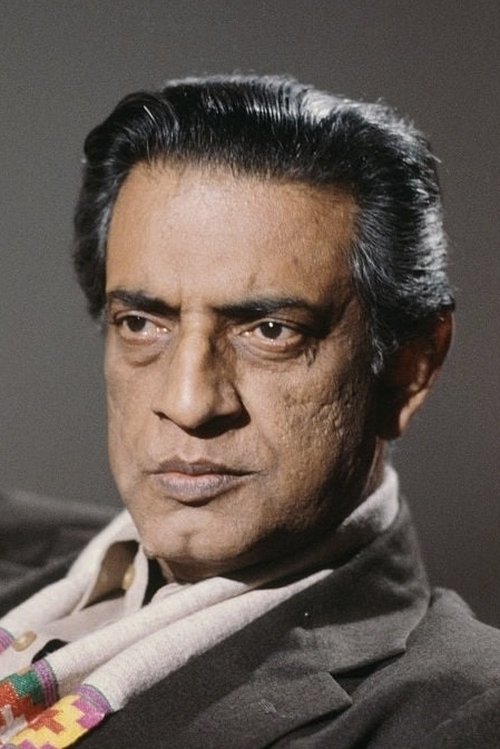
While Ray is best known for his social dramas and intimate family portraits, his filmography reveals a director unafraid of genre experimentation. The foundation of his career rests on realist narratives, most famously the semi-autobiographical coming-of-age saga embodied in Pather Panchali (1955) and its sequels Aparajito (1956) and The World of Apu (1959). These films establish a contemplative, observational mode that became a hallmark of his style.
Yet Ray’s cinematic curiosity led him beyond the confines of realism. For instance, The Chess Players (1977) is a historical drama set against the backdrop of British colonialism, blending political allegory with a meditation on inertia and decadence. Similarly, The Stranger (1991), a psychological thriller, showcases his deftness at suspense and layered narrative complexity.
Ray’s willingness to explore different genres without sacrificing his humanistic core is a defining trait. He ventured into the realm of detective fiction with the charming Feluda series and crafted nuanced social critiques within melodramatic and romantic frameworks, as seen in Charulata (1964), a subtle exploration of loneliness and creative yearning within a 19th-century Bengali household.
Filmmaker quote“তা পারব। বোধহয় ঠিক এই রকমের একটা সুযোগের জন্যেই শরীরের শেষ শক্তিটুকুকে ধরে রেখেছি।”
Satyajit Ray
Recurring Actors and Creative Chemistry

Ray often collaborated with a select group of actors who embodied his cinematic ethos. Soumitra Chatterjee stands out prominently, appearing in over fourteen of Ray’s films, including key roles in Charulata and The Big City (1963). Chatterjee’s versatility and understated intensity perfectly complemented Ray’s nuanced characterizations.
Another frequent collaborator was Dhritiman Chatterjee, who brought a restrained gravitas to The Chess Players. Ray’s casting choices favored actors who could convey emotional complexity without theatrical excess, aligning with his minimalist yet expressive directing style.
- Soumitra Chatterjee – trusted lead and muse
- Karuna Banerjee – memorable for her role as Sarbajaya in Pather Panchali
- Sharmila Tagore – brought nuanced femininity to The World of Apu and Devi
- Dhritiman Chatterjee – key figure in Ray’s later, more politically charged films
Early Life and Formative Influences
Born into an illustrious Bengali family in Calcutta in 1921, Ray was immersed in a rich cultural and intellectual environment from an early age. His grandfather, Upendrakishore Ray Chowdhury, was a writer and illustrator, while his father, Sukumar Ray, was a noted poet and humorist.
This lineage fostered Ray’s early love for literature, music, and art, which would deeply inform his cinematic vision.
Ray’s formative years were also shaped by his studies in fine arts at Visva-Bharati University under the tutelage of Nandalal Bose, an experience that cultivated his sensibility for visual composition. His exposure to international cinema, notably the works of Jean Renoir, Vittorio De Sica, and John Ford, as well as cinematic pioneers like Sergei Eisenstein, profoundly influenced his narrative and aesthetic approach.
Ray’s initial career path as a commercial artist and graphic designer gave him an acute eye for detail and design, qualities evident in the meticulous art direction and framing of his films. These diverse artistic influences coalesced in his first feature, Pather Panchali, which broke new ground in Indian cinema by blending artistic ambition with social realism.
What Filmmakers Can Learn From Them
Satyajit Ray’s career offers invaluable lessons for filmmakers striving for sincerity and depth in their work. His commitment to authenticity—both cultural and emotional—demonstrates the importance of grounding stories in lived experience rather than formulaic plot devices.

Ray’s disciplined craftsmanship shows the power of restraint; his films rarely rely on melodrama, instead trusting subtle performances and evocative visual storytelling to convey complex human emotions.
His integration of local specificity with universal themes offers a masterclass in balancing the particular and the global. Ray’s films remind filmmakers that stories rooted in a distinct cultural milieu can resonate worldwide when they tap into fundamental human concerns such as family, identity, and social change.
- Embrace cultural specificity without sacrificing universality
- Trust subtlety and nuance over overt emotional manipulation
- Combine diverse artistic disciplines—music, literature, visual arts—for a holistic cinematic language
- Maintain rigorous attention to detail in every aspect, from casting to set design
Studio Years vs Independent Years
Ray’s career defies the typical dichotomy between studio and independent cinema, largely because he operated outside the conventional Bollywood machine. His early films, including the celebrated Pather Panchali, were financed through unconventional means, often relying on grants and personal resources rather than large studios. This independence allowed him creative freedom to tell stories that diverged from mainstream Indian cinema’s melodramatic and formulaic trends.
Throughout his career, Ray maintained a fiercely autonomous position, producing films through his own production company or in partnership with state cultural bodies. This autonomy was crucial in allowing him to explore sensitive social themes and experiment with narrative structures that a commercial studio might have rejected.
While some of his later works, such as The Chess Players, involved larger budgets and more elaborate production values, Ray’s distinctive creative vision remained uncompromised. His career exemplifies how directors can sustain artistic integrity by balancing pragmatic production concerns with unwavering dedication to storytelling.
Collaborators: Writers, DPs, Editors, Composers
Ray’s collaborations extended well beyond his actors. As a filmmaker who often wrote or adapted his own screenplays, he was deeply involved in every creative facet of his films. His scripts, frequently based on Bengali literature or original stories, reflect his dual passions for literature and cinema.
Visually, Ray’s partnership with cinematographer Subrata Mitra was transformative. Mitra’s pioneering use of bounce lighting and naturalistic setups helped craft the signature look of Ray’s early films, especially the luminous landscapes of Pather Panchali. Their collaboration profoundly influenced the visual language of Indian cinema.
Editor Dulal Dutta was another key contributor, shaping the rhythm and pacing with an understated precision that complemented Ray’s narrative style. The musical scores, often composed by Ray himself, are integral to his films’ emotional texture.
His background in music allowed him to blend classical Indian melodies with innovative soundscapes, enriching the cinematic experience.
- Subrata Mitra (cinematography) – architect of Ray’s visual realism
- Dulal Dutta (editing) – crafted Ray’s deliberate narrative pacing
- Satyajit Ray (music composition) – seamlessly integrated score and narrative
- Ray as writer – adapted diverse literary works and original screenplays
The Breakthrough Moment
The watershed moment of Ray’s career—and arguably for Indian cinema—was the release of Pather Panchali in 1955. Coming after years of preparation and financial struggle, the film’s debut marked a radical departure from the melodrama and spectacle that dominated the Indian film industry. Its raw, poetic depiction of rural Bengal’s hardships and joys introduced a new cinematic language that was intimate, authentic, and profoundly human.
Pather Panchali garnered international acclaim, winning awards at prestigious festivals and drawing attention to Indian cinema’s artistic potential on the world stage. The film’s success launched Ray’s career and laid the foundation for The Apu Trilogy, which continued the story of the protagonist with a rare depth of character development across three films.
The Films That Best Represent Their Style
While Ray’s entire oeuvre is rich and varied, several films crystallize the essence of his style and thematic preoccupations. The three films of The Apu Trilogy—Pather Panchali, Aparajito, and The World of Apu—stand as his magnum opus, combining neorealist aesthetics with lyrical storytelling and profound psychological insight.
Charulata (1964), often cited as one of his finest works, showcases his ability to explore intimate emotional landscapes with subtlety and grace. The film’s delicate portrayal of a woman’s intellectual and emotional isolation is matched by its exquisite visual composition.
The Music Room (1958) and The Chess Players (1977) represent Ray’s fascination with the cultural and political tensions of his era, blending social critique with poetic narrative structures. These films reveal his evolving engagement with history and power.
- Pather Panchali (1955) – humanist neorealism
- Charulata (1964) – psychological intimacy and visual poetry
- The Music Room (1958) – cultural decadence and artistic obsession
- The Chess Players (1977) – historical allegory and political nuance
Themes That Keep Returning
Ray’s films are unified by recurring themes that explore the human condition in the context of Indian society. Central among these is the tension between tradition and modernity. Films like The Big City (1963) depict the disorienting and often painful urban experience, highlighting the friction between inherited cultural values and emerging modern identities.
The theme of familial bonds, especially the interplay between parents and children, recurs with emotional depth throughout his work. The Apu Trilogy itself is a poignant meditation on childhood, growth, and loss. Similarly, Ray’s interest in the inner lives of women, particularly their struggles with limited social roles and personal desires, finds eloquent expression in Charulata and Devi (1960).
Another persistent motif is the artist’s place in society, seen in films like The Music Room, where the pursuit of art exists in tension with social realities. Ray’s humanism is also inseparable from his critique of social injustice and colonial history, made evident in films such as The Chess Players and The Hero (1966).
Related on Filmmaking Lifestyle
Read next: A Christmas Story: The Essential Breakdown, Alfred Hitchcock: The Essential Breakdown, and Bad Boy Bubby: The Essential Breakdown.
Wrapping Up
Satyajit Ray’s legacy is a testament to cinema’s power to illuminate the human spirit with dignity and insight. His films, rooted in the particularities of Indian life yet suffused with universal empathy, continue to challenge and inspire.
As a director, writer, composer, and artist, Ray embodied a rare confluence of talents that allowed him to create deeply personal yet widely resonant works.
For students and aficionados of film, Ray offers an enduring example of how cinema can be both a mirror reflecting society and a window into the human soul. His commitment to authenticity, his embrace of subtlety, and his
Want to explore more directors next?


New comments are not currently accepted.
Comments