
On this pageTap to expand
Peter Finch was an acclaimed British-Australian actor who had a long and distinguished career in film, television, and theater. He is best known for his powerful performances in films such as Network and Sunday Bloody Sunday.
In this article, we will take a look at some of Peter Finch’s best movies and why they are worth watching.
Best Peter Finch Movies
From his early work in British cinema to his later Hollywood roles, Peter Finch’s filmography is a testament to his talent and versatility as an actor.
The full list
| Film | Year |
|---|---|
| Network | 1976 |
| Raid on Entebbe (1976 TV Movie) | — |
| The Flight of the Phoenix | 1965 |
| Elephant Walk | 1954 |
| Far from the Madding Crowd | 1967 |
| The Nun’s Story | 1959 |
| Lost Horizon | 1973 |
| A Town Like Alice | 1956 |
| Pursuit of the Graf Spee | 1956 |
| The Pumpkin Eater | 1964 |
| The Red Tent | 1969 |
| The Legend of Lylah Clare | 1968 |
| Kidnapped | 1959 |
| The Detective | 1954 |
| The Rats of Tobruk | 1944 |
| No Love for Johnnie | 1961 |
| The Nelson Affair | 1973 |
| Judith | 1966 |
| The Trials of Oscar Wilde | 1960 |
| The Warriors | 1955 |
| The Wooden Horse | 1950 |
| Girl with Green Eyes | 1964 |
| The Miniver Story | 1950 |
| In the Cool of the Day | 1963 |
1. Network (1976)
Network is a 1976 satirical film directed by Sidney Lumet and written by Paddy Chayefsky. The film tells the story of a struggling television network, UBS, that decides to exploit the on-air mental breakdown of its anchor, Howard Beale (played by Peter Finch), for higher ratings.
As Beale’s rambling and mad rants continue to attract a devoted audience, the network executives, including Faye Dunaway’s character Diana Christensen, become increasingly ruthless in their pursuit of profit, ultimately leading to a shocking and tragic climax.
Network was a critical and commercial success upon its release, and has since become a cultural touchstone, with many of its themes and lines of dialogue entering the popular lexicon.
The film is known for its scathing critique of the media industry, and its commentary on the power of television and the dangerous consequences of media sensationalism is as relevant today as it was in 1976.
The film was nominated for ten Academy Awards, winning four, including Best Actor for Peter Finch and Best Supporting Actress for Beatrice Straight, who gives a memorable performance in a single scene as Beale’s estranged wife.

2. Raid on Entebbe (1976 TV Movie)
Raid on Entebbe is a 1976 television film directed by Irvin Kershner and starring Peter Finch, Charles Bronson, Yaphet Kotto, and Martin Balsam. Here are three reasons why Raid on Entebbe is worth watching:
Based on a True Story: The film is based on the real-life hijacking of Air France Flight 139 by Palestinian and German terrorists, and the subsequent rescue mission by Israeli commandos in Entebbe, Uganda.
The film is a gripping portrayal of the events and the heroism of the Israeli soldiers who carried out the daring mission.
Peter Finch’s Performance: In Raid on Entebbe, Peter Finch delivers a powerful performance as Israeli Prime Minister Yitzhak Rabin. His portrayal of Rabin is nuanced and human, conveying the complex emotions of a leader who must make tough decisions in a time of crisis.
Tense and Suspenseful: Raid on Entebbe is a tense and suspenseful film that keeps the audience on the edge of their seats. The film builds to a thrilling climax as the Israeli commandos attempt to rescue the hostages and take on the terrorists.
Overall, Raid on Entebbe is a well-made and engaging film that offers a gripping portrayal of a real-life crisis and the courage of those who risked their lives to save others.
Peter Finch’s performance as Yitzhak Rabin is a standout, and the film’s tense and suspenseful atmosphere makes it a thrilling watch.

3. The Flight of the Phoenix (1965)
Robert Aldrich's The Flight of the Phoenix strands the survivors of a cargo-plane crash in the Sahara, where dwindling water and rising tensions force them to consider building a smaller aircraft from the wreckage.
Peter Finch plays Captain Harris, a British Army officer determined to lead a march toward an oasis. His plan brings him into conflict with pilot Frank Towns, played by James Stewart, and with the practical limits imposed by the desert.
If you like Peter Finch’s performances, on our sister site AuteurGraph we have a profile page, a visual film timeline, and a ratings page that gives a tonne of info and data about their career in a visualized form.
Finch gives Harris the bearing of a trained commander but also the rigidity of someone accustomed to being obeyed. His decision to leave the crash site tests the difference between courage, authority, and judgment.
Hardy Krüger's aircraft designer Dorfmann proposes the unlikely reconstruction project, while Richard Attenborough's Moran tries to hold the competing personalities together. The ensemble makes survival a problem of cooperation as much as engineering.
Finch's role is not the largest in the film, but Harris is essential to its debate about leadership. His confidence offers the group a possible route to safety while exposing how quickly decisiveness can become fatal inflexibility.

20th Century Fox
- The Flight Of The Phoenix - DVD New
The Flight Of The Phoenix - DVD New
View on Amazon4. Elephant Walk (1954)
Elephant Walk is a 1954 drama film directed by William Dieterle and starring Elizabeth Taylor, Dana Andrews, and Peter Finch.
The film is set in Ceylon (now Sri Lanka) and follows the story of Ruth Wiley (Elizabeth Taylor), a young woman who marries John Wiley (Peter Finch), a wealthy tea plantation owner.
Ruth soon discovers that her new home, the plantation known as Elephant Walk, is haunted by the memory of John’s father, who died in a stampede of elephants.
As Ruth tries to adjust to her new life in Ceylon, she begins to fall in love with Dick Carver (Dana Andrews), the plantation’s overseer.
However, her growing attraction to Dick is complicated by John’s increasing obsession with preserving the legacy of his father and the plantation.
The film culminates in a dramatic confrontation between John and the elephants, as he tries to assert his authority over the land and the animals.
Elephant Walk was a controversial film for its portrayal of colonialism and its treatment of the local Sri Lankan characters. Despite this, the film was a commercial success and is remembered today for its stunning location photography and the performances of its lead actors.

Paramount
- Elephant Walk (Full Screen) - DVD Brand New
Elephant Walk (Full Screen) - DVD Brand New
View on Amazon5. Sunday Bloody Sunday (1971)
Sunday Bloody Sunday is a 1971 British drama film directed by John Schlesinger and starring Peter Finch, Glenda Jackson, and Murray Head. Here are three reasons why Sunday Bloody Sunday is worth watching:
Groundbreaking for its Time: Sunday Bloody Sunday was a groundbreaking film for its time as it dealt with themes of bisexuality and polyamory in a sensitive and non-judgmental way. The film was considered ahead of its time for its exploration of alternative lifestyles and relationships.
Strong Performances: The film features strong performances from Peter Finch, Glenda Jackson, and Murray Head.
Peter Finch portrays a middle-aged Jewish doctor who is involved in a love triangle with a young artist played by Murray Head and a divorced woman played by Glenda Jackson. The three actors bring depth and complexity to their characters, making them feel real and relatable.
Beautifully Shot: Sunday Bloody Sunday is beautifully shot, with director John Schlesinger making excellent use of the London locations to create a sense of place and atmosphere. The film also features a memorable score by composer Ron Geesin.
Overall, Sunday Bloody Sunday is a groundbreaking and thought-provoking film that explores themes of love, sexuality, and relationships in a mature and nuanced way. The strong performances and beautiful cinematography make it a memorable and rewarding watch.
Paramount
- Elephant Walk (Full Screen) - DVD Brand New
Elephant Walk (Full Screen) - DVD Brand New
View on Amazon6. Far from the Madding Crowd (1967)
John Schlesinger's adaptation of Thomas Hardy's novel stars Julie Christie as Bathsheba Everdene, whose inheritance of a Dorset farm places her at the center of work, independence, and the competing attention of three very different men.
Peter Finch plays William Boldwood, the prosperous neighboring landowner whose controlled exterior gives way to fixation after Bathsheba sends him a teasing valentine. Finch resists making Boldwood a simple obstacle; his stillness and formality suggest a man with little defense against emotional upheaval.
Alan Bates supplies steadiness as shepherd Gabriel Oak, while Terence Stamp's Sergeant Troy brings glamour and danger. Nicolas Roeg's landscape photography makes weather and agricultural labor part of the drama rather than decorative period background.
Finch's performance is central to the story's movement from romantic possibility toward tragedy. His Boldwood is disturbing, but the performance also makes visible the loneliness and social rigidity that feed his obsession.

7. The Nun’s Story (1959)
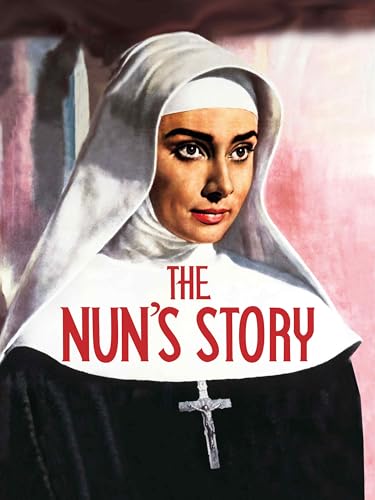
The Nun’s Story is a 1959 drama film directed by Fred Zinnemann and starring Audrey Hepburn in the lead role. Based on the novel by Kathryn Hulme, the film tells the story of Sister Luke (Audrey Hepburn), a young woman who enters a convent to become a nun.
Set against the backdrop of World War II, the film follows Sister Luke’s struggles to reconcile her faith with the demands of her order and the challenges of the outside world.
After being sent to the Congo to work as a nurse, she confronts the harsh realities of colonialism and the difficulties of providing medical care in a remote and dangerous region.
As Sister Luke’s commitment to her vocation is tested, she begins to question her faith and the sacrifices she has made. The film culminates in a powerful and emotional climax as Sister Luke must make a difficult decision about her future.
The Nun’s Story is widely regarded as one of Audrey Hepburn’s best performances and was nominated for eight Academy Awards, including Best Picture and Best Actress. The film is a moving and thought-provoking exploration of faith, sacrifice, and the human spirit.

8. Lost Horizon (1973)
Charles Jarrott's musical remake casts Peter Finch as British diplomat Richard Conway. After an evacuation flight is hijacked and crashes in the Himalayas, Conway and the other passengers are led to Shangri-La, a secluded community whose serenity comes with difficult questions about freedom and permanence.
Finch gives Conway the necessary tension between public duty and private longing. Liv Ullmann plays Catherine, with Sally Kellerman, George Kennedy, Michael York, Olivia Hussey, and Bobby Van among the stranded travelers.
John Gielgud plays Chang, the Oxford-educated guide who brings the survivors to the lamasery, while Charles Boyer plays the High Lama.
Burt Bacharach and Hal David's score makes this version markedly different from Frank Capra's 1937 adaptation. Its reputation has long been troubled, but Finch's thoughtful, reserved performance remains one of the more grounded elements inside the large-scale musical production.

9. A Town Like Alice (1956)
A Town Like Alice is a 1956 British drama film directed by Jack Lee and starring Virginia McKenna and Peter Finch.
Based on the novel by Nevil Shute, the film tells the story of a young Englishwoman named Jean Paget (Virginia McKenna) who is captured by the Japanese during World War II and forced to march with other prisoners of war through the jungles of Malaysia.
As Jean and her fellow prisoners endure brutal conditions and cruel treatment, they form a bond of solidarity and resilience.
After the war, Jean sets out to fulfill a promise she made to one of her fellow prisoners and travels to the Australian outback to help build a well in a small, remote town.
There, she meets a charming and enigmatic Australian named Joe Harman (Peter Finch), who helps her navigate the challenges of life in the outback and begins to fall in love with her.
But Jean’s past and the scars of war continue to haunt her, and she must confront her own fears and doubts as she seeks to build a new life for herself and the people of the town.
A Town Like Alice is a powerful and moving film that explores themes of love, resilience, and the human spirit.
The performances by Virginia McKenna and Peter Finch are outstanding, and the film’s stunning cinematography captures the beauty and harshness of the Australian outback. It remains a beloved classic of British cinema.

10. Pursuit of the Graf Spee (1956)
Pursuit of the Graf Spee is a 1956 British war film directed by Michael Powell and Emeric Pressburger and starring Peter Finch, Bernard Lee, and Anthony Quayle. Here are three reasons why Pursuit of the Graf Spee is worth watching:
Gripping Story: The film is based on the true story of the Royal Navy’s pursuit of the German battleship Admiral Graf Spee during World War II. The story is exciting and suspenseful, with the tension building as the chase unfolds.
Strong Performances: Peter Finch delivers a standout performance as Captain Hans Langsdorff, the commander of the Admiral Graf Spee.
Finch brings depth and complexity to the character, making him a sympathetic figure despite his allegiance to the enemy. Bernard Lee and Anthony Quayle also give strong performances as British naval officers.
Impressive Action Scenes: The film features impressive action scenes, including realistic naval battles and explosive torpedo attacks. The special effects are impressive for their time, and the action is thrilling and well-choreographed.
Overall, Pursuit of the Graf Spee is a well-crafted war film that combines gripping storytelling, strong performances, and impressive action scenes. It offers a unique perspective on a lesser-known World War II battle and is a must-watch for fans of the genre.
![The Battle of the River Plate (1956) ( Pursuit of the Graf Spee ) ( Graf Spee ) [ NON-USA FORMAT, Blu-Ray, Reg.B Import - Germany ]](https://m.media-amazon.com/images/I/51ajpYFwWvL.jpg)
11. The Pumpkin Eater (1964)
Jack Clayton's adaptation of Penelope Mortimer's novel follows Jo Armitage, played by Anne Bancroft, as she confronts the strain beneath her marriage and her identity as a mother. Harold Pinter's screenplay approaches the crisis through fractured conversations and memory rather than a conventional domestic plot.
Peter Finch plays Jo's husband Jake, a successful screenwriter whose charm and repeated infidelities have become inseparable. Finch makes Jake persuasive enough to explain the marriage's endurance while allowing his evasions and entitlement to remain visible.
Bancroft carries the film's emotional point of view, and her scenes with Finch avoid easy divisions between villain and victim. Their exchanges expose how affection, dependency, resentment, and social expectation can occupy the same relationship.
For Finch, the role is a strong example of controlled modern drama: Jake rarely announces what he feels, but the performance reveals his discomfort whenever Jo refuses the version of their life he prefers to maintain.

12. The Red Tent (1969)
The Red Tent is a 1969 American-Italian adventure drama directed by Mikhail Kalatozov and starring Sean Connery, Peter Finch, and Claudia Cardinale.
The film dramatizes the 1928 Italia airship disaster: General Umberto Nobile (Finch) leads a polar expedition that crashes on the Arctic ice, while Roald Amundsen (Connery) joins the international rescue effort. Cardinale plays Nurse Valeria, whose presence anchors the human stakes of the ordeal.
Through flashbacks and contested memories, the film revisits the crash, the survivors’ struggle in the red tent on the pack ice, and the public controversy that followed Nobile home.
The Red Tent is a sweeping survival epic that explores themes of leadership, guilt, heroism, and the politics of blame after disaster.
The performances by Sean Connery, Peter Finch, and Claudia Cardinale are all excellent, and the film’s stark ice photography captures the grandeur and terror of the Arctic. It remains a distinctive late-career Kalatozov entry and one of Finch’s most unusual international roles.
![The Red Tent [DVD]](https://m.media-amazon.com/images/I/51NvqiJA1qL.jpg)
13. The Legend of Lylah Clare (1968)
The Legend of Lylah Clare is a 1968 drama film directed by Robert Aldrich and starring Peter Finch, Kim Novak, and Ernest Borgnine. Here are three reasons why The Legend of Lylah Clare is worth watching:
Intriguing Story: The film follows the story of a young Hollywood actress who is cast to play the lead in a biopic about a deceased actress named Lylah Clare.
As filming progresses, the actress becomes increasingly obsessed with her character and begins to unravel the mystery of Lylah’s death. The plot is full of twists and turns, making for a suspenseful and intriguing story.
Great Performances: Peter Finch delivers a memorable performance as the film’s director, Lewis Zarkan.
His character is manipulative and controlling, and Finch brings a dark intensity to the role. Kim Novak also shines as both the young actress and the ghost of Lylah Clare, displaying a range of emotions and a haunting presence.
Stylish Direction: Director Robert Aldrich infuses the film with his signature style, creating a visually stunning and atmospheric experience.
The film’s use of flashbacks and dream sequences adds to the mystery and intrigue of the story, and the vibrant 1960s Hollywood setting is captured in all its glamor and excess.
Overall, The Legend of Lylah Clare is a stylish and suspenseful drama that boasts great performances and an intriguing storyline. It offers a unique look at the darker side of Hollywood and is a must-watch for fans of classic cinema.

14. Kidnapped (II) (1959)
Disney's adaptation of Robert Louis Stevenson's novel stars James MacArthur as David Balfour, a young heir betrayed by his uncle and forced aboard a ship bound for the American colonies. The film was released in 1960, despite the 1959 date sometimes attached to its production.
Peter Finch plays the Jacobite adventurer Alan Breck Stewart. After David encounters Alan aboard the ship, their alliance carries the story from maritime danger into flight across the Scottish Highlands.
Finch gives Alan wit, pride, and volatility without losing the character's practical courage. His energy counters MacArthur's more inexperienced David and turns their uneasy partnership into the film's main attraction.
The adaptation condenses Stevenson's political and historical detail, but Finch makes the friendship convincing. Alan is both mentor and liability, a charismatic survivor whose loyalties pull David into a conflict larger than his inheritance.

15. The Detective (1954)
The Detective is a 1954 film noir directed by Phil Karlson and starring Frank Sinatra, Lee Remick, and Ralph Meeker.
The film is based on the novel of the same name by Roderick Thorp.
Sinatra stars as Joe Leland, a tough police detective who investigates the murder of a homosexual man in New York City. As he delves deeper into the case, Leland uncovers a web of corruption and deception that leads him to question everything he thought he knew about justice and the law.
The Detective is a gripping and gritty thriller that explores complex themes of sexuality, prejudice, and power. Sinatra gives a powerhouse performance as Leland, and his chemistry with co-star Lee Remick is palpable.
The film’s moody black-and-white cinematography and hard-boiled dialogue capture the seedy underbelly of mid-century New York City, making it a classic of the film noir genre.

16. The Rats of Tobruk (1944)
The Rats of Tobruk is a 1944 Australian war film directed by Charles Chauvel and starring Peter Finch, Chips Rafferty, and Pauline Garrick. Here are three reasons why The Rats of Tobruk is worth watching:
Historical Significance: The film depicts the Siege of Tobruk, a significant battle that took place in Libya during World War II.
The battle lasted for over 240 days and was a key turning point in the war. The Rats of Tobruk provides a glimpse into the hardships and heroism of the Australian soldiers who fought in this important battle.
Strong Performances: Peter Finch delivers a standout performance as Digger Kelly, a soldier who becomes a leader among his comrades.
His character undergoes a transformation throughout the film, and Finch portrays the nuances of the character’s journey with skill and depth. Chips Rafferty also shines as Sergeant Bluey Donkin, bringing both humor and gravitas to the role.
Realistic Depiction of War: Director Charles Chauvel was known for his realistic and gritty portrayals of war, and The Rats of Tobruk is no exception.
The film accurately depicts the brutal conditions and dangers of battle, while also showing the camaraderie and bravery of the soldiers. The battle scenes are intense and well-staged, creating a visceral and immersive experience for the viewer.
Overall, The Rats of Tobruk is a powerful and important war film that offers a glimpse into a significant chapter in Australian and World War II history. It features strong performances and realistic depictions of war, and is a must-watch for fans of historical and war cinema.

Umbrella Entertainment
- The Fighting Rats of Tobruk (1944) ( The Rats of Tobruk )
- The Fighting Rats of Tobruk (1944)
- The Rats of Tobruk
The Fighting Rats of Tobruk (1944) ( The Rats of Tobruk ) The Fighting Rats of Tobruk (1944)
View on Amazon17. No Love for Johnnie (1961)
Ralph Thomas's political drama casts Finch as Johnnie Byrne, a Labour MP whose ambition, disillusionment, and private life begin to pull in incompatible directions. Adapted from Wilfred Fienburgh's novel, the film is less interested in parliamentary procedure than in the compromises produced by a career built around power.
Johnnie's unhappy marriage and relationship with a much younger woman run alongside his attempts to reposition himself inside the party. Finch lets the character's intelligence and magnetism coexist with vanity and opportunism, which keeps the portrait from becoming either an endorsement or a simple condemnation.
The performance won Finch the BAFTA award for British actor and remains one of his most substantial leading roles.
The film's questions about personal loyalty, political expediency, and the distance between public ideals and private conduct remain sharper than its period trappings might suggest.
18. The Nelson Affair (1973)
The Nelson Affair is a 1973 British-Canadian film directed by James Cellan Jones and starring Glenda Jackson and Peter Finch. The film is based on the real-life scandalous affair between British naval hero Horatio Nelson and Lady Emma Hamilton.
Jackson stars as Lady Hamilton, a charismatic and seductive woman who becomes involved in a torrid love affair with Nelson, played by Finch.
As their affair becomes increasingly scandalous and threatens to derail Nelson’s career and reputation, the two must navigate the dangerous waters of love and politics in 18th-century England.
The Nelson Affair is a lush and lavish period drama that showcases the talents of its two lead actors.
Jackson and Finch deliver powerful performances that capture the passion and intensity of their characters’ relationship, while the film’s sumptuous costumes and stunning locations bring the world of 18th-century England to life.
It’s a must-see for fans of historical romance and classic British cinema.

Imprint
- The Nelson Affair (Imprint) ( Bequest to the Nation )
- The Nelson Affair (Imprint)
- Bequest to the Nation
The Nelson Affair (Imprint) ( Bequest to the Nation ) The Nelson Affair (Imprint)
View on Amazon19. Judith (1966)
Judith is a 1966 drama film directed by Daniel Mann and starring Sophia Loren and Peter Finch. Here are three reasons why Judith is worth watching:
Strong Performances: Sophia Loren delivers a powerful performance as Judith, a Jewish woman who survived the Holocaust and is seeking revenge against the Nazi officer who betrayed her family.
Peter Finch also shines as Alex, a British officer who becomes involved with Judith and helps her in her quest for justice. Both actors bring depth and nuance to their roles, creating a compelling and emotionally resonant story.
Exploration of Trauma and Revenge: Judith tackles complex themes such as trauma, loss, and revenge.
The film explores the psychological toll of surviving the Holocaust, and the lengths to which survivors will go to seek justice for themselves and their loved ones. It raises thought-provoking questions about morality and justice, and offers a nuanced exploration of these complex issues.
Cinematography and Score: Judith features stunning cinematography by Harry Waxman, with beautiful shots of the Italian countryside and the ruins of a bombed-out Munich.
The film’s score, composed by Sol Kaplan, is also a standout, with haunting and evocative music that heightens the emotional impact of the story.
Overall, Judith is a powerful and thought-provoking film that tackles difficult themes with sensitivity and nuance.
It features strong performances, stunning cinematography, and a memorable score, and is a must-watch for fans of Sophia Loren and Peter Finch, as well as those interested in exploring complex themes of trauma and revenge.

20. The Trials of Oscar Wilde (1960)
Ken Hughes' The Trials of Oscar Wilde stars Peter Finch as Wilde during the libel action against the Marquess of Queensberry and the criminal proceedings that followed. The film centers the social and legal machinery that turned Wilde's relationships with men into grounds for prosecution.
Lionel Jeffries plays the Marquess of Queensberry, John Fraser plays Lord Alfred Douglas, and James Mason appears as barrister Edward Carson.
Finch balances Wilde's practiced wit with mounting recognition of the danger around him. His courtroom poise does not erase the character's fear, pride, or damaging reluctance to retreat when escape is still possible.
Released in the same year as Oscar Wilde with Robert Morley, Hughes' film is distinguished by Finch's less theatrical, more vulnerable interpretation. It treats the trials as both personal catastrophe and an indictment of the law and prejudices that made them possible.

Reel Vault
- Trials Of Oscar Wilde
- Product Type: Physical Movie
- Format: Dvd
Trials Of Oscar Wilde Product Type: Physical Movie
View on Amazon21. The Warriors (1955)
The Warriors is a 1955 crime drama film directed by Henry Levin and starring Errol Flynn, Joanne Dru, and William Prince. The film is based on the novel of the same name by Sol Yurick.
Set in the gritty and dangerous world of gang warfare in 1950s New York City, The Warriors follows a Coney Island street gang as they make their way through the city to a peace summit with other gangs.
Along the way, they face a series of dangerous obstacles and violent clashes with rival gangs and the police.
Flynn delivers a strong and intense performance as the charismatic leader of the gang, while Dru and Prince provide strong support as the love interest and rival gang leader, respectively.
The film’s gritty and realistic portrayal of gang life in the city has earned it a place as a classic of 1950s cinema.
The Warriors is a must-see for fans of crime dramas and classic Hollywood cinema. It’s a thrilling and action-packed ride that showcases the talents of its talented cast and the skill of its director.

22. The Wooden Horse (1950)
The Wooden Horse is a 1950 British war film based on the book of the same name by Eric Williams.
The film tells the true story of a group of Allied prisoners of war who escape from a German prison camp during World War II using a wooden vaulting horse as a makeshift tunneling tool.
Peter Finch plays the role of Australian Flight Lieutenant Phil Dicky Dick, one of the main characters in the film. Finch’s portrayal of Dick earned him critical acclaim and helped establish him as a leading actor in British cinema.
The Wooden Horse is considered a classic of British war cinema, and is particularly noted for its realistic depiction of prison camp life and the ingenuity of the escape plan. It was also one of the first films to be shot on location in Germany after the end of World War II.
Overall, The Wooden Horse is a must-watch for fans of Peter Finch and anyone interested in World War II cinema.

23. Girl with Green Eyes (1964)
Desmond Davis's Girl with Green Eyes, adapted by Edna O'Brien from her novel The Lonely Girl, follows Kate Brady, a young woman who leaves rural Ireland for Dublin and becomes involved with an older, married writer.
Rita Tushingham plays Kate, while Peter Finch plays Eugene Gaillard. Their difference in age and experience is fundamental to the film: Eugene can appear attentive and liberating while still controlling the terms of a relationship Kate experiences far more completely.
Finch avoids turning Eugene into either a romantic ideal or a stock seducer. His reserve makes the imbalance visible, and the performance allows moments of genuine connection to coexist with selfishness and emotional distance.
Lynn Redgrave, as Kate's friend Baba, supplies a more irreverent counterweight. Together, the performances give the film its alertness to class, sexuality, friendship, and the limited choices available to its young women.
24. The Miniver Story (1950)
The Miniver Story is a 1950 drama film directed by H.C. Potter and starring Greer Garson, Walter Pidgeon, and John Hodiak. The film is a sequel to the acclaimed 1942 film Mrs. Miniver, which also starred Garson and Pidgeon.
The Miniver Story picks up where Mrs. Miniver left off, following the Miniver family as they adjust to life in post-World War II England.
Garson and Pidgeon reprise their roles as Kay and Clem Miniver, while Hodiak joins the cast as Mark Thwaites, an American soldier who becomes involved with the family.
The film is notable for its portrayal of the challenges faced by ordinary families in the aftermath of the war, including economic hardship, political unrest, and social change.
Garson delivers a powerful and moving performance as Kay Miniver, struggling to maintain her family and her ideals in a rapidly changing world.
While The Miniver Story may not have achieved the same level of critical acclaim as its predecessor, it remains a compelling and emotionally resonant drama that explores the human cost of war and the challenges of rebuilding in its aftermath.

25. In the Cool of the Day (1963)
In the Cool of the Day is a 1963 drama film directed by Robert Stevens, starring Peter Finch alongside Jane Fonda, Angela Lansbury, and Arthur Hill.
The film is based on the novel of the same name by Susan Ertz, and follows the story of an unhappily married woman named Christine Bonner (played by Fonda) who falls in love with a British writer named Murray Logan (played by Finch) while on holiday in Greece.
The two begin an affair, but their relationship becomes complicated when Christine’s husband (played by Hill) discovers their infidelity.
While the film received mixed reviews upon its release, Finch’s performance was praised by critics. His portrayal of Murray Logan, a sensitive and introspective writer struggling with his own inner demons, is considered one of his best.
Overall, In the Cool of the Day is a thoughtful and thought-provoking film, and is worth watching for Finch’s nuanced performance alone.

3 Reasons To Watch Peter Finch Movies
Versatility: Peter Finch was known for his versatile acting skills and ability to take on a wide range of roles, from dramatic to comedic. He was equally adept at playing heroes and villains, and his performances often brought a depth and complexity to his characters.
Strong Screen Presence: Finch had a commanding presence on screen that made him a natural fit for leading roles. He was able to convey a wide range of emotions and captivate audiences with his powerful performances.
Legacy: Peter Finch was widely regarded as one of the greatest actors of his time, and his contributions to film continue to be celebrated today.
His influence can be seen in the work of many contemporary actors and filmmakers, and watching his movies is a great way to appreciate his talent and legacy.
Related on Filmmaking Lifestyle
Read next: 12 Best John Barrymore Movies: The Powerful Performances and Unforgettable Roles of a Screen Legend, 4 Best Lionel Barrymore Movies: The Powerful Performances and Unforgettable Roles of a Screen Legend, and 21 Best Peter O''Toole Movies: The Enigmatic Charm of a Screen Legend.
Best Peter Finch Movies – Wrap Up
Thank you for exploring some of the best movies featuring Peter Finch. From his iconic role as Howard Beale in Network to his remarkable performance in The Nun’s Story, Finch has left an indelible mark on the world of cinema.
His ability to portray complex characters with ease and conviction has made him one of the most celebrated actors of his time.
Whether you are a fan of classic cinema or simply enjoy great performances, the movies on this list are sure to captivate and entertain you.
Understand cinema on a deeper level with these Film Theory guides.

Incendies: Context, Themes, and Style

No Fear, No Die: Symbolism and Interpretation

Frances Ha: The Meaning Behind the Moments

Lola: A Guide to Its Meaning and Impact

A Bay of Blood: Visual Style, Ideas, and Impact

Once Upon a Time in Anatolia: A Modern Appreciation

Demon Seed: A Guide to Watching It Like a Critic

Lone Wolf and Cub: The Final Conflict: A Modern Appreciation

Ex Machina: What Makes It a Classic


New comments are not currently accepted.
Comments