
On this pageTap to expand
Brigitte Bardot is a French actress, model, and singer who rose to international fame in the 1950s and 1960s. Known for her stunning beauty and sensual charisma, Bardot became an icon of French cinema and a symbol of the sexual revolution of the 1960s.
These films showcase Bardot’s talent as an actress, as well as her impact on popular culture.
Best Brigitte Bardot Movies
From her breakout role in And God Created Woman to her acclaimed performance in Contempt, Bardot’s films continue to captivate audiences today with their charm, wit, and sensuality.
All picks in one table
| Film | Year |
|---|---|
| …And God Created Woman | 1956 |
| The Novices | 1970 |
| La Vérité | 1960 |
| Don Juan, or If Don Juan Were a Woman | 1973 |
| Les femmes | 1969 |
| Love Is My Profession | 1958 |
| Two Weeks in September | 1967 |
| Come Dance with Me! | 1959 |
| The Bear and the Doll | 1970 |
| Babette Goes to War | 1959 |
| Love on a Pillow | 1962 |
| Contempt | 1963 |
| La Parisienne | 1957 |
| The Night Heaven Fell | 1958 |
| A Very Private Affair | 1962 |
| The Legend of Frenchie King | 1971 |
| Agent 38-24-36 | 1964 |
| Viva Maria! | 1965 |
1. …And God Created Woman (1956)
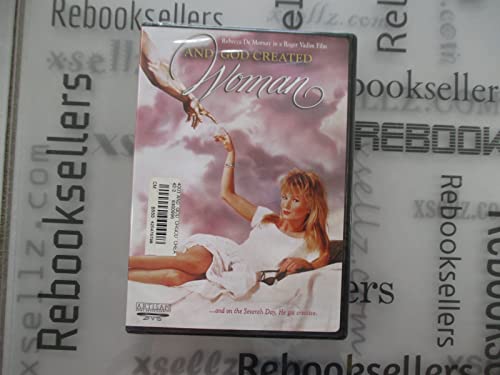
“And God Created Woman” is a 1956 French drama film directed by Roger Vadim and starring Brigitte Bardot.
The film tells the story of a free-spirited young woman named Juliette, who lives on the French Riviera and is desired by three men: her boyfriend Michel, his older brother Antoine, and a wealthy older man named Eric.
The film explores themes of sexual liberation, female empowerment, and the clash between traditional and modern values.
It was controversial upon its release due to its provocative subject matter and depiction of sexuality, but it was also a commercial sensation, launching Bardot to international stardom and cementing her status as a sex symbol.
The film is a classic of popular French cinema. Shot on location with a young cast, it helped clear a path for the Nouvelle Vague, but it is Roger Vadim’s debut, not a Nouvelle Vague film itself.
Lionsgate
- In this variation on director Vadim's own, more acclaimed Et Dieu Créa La Femme (1956, the same title in French), the vamp Robin Shea marries charming carpenter Billy Moran, only to get out of prison, but soon decides to seduce James Tiernan, who runs for state governor.
In this variation on director Vadim's own, more acclaimed Et Dieu Créa La Femme (1956, the same title in French), the vamp Robin Shea marries charming carpenter Billy Moran, only to get out of prison, but soon decides to seduce James Tiernan, who runs for state governor.
View on Amazon2. The Novices (1970)
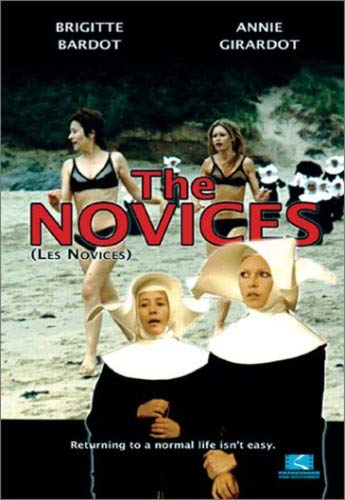
The Novices (original title: Les Novices) is a 1970 French-Italian comedy directed by Guy Casaril and starring Brigitte Bardot and Annie Girardot.
Bardot plays Agnès, a novice who runs away from her convent and lands in Paris with little more than a stray dog. She is taken in by Mona Lisa (Girardot), a prostitute who tries to teach her the trade. Agnès is hopeless at it, then finds work on an ambulance, which Mona turns into a brothel on wheels until the police catch on. The two women abandon the ambulance and slip back into the convent.
The film is a broad sex comedy from the later part of Bardot’s career, played off the gap between Agnès’s convent habits and Mona’s schemes.
If you like Brigitte Bardot’s performances, on our sister site AuteurGraph we have a profile page, a visual film timeline, and a ratings page that gives a tonne of info and data about their career in a visualized form.
3. La Vérité (1960)
La Vérité is a 1960 French drama film directed by Henri-Georges Clouzot and starring Brigitte Bardot, Charles Vanel, and Sami Frey.
The film tells the story of Dominique Marceau (Brigitte Bardot), a young and free-spirited woman who is accused of murdering her former lover.
As Dominique’s trial unfolds, her past relationships and personal struggles are laid bare, revealing a complex and troubled woman struggling to find her place in the world.
With its stunning black-and-white cinematography, intense performances, and moody score, La Vérité is a gripping and powerful exploration of love, lust, and betrayal.
Brigitte Bardot delivers a tour-de-force performance as Dominique, imbuing the character with a sense of vulnerability and strength that is both captivating and heartbreaking.
Sami Frey plays Gilbert Tellier, the lover whose death is on trial. Charles Vanel is Maître Guérin for the defense, and Paul Meurisse is Maître Éparvier for the civil party.
While La Vérité may not be as well-known as some of Clouzot’s other works, such as Les Diaboliques or The Wages of Fear, it remains a haunting and unforgettable film that deserves to be rediscovered by modern audiences.

Spirit Entertainment
- Polish Release, cover may contain Polish text/markings. The disk has English subtitles.
Polish Release, cover may contain Polish text/markings. The disk has English subtitles.
View on Amazon4. Don Juan, or If Don Juan Were a Woman (1973)
“Don Juan, or If Don Juan Were a Woman” is a 1973 French-Italian film directed by Roger Vadim and starring Brigitte Bardot in the title role. The film is a modern-day retelling of the Don Juan legend, with Bardot playing a female version of the character who seduces and manipulates men for her own pleasure.
The film explores themes of gender and power, as Don Juan becomes the subject of desire rather than the object, and subverts traditional gender roles. The film’s stylish visuals and erotic themes made it a controversial release at the time, but also contributed to its enduring cult status.
Bardot plays Jeanne in what became her last feature, with Jane Birkin and Robert Hossein among the supporting cast. The film has a cult following as a late Vadim reunion, though it sits well below And God Created Woman, La Vérité, and Contempt in her career.
Overall, “Don Juan, or If Don Juan Were a Woman” is considered a daring and provocative film that challenges traditional notions of gender and sexuality, and remains a cult classic in French cinema.
5. Les femmes (1969)
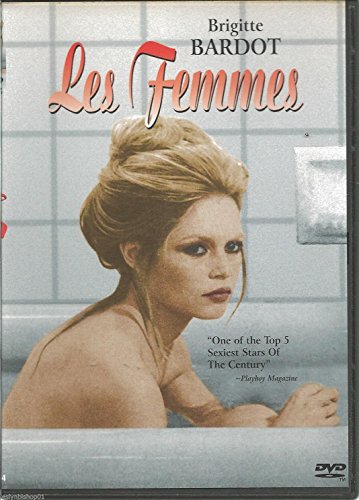
Les Femmes, released in the United States as The Vixen, is a 1969 French-Italian comedy co-written and directed by Jean Aurel. It stars Brigitte Bardot as Clara opposite Maurice Ronet as Jérôme, with Anny Duperey among the supporting cast.
Jérôme is a novelist whose relationships with women feed his writing. Clara, his new secretary, becomes both collaborator and complication as fiction, attraction, and his attitudes toward women begin to overlap.
The film belongs to the later, more domestically focused phase of Bardot’s career and gives her a central comic role as Clara.
6. Love Is My Profession (1958)
Love Is My Profession (1958) is a French romantic drama film directed by Claude Autant-Lara and starring Jean Gabin and Brigitte Bardot.
Adapted from Georges Simenon’s En cas de malheur, it follows Yvette Maudet (Bardot), who knocks out a shopkeeper’s wife during a botched robbery and asks the eminent lawyer André Gobillot (Jean Gabin) to defend her. He arranges a false witness, wins her acquittal, and keeps her as his mistress.
Gobillot’s wife, Viviane (Edwige Feuillère), watches the affair threaten his marriage and his practice. Yvette is still tied to a jealous medical student, Mazetti, and when she tries to leave him he kills her.
The frank sex, and a respected lawyer who rigs a trial, were controversial at the time. The film is a late studio drama built on the pairing of Gabin and Bardot.

7. Two Weeks in September (1967)
Two Weeks in September (À cœur joie) is a 1967 French-British romantic drama directed by Serge Bourguignon and starring Brigitte Bardot, Laurent Terzieff, and Jean Rochefort.
Bardot plays Cécile, a cover girl who lives quietly with her older husband, Philippe (Rochefort). On a photo assignment in London she meets a younger man, Vincent (Terzieff), becomes his mistress, and goes with him to Scotland before she has to choose between the two men.
The film was shot in London and on the East Lothian coast. Reviews at the time were poor. It remains of interest mainly as a late Bardot star vehicle.
8. Come Dance with Me! (1959)
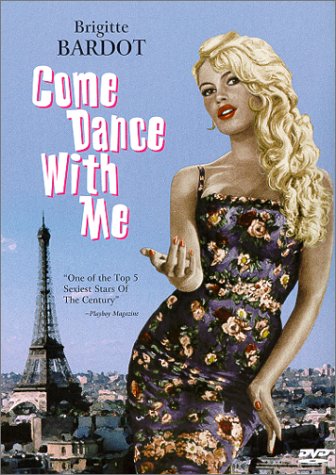
Come Dance with Me! (original title: “Voulez-vous danser avec moi?”) is a 1959 French crime film directed by Michel Boisrond and starring Brigitte Bardot and Henri Vidal.
Virginie (Bardot), the spoiled daughter of a wealthy industrialist, has married the dentist Hervé Dandieu (Vidal). After a quarrel he is picked up by dance teacher Anita Florès, who tries to blackmail him. When he goes to confront her he finds her murdered and becomes the suspect. Virginie then takes a job at the dance school to clear him.
The film is a light comic mystery built on the Bardot–Vidal pairing. Serge Gainsbourg has a supporting role. Bardot’s 1963 recording L’Appareil à sous is a separate Gainsbourg song, not a number from this film.
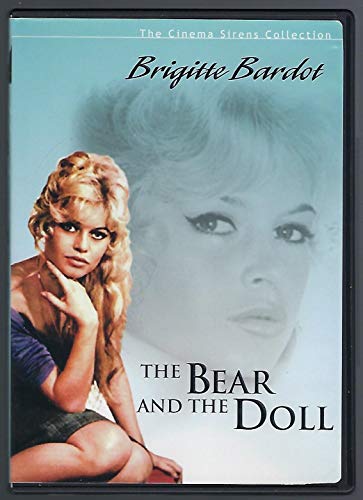
9. The Bear and the Doll (1970)
The Bear and the Doll (original title: L’Ours et la Poupée) is a 1970 French romantic comedy film directed by Michel Deville and starring Brigitte Bardot and Jean-Pierre Cassel in the lead roles.
Gaspard (Cassel) is a nearsighted cellist who lives in the country with his son. Félicia (Bardot) is a rich, much-divorced Parisian whose Rolls collides with his 2CV. She sets out to seduce the man who does not fall for her, and the sparring turns into affection.
The film is a light star comedy, not a Nouvelle Vague picture. Its pleasure is the clash between Félicia’s gloss and Gaspard’s stubborn privacy, and the chemistry between Bardot and Cassel.
10. Babette Goes to War (1959)
Babette Goes to War (Babette s’en va-t-en guerre) is a 1959 French wartime comedy directed by Christian-Jaque and starring Brigitte Bardot, Jacques Charrier, and Francis Blanche.
In 1940, Babette (Bardot) reaches London and is taken on as a maid at Free French headquarters. A British intelligence officer notices that she resembles the former mistress of German General von Arenberg, and she is parachuted back into occupied France with Lieutenant Gérard de Crécy (Charrier) to kidnap the general. Separated from Gérard, she is also pressed into service by a Gestapo chief who wants her to watch von Arenberg.
The film is a comic spy caper, and it gives Bardot a naïve, resourceful lead instead of a femme-fatale part.
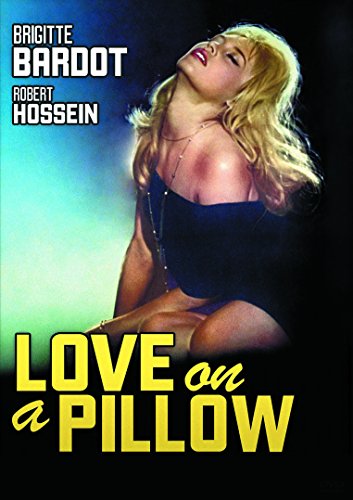
11. Love on a Pillow (1962)
Love on a Pillow (French title: “Le Repos du guerrier”) is a 1962 French drama film directed by Roger Vadim and starring Brigitte Bardot and Robert Hossein.
The film tells the story of a wealthy Parisian woman named Geneviève (Bardot) who becomes involved with a troubled artist named Renaud (Hossein).
Geneviève becomes fascinated by Renaud’s tortured soul and artistic talent, and becomes determined to help him overcome his demons. However, her attempts to save him from himself ultimately lead to her own downfall.
Love on a Pillow is notable for its stylish visuals and exploration of themes such as love, power, and self-destruction.
The film also features strong performances from its lead actors, with Bardot delivering a nuanced portrayal of a woman struggling to find meaning in her privileged existence.
While not one of Bardot’s most well-known films, Love on a Pillow is a Vadim melodrama about possession and self-destruction, not a Nouvelle Vague film.
12. Contempt (1963)

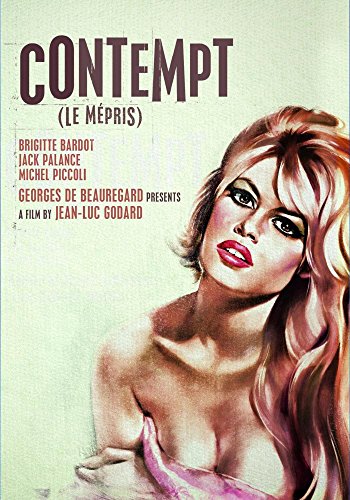
Jean-Luc Godard’s Contempt (Le Mépris) stars Bardot as Camille, whose marriage to screenwriter Paul Javal (Michel Piccoli) begins to fracture while he is hired to rewrite a troubled screen adaptation of Homer’s Odyssey. Jack Palance plays the American producer, while director Fritz Lang appears as himself.
The film moves between a disintegrating relationship and the compromises of commercial filmmaking. Raoul Coutard’s widescreen photography, Georges Delerue’s score, and the production’s striking use of Rome and Capri make the tension between spectacle and emotional estrangement part of the film’s form.
Bardot’s restrained performance is crucial: Camille’s shifting attitude toward Paul is conveyed through glances, silences, and the film’s extended apartment sequence rather than a conventional romantic arc. For viewers interested in Bardot as an actor rather than simply as a screen icon, this is an essential entry.
Lionsgate
- Contempt
- Product Type: Physical Movie
- Format: Dvd
Contempt Product Type: Physical Movie
View on Amazon13. La Parisienne (1957)
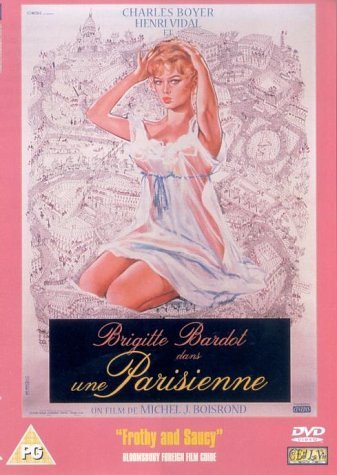
La Parisienne (Une Parisienne) is a 1957 French comedy directed by Michel Boisrond. Bardot plays Brigitte Laurier, the headstrong daughter of a senior French politician, opposite Henri Vidal as her father’s womanising chief of staff, Michel Legrand.
After manoeuvring Michel into marriage, Brigitte grows frustrated by his indifference and tries to provoke his jealousy through an escapade with a prince, played by Charles Boyer. The lightweight farce is chiefly a vehicle for Bardot’s comic timing and star presence.
TF1 VIDEO
- Une parisienne ( La Parisienne ) ( Una Parigina )
- Une parisienne
- La Parisienne
- Una Parigina
Une parisienne ( La Parisienne ) ( Una Parigina ) Une parisienne
View on Amazon14. The Night Heaven Fell (1958)
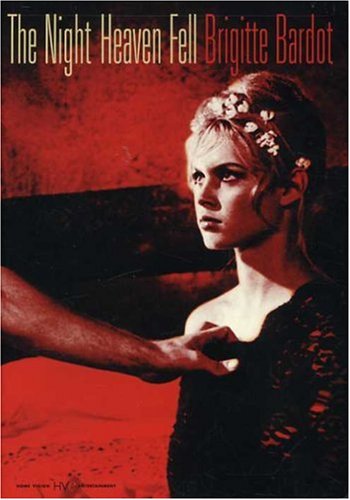
The Night Heaven Fell (1958) is a French-Italian romantic drama film directed by Roger Vadim, and stars Brigitte Bardot, Stephen Boyd, and Alida Valli.
Ursula (Bardot), just out of a convent, goes to Spain to live with her aunt Florentine (Alida Valli) and her uncle, Count Ribera. She falls for Lambert (Stephen Boyd), who kills Ribera in a confrontation tied to the suicide of Lambert’s sister. Florentine, who is Lambert’s mistress, refuses to support his alibi. Ursula flees with him, and she is shot when she steps in front of him as the police close in.
By 1958 Bardot was already a star from And God Created Woman. This follow-up is remembered for its Spanish locations, Georges Auric’s score, and a tragic Bardot role. Reviews at the time were mixed.
15. A Very Private Affair (1962)
A Very Private Affair (Vie privée) is a 1962 drama directed by Louis Malle and starring Brigitte Bardot and Marcello Mastroianni.
Jill (Bardot), from a wealthy Geneva family, becomes a model and then a world-famous actress. Paparazzi and fans destroy her privacy. After a breakdown she retreats to her mother’s villa on Lake Geneva and begins an affair with Fabio Rinaldi (Mastroianni), an editor and theatre director who had been married to her friend Carla. When she joins him at the Spoleto Festival, the press closes in again.
The film is a reflection on Bardot’s own fame: a star who cannot get a private life back.

Posterazzi
- A Very Private Affair
- Print Type:
- Paper Size: 16.00 x 20.00 inches
- Licensor: Everett Collection
A Very Private Affair Print Type:
View on Amazon16. The Legend of Frenchie King (1971)
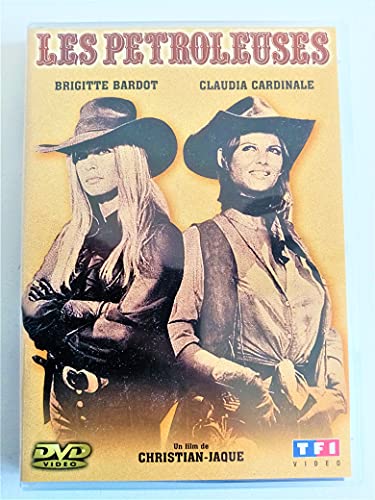
The Legend of Frenchie King (original title: Les Pétroleuses) is a 1971 comic western directed by Christian-Jaque and starring Brigitte Bardot and Claudia Cardinale.
Louise (Bardot), called Frenchie King, and her sisters take over the Little P ranch after a train robbery leaves them the deed. Maria Sarrazin (Cardinale) and her brothers want the same land because it sits on oil. The two women feud, then end up on the same side. Michael J. Pollard plays the sheriff, with Patty Shepard and Georges Beller in the supporting cast.
The film is a spoof western that puts Bardot in a gunslinger lead opposite Cardinale.
17. Agent 38-24-36 (1964)
Agent 38-24-36 (French title Une ravissante idiote) is a 1964 spy comedy film directed by Édouard Molinaro and starring Brigitte Bardot and Anthony Perkins.
In London, Harry Compton (Perkins), a fired bank clerk of Russian parentage, offers himself to Soviet intelligence and is sent to steal papers from Sir Reginald Dumfrey. Penelope Lightfeather (Bardot), the seamstress he is already infatuated with, works in that household and seems too dizzy to be useful. The papers are bait, Harry bungles the theft, and Penelope turns out to be the one pulling the strings.
Penelope’s ditzy-blonde persona is the film’s running joke—and Bardot’s weapon.
Agent 38-24-36 is a fun and entertaining spy comedy that showcases the glamour and intrigue of the 1960s spy genre. The movie is notable for its stylish and colorful cinematography, as well as for Bardot’s comic timing opposite Perkins.
Bardot plays the seemingly empty-headed Penelope, while Perkins is the neurotic novice spy who keeps underestimating her.
The movie is also notable for its witty and irreverent script, which pokes fun at the conventions of the spy genre while still delivering light intrigue.
Overall, Agent 38-24-36 is a must-watch for fans of classic spy movies and Bardot comedies, and for anyone looking for a fun and lighthearted romp through the world of espionage.
18. Viva Maria! (1965)
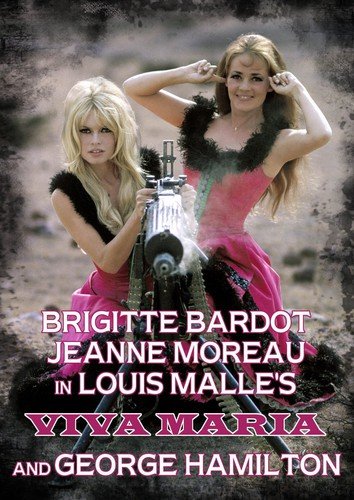
Viva Maria! is a 1965 French comedy-adventure film directed by Louis Malle and starring Brigitte Bardot and Jeanne Moreau.
The film tells the story of two women named Maria (played by Bardot and Moreau) who meet by chance in early 20th century Latin America.
The two become fast friends and soon find themselves caught up in a series of wild adventures, including performing as a duo in a traveling circus, leading a revolution against a corrupt government, and even becoming gun-runners in the midst of a civil war.
With its playful humor, colorful set-pieces, and two charismatic leading ladies, Viva Maria! is a delightful romp that showcases the talents of both Bardot and Moreau.
The chemistry between the two actresses is palpable, and their performances capture the joy and spontaneity of their characters’ adventures.
While Viva Maria! may not be as well-known as some of Bardot’s other films, such as “And God Created Woman” or Contempt, it remains a beloved classic of French cinema and a testament to the enduring appeal of two of the greatest actresses of their generation.
3 Reasons To Watch Brigitte Bardot Movies
Iconic Performances: Brigitte Bardot was one of the most famous actresses of the 1950s and 60s, and her performances in films such as “And God Created Woman” and Contempt are still remembered as iconic performances today.
Bardot’s natural beauty and magnetic presence on screen captivated audiences around the world, making her an enduring symbol of French cinema.
Fashion and Style: Bardot was not only known for her acting ability but also her fashion sense. Her signature style, featuring chic and effortless clothing, became a global trend and influenced fashion for decades.
Watching her films can be a great way to appreciate her timeless fashion sense and classic style.
Cultural Significance: Brigitte Bardot was more than just an actress – she was also a cultural icon and a symbol of liberation and rebellion in the 1950s and 60s.
Her roles challenged traditional gender roles and her public persona helped to break down conservative social norms in France and beyond.
Watching her films can be a way to appreciate the cultural significance of one of the most iconic actresses of the 20th century.
Related on Filmmaking Lifestyle
Read next: 10 Best Fred Astaire Movies: The Magical Dance and Timeless Elegance of a Screen Legend, 10 Best Juliette Binoche Movies: The Captivating Performances of a French Screen Legend, and 5 Best Simone Signoret Movies: The Sensual and Provocative Roles of a French Legend.
Best Brigitte Bardot Movies – Wrap Up
Brigitte Bardot’s career spanned several decades and left a lasting impact on French cinema and fashion. She became known as a symbol of sensuality and sex appeal, and her films remain beloved to this day.
These films showcase Bardot’s talent as an actress and her undeniable onscreen presence. They capture her unique blend of innocence and sensuality, and her performances are still studied and celebrated by filmmakers and actors around the world.
Overall, Brigitte Bardot’s contribution to French cinema and culture cannot be overstated. Her influence on fashion, art, and popular culture continues to be felt to this day, and her films remain a testament to her lasting impact on the world of entertainment.
From Expressionism to New Wave — dive deeper into Film History.

Let's Get Lost: The Essential Breakdown

The Old Dark House: Context, Themes, and Style

Night and Fog: Themes, Mood, and Visual Language

Runaway Train: Key Ideas and Lasting Influence

Even the Wind Is Afraid: A Deep Dive Into Story and Style

Introducing The Big Combo: Why It Still Matters

A Fistful of Dollars: What to Notice on a Rewatch

Anima: A Guide to Watching It Like a Critic

Raging Bull: The Meaning Behind the Moments


New comments are not currently accepted.
Comments