
On this pageTap to expand
There is a lot to consider before editing your YouTube video. There are many things that you will need to think about.
This article will help you understand what they are and how they can benefit you.
Process map
Edit YouTube videos
- 1
Understanding Youtube's Video Editor
- 2
Importing Your Clips
- 3
Basic Video Editing Techniques
- 4
Enhancing Your Video With Special Effects
- 5
Adding Music And Audio Effects
- 6
Collaborating And Sharing Your Edited Video
How To Edit YouTube Videos
What Are How To Edit YouTube Videos
This is a simple tutorial to help you learn how to edit YouTube videos using YouTube’s own tools — mainly YouTube Studio’s Editor for post-upload trims and Audio Library music, plus YouTube Create when you need a fuller mobile timeline.
Desktop NLEs such as Adobe Premiere Pro remain excellent for heavier edits before you upload; this guide focuses on what you can do on YouTube itself.
Editing videos for YouTube isn’t just about cutting and trimming; it’s about telling a story that captivates your audience.
We’ll guide you through the process, from basic Studio edits to when special effects belong in Create or a desktop editor.
Whether you’re a vlogger, educator, or marketer, knowing which YouTube tools actually exist — and what they can’t do — is essential in creating videos that resonate with viewers.
Stick with us, and we’ll turn those raw clips into polished gems that are sure to keep eyes glued to the screen.

Understanding YouTube Studio’s Editor
Editing on YouTube has evolved, becoming a more streamlined process.
YouTube’s classic web Video Editor was retired in 2017; today we edit uploaded videos in YouTube Studio’s Editor, and we can build fuller projects in the mobile YouTube Create app (available in select markets).
Studio’s tools make it easier to trim footage and add music from YouTube’s Audio Library without re-uploading a new file.
To start in Studio, we upload a video (or open an existing one), open Content, select the video, then choose Editor.
There, Trim & cut lets us remove unwanted parts from the beginning, middle, or end.
Adding music and sound effects is straightforward with YouTube’s built-in Audio Library.
It hosts a wide range of sounds and songs that are free to use and can dramatically enhance the mood of our projects.
We can also add end screens, cards, and captions to reinforce the story and guide viewers to the next watch.
Below are the principal functionalities available in YouTube Studio’s Editor (and closely related Studio tools):

Want a calendar that actually feels booked?
The same guide thousands of video owners use to turn sporadic inquiries into a healthier mix of repeat work and referrals — practical, no fluff.
- Trimming and cutting – to cut out parts that don’t add value to our story,
- Audio Library tracks – to layer approved music onto the upload,
- Blur – to obscure faces or objects when needed,
- End screens and cards – to add calls to action after the edit,
- Captions and chapters – to add narrative clarity and navigation.
For transitions, filters, multi-clip timelines, and heavier visual effects, YouTube Create (or a desktop NLE such as Premiere Pro) is the better fit — Studio’s Editor is a post-upload refinement tool, not a full timeline editor.
While we’re cultivating our skills with these YouTube tools, it’s important to remember that effective storytelling remains at the heart of our content.
The tools are there to help us refine and present our story, not to overshadow it.
Our proficiency with these tools will elevate the final product, engaging our audience from the first frame to the last.
Importing Your Clips
Before diving into the heart of video editing, you’ll need to get your footage onto YouTube — either by uploading a finished (or near-finished) file to YouTube Studio, or by importing clips into the YouTube Create app if you’re assembling the edit on mobile.
This is the first step in bringing your creative vision to life.
Ensure your video files are readily available on your device – a tidy folder structure will save you time and stress.
We often find that starting with a solid naming convention is crucial.
This simplifies identifying each clip, especially when working with multiple shots.
In Studio, use Create → Upload videos (there is no classic “Import into Video Editor” button anymore).
In YouTube Create, import the clips you want on the timeline before you publish.
You might encounter various file formats.
YouTube supports the most commonly used video file types for upload.
Here are some of the key formats you can upload without a hitch:
- MP4,
- MOV,
- AVI,
- WMV.
Remember, the clarity and quality of your uploads determine the impact of your final cut.
We always recommend checking your video resolution and aspect ratio beforehand.
To maintain high standards, your videos should preferably be in 1080p or higher.
In situations where clips are taken from different devices, consistency is key.
Ensure all footage matches the frame rate and resolution for a seamless edit.
Sudden changes in video quality can be jarring and detract from your storytelling.
After upload (or after importing in Create), organize your clips and decide what still needs a Studio trim versus a full re-edit elsewhere.
Tailoring your workspace for efficiency can significantly enhance your editing flow.
Our next step will involve piecing together our narrative structure.
Stay tuned as we guide you through that process, ensuring that your story unfolds with purpose and style.
Basic Video Editing Techniques
When diving into the world of video editing, it’s crucial to grasp the basics.
Mastering fundamental techniques can greatly enhance your YouTube content.
Cutting and Trimming plays a pivotal role in controlling the pace and rhythm of your story.
We refine clips to ensure each moment serves a purpose, be it advancing the narrative or heightening emotion.
Sequencing and Transitions are about the artful arrangement of clips to maintain continuity or create a desired effect.
Smooth transitions help sustain viewer engagement and can boost the overall production value.
Keen attention to Color Correction can transform the visual appeal of your footage.
We adjust exposure, contrast, and saturation to ensure our videos have a consistent and professional look.
Here’s what you should focus on:
- Balancing colors for uniformity,
- Correcting exposure to avoid over or under-lit scenes.
Audio levels mustn’t be overlooked.
We meticulously balance dialogue, sound effects, and background music so each audio element is heard clearly without overwhelming the others.
Crafting an impactful narrative involves more than just assembling clips.
It’s about choosing the right order and length for each section.
Here’s how we approach this:
- Introduction sets the stage,
- Main body delves into the core content,
- Climactic moments create an emotional peak.
Italics and text animations can emphasize key points or add a creative flair.
Through strategic placement and timing, text overlays can greatly enhance the communication of your message.
Finally, inserting B-Roll or supplementary footage can enrich storytelling.
These shots add depth and context to your main content and keep the viewer’s attention.
Remember that editing is an iterative process.
We continuously refine and adjust our techniques to better convey the intended message and ensure our audience remains captivated from start to finish.
Enhancing Your Video With Special Effects
Adding special effects to videos has become an integral part of filmmaking, transforming the ordinary into the extraordinary.
YouTube Studio’s Editor is limited here (trim, blur, Audio Library, end screens); for filters, transitions, and timeline effects we use YouTube Create or a desktop video editor such as Premiere Pro.
Special effects can dramatically elevate the storytelling experience.
Films like Jurassic Park and Inception have shown how effects can be game-changers in visual narratives.
Our videos can benefit from the following effects (Create or an NLE, not Studio’s post-upload Editor):
- Visual Filters – They set the mood and tone.
- Slow Motion – It highlights dramatic moments.
- Speed Ramping – This technique combines fast and slow motion for dynamic sequences.
Using effects responsibly is key.
Overdoing it can distract viewers from the content’s core message.
Understanding when and where to apply effects requires practice and a good eye for detail.
It becomes second nature as we regularly edit and enhance our videos before or alongside publishing on the platform.
Incorporating effects such as lightning strikes or muzzle flash can be crucial for action sequences.
It’s how we craft high-impact scenes without the Hollywood budget — typically in Create or a desktop NLE, then upload the finished file.
Color grading is essential for achieving a cohesive look across various shots.
It helps in creating atmosphere and depth within our videos, and it belongs in an NLE rather than Studio’s Editor.
Audio effects shouldn’t be overlooked.
Sound can be just as transformative as visual effects, shaping the viewer’s emotional response.
We use sound design to engulf the audience in the world we’re creating.
Sounds like reverberation or echo can imply space and environment effectively.
Animating text and logos gives a professional touch to our intros and credit rolls.
It makes our brand stand out and leaves a lasting impression on the audience.
Remember, the magic of special effects lies in their ability to enhance, not overshadow.
We carefully weave these elements into our videos, ensuring that each effect serves the story we’re telling.
[Watch on YouTube](
)
Adding Music And Audio Effects
When crafting a compelling video, the auditory experience is as crucial as the visual elements.
Music and audio effects provide an emotional undertone that can elevate the storytelling impact significantly.
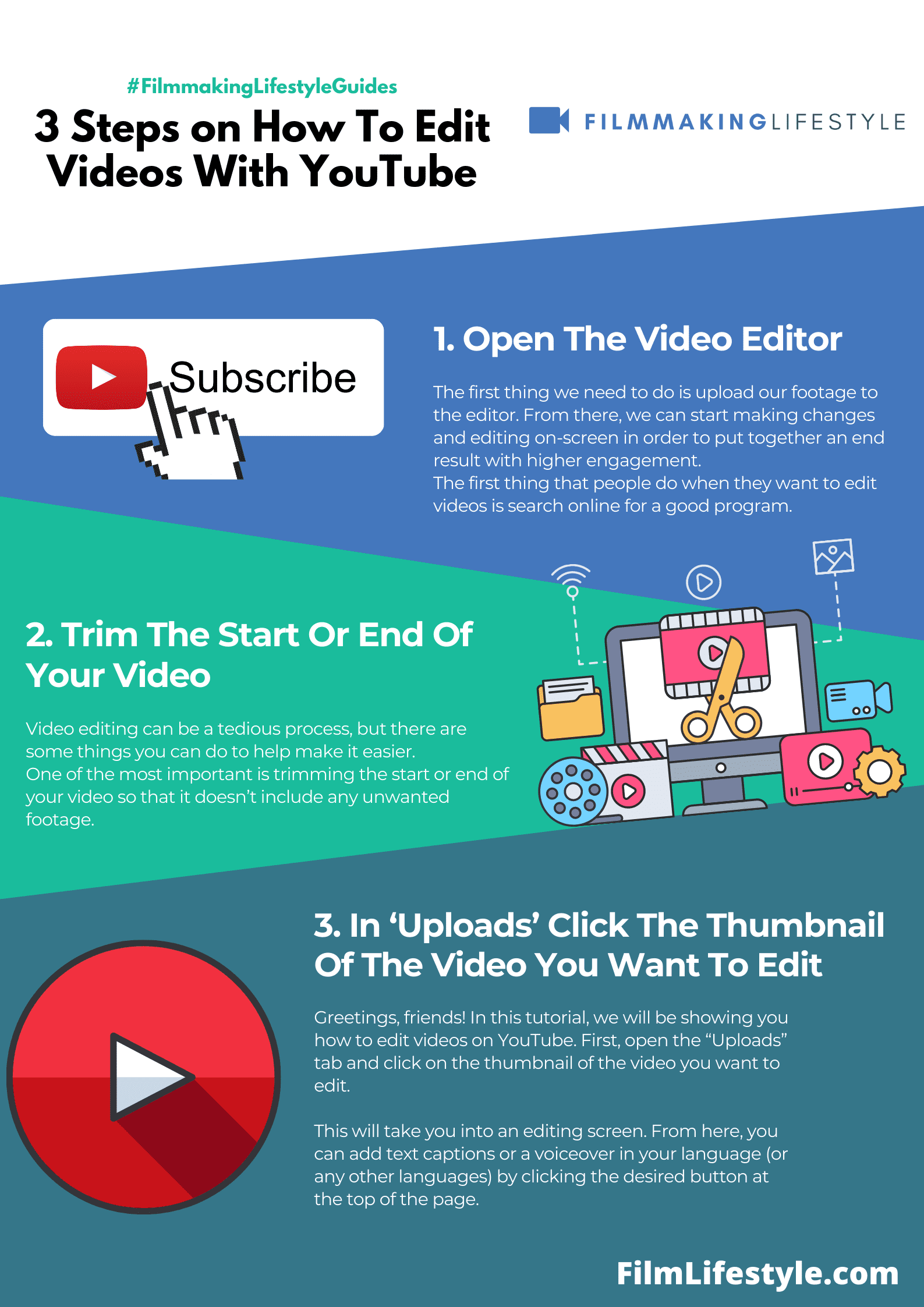
YouTube Studio’s Editor and the Audio Library offer practical audio tools that can enhance uploaded videos.
We can add Audio Library tracks in Studio; fuller mixes, voiceovers, and custom sound design still belong in Create or a desktop editor before upload.
Here are a few ways we can optimize our use of music and sound effects:
- Selecting the right music – Tension, excitement, or serenity can be conveyed through the proper track.
- Incorporating sound effects – Subtle background noises or dramatic sounds can add realism and depth.
- Using royalty-free libraries – YouTube’s Audio Library provides free songs and sound effects, helping us avoid copyright issues.

Discovery calls that win corporate & branded work
Align with marketing stakeholders faster: stakeholder map, success metrics, and approval paths — distilled into a practical checklist.
Timing is everything in audio editing.
We ensure that the music cues align with the visual transitions to maintain a cohesive and engaging viewer experience.
Audio mastering is not to be overlooked.
It involves fine-tuning the final audio mix so all elements sound balanced and clear.
Understanding when to let the scene breathe without music is as important as knowing when to amplify the mood with sound.
We are mindful of where silence can be more powerful than any soundtrack or sound effect.
Let’s not forget the emotional weight that audio can carry.
A well-chosen song or a perfectly timed sound effect can make the difference between a good video and a great one.
With the right application of music and sound, our YouTube videos can truly resonate with our audience, crafting an immersive experience that’s both visually and audibly compelling.
Collaborating And Sharing Your Edited Video
Creating content isn’t just about the editing process; it’s also about how you share your work with others.
Collaboration is key in the video editing world, especially with platforms like YouTube that emphasize community and shared experiences.
Our knowledge in the filmmaking industry tells us that a well-shared video is half the battle won.
YouTube does not offer a shared real-time timeline or project-file editor; instead we collaborate through channel permissions and video collaborator invites.
In YouTube Studio → Settings → Permissions, we can invite Managers or Editors so teammates can upload, trim, and manage videos without sharing a Google password.
On a video’s details, we can also invite other channels as collaborators so the finished upload is credited and discoverable to each audience.
- Grant Editor/Manager access for Studio work,
- Invite channel collaborators on the published video,
- Keep the creative timeline in Create or a desktop NLE, then upload the shared result.
The benefits of these collaborative efforts lead to not only a more refined video but also one that resonates with a wider audience.
Harmonizing our creativity with our collaborators’ talent becomes far easier when roles and credits are clear.
By utilizing the YouTube platform to its fullest, we ensure that our project benefits from diversity in thought and technique.
Once the editing is complete, sharing our masterpiece is the final step of the journey.
YouTube’s share functionality doesn’t just limit us to one platform; it extends our reach across various social media channels.
We can promote uploads on platforms such as Facebook, X (formerly Twitter), and LinkedIn to maximize our video’s exposure.
- Instantly reach followers,
- Promote across multiple channels,
- Engage with our community.
Having the ability to spread our content across channels opens up a myriad of opportunities for viewer engagement and feedback.
Engaging our audience is invaluable, and YouTube’s straightforward sharing tools make connecting with our viewers and growing our community effortless.
How To Edit Videos In Youtube – Wrap Up
We’ve walked through the essentials of using YouTube Studio’s Editor and YouTube Create to craft our stories and share them with the world.
With these tools at our fingertips we can trim scenes, add Audio Library tracks, and — with Create or a desktop NLE — build visually compelling content that resonates with our audience.
Let’s not forget channel permissions, collaborator credits, and the wider reach we gain by sharing our videos across social platforms.
Now it’s time to immerse and let our creativity shine on YouTube.
Happy editing!
Frequently Asked Questions
What Is Youtube Studio’s Editor?
YouTube Studio’s Editor is the built-in tool for trimming, cutting, blurring, and adding Audio Library music to videos already on your channel — without a full re-upload.
Richer timeline edits (filters, transitions, multi-clip assembly) belong in YouTube Create or a desktop editor before you upload.
How Can I Improve Storytelling In My Videos?
Effective storytelling can be enhanced by tight trims, clear captions or chapters, purposeful B-roll, and — when you need them — filters and effects from Create or an NLE that support the narrative rather than distract from it.
Is It Possible To Collaborate On Video Edits Within Youtube?
YouTube doesn’t offer real-time shared project files. You can grant Editors or Managers channel permissions in Studio, and invite other channels as video collaborators for shared credit and discovery, while the timeline edit itself happens in Create or a desktop NLE.
Why Should I Share My Edited Videos On Social Media?
Sharing your edited videos on social media channels expands your reach, maximizes exposure, and engages with a wider audience, which can lead to increased viewership and subscriber growth on YouTube.


New comments are not currently accepted.
Comments