
On this pageTap to expand
François Ozon is a highly regarded French film director known for his distinctive style and exploration of complex themes such as gender, sexuality, and family relationships.
He has made a number of critically acclaimed films, and here are some of his best works:
Swimming Pool (2003) – This psychological thriller stars Charlotte Rampling and Ludivine Sagnier, and tells the story of a crime writer who travels to the south of France to work on her latest novel.
There, she becomes increasingly drawn into the dark and unsettling world of her host’s daughter.
In the House (2012) – This thriller stars Fabrice Luchini and Ernst Umhauer, and tells the story of a high school student who becomes involved with a wealthy family as part of a writing assignment.
As the story progresses, the lines between reality and fiction become increasingly blurred.
François Ozon’s films are characterized by their provocative themes, their lush visuals, and their exceptional performances.
Best Francois Ozon Films
They offer a unique and insightful perspective on the complexities of human relationships, and are a testament to the power of cinema to explore profound and meaningful themes.
Every film in this guide
| Film | Year |
|---|---|
| Swimming Pool | 2003 |
| In the House | 2012 |
| Under the Sand | 2000 |
| Sitcom | 1998 |
| Five Times Two | 2004 |
| X2000: The Collected Shorts of Francois Ozon (2001 Video) | |
| See the Sea | 1997 |
| Victor | 1993 |
| Little Death | 1995 |
| Truth or Dare | 1994 |
| A Summer Dress | 1996 |
| Scènes de lit | 1998 |
| L’homme idéal (II) | 1996 |
| Photo de famille | 1988 |
| Les doigts dans le ventre | 1988 |
1. Swimming Pool (2003)
Swimming Pool is a 2003 psychological thriller directed by François Ozon, starring Charlotte Rampling and Ludivine Sagnier.
The film follows Sarah Morton, a British crime writer who is struggling with writer’s block.
She travels to her publisher’s house in the south of France to find inspiration for her new book, but her quiet and isolated life is disrupted by the arrival of the publisher’s daughter, Julie.
As Sarah begins to observe Julie’s wild and reckless behavior, she becomes drawn into a dangerous and sensual game of manipulation, where nothing is quite as it seems.
The film is known for its complex and twisting plot, as well as for its strong performances from the two lead actresses.
Swimming Pool is also notable for its striking cinematography and use of color, which creates a vivid and sensual atmosphere that heightens the tension and mystery of the story.
The film also explores themes of creativity, sexuality, and the nature of fiction, making it a thought-provoking and engaging thriller.
Overall, Swimming Pool is a provocative and mesmerizing film that will keep you on the edge of your seat until the very end. It is a must-see for fans of psychological thrillers and French cinema.
![Swimming Pool [2003] [DVD]](https://m.media-amazon.com/images/I/513+WeCo10L.jpg)
2. In the House (2012)
In the House is a 2012 French drama film directed by François Ozon, starring Fabrice Luchini, Kristin Scott Thomas, and Ernst Umhauer.
The film tells the story of a high school student who becomes obsessed with a classmate’s family and begins to weave an intricate web of lies and deception in order to infiltrate their home and gain their trust.
One of the defining characteristics of In the House is its complex and layered narrative. The film blurs the lines between reality and fiction, as the student’s stories become increasingly intertwined with the lives of the family he is observing.
If you like Francois Ozon’s work, on our sister site AuteurGraph we have a profile page, a visual film timeline, and a ratings page that gives a tonne of info and data about their career in a visualized form.
The film is also notable for its exploration of voyeurism and the power of storytelling, as the student’s writing becomes a means for him to manipulate and control those around him.
Another notable aspect of In the House is its strong performances, particularly from Fabrice Luchini as the jaded and cynical teacher who becomes embroiled in the student’s schemes, and Ernst Umhauer as the enigmatic and unsettling student at the center of the story.
Overall, In the House is a thought-provoking and compelling film that explores themes of obsession, storytelling, and the blurred lines between reality and fiction.
Its intricate narrative and strong performances make it a must-see for fans of French cinema and psychological dramas.
![In The House [DVD] [2012]](https://m.media-amazon.com/images/I/515cnqG-8KL.jpg)
MOMENTUM PICTURES
- Actors Fabrice Luchini, Ernst Umhauer, Emmanuelle Seigner, Kristin Scott Thomas & Denis Mnochet
- Director Franois Ozon
- Year 2012
- Languages French
- Subtitles English
Actors Fabrice Luchini, Ernst Umhauer, Emmanuelle Seigner, Kristin Scott Thomas & Denis Mnochet Director Franois Ozon
View on Amazon3. Under the Sand (2000)
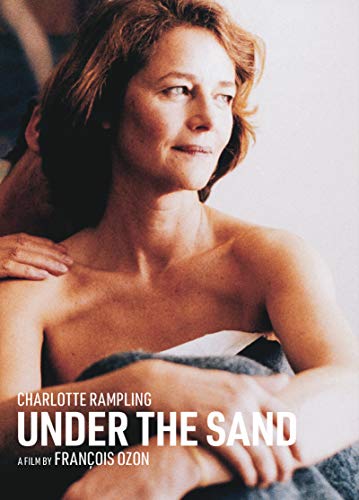
Under the Sand is a French drama film directed by François Ozon and released in 2000. The movie tells the story of a middle-aged woman named Marie, played by Charlotte Rampling, who goes on a holiday with her husband to the beach.
While there, her husband disappears, and Marie is left to grapple with the uncertainty of his fate.
One of the notable aspects of Under the Sand is the way it explores grief and loss.
The film’s focus is on Marie’s emotional journey as she tries to come to terms with her husband’s disappearance, and the way her grief affects her relationships with others.
Rampling’s performance in the lead role is widely acclaimed for its emotional depth and nuance.
Overall, Under the Sand is a powerful and poignant film that explores the human experience with sensitivity and grace.
François Ozon’s direction is understated and subtle, allowing the emotional weight of the story to come through without melodrama or sentimentality.
4. Sitcom (1998)
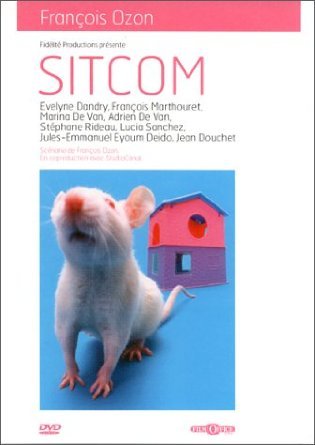
Sitcom is a 1998 French film directed by François Ozon. The film is a dark comedy that tells the story of a seemingly perfect, bourgeois family that suddenly starts behaving strangely after bringing a white rat into their home.
As their behavior becomes increasingly erratic and perverse, tensions rise and the family’s facade of normalcy begins to crumble.
The film is known for its absurd and surreal imagery, as well as its biting satire of the traditional nuclear family.
The film’s themes of repression, conformity, and sexual deviance are presented in a way that is both humorous and unsettling, and the film is ultimately a commentary on the hypocrisies and underlying tensions of modern society.
Sitcom was Ozon’s first feature film, and it helped to establish him as a rising talent in French cinema.
The film’s bold and daring approach to storytelling, as well as its willingness to take risks with its subject matter, have made it a cult favorite among fans of independent and avant-garde cinema.

5. Five Times Two (2004)
Five Times Two (2004) is a critically acclaimed film directed by François Ozon. The movie explores the end of a relationship by telling the story of a couple in reverse chronological order, beginning with their divorce and ending with their first meeting.
The film is divided into five segments, each depicting a pivotal moment in the couple’s relationship.
These moments include their wedding, the birth of their child, and their first date, among others. As the film unfolds, viewers gain a deeper understanding of the couple’s struggles and the reasons behind their eventual separation.
Five Times Two is known for its emotional intensity and sensitive exploration of the complexities of human relationships.
The film features strong performances from its lead actors, Valeria Bruni Tedeschi and Stéphane Freiss, and is a powerful meditation on the nature of love, loss, and the passage of time.
Overall, Five Times Two is a powerful and moving film that offers a nuanced and insightful perspective on the challenges and joys of romantic relationships.

6. X2000: The Collected Shorts of Francois Ozon (2001 Video)
X2000: The Collected Shorts of Francois Ozon is a 2000 compilation of short films directed by François Ozon, a French filmmaker known for his provocative and unconventional style.
The collection features eight short films that span Ozon’s career, from his earliest work in the 1980s to his more recent films.
One of the defining characteristics of Ozon’s short films is their exploration of taboo subjects and unconventional relationships.
The films often feature non-traditional gender roles and sexuality, and challenge the boundaries of social norms and expectations.
Another notable aspect of the collection is the range of genres and styles represented. The films vary from dark comedies to surreal dramas to erotic thrillers, showcasing Ozon’s versatility and willingness to experiment with different storytelling techniques.
Overall, X2000: The Collected Shorts of Francois Ozon offers a fascinating glimpse into the early career of one of France’s most talented and daring filmmakers.
The collection’s exploration of taboo subjects and unconventional relationships, as well as its range of genres and styles, make it a must-see for fans of Ozon’s work and lovers of independent cinema.
![X2000 - The Collected Shorts of Francois Ozon [DVD]](https://m.media-amazon.com/images/I/512918FN54L.jpg)
7. See the Sea (1997)
See the Sea is a French film directed by François Ozon and released in 1997. The movie tells the story of a young mother named Sasha, played by Sasha Hails, who rents a room in her house to a young woman named Tatiana, played by Marina de Van.
As the two women spend time together, tensions start to rise, and Sasha begins to feel increasingly uncomfortable with Tatiana’s behavior.
One of the notable aspects of See the Sea is the way it explores themes of paranoia and isolation. The film has a slow, ominous pace, building tension gradually as Sasha’s unease grows.
The movie’s setting, a remote seaside village, adds to the sense of isolation and unease.
The film is also notable for its exploration of female desire and sexuality, as the relationship between Sasha and Tatiana takes on increasingly charged undertones.
Overall, See the Sea is a haunting and atmospheric film that is highly regarded by fans of psychological thrillers.
François Ozon’s direction is restrained and subtle, allowing the tension to build gradually without resorting to cheap scares or shock tactics.
The film’s evocative setting and strong performances from the lead actresses combine to create a memorable and impactful viewing experience.

8. Victor (1993)
Victor is a 1993 French short film written and directed by François Ozon. A young man named Victor learns that his parents have died in a car crash—and instead of conventional mourning, he stages a grotesque, erotic wake that turns grief into provocation.
Emotional storytelling: The film is a cold, funny, and unsettling exploration of grief and desire, seen through Ozon’s early short-film sensibility rather than a Chabrol village melodrama.
It’s a sensitive-but-perverse portrait of how a son processes absence: inviting friends, lovers, and strangers into the family flat until mourning becomes performance.
Beautiful cinematography: Shot with Ozon’s already sharp eye for domestic interiors and bodies, the short turns an apartment into a theatre of taboo.
Strong performances: The cast leans into the film’s deadpan shock comedy, letting Victor’s detachment read as both defense mechanism and cruelty.
Overall, Victor is a key early Ozon short—already obsessed with family secrets, sexual candor, and the comedy of bad taste—and a must-watch for anyone tracing how his feature voice began.
Brand: Victor Books
- Used Book in Good Condition
Used Book in Good Condition
View on Amazon9. Little Death (1995)
I believe you may be referring to Little Death, a short film directed by François Ozon in 1995. The film is part of a trilogy of short films that Ozon made during this time, which also includes A Summer Dress and X2000.
Little Death tells the story of a young boy who is struggling to come to terms with the death of his pet rabbit.
The boy becomes obsessed with the idea of death and begins to explore the subject in various ways, including through his relationship with a young girl who lives in his apartment building.
The film is notable for its exploration of dark themes and its examination of the fragility of life. Like many of Ozon’s films, Little Death is unflinching in its depiction of difficult subject matter, and it offers a powerful and thought-provoking meditation on the human experience.
While it may not be as well-known as some of Ozon’s other films, Little Death is still considered an important work in the director’s oeuvre and is worth exploring for those interested in his work.
10. Truth or Dare (1994)
Truth or Dare (French: Action vérité) is a 1994 short film written and directed by François Ozon—not the Madonna tour documentary Truth or Dare / In Bed with Madonna.
A group of teenagers play a truth-or-dare game that escalates from flirtation into cruelty, jealousy, and a sudden glimpse of adult violence. Ozon’s camera stays close to the social mechanics of the game: who dares, who refuses, and who gets sacrificed for entertainment.
The short already shows Ozon’s interest in adolescence as a pressure cooker—desire, humiliation, and group conformity colliding in a few charged scenes.
Action vérité was an early festival calling card and sits alongside Ozon’s other mid-’90s shorts as proof that his feature provocations were practiced in miniature first.
Overall, Ozon’s Truth or Dare is a sharp, uncomfortable teen chamber piece—and easy to confuse with Madonna’s film only by English-title coincidence.
11. A Summer Dress (1996)
A Summer Dress is a 1996 French short film directed by François Ozon, and stars Frédéric Mangenot and Lucia Sanchez.
The film tells the story of a young man named Luc who travels to the countryside to visit his girlfriend, but finds himself drawn to a young woman he meets along the way.
One of the defining characteristics of A Summer Dress is its exploration of themes related to desire and identity.
The film uses the metaphor of clothing to explore how we present ourselves to the world, and how our desires and identities can shift and change over time.
Another notable aspect of the film is its minimalist style and use of silence. The film relies on visual storytelling and understated performances to convey its themes and emotions, creating a sense of intimacy and vulnerability that draws the viewer into the story.
Overall, A Summer Dress is a powerful and haunting film that explores complex themes related to desire, identity, and self-discovery.
Its minimalist style and understated performances make it a deeply personal and introspective work that stays with the viewer long after the credits roll.
![A Summer's Tale [1996] [DVD]](https://m.media-amazon.com/images/I/41IuuAU-kIL.jpg)
Artificial Eye
- A Summer's Tale ( Conte d'été )
- A Summer's Tale
- Conte d'été
A Summer's Tale ( Conte d'été ) A Summer's Tale
View on Amazon12. Scènes de lit (1998)
“Scènes de lit” is a French film released in 1998, directed by François Ozon. The movie is a collection of short stories that explore the lives of various couples as they navigate love, sex, and relationships in all their messy complexity.
One of the notable aspects of “Scènes de lit” is the way it portrays sex and relationships in a frank and unflinching way.
The film’s vignettes are often explicit, and Ozon’s direction is not afraid to depict sex and nudity in an honest and realistic way.
The movie’s various stories also explore the many facets of human relationships, from passion and desire to jealousy and betrayal.
Overall, “Scènes de lit” is a provocative and engaging film that offers a candid and sometimes uncomfortable glimpse into the world of human sexuality and relationships.
François Ozon’s direction is confident and assured, and the film’s various stories are tied together by a common thread of emotional honesty and vulnerability.
While the movie’s frank depiction of sex may not be to everyone’s taste, it is a must-see for fans of art-house cinema and those interested in exploring the complexities of human relationships.
13. L’homme idéal (II) (1996)
L’homme idéal is a 1996 French short film written and directed by François Ozon—not Xavier Gélin’s romantic comedy of a similar title.
A woman invents, pursues, and discards versions of the “ideal man,” turning dating fantasy into a cool, comic experiment in projection. Ozon keeps the tone light while letting the short’s cruelty show: desire as casting call.
Here are some reasons why you might want to watch Ozon’s L’homme idéal:
Humorous storytelling: The film is a light-hearted and pointed look at how people audition partners for roles that only exist in their heads.
Strong performances: The cast plays the short’s role-switching game with dry charm, matching Ozon’s early taste for role-play and identity games.
French short-film bite: Compact, stylish, and a little mean, it belongs with Ozon’s mid-’90s shorts rather than a Paris tourist rom-com.
Overall, Ozon’s L’homme idéal is a fun, sharp miniature—and a reminder to check the director credit when French titles collide.
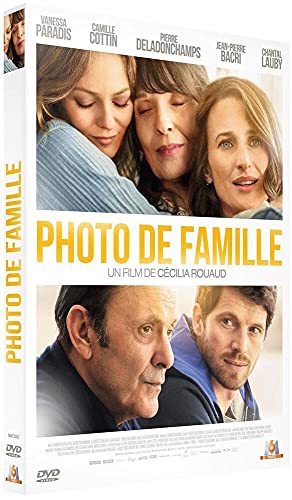
14. Photo de famille (1988)
Photo de famille is a 1988 short film by François Ozon—one of his earliest surviving student works—not Jacques Doillon’s family drama of a similar name.
A family poses for a photograph and the ritual of looking “happy” starts to crack: Ozon already treats the family unit as a stage set where desire, irritation, and performance share the same frame.
The short is known for its modest means and sharp eye—an apprentice piece that foreshadows the family comedies and melodramas he would later explode in features like Sitcom.
The performances lean into awkwardness rather than star turns, which fits an early exercise in domestic unease.
Photo de famille matters less as a polished classic than as a genealogy document: proof that Ozon’s obsession with family portraits began before the features. If you are tracing his career from the first frames, this short is worth seeking out.
15. Les doigts dans le ventre (1988)
François Ozon is a French filmmaker known for his diverse filmography, ranging from comedies to dramas to thrillers.
Here are three characteristics that can be found in his films:
Exploration of gender and sexuality: Many of Ozon’s films explore gender and sexuality, often through the use of unconventional narratives and characters.
For example, Water Drops on Burning Rocks features a gay couple, while The New Girlfriend is about a woman who discovers that her best friend’s husband likes to cross-dress.
Use of ambiguity and subversion: Ozon’s films often play with audience expectations and subvert genre conventions. He often uses ambiguous endings or twists that challenge the audience’s perception of the story.
For example, in Swimming Pool, the relationship between the two main characters is left open to interpretation.
Strong female characters: Ozon’s films often feature complex and well-developed female characters. He has worked with some of France’s top actresses, including Charlotte Rampling, Isabelle Huppert, and Catherine Deneuve.
In films like 8 Women and In the House, he creates intricate female-driven narratives that explore themes of power, desire, and identity.
Overall, Ozon’s films are known for their bold and inventive storytelling, exploration of complex themes, and strong performances from talented actors.
3 Characteristics of Francois Ozon Films
François Ozon is a French filmmaker known for his provocative and unconventional style, and here are three reasons why you should watch his films:
Daring and unconventional storytelling: Ozon’s films often explore taboo subjects and challenge social norms, featuring complex characters and relationships that are not often seen in mainstream cinema. His films are often edgy and provocative, and push boundaries in terms of content and form.
Exploration of themes related to identity and sexuality: Ozon’s films frequently explore themes related to sexuality, gender, and identity.
He is known for his frank and unapologetic portrayal of characters that fall outside of traditional gender roles and societal expectations, offering a fresh and nuanced perspective on human relationships.
Versatility and experimentation: Ozon’s films span a wide range of genres and styles, from dark comedies to surreal dramas to erotic thrillers.
He is not afraid to experiment with different storytelling techniques and visual styles, keeping audiences engaged and on the edge of their seats.
Overall, François Ozon is a bold and talented filmmaker with a unique perspective on the human condition.
His films are thought-provoking, visually stunning, and always surprising, making them a must-watch for anyone who loves independent cinema and daring storytelling.
3 Reasons Why You Should Watch Francois Ozon Films
Bold and Provocative Storytelling: François Ozon’s films are known for their provocative and bold storytelling.
He is not afraid to tackle complex and controversial subjects in his films, and he does so in a way that is thought-provoking and often unexpected.
Whether he is exploring issues of sexuality, gender, or identity, Ozon’s films are always challenging and never shy away from pushing boundaries.
Unique and Creative Vision: Ozon has a unique and creative vision as a filmmaker, and his movies are full of striking visuals and inventive storytelling techniques.
He often employs unusual camera angles, dream-like sequences, and unconventional editing to create films that are visually stunning and emotionally resonant.
Wide Range of Films: Ozon has directed films in a variety of genres, from drama to comedy to thriller.
He is equally adept at crafting intimate character studies and suspenseful thrillers, and his diverse body of work means that there is something for everyone in his filmography. Whether you are looking for a serious drama or a lighthearted comedy, Ozon has a film that will meet your needs.
Related on Filmmaking Lifestyle
Read next: 20 Best Francois Truffaut Films: The Legendary French Filmmaker, 5 Best Simone Signoret Movies: The Sensual and Provocative Roles of a French Legend, and Francois Ozon: A Director's Style in Focus.
Best Francois Ozon Films – Wrapping Up
In this series of film recommendations, we have explored some of the best films by French director François Ozon.
Ozon is known for his eclectic filmography, which ranges from lighthearted comedies to dark and complex dramas. Here is a summary of some of Ozon’s best films:
Swimming Pool (2003) – This thriller stars Charlotte Rampling as a crime novelist who finds inspiration for her latest book while staying at a villa in the south of France.
8 Women (2002) – A musical murder mystery featuring an all-star cast of French actresses, including Catherine Deneuve, Isabelle Huppert, and Emmanuelle Béart.
In the House (2012) – A darkly humorous drama about a high school teacher who becomes involved in the lives of one of his students and his family.
Frantz (2016) – A period drama set in the aftermath of World War I, which explores the relationship between a French woman and a German soldier.
Potiche (2010) – A comedy about a housewife who takes over her husband’s umbrella factory and proves to be a natural leader.
These films showcase Ozon’s versatility as a filmmaker and his ability to tell compelling stories in a range of genres.
Whether you’re a fan of psychological thrillers, romantic dramas, or quirky comedies, Ozon’s films are definitely worth a watch.
Great films deserve serious analysis. Explore more Film Theory here.

Incendies: Context, Themes, and Style

No Fear, No Die: Symbolism and Interpretation

Frances Ha: The Meaning Behind the Moments

Lola: A Guide to Its Meaning and Impact

A Bay of Blood: Visual Style, Ideas, and Impact

Once Upon a Time in Anatolia: A Modern Appreciation

Demon Seed: A Guide to Watching It Like a Critic

Lone Wolf and Cub: The Final Conflict: A Modern Appreciation

Ex Machina: What Makes It a Classic


New comments are not currently accepted.
Comments