
On this pageTap to expand
George Lucas is an influential filmmaker and producer who has made a significant contribution to the world of cinema. Here are some of his most notable and best films, along with a brief introduction to each one:
Star Wars (1977): This iconic space opera is one of the most successful and beloved franchises in the history of cinema.
The film, which takes place in a galaxy far, far away, tells the story of a young farm boy named Luke Skywalker who discovers his destiny as a Jedi Knight and becomes involved in a rebellion against the evil Empire.
Lucas combined the adventure serial, fairy tale, Western, war film, and samurai-film traditions into unusually direct popular storytelling. Its impact also came from the production infrastructure built to realize that world, especially the new Industrial Light & Magic effects unit and the dense, “used” material detail of its ships and environments.
American Graffiti (1973): This coming-of-age film is set in the summer of 1962 and follows a group of high school graduates as they navigate their way through a night of cruising and partying.
The film is known for its nostalgic depiction of 1960s American culture and its use of classic rock and roll music. It was a critical and commercial success and helped establish Lucas as a major filmmaker.
Best George Lucas Movies
Let’s take a look at the best George Lucas films. These six are the features he directed.
Filmmaker quote“You have to find something that you love enough to be able to take risks.”
George Lucas
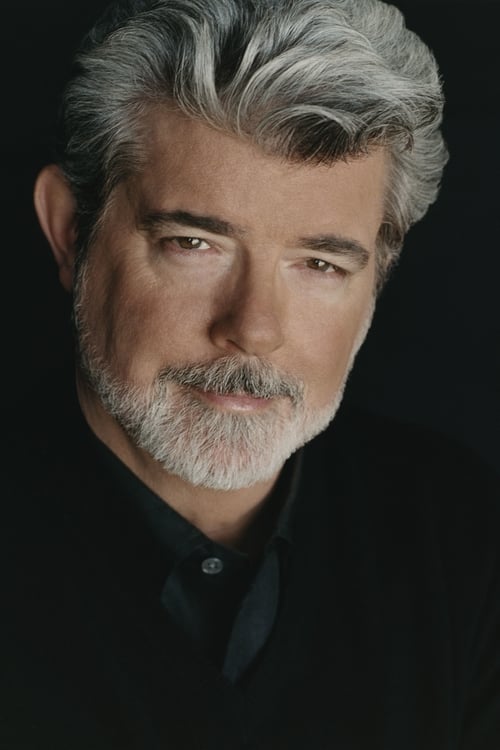
Films at a glance
Filmmaker quote“I was going to go to a four-year college and be an anthropologist or to an art school and be an illustrator when a friend convinced me to learn photography at the University of Southern California. Little did I know it was a school that taught you how to make movies! It had never occurred to me that I'd ever have any interest in filmmaking.”
George Lucas
| Film | Year |
|---|---|
| THX 1138 | 1971 |
| American Graffiti | 1973 |
| Star Wars | 1977 |
| Star Wars: Episode III – Revenge of the Sith | 2005 |
| Star Wars: Episode II – Attack of the Clones | 2002 |
| Star Wars: Episode I – The Phantom Menace | 1999 |
1. THX 1138 (1971)
THX 1138 is a dystopian science fiction film directed by George Lucas and released in 1971. The film depicts a future society in which individuality is outlawed and citizens are controlled by a totalitarian government.
The story follows the experiences of a factory worker named THX 1138 (played by Robert Duvall) who begins to question the nature of his existence and rebels against the oppressive system.
The film was notable for its stark, minimalist visuals and its commentary on issues such as government control, conformity, and the dehumanizing effects of technology.
Although the film was not a commercial success upon its initial release, it has since gained a cult following and is regarded as a science fiction classic.

2. American Graffiti (1973)
American Graffiti is a coming-of-age comedy-drama film directed by George Lucas and released in 1973.
Set in Modesto, California in 1962, the film follows a group of high school graduates as they spend their last night together before heading off to college and adult life.
The film features an ensemble cast including Richard Dreyfuss, Ron Howard, Cindy Williams, and Harrison Ford, among others.
American Graffiti is notable for its use of music from the era, and its portrayal of the car culture and social scene of the early 1960s.
The film was a critical and commercial success and has since become a cult classic, and is widely regarded as one of the best films about adolescence ever made.


3. Star Wars (1977)

Star Wars (also known as Episode IV: A New Hope) is George Lucas’s 1977 science-fiction landmark. Luke Skywalker discovers his destiny as a Jedi and joins the rebellion against the Empire — with Harrison Ford’s Han Solo and Carrie Fisher’s Leia.
If you like George Lucas’s work, on our sister site AuteurGraph we have a profile page, a visual film timeline, and a ratings page that gives a tonne of info and data about his career in a visualized form.
The film's visual-effects breakthrough was not modern CGI. ILM photographed detailed miniatures, matte paintings, blue-screen elements, pyrotechnics, and animation, then combined them through photochemical optical compositing.
The film’s cast includes Mark Hamill as Luke Skywalker, Harrison Ford as Han Solo, and Carrie Fisher as Princess Leia. The film’s villain, Darth Vader, is voiced by James Earl Jones.
The computer-controlled Dykstraflex motion-control system could repeat complex camera moves around stationary spacecraft models, making consistent multi-element composites and unusually dynamic space battles possible. Limited computer graphics appear in displays and animation such as the Death Star briefing, but the original 1977 imagery should not be confused with the extensive digital additions created for later special editions. John Williams's symphonic score provides another essential part of the film's scale and narrative clarity.
Star Wars was a commercial and critical success and spawned two sequels, The Empire Strikes Back and Return of the Jedi, as well as a prequel trilogy and a sequel trilogy.
The Star Wars franchise has become a cultural phenomenon and has had a major influence on popular culture and the entertainment industry.

4. Star Wars: Episode III – Revenge of the Sith (2005)
Star Wars: Episode III – Revenge of the Sith is a 2005 American epic space opera film directed by George Lucas. It is the third episode of the saga and the sixth Star Wars feature released. The movie is set three years after the start of the Clone Wars, which were initiated in Star Wars: Episode II – Attack of the Clones.
The film focuses on the transformation of Anakin Skywalker (played by Hayden Christensen) into Darth Vader and the final days of the Jedi Order.
The story begins with a space battle above the planet Coruscant, where Jedi Knight Obi-Wan Kenobi (played by Ewan McGregor) and Anakin Skywalker rescue Chancellor Palpatine (played by Ian McDiarmid) from the clutches of the Separatists.
As the war draws to a close, Anakin is plagued by visions of his wife Padmé Amidala (played by Natalie Portman) dying in childbirth.
The Sith Lord Darth Sidious, who has been manipulating events from behind the scenes, reveals himself to Anakin and tempts him with promises of unlimited power and the ability to save his wife.
Anakin ultimately succumbs to the dark side and helps Sidious to execute Order 66, a directive to eliminate the Jedi Order.

STAR WARS
- Science Fiction - General
Science Fiction - General
View on Amazon5. Star Wars: Episode II – Attack of the Clones (2002)
Star Wars: Episode II – Attack of the Clones is a science fiction film directed by George Lucas and released in 2002. It is the second film in the prequel trilogy and is set 10 years after the events of the previous film, The Phantom Menace.
The film follows the story of Anakin Skywalker, a young Jedi apprentice who is assigned to protect Senator Padmé Amidala, with whom he falls in love. Meanwhile, the Galactic Republic is on the brink of war, and an army of clones is being created to fight against a separatist movement.
The film features a cast of returning actors from the previous film, including Ewan McGregor as Obi-Wan Kenobi and Natalie Portman as Padmé Amidala, as well as new cast members, such as Hayden Christensen as Anakin Skywalker and Christopher Lee as Count Dooku.
Attack of the Clones is known for its groundbreaking visual effects, which continue to push the boundaries of computer-generated imagery. The film also features intense action sequences and explores the character of Anakin Skywalker as he struggles with the dark side of the Force.
The film was a commercial success, but its critical reception was mixed. Some critics praised the film’s visual effects and action sequences, while others criticized the film’s writing and pacing.

20th Century Fox
- Preowned, very good condition - no damage to disc or protective casing
Preowned, very good condition - no damage to disc or protective casing
View on Amazon6. Star Wars: Episode I – The Phantom Menace (1999)
Star Wars: Episode I – The Phantom Menace is a science fiction film directed by George Lucas and released in 1999. It is the first film in the prequel trilogy and is set 32 years before the events of the original Star Wars film.
The film follows the story of Jedi Knight Qui-Gon Jinn and his apprentice Obi-Wan Kenobi as they are sent to negotiate a dispute between the Trade Federation and the planet of Naboo.
They soon discover a larger plot involving the return of the Sith and the rise of a young boy named Anakin Skywalker, who is believed to be the Chosen One who will bring balance to the Force.
The film features a cast of both new and returning actors, including Liam Neeson as Qui-Gon Jinn, Ewan McGregor as Obi-Wan Kenobi, and Natalie Portman as Queen Amidala. It also introduces new characters such as Jar Jar Binks, a Gungan who becomes an unlikely ally to the Jedi.
The Phantom Menace is known for its groundbreaking visual effects, which pushed the boundaries of computer-generated imagery. The film also features intense action sequences, such as the iconic lightsaber duel between Qui-Gon Jinn, Obi-Wan Kenobi, and Darth Maul.

3 Characteristics of George Lucas Films

George Lucas is a celebrated filmmaker and writer, best known for creating the Star Wars and Indiana Jones franchises. Some of the characteristics that are often associated with George Lucas films are:
Epic Scope and Visuals: George Lucas is known for creating movies that have an epic scale and grandeur. His films often feature stunning visual effects, elaborate sets, and costumes that transport the audience to fantastical worlds.
Mythic Storytelling: George Lucas is inspired by the work of mythologist Joseph Campbell and his ideas about the “hero’s journey.” Lucas often weaves archetypal elements and mythic themes into his stories, which resonates with audiences and makes his films feel timeless.
Innovative Use of Technology: George Lucas has always been at the forefront of using cutting-edge technology in filmmaking.
He is known for being one of the first filmmakers to use computer-generated imagery (CGI) in his films, and has also pioneered the use of sound design and other technical innovations that have helped to advance the art of filmmaking.
3 Reasons Why You Should Watch George Lucas Films
Here are three reasons why you should watch George Lucas films:
Pioneering Visual Effects: George Lucas is known for his pioneering work in visual effects, using a mix of practical and digital techniques to create stunning visuals that were groundbreaking for their time.
His films, especially the Star Wars and Indiana Jones franchises, have pushed the boundaries of computer-generated imagery and have inspired countless other filmmakers to explore the possibilities of visual effects.
Epic Storytelling: George Lucas is a master storyteller, creating epic narratives that capture the imagination of audiences around the world.
His films often deal with themes of heroism, adventure, and the battle between good and evil. From the Star Wars saga to the Indiana Jones series, Lucas has created some of the most memorable characters and stories in cinema history.
Cultural Phenomena: George Lucas’s films have had a massive impact on popular culture and have become cultural phenomena in their own right.
From the iconic characters and music of the Star Wars franchise to the adventurous spirit of the Indiana Jones movies, Lucas’s films have become touchstones of popular culture and continue to inspire new generations of filmmakers and fans.
Related on Filmmaking Lifestyle
Read next: 16 Best George A. Romero Movies: Father of the Modern Zombie Film, 20 Best George C. Scott Movies: The Unyielding Power of a Stage and Screen Icon, and 25 Best George Cukor Movies: The Master of Golden Age Glamour.
Best George Lucas Films – Wrapping Up
George Lucas has had a long and illustrious career in filmmaking, with many notable contributions to the art form. The six films ranked above are the features he directed, from THX 1138 (1971) through Revenge of the Sith (2005).
He also originated The Empire Strikes Back (1980), Raiders of the Lost Ark (1981), and Return of the Jedi (1983), but he did not direct them. Irvin Kershner, Steven Spielberg, and Richard Marquand directed those films. Lucas is credited with the stories and as executive producer, and he co-wrote the Return of the Jedi screenplay.


The films he directed showcase his distinctive style, innovative storytelling, and technical expertise. Star Wars and Indiana Jones have become cultural touchstones, while American Graffiti and THX 1138 are examples of Lucas’s more experimental and personal works.
Overall, George Lucas’s films have had a significant impact on cinema and continue to inspire and captivate audiences around the world.
Fascinated by how films work? These articles will level up your knowledge.

Let's Get Lost: The Essential Breakdown

The Old Dark House: Context, Themes, and Style

Night and Fog: Themes, Mood, and Visual Language

Runaway Train: Key Ideas and Lasting Influence

Even the Wind Is Afraid: A Deep Dive Into Story and Style

Introducing The Big Combo: Why It Still Matters

A Fistful of Dollars: What to Notice on a Rewatch

Anima: A Guide to Watching It Like a Critic

Raging Bull: The Meaning Behind the Moments


New comments are not currently accepted.
Comments