
On this pageTap to expand
Takashi Miike is a prolific Japanese filmmaker whose work moves restlessly among yakuza thrillers, horror, family films, musicals, manga adaptations, period drama, and surreal comedy.
That range matters more than his reputation for extremity alone. Miike can use graphic provocation, but he also shifts tone and production style with unusual freedom, moving from direct-to-video projects to large studio productions without settling into a single house style.
Here are some of Takashi Miike’s best films:
Audition (1999) – a horror-thriller about a widower who sets up auditions for a new wife, but becomes entangled in a twisted and disturbing relationship with one of the candidates.
Ichi the Killer (2001) – a violent and graphic crime thriller about a sadistic yakuza enforcer and a mysterious and equally violent killer named Ichi.
13 Assassins (2010) – a samurai epic about a group of assassins who band together to take down a sadistic and powerful warlord in feudal Japan.
Visitor Q (2001) – a dark and disturbing satire about a dysfunctional family who become embroiled in a series of increasingly bizarre and perverse situations.
Gozu (2003) – a surreal and bizarre crime thriller about a yakuza member sent to dispose of a fellow member, only to get lost in a strange and dreamlike town.
Best Takashi Miike Films
These films showcase Miike’s unique approach to filmmaking and his willingness to explore difficult and controversial subject matter.
They are not for the faint of heart, but for those who appreciate bold and boundary-pushing cinema, they are must-see films.
All picks in one table
| Film | Year |
|---|---|
| Ichi the Killer | 2001 |
| Visitor Q | 2001 |
| The Happiness of the Katakuris | 2001 |
| Audition | 1999 |
| Gozu | 2003 |
| Izo | 2004 |
| Fudoh: The New Generation | 1996 |
| Masters of Horror (2005–2007) Episode: Imprint | 2006 |
| Crows Zero | 2007 |
| Dead or Alive 2: Birds | 2000 |
| 13 Assassins | 2010 |
| Graveyard of Honor | 2002 |
| The Bird People in China | 1998 |
| Dead or Alive | 1999 |
| Rainy Dog | 1997 |
| Young Thugs: Nostalgia | 1998 |
| Blues Harp | 1998 |
| Crows Zero II | 2009 |
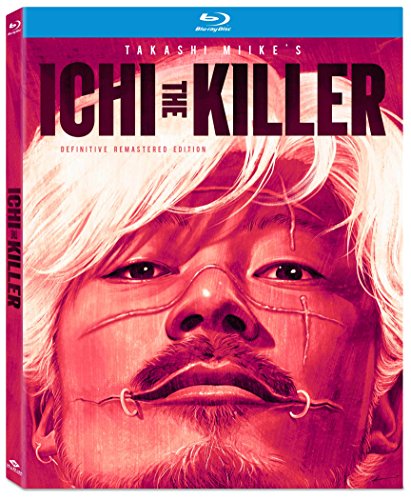
1. Ichi the Killer (2001)
Ichi the Killer is a 2001 Japanese crime-horror film directed by Takashi Miike, based on the manga series of the same name by Hideo Yamamoto.
The film is known for its extreme violence and sadomasochistic themes, which have earned it a reputation as one of the most controversial and disturbing films ever made.
The plot follows a yakuza boss named Anjo who goes missing, and his loyal but sadistic enforcer, Kakihara, sets out to find him.
In the process, Kakihara crosses paths with a mysterious and equally violent killer named Ichi, who may hold the key to Anjo’s disappearance.
The two men engage in a brutal and bloody game of cat and mouse, with each seeking to prove their dominance over the other.
Ichi the Killer is known for its graphic violence and disturbing imagery, including scenes of torture and mutilation. It has been banned in several countries and has been the subject of controversy and debate among critics and audiences alike.
Despite its extreme content, the film has gained a cult following and is considered a classic of the Japanese horror genre. It is not for everyone, but for fans of extreme cinema, Ichi the Killer is a must-see.
2. Visitor Q (2001)
Visitor Q drops a nameless outsider into the home of the Yamazaki family, whose members are already locked into cycles of humiliation, exploitation, addiction, and violence. The visitor rarely explains himself; his disruptive presence instead forces the family's concealed behavior into the open.
Miike shot the film on digital video, and its harsh home-movie texture makes the most grotesque incidents feel uncomfortably immediate. That visual plainness also sharpens the collision between domestic realism, deadpan comedy, and deliberate provocation.
If you like Takashi Miike’s work, on our sister site AuteurGraph we have a profile page, a visual film timeline, and a ratings page that gives a tonne of info and data about their career in a visualized form.
The premise recalls Pier Paolo Pasolini's Teorema, but Visitor Q turns the mysterious-guest structure into a low-budget attack on the respectable family image and the ethics of turning suffering into media. The father is a failed television reporter who compulsively records degradation even when his own family is involved.
Its content is intentionally extreme and requires a strong warning: sexual violence, incest, drug use, abuse, and other disturbing material are central rather than incidental. For viewers prepared for that approach, the film demonstrates how Miike can make transgression serve savage social satire rather than spectacle alone.

3. The Happiness of the Katakuris (2001)
The Happiness of the Katakuris is a 2001 Japanese musical-comedy-horror film directed by Takashi Miike.
The film is a unique blend of different genres and styles, incorporating elements of dark comedy, horror, musical numbers, and stop-motion animation.
The story follows the Katakuris, a family who run a struggling guesthouse in the countryside.
Guests begin to die by suicide, accident, or misadventure, and the family buries the bodies in the nearby woods to protect the inn. The cover-up is complicated by a con man, a volcanic eruption, and a musical sequence in which the dead rise to sing and dance.
The film is a playful and irreverent take on the horror genre, with a whimsical and upbeat tone that contrasts with its macabre subject matter.
It is a visual feast, with colorful and imaginative sets, creative camera work, and inventive use of special effects. The Happiness of the Katakuris is not for everyone, but for those who appreciate offbeat and eccentric cinema, it is a must-see.
It has gained a cult following over the years and is regarded as one of Takashi Miike’s most beloved and entertaining films.

4. Audition (1999)
Audition is a 1999 Japanese horror-thriller film directed by Takashi Miike, based on a novel by Ryu Murakami. The film is known for its slow-building tension, disturbing subject matter, and shocking finale.
The story follows a widower named Shigeharu Aoyama who, at the urging of his friend, holds a fake audition to find a new wife. He becomes enamored with a soft-spoken and demure young woman named Asami, and the two begin a relationship.
However, as their relationship deepens, Aoyama begins to uncover a dark and twisted past that Asami has been hiding, and he realizes that she may not be who she seems.
The film is a masterclass in suspense and psychological horror, with a deliberately slow pace that allows the tension to build steadily over the course of the story.
It is also a commentary on gender roles and power dynamics, with Asami’s character serving as a chilling and memorable embodiment of female rage.
Audition is not for the faint of heart, with scenes of extreme violence and body horror that are sure to shock and disturb audiences.
However, for those who appreciate bold and uncompromising cinema, it is a must-see film that showcases Takashi Miike’s unique and uncompromising approach to filmmaking.

5. Gozu (2003)
Gozu is a 2003 Japanese horror film directed by Takashi Miike. The film is a surreal and bizarre take on the yakuza genre, with elements of horror, comedy, and eroticism.
The story follows Minami, a young yakuza member who is sent to dispose of Ozaki, the unstable senior he regards as a brother.
However, when Minami loses the man’s body, he embarks on a strange and hallucinatory journey through a nightmarish landscape, encountering a variety of bizarre and grotesque characters along the way.
The film is a surreal and dreamlike exploration of identity, masculinity, and the nature of reality.
It features a wide range of eccentric and memorable characters, including a lactating woman, a man with a fetish for women in dog costumes, and a mysterious woman who may hold the key to Minami’s journey.
Gozu is not for everyone, with its graphic imagery, surreal storytelling, and bizarre subject matter.

However, for those who appreciate unconventional and challenging cinema, it is a must-see film that showcases Takashi Miike’s unique and uncompromising approach to filmmaking.

6. Izo (2004)
Izo is a 2004 Japanese samurai fantasy film directed by Takashi Miike. The film tells the story of Izo, a historical figure who was executed in the late 19th century for his role in a rebellion against the government.
In the film, Izo is reincarnated as a supernatural being, tasked with traveling through time and space to kill those responsible for his suffering.
The film is a surreal and hallucinatory journey through history and mythology, with Izo encountering a variety of characters from different time periods and dimensions, including samurai, politicians, and gods.
The film is characterized by its extreme violence, graphic imagery, and nonlinear storytelling, with scenes of brutal violence and torture that are sure to shock and disturb viewers.
Izo is not for the faint of heart, with its uncompromising and challenging approach to storytelling and filmmaking.
However, for those who appreciate bold and unconventional cinema, it is a must-see film that showcases Takashi Miike’s unique and uncompromising style.
It is a film that pushes the boundaries of the samurai genre and explores deep themes of revenge, justice, and the cyclical nature of violence.

7. Fudoh: The New Generation (1996)
Fudoh: The New Generation is a 1996 Japanese crime film directed by Takashi Miike. The film follows Riki Fudoh, a high school student who is also the son of a yakuza boss. As a child he watched his father execute his older brother to settle a gang dispute; years later Riki sets out to destroy his father’s organization, with the help of a group of loyal followers.
The film is characterized by its extreme violence, sexual content, and dark humor, with over-the-top action sequences and a storyline that twists and turns in unexpected ways. It is a wild and chaotic ride through the criminal underworld, with Riki and his gang battling rival yakuza factions, corrupt police officers, and even a group of child assassins.
Despite its extreme content, Fudoh: The New Generation is also a commentary on Japanese society and the youth culture of the 1990s.
It features a cast of rebellious and disenfranchised young people who are willing to do whatever it takes to achieve their goals and create a new order.
Overall, Fudoh: The New Generation is a fast-paced and entertaining crime film that showcases Takashi Miike’s unique visual style and willingness to push the boundaries of the genre.
It is a cult classic that has gained a following among fans of extreme and unconventional cinema.

Tokyo Shock
- Factory sealed DVD
Factory sealed DVD
View on Amazon8. Masters of Horror (2005–2007) Episode: Imprint (2006)
Imprint is the thirteenth and final episode of the first season of the horror anthology TV series Masters of Horror. It was directed by Takashi Miike and written by Daisuke Tengan.
The episode was originally produced as part of a thirteen-episode season, but was deemed too graphic and disturbing for television by Showtime, the network that aired the series in the United States.
As a result, Imprint was not broadcast on television in the United States, and was only made available as part of the DVD box set release of the first season.
The episode is set in 19th century Japan and follows Christopher, an American journalist who travels to a remote island in search of a woman named Komomo, whom he fell in love with the previous year.
On the island he spends the night with a disfigured prostitute, who tells him that Komomo hanged herself. Pressed, she changes the story: she says she framed Komomo for a theft, watched her tortured, and killed her.
The accounts keep shifting, and the episode’s horror sits in that unreliable confession.
Imprint is known for its extreme violence, graphic sexual content, and disturbing imagery, and has been described as one of the most disturbing episodes of the series.
The episode has also been praised for its atmospheric cinematography and the performances of its cast, including Billy Drago, Michie Itô, and Toshie Negishi.

9. Crows Zero (2007)
Crows Zero is a 2007 Japanese action film directed by Takashi Miike and based on the manga series Crows by Hiroshi Takahashi.
The film follows the story of Genji Takiya, a new student at Suzuran High School, a notorious institution known for its violent student body and numerous gangs.
Genji is determined to take over as the school’s top gang leader and set a new standard for the school’s students.
As Genji sets out to conquer the school’s numerous gangs, he faces opposition from the school’s reigning kingpin, Tamao Serizawa, and his loyal followers.
The film chronicles Genji’s battles with the school’s various gangs and his eventual confrontation with Serizawa, as he strives to become the new king of Suzuran High School.
The film features a large ensemble cast of young actors, including Shun Oguri as Genji Takiya, Takayuki Yamada as Tamao Serizawa, and Kyôsuke Yabe as Ken Katagiri.
The film’s action sequences are known for their intense and realistic depictions of hand-to-hand combat, with the use of martial arts and street fighting techniques.
Crows Zero was a commercial success in Japan, and spawned two sequels, Crows Zero II (2009), also directed by Miike, and Crows Explode (2014), directed by Toshiaki Toyoda.
The film has also been praised for its portrayal of teenage gang culture and its commentary on the Japanese education system.

10. Dead or Alive 2: Birds (2000)

Dead or Alive 2: Birds is a 2000 Japanese crime film directed by Takashi Miike. It is a sequel to the 1999 film Dead or Alive, but features a completely different story and characters.
The film follows two hitmen, Mizuki and Shuichi, who cross paths on the same job and realize they were childhood friends at an island orphanage.
They hide out on that island, reconnect with another old friend, and begin to question the killing. They then team up, taking money from yakuza and triads and sending it toward water and medicine for children.
The film blends that crime story with a surreal turn, exploring themes of life, death, and redemption.
Dead or Alive 2: Birds features Sho Aikawa as Mizuki, Riki Takeuchi as Shuichi, and Noriko Aota as the wife of their childhood friend Kohei.
The film’s stylistic approach, which blends elements of surrealism, violence, and drama, has been praised by critics, along with its unique exploration of themes of redemption and the cyclical nature of violence.
The film is often considered one of Takashi Miike’s best works, and has gained a cult following among fans of Japanese cinema.

11. 13 Assassins (2010)
13 Assassins is a 2010 Japanese jidaigeki (period drama) film directed by Takashi Miike. The film is a remake of the 1963 film of the same name, and is set in 1844 during Japan’s Edo period.
The story revolves around a group of samurai assembled to assassinate Lord Naritsugu, a sadistic young lord and the shogun’s half-brother, before he can take a seat on the shogunate council.
The samurai are led by Shinzaemon Shimada, a veteran warrior who assembles a team of thirteen skilled assassins to take down Naritsugu and his army of loyal soldiers.
The majority of the film takes place during a climactic battle scene, as the thirteen assassins prepare to take on Naritsugu and his army in a small village.
The film’s action sequences are known for their intense and visceral depictions of combat, with a focus on hand-to-hand combat and sword fights.
The film features an ensemble cast of veteran Japanese actors, including Kôji Yakusho as Shinzaemon Shimada, Goro Inagaki as Lord Naritsugu, and Takayuki Yamada as Shinrouko.
The film’s visual style, which blends elements of traditional Japanese aesthetics with modern filmmaking techniques, has been praised by critics.
13 Assassins was a commercial and critical success, and has been praised for its masterful storytelling, expertly choreographed action sequences, and its exploration of themes such as honor, loyalty, and sacrifice.
It is often considered one of Takashi Miike’s best works, and has gained a following among fans of Japanese cinema and samurai films

12. Graveyard of Honor (2002)
Graveyard of Honor is a 2002 Japanese crime film directed by Takashi Miike. The film is a remake of the 1975 film of the same name, which was based on the true story of a yakuza member named Rikio Ishikawa.
The film follows Rikuo Ishimatsu, a barkeeper who saves a yakuza boss’s life and rises inside the gang through acts of violence and recklessness.
However, his increasing power and lack of control lead to his downfall, and he becomes a target for both rival gangs and the police.
Graveyard of Honor is known for its graphic violence and depiction of the seedy underbelly of the yakuza world.
The film features an ensemble cast of veteran Japanese actors, including Goro Kishitani as Rikuo Ishimatsu and Narimi Arimori as Chieko Kikuta.
The film’s visual style, which uses handheld cameras and natural lighting to create a gritty and realistic feel, has been praised by critics.
The film’s exploration of themes such as loyalty, honor, and the cycle of violence has also been noted.
Graveyard of Honor has been described as a powerful and disturbing portrayal of the yakuza lifestyle, and is considered one of Takashi Miike’s most intense and brutal films.
While the film has been criticized for its excessive violence and graphic content, it has also been praised for its unflinching honesty and realistic portrayal of the yakuza world.

13. The Bird People in China (1998)
The Bird People in China is a 1998 Japanese film directed by Takashi Miike. The film is a blend of adventure, drama, and fantasy, and tells the story of a salaryman and a yakuza who travel to a remote village in Yunnan in search of jade.
Wada is sent by his company to assess a jade deposit. Ujiie, a yakuza, forces himself along because the company owes his gang money. Their guide is Shen.
As they journey deeper into the mountains, they reach a village where a blue-eyed teacher is training children to fly with handmade wings, using notes left by her grandfather, a crashed British airman.
As Ujiie and Wada learn more about the bird people and their culture, they are forced to confront their own preconceptions and beliefs about the world.
The film explores themes such as cultural differences, environmentalism, and the power of myth and storytelling.
The film stars Masahiro Motoki as Wada and Renji Ishibashi as Ujiie, as well as Mako as Shen, their guide.
The film’s stunning visuals, which blend natural landscapes with surreal and fantastical imagery, have been praised by critics.
The Bird People in China has been described as a poetic and thought-provoking film that explores the intersections between different cultures and ways of life.
While it may not be as well-known as some of Takashi Miike’s more violent or genre-bending films, The Bird People in China is often considered one of his most poetic and visually stunning works.
14. Dead or Alive (1999)
Dead or Alive is a 1999 Japanese crime film directed by Takashi Miike.
The film follows Detective Jojima, a veteran Tokyo cop, and Ryūichi, a gang leader of Chinese descent, as each wages his own war in the Shinjuku underworld and the two are drawn into a collision.
The film’s plot is fast-paced and violent, with numerous action sequences and dramatic confrontations between Jojima and Ryūichi’s gang.
The film also features elements of surrealism and dark humor, with unexpected twists and turns in the story.
The two lead actors, Riki Takeuchi and Sho Aikawa, who play the yakuza boss and the veteran detective, respectively, have become associated with Takashi Miike’s films and have appeared in numerous other works by the director.
Dead or Alive has been described as a visceral and intense crime thriller that blends elements of traditional yakuza films with the director’s trademark dark humor and avant-garde style.
The film’s violent and provocative content has been controversial, but it has also earned a cult following and critical acclaim.
Dead or Alive has since spawned two sequels, Dead or Alive 2: Birds and Dead or Alive: Final, although the sequels have a different tone and style from the original film.

15. Rainy Dog (1997)
Rainy Dog is a 1997 Japanese film directed by Takashi Miike. The film is the second installment in what is known as Miike’s Black Society Trilogy, which also includes Shinjuku Triad Society and Ley Lines.
The film tells the story of a Japanese hitman named Yuuji, who is working in Taipei after being cut off by his syndicate.
An ex-girlfriend leaves him with a mute boy she says is his son. Yuuji also forms a bond with a local prostitute, Lili, and the three are thrown together when a contract killing brings a revenge hunt.
The film is known for its atmospheric and moody visuals, which capture the gritty and oppressive environment of the city and the characters’ emotional states.
The film’s exploration of themes such as isolation, loneliness, and redemption has also been noted by critics.
Rainy Dog stars Sho Aikawa as Yuuji, Taiwanese actress Xianmei Chen as Lili, and Jianqin He as the boy.
The film’s soundtrack, which features a mix of Japanese and Taiwanese music, adds to the film’s immersive and evocative mood.
Overall, Rainy Dog is considered one of Takashi Miike’s more subdued and introspective works, but it still features the director’s trademark style and themes, such as unconventional characters, graphic violence, and a blend of genres and influences.

16. Young Thugs: Nostalgia (1998)
Young Thugs: Nostalgia is a 1998 Japanese film directed by Takashi Miike, based on Riichi Nakaba’s autobiographical novel. It is a prequel to Miike’s Young Thugs: Innocent Blood (1997).
The film follows Riichi, a boy in Osaka around 1969–70, growing up in a violent, comic, and dysfunctional household. His father drinks, fights, and drifts; school brawls and a botched runaway to Shikoku sit alongside a scheme to win paints for a friend’s grandmother by building a life-size Apollo lunar-module replica.
The film explores themes of nostalgia and the challenges of growing up in a harsh environment. The film’s depiction of the social and economic struggles of working-class communities in Osaka has also been noted by critics.
Young Thugs: Nostalgia stars Yuki Nagata as Riichi and Naoto Takenaka as his father. The film’s authentic period details and use of Osaka dialect add to the film’s immersive and realistic atmosphere.
Overall, Young Thugs: Nostalgia is considered one of Takashi Miike’s more restrained and introspective works, focusing on character development and emotional drama rather than graphic violence and shocking imagery.
However, the film still showcases the director’s skill at depicting the complexities and contradictions of human nature.

17. Blues Harp (1998)
Blues Harp is a 1998 Japanese film directed by Takashi Miike. The film tells the story of Chuji, a harmonica-playing bartender and part-time drug dealer, and Kenji, an ambitious yakuza who befriends him after Chuji helps him hide from a rival gang.
Kenji is scheming to take over his own gang. That plan pulls Chuji into a hit he is not equipped for, even as a record scout offers Chuji a way out through music and his girlfriend Tokiko tells him she is pregnant.
The film is known for its gritty and realistic portrayal of the Tokyo music scene and the characters’ struggles to make a name for themselves.
The film’s use of blues music and themes of artistic expression and freedom have also been noted by critics.
Blues Harp stars Hiroyuki Ikeuchi as Chuji, Seiichi Tanabe as Kenji, and Saori Sekino as Tokiko.
The film’s atmospheric and moody cinematography adds to the film’s immersive and evocative tone.
Overall, Blues Harp is considered one of Takashi Miike’s more restrained and contemplative works, focusing on character development and emotional drama rather than graphic violence and shocking imagery.
However, the film still showcases the director’s talent for exploring complex themes and characters in a unique and compelling way.

18. Crows Zero II (2009)
Crows Zero II is a 2009 Japanese action film directed by Takashi Miike. The film is a sequel to Crows Zero and is based on the manga series Crows by Hiroshi Takahashi.
The film continues the story of high school student Genji Takiya after his battle with Suzuran’s Tamao Serizawa. Genji still has not united the school, and he breaks a non-aggression pact with rival Housen Academy by protecting a Suzuran student Housen wants dead.
Housen’s leader, Taiga Narumi, then brings his army against Suzuran. Genji has to hold his own factions together, including Serizawa’s, for the fight.
The film features intense fight scenes and a strong focus on the complex relationships between the characters, as well as themes of loyalty, friendship, and the pursuit of power.
Crows Zero II stars Shun Oguri as Genji, Takayuki Yamada as Tamao Serizawa, Kyôsuke Yabe as Ken Katagiri, and Nobuaki Kaneko as Taiga Narumi.
The film’s use of dynamic camera work and stylish visual effects add to the film’s adrenaline-fueled atmosphere.
Overall, Crows Zero II is considered a worthy follow-up to the original film, expanding upon its characters and themes while maintaining the same level of intense action and emotional drama.
The film was a commercial success and has become a cult favorite among fans of the genre.

Related on Filmmaking Lifestyle
Read next: 20 Best Japanese Movies: A Celebration of The Cinema of Japan, 12 Best Nagisa Ōshima Films: Radical Voice of Japanese Cinema, and 4 Best Tatsuya Nakadai Movies: The Powerful Presence of a Japanese Cinema Icon.
Best Takashi Miike Films – Wrapping Up
Takashi Miike is a prolific Japanese filmmaker known for his diverse range of films that often blend genres and push boundaries.
With over 100 films to his credit, the eighteen films above are one route through that body of work.
Deepen your understanding of Cinema — explore more Film Theory.

Let's Get Lost: The Essential Breakdown

The Old Dark House: Context, Themes, and Style

Night and Fog: Themes, Mood, and Visual Language

Runaway Train: Key Ideas and Lasting Influence

Even the Wind Is Afraid: A Deep Dive Into Story and Style

Introducing The Big Combo: Why It Still Matters

A Fistful of Dollars: What to Notice on a Rewatch

Anima: A Guide to Watching It Like a Critic

Raging Bull: The Meaning Behind the Moments


New comments are not currently accepted.
Comments