
On this pageTap to expand
Sidney Lumet’s place in American cinema is both foundational and enduring. With a career spanning five decades, he cultivated a distinct and penetrating vision that addressed the moral and ethical fissures within society.
His films refuse facile resolutions, instead probing the complexities of justice, power, and human frailty with a clarity and intensity unparalleled by many of his contemporaries. Lumet’s work is a masterclass in socially conscious storytelling, combining rigorous realism with a theatrical sensibility sharpened by his early roots in live television.

Though he never chased blockbuster spectacle, Lumet consistently attracted critical acclaim and an audience that appreciated cinema as a vehicle for moral inquiry. His films often unfold in claustrophobic, institutional settings—courtrooms, police precincts, psychiatric wards, and newsrooms—where characters grapple with ethical dilemmas that resonate far beyond their confined spaces.
His commitment to strong narratives, layered performances, and socially relevant themes makes him a towering figure whose influence can be traced through generations of filmmakers.
Few directors have so consistently balanced artistry with engagement in matters of civic importance. Lumet’s oeuvre acts as a lens through which the shifting American psyche and political landscape of the 20th century can be viewed, from the paranoia of the Cold War era to the disillusionment of the post-Watergate period and beyond.
It is this fusion of moral gravity and cinematic discipline that cements his status as one of the great auteurs in American film history.
Collaborators: Writers, DPs, Editors, Composers
Filmmaker quote“The varying physical characteristics of the actors may also necessitate changes. Sean Connery is six feet four. Dustin Hoffman isn't.”
Sidney Lumet
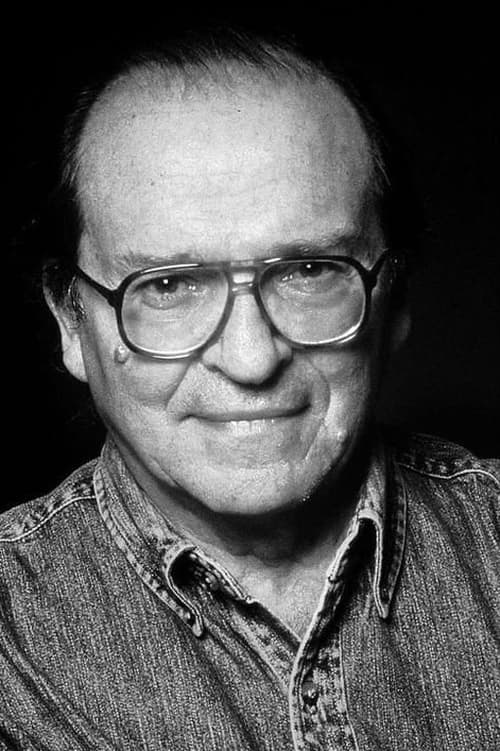
Sidney Lumet’s films benefited enormously from long-standing collaborations with some of the most talented writers, cinematographers, editors, and composers in the business. His close work with screenwriters often emphasized a sharp, realistic dialogue and morally complex characters, enabling the thematic depth that defines his style.
- Paddy Chayefsky stands out as a key writing collaborator, particularly for Network (1976), where his scathing script about media manipulation found a perfect director in Lumet.
- Penelope Gilliatt contributed to several scripts, ensuring that Lumet’s commitment to character-driven narratives remained intact.
- John Turturro worked with Lumet later in his career, notably in Before the Devil Knows You're Dead (2007), reflecting the director’s evolving interest in family and moral collapse.
- On cinematography, Arthur Penn influenced Lumet early, but key DPs like Andrzej Bartkowiak (Find Me Guilty) helped transition his style into the modern era.
- Editors such as Sidney Levin and Jerry Greenberg contributed to the taut narrative pacing that defines many of Lumet’s best films.
- Musical scores by David Shire and Howard Shore supported the tension and emotional nuance, rounding out Lumet’s aesthetic approach.

Your first paying video clients — where to look first
If you’re early in the journey, start here: realistic channels, simple outreach, and what to say when someone says “send me a quote.”
Filmmaker quote“In drama, the characters should determine the story. In melodrama, the story determines the characters.”
Sidney Lumet
Early Life and Formative Influences
Born in Philadelphia in 1924, Sidney Lumet was steeped in the theatrical arts from a young age. His parents were actors, and he himself began performing as a child on the stage. This early immersion in live performance profoundly shaped his directorial sensibility, particularly his emphasis on actors and dialogue.

His formative years coincided with the golden age of live television drama, a medium in which he honed his skills directing dozens of live plays. This experience sharpened his ability to craft tension in confined spaces and to work efficiently with actors, laying the groundwork for his later feature films.
Lumet’s influences are manifold, drawing on the theatrical realism of the Group Theatre, the social consciousness of filmmakers from the 1940s, and the moral rigor of European directors. He synthesized elements from diverse traditions into an American idiom uniquely his own.

Directors like John Huston, Elia Kazan, and Orson Welles, as well as the social critique found in works of the post-war era, informed his attention to ethical complexity and institutional critique.
Studio Years vs Independent Years
Lumet’s career can be neatly divided into his early studio work and his later independent ventures, each phase contributing differently to his legacy. His debut feature, 12 Angry Men (1957), was produced within the studio system but displayed an atypical independence of vision. This film exemplifies his ability to extract intense drama from minimalist settings, a skill perfected in his television days.
Throughout the 1960s and 1970s, Lumet navigated studio demands while increasingly infusing his films with political and social critique. For example, Fail Safe (1964) and Serpico (1973) combined studio resources with pointed, topical storytelling. However, as Hollywood’s system evolved, Lumet shifted toward more independent productions that allowed greater freedom to pursue complex narratives and unconventional subjects, such as in Before the Devil Knows You’re Dead (2007).
His independent years saw a deepening of his exploration into human fallibility and institutional failure, with films like Prince of the City (1981) and Find Me Guilty (2006) reflecting a more personal, nuanced style that was less constrained by commercial considerations.
Recurring Actors and Creative Chemistry
Sidney Lumet fostered enduring relationships with a number of actors who appeared repeatedly in his films, helping to build a repertory company of sorts that thrived on trust and creative understanding.
- Al PacinoSerpico and Dog Day Afternoon, are among the most celebrated director-actor pairings in American film. Pacino’s intensity and moral ambiguity found an ideal vessel in Lumet’s direction.
- Paul Newman: Notably in The Verdict, Newman brought a weary dignity that harmonized perfectly with Lumet’s themes of redemption and justice.
- Faye Dunaway: Her work with Lumet in films like Network showcased his ability to elicit sharp, vibrant performances from strong female leads.
- Richard Gere and Christopher Walken also appeared in multiple Lumet films, benefiting from the director’s encouragement of nuanced, layered performances.
These actors were not just performers but collaborators who understood Lumet’s priorities: authenticity, moral complexity, and psychological depth.
The Breakthrough Moment
While Sidney Lumet had a steady career in television, his breakthrough as a feature director came with 12 Angry Men in 1957. This film established his signature style—intense character drama set within a confined location, exploring justice and human ethics.

Discovery calls that win corporate & branded work
Align with marketing stakeholders faster: stakeholder map, success metrics, and approval paths — distilled into a practical checklist.
12 Angry Men was revolutionary for its time, eschewing elaborate sets and star power to focus on dialogue, performance, and moral argument. The film’s tension arises purely from the interaction of twelve jurors wrestling with the fate of a young defendant. This stripped-down drama became a textbook example of how cinematic storytelling could interrogate social and judicial institutions.

From this point forward, Lumet earned a reputation as a director who could tackle difficult moral questions without didacticism, always prioritizing human complexity over easy answers.
Editing Rhythm and Narrative Shape
Lumet’s editorial approach is characterized by a rhythm that balances naturalistic pacing with dramatic urgency. Unlike directors who favor rapid cutting, Lumet often allowed scenes to breathe, emphasizing performance and dialogue nuances rather than kinetic visual spectacle.

This approach is evident in films like Dog Day Afternoon, where the slow build of tension mirrors the psychological unraveling of the characters. His editing choices often reinforced the claustrophobic or institutional settings, creating a sense of inescapable pressure.
He also employed strategic cross-cutting to heighten suspense, as seen in Fail Safe, where parallel narratives track the escalating nuclear crisis with an ominous inevitability. Lumet’s narrative shapes tend to be linear and clear, never obscuring the moral stakes of the story.
The Films That Best Represent Their Style

A selection of Lumet’s films succinctly encapsulates the director’s enduring preoccupations and stylistic trademarks:
- 12 Angry Men (1957): The definitive Lumet film—intimate, morally charged, and dialogue-driven, exploring justice through the prism of human fallibility.
- Serpico (1973): A blistering examination of police corruption that underscores Lumet’s commitment to social realism and the individual’s struggle against institutional rot.
- Dog Day Afternoon (1975): Combines character study and social commentary in a tense, real-time hostage drama that delves into identity, desperation, and media spectacle.
- Network (1976): A scathing satire of television and corporate power, distinguished by its sharp script and theatrical performances.
- The Verdict (1982): A courtroom drama centered on redemption and moral awakening, showcasing Lumet’s skill at balancing procedural narrative with deep character insight.
- Before the Devil Knows You're Dead (2007): His final film, a dark, intimate crime drama about family betrayal, illustrating a late-career turn toward more personal storytelling.
These films highlight Lumet’s ability to fuse ethical inquiry with gripping narrative and demonstrate his evolving style across decades.
Related on Filmmaking Lifestyle
Read next: A Christmas Story: The Essential Breakdown, Angels with Dirty Faces: A Deep Dive Into Story and Style, and Ashes and Diamonds: A Film History Perspective.
If you want the system behind the article, start with Video Business Fast Forward or Video Business Blueprint.
Wrapping Up
Sidney Lumet’s legacy is that of a filmmaker who wielded cinema as a tool for moral scrutiny and social reflection. His work is notable not just for its technical mastery but for a consistent engagement with the challenges of justice, power, and human dignity.
Lumet’s films remain indispensable for anyone interested in cinema that confronts the complexities of the human condition without compromise or artifice.
His influence extends beyond his own filmography, echoing in the work of directors who navigate the intersections of character, society, and institutional critique. Lumet’s respect for actors, his deft narrative control, and his unflinching ethical vision make his body of work a cornerstone in the study of American film.
Up for more film history and directors?


New comments are not currently accepted.
Comments