
On this pageTap to expand
Derek Jarman’s cinematic legacy defies easy categorization. Emerging from the fertile cultural crucible of 1970s London, he forged a path distinctly his own—one that merged avant-garde experiment with a radical openness about identity and history.
His films are less about straightforward storytelling and more about visual and emotional experience, often charged with political urgency and a deeply personal perspective. The boundaries between past and present, fact and fantasy, beauty and decay blur and dissolve in his work, challenging viewers to rethink not only cinema but the social narratives that underpin it.

Jarman’s approach to filmmaking was as much about poetry and painting as it was about narrative cinema. His bold use of color—vivid, sometimes harsh, often symbolic—became a hallmark, alongside his raw, unapologetic exploration of gay themes during a time when such representation was still marginalized. Through films like Caravaggio and Blue, he confronted history and illness, memory and loss, with a singular voice that remains potent decades after his passing.
While not a mainstream figure, Jarman’s influence ripples through both queer cinema and the broader art film tradition. His refusal to conform to commercial expectations or conventional storytelling has earned him reverence among cinephiles and scholars who appreciate his fearless synthesis of politics, aesthetics, and autobiography.

His work remains a testament to the power of cinema as a space for radical experimentation and social critique.
The Deep Cuts Worth Your Time
Beyond his most celebrated films, Jarman’s oeuvre contains several overlooked or underappreciated works that reveal different facets of his artistry. For example, Tarot (1972), an early experimental piece, showcases his interest in symbolic imagery and non-linear narrative long before his recognized feature debut. It offers invaluable insight into his evolving visual language and thematic preoccupations.
Projections (1993), created near the end of his career, is a poetic reflection on memory and mortality, combining archival footage, superimpositions, and haunting voiceover. This work stands as a poignant coda to his cinematic journey and his confrontation with AIDS.
Other films such as Sebastian Wrap (1975) and Arabia (1974) demonstrate Jarman’s early engagement with queer identity and experimental form, laying groundwork for his later, more refined projects. These films are essential for understanding his development as a filmmaker who persistently challenged both formal and social conventions.
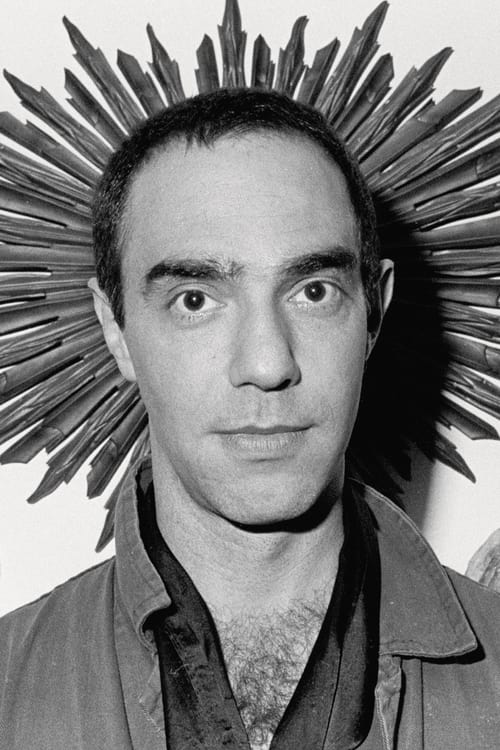
Cinema quote“Oh how Shakespeare would have loved cinema!”
Derek Jarman
Critical Reception and Reappraisal

During his lifetime, Jarman’s films often polarized critics and audiences. Mainstream reception was frequently mixed; his works were sometimes dismissed as overly esoteric or niche due to their avant-garde style and explicit queer content.
However, critics who championed art cinema and queer cultural production recognized his unique voice early on.
In recent decades, there has been a notable reappraisal of Jarman’s contributions. Scholars and critics now place him among the most important British filmmakers of the late 20th century.
His fearless exploration of gender, sexuality, and history is seen as groundbreaking, especially within the context of the AIDS crisis and the political struggles surrounding LGBTQ+ rights in the UK.
- Reevaluation of Blue as a profound meditation on illness and perception
- Recognition of Edward II as a daring queer historical adaptation
- Scholarly interest in his melding of visual art and cinema
- Growing appreciation for his role as a cultural provocateur and activist
Studio Years vs Independent Years
Jarman’s career cannot be neatly divided into studio versus independent phases as many directors’ work can. His films were consistently produced with limited budgets and often outside the mainstream studio system, reflecting his outsider status and commitment to artistic freedom.
Even during collaborations that might have had more formal backing, such as Edward II (1991), Jarman’s work maintained an independent spirit. This film, though adapted from Christopher Marlowe’s play and benefiting from wider distribution, remains a fiercely personal and politically charged statement.
The majority of his work was rooted in the independent art world, often funded by grants or small production companies, which allowed him to take creative risks that commercial studios typically avoid. This independence was crucial for preserving the radical edge of his vision.
How They Handle Performance
Jarman’s direction of actors is notable for its blend of theatricality and naturalism. He favored performances that embraced stylization and intensity over conventional realism, aligning with his overall aesthetic strategy of blending the symbolic with the corporeal.
In films like Caravaggio, performances evoke the painterly subjects they portray—figures caught in poses reminiscent of classical art, yet imbued with contemporary emotional complexity. This duality creates a living tableau that is both historical and immediate.

He often cast non-professional actors alongside seasoned performers, a choice that heightened the sense of hybridity and unpredictability in his films. This approach also reflects his refusal to adhere strictly to industry norms, favoring authenticity and poetic resonance instead.
What Filmmakers Can Learn From Them
- Embrace risk: Jarman’s career exemplifies the value of taking creative risks and resisting commercial pressures to tell personal, difficult stories.
- Integrate art forms: His synthesis of painting, poetry, and film challenges filmmakers to think beyond narrative cinema and explore multidisciplinary storytelling.
- Use color symbolically: Bold and unconventional color palettes can communicate emotion and theme as powerfully as dialogue or plot.
- Address politics through aesthetics: Jarman demonstrates how formal experimentation can be deeply political, intertwining content and style.
- Champion marginalized voices: His unapologetic focus on queer identity and history underscores the importance of representation in cinema.
A Director’s Visual Grammar
Jarman’s visual grammar is distinctive and instantly recognizable. It is built on a foundation of painterly composition and a fearless use of color—often in stark contrast to the drab or decaying environments his characters inhabit.
This tension between vibrancy and bleakness is a core visual motif throughout his work.
His films frequently incorporate collage techniques, superimpositions, and archival footage, creating layered textures that evoke memory and fragmentation. This approach resists linear storytelling, instead offering a sensory and emotional experience that mirrors the complexity of identity and history.

Lighting is another key element: Jarman often employs chiaroscuro reminiscent of Caravaggio himself (notably in the film of the same name), using shadow and light to sculpt his characters into living artworks. His camera work is intimate, yet it often distances viewers to encourage reflection rather than simple empathy.
A Final Note
Derek Jarman’s work remains a vital and challenging presence in the landscape of British cinema and queer cultural history. His films are not mere relics of a past era but continue to resonate with contemporary audiences, offering a blueprint for cinema that is at once personal, political, and poetic.
More than anything, Jarman insisted on the right to create art on his own terms—a legacy that inspires filmmakers and artists to this day. His fearless exploration of identity, history, and aesthetics invites us all to reconsider what cinema can be.
Want to explore more directors next?
Related on Filmmaking Lifestyle
Read next: Abbas Kiarostami: What It Teaches About Cinema, Abderrahmane Sissako: A Visual Language Worth Studying, and Abel Gance: A Practical Guide to the Filmography.
If you want the system behind the article, start with Video Business Fast Forward or Video Business Blueprint.


New comments are not currently accepted.
Comments