
On this pageTap to expand
Woody Allen is a towering figure in American cinema, whose body of work spans over five decades and encompasses a remarkable range of tones and styles. Emerging in the mid-1960s as a stand-up comedian and writer, Allen quickly transitioned to filmmaking, where his singular voice took root in a uniquely neurotic, intellectual, and often deeply personal brand of comedy.
His films—infused with sharp dialogue, existential inquiries, and a profound affection for the quirks of human relationships—have become cultural touchstones.

From the metropolitan charm of Annie Hall and Manhattan to the wistful nostalgia in Midnight in Paris, Allen’s films deftly explore the complexities of love, identity, and artistic ambition. His prolific output includes works that range from screwball comedies to darker, more dramatic fare, consistently marked by a distinct voice that blends humor with pathos. While controversies have clouded his personal life, his contribution to film history remains significant, offering rich terrain for study and appreciation.
Examining Allen's evolving style and thematic preoccupations offers an insight into a filmmaker who has both shaped and reflected the cultural landscape of New York City and beyond. His films often serve as self-contained worlds where intellectualism and everyday neuroses collide, inviting audiences into an intimate dialogue about the human condition.
Editing Rhythm and Narrative Shape
Filmmaker quote“If my film makes one more person miserable, I’ve done my job.”
Woody Allen
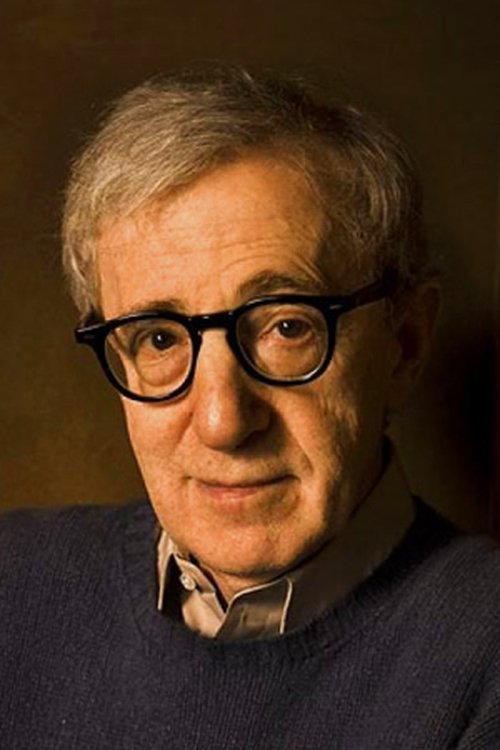
Woody Allen’s editing style is subtle but precise, often serving to enhance the rhythm of his character-driven narratives rather than drawing attention to itself. His collaborations with longtime editors such as Susan E.
Morse have resulted in a pacing that feels conversational and natural, mirroring the rhythm of real-life interactions and thought processes.
Allen’s narratives frequently eschew traditional, linear storytelling in favor of a more freewheeling, episodic structure. Take Zelig (1983), for example—a faux documentary that blends archival footage with staged scenes in a playful, nontraditional format. Similarly, in Midnight in Paris (2011), temporal shifts are woven seamlessly into the narrative, creating a dreamlike flow that matches the protagonist’s romanticized view of the past.
The editing often complements Allen’s penchant for dialogue-heavy scenes, allowing actors space to breathe and deliver performances grounded in subtlety rather than spectacle. This results in a pacing that is leisurely but never sluggish, reflective of the intellectual ambles and emotional meanderings that define his characters’ journeys.
Filmmaker quote“Eighty percent of success is turning up.”
Woody Allen
Genre Patterns and Left Turns

Allen is most famously associated with his romantic comedies, but his oeuvre includes a surprising array of genres. Early works like Love and Death (1975) showcase his flair for parody, here skewering Russian literature and existential philosophy with broad, satirical strokes. Yet even within comedy, his films often harbor serious undercurrents.

In the 2000s, Allen began exploring more dramatic territory, often blending genres to create morally complex narratives. Match Point (2005) is a stark thriller that delves into themes of luck, ambition, and moral ambiguity, a tonal departure that earned critical acclaim for its suspense and psychological depth. Similarly, Blue Jasmine (2013) is a drama steeped in tragedy and mental unraveling, with Allen’s direction focusing tightly on character study rather than comedic relief.
Despite these shifts, Allen’s films maintain a throughline of intellectual exploration and a fascination with human folly, whether expressed through comedy, tragedy, or a hybrid of both. His ability to pivot between genres while preserving his thematic concerns marks him as an artist unafraid of reinvention.
The Deep Cuts Worth Your Time
Beyond Allen’s best-known works, several lesser-seen films offer valuable insights into his evolving artistry. Hannah and Her Sisters (1986) is a layered ensemble piece that deftly balances humor and pathos, examining the complexities of family and infidelity with emotional nuance.
Crimes and Misdemeanors (1989) stands out as one of Allen’s most philosophically ambitious films. It interweaves two narratives—one exploring moral compromise and the other romantic entanglement—offering a meditation on guilt, justice, and existential dread.
Zelig (1983) remains a fascinating experiment in style and form, blending mockumentary with historical fiction in a way that anticipates later genre-benders. Meanwhile, Love and Death (1975) is an often overlooked gem that showcases Allen’s command of slapstick and literary satire.
- Hannah and Her Sisters (1986)
- Crimes and Misdemeanors (1989)
- Zelig (1983)
- Love and Death (1975)
Early Life and Formative Influences
Born Allan Stewart Konigsberg in 1935 in The Bronx, New York City, Woody Allen grew up in a Jewish family that nurtured his early love for storytelling and comedy. His formative years in New York’s vibrant cultural milieu profoundly shaped his artistic sensibilities, particularly his fascination with urban life, intellectualism, and the anxieties of modern existence.
Allen’s early influences include the Marx Brothers and Bob Hope, whose comedic timing and wit left an imprint on his own work. His admiration for European art cinema—especially the works of Ingmar Bergman, Federico Fellini, and Jean-Luc Godard—also helped him cultivate a filmic language blending humor with existential depth.
His early career as a comedy writer and stand-up performer honed his sharp, self-deprecating voice, which became a hallmark of his filmmaking. The city of New York itself functions almost as a character in his films, serving as a backdrop for the neurotic, intellectual dramas he loves to explore.
Recurring Actors and Creative Chemistry
Allen has developed long-standing collaborations with certain actors who have become synonymous with his work. Diane Keaton’s quirky, earnest performances, especially in Annie Hall and Manhattan, helped define the emotional core of his early films. Mia Farrow was another crucial muse during the 1980s and early 1990s, appearing in many films including Hannah and Her Sisters and Crimes and Misdemeanors.
More recently, Cate Blanchett’s tour de force in Blue Jasmine demonstrated the director’s continued ability to elicit deeply nuanced performances, blending vulnerability and volatility. Other frequent collaborators include Michael Caine, who starred in several Allen films such as Match Point and Hannah and Her Sisters, and Diane Wiest, whose roles often provide emotional grounding.
- Diane Keaton
- Mia Farrow
- Michael Caine
- Cate Blanchett
- Diane Wiest
Influence on Later Filmmakers

Woody Allen’s impact on cinema is vast, influencing generations of filmmakers who admire his blend of intellectual humor and character-driven storytelling. Directors such as Noah Baumbach and Wes Anderson have acknowledged Allen’s influence in their meticulous attention to dialogue, neurotic characters, and urban settings.
His innovative narrative structures and willingness to blend comedy with existential inquiry have also inspired auteurs worldwide, encouraging a more cerebral approach to storytelling that balances levity with philosophical depth. Allen’s work paved the way for filmmakers who seek to merge literary sensibilities with cinematic form, emphasizing mood and character over spectacle.
Studio Years vs Independent Years
Woody Allen’s career can be broadly divided into periods of studio-backed productions and more recent independent endeavors. The earlier phase, spanning from the late 1960s through the 1980s, saw Allen working within the studio system, producing some of his most iconic films such as Annie Hall and Manhattan. These films combined commercial appeal with artistic ambition, achieving critical acclaim while maintaining box office success.
Since the mid-1990s, Allen has largely operated as an independent filmmaker, often financing his projects through international partnerships, particularly with European producers. This shift afforded him greater creative freedom but also resulted in smaller-scale productions with more modest budgets and limited releases.
The independent years have been marked by an experimental spirit, as Allen explores new settings like Europe in films such as Vicky Cristina Barcelona and Midnight in Paris. The narrative scope has broadened, but the core elements—sharp dialogue, complex characters, and intellectual inquiry—remain consistent.
Closing Notes

Woody Allen’s cinematic legacy is a complex tapestry woven with humor, neurosis, and profound human insight. His films offer a distinctive blend of wit and melancholy, intellectual curiosity and emotional vulnerability, all framed by the vibrant cultural atmosphere of New York and beyond.
Whether through the groundbreaking romanticism of Annie Hall, the philosophical probing of Crimes and Misdemeanors, or the nostalgic charm of Midnight in Paris, Allen has crafted a unique space in film history. His work encourages audiences and filmmakers alike to embrace the messiness of human experience with both humor and seriousness—a testament to the enduring power of cinema as a mirror to life’s contradictions.
Ready for another director deep dive?
Related on Filmmaking Lifestyle

Read next: Alejandro Amenabar: How the Director Shapes Meaning, Alfonso Cuaron: How the Director Shapes Meaning, and Amat Escalante: How the Director Shapes Meaning.
Every great film starts with a great director. See our picks.

Kei Ishikawa: The Art of Directing, In One Career

Osamu Dezaki: A Visual Language Worth Studying

Ermanno Olmi: Themes, Technique, and Legacy

Juraj Herz: The Essential Breakdown

Orson Welles: A Visual Language Worth Studying

Zoltan Fabri: The Career That Changed the Medium

Barry Jenkins: A Complete Introduction

Tom Tykwer: A Complete Introduction

Ari Aster: A Director's Style in Focus


New comments are not currently accepted.
Comments