
On this pageTap to expand
Ágnes Kocsis is a quietly formidable presence in contemporary Hungarian cinema, her work distinguished not by spectacle or flamboyance but by a probing intimacy and a sparse, deliberate style. Emerging in the early 2000s, she carved a niche for herself through films that meditate on the subtle complexities of women’s interior worlds amid the pressures of modern life.
Far from the more sensationalist or politically charged strands of Eastern European cinema, Kocsis offers a cinema of nuance and silence, where alienation and identity are examined not through rhetoric but through a patient observation of gesture and atmosphere.
Her films move with a contemplative pace, inviting viewers into liminal spaces where characters negotiate their sense of self in relation to family, society, and history. Kocsis’ cinema eschews easy resolution or melodrama, instead constructing narratives that unfold through moments that seem almost accidental but are meticulously composed.
As a result, her work demands attention and rewards with an emotional and intellectual depth that is both challenging and deeply human.
Despite not being widely known outside cinephile circles, Ágnes Kocsis represents a vital voice in Hungarian cinema, contributing to ongoing conversations about gender, memory, and the social fabric of post-socialist Europe. Her filmography, including works like Fresh Air and Adrienn Pál, is a testament to a filmmaker committed to exploring the contours of personal and collective identity through the lens of women’s experiences.
Early Life and Formative Influences
Filmmaker quote“Or take this girl, for example. At a meeting just outside Paris, a fifteen-year-old girl came up to me and said that she'd been to see [The Double Life of] Véronique. She'd gone once, twice, three times and only wanted to say one thing really - that she realized that there is such a thing as a soul. She hadn't known before, but now she knew that the soul does exist. There's something very beautiful in that. It was worth making Véronique for that girl. It was worth working for a year, sacrificing all that money, energy, time, patience, torturing yourself, killing yourself, taking thousands of decisions, so that one young girl in Paris should realize that there is such a thing as a soul. It's worth it.”
Krzysztof Kieślowski
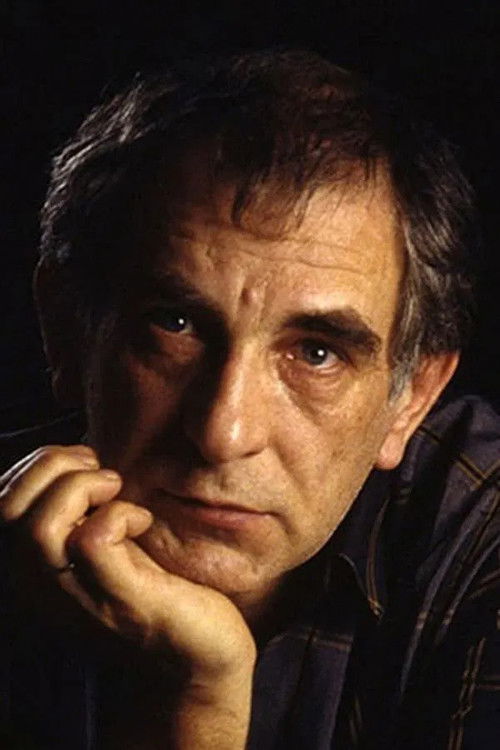
Ágnes Kocsis was born in Budapest in 1971. She studied Polish, aesthetics, and film theory at Eötvös Loránd University (ELTE), spent scholarship time at Kraków’s Jagiellonian University, and later trained in film direction and screenwriting at Rome’s Scuola Nazionale del Cinema before graduating from the University of Theatre and Film Arts (SZFE) in Budapest in 2005. Growing up amid Hungary’s transition from the late socialist period into a new democratic and capitalist order, she absorbed the tensions and contradictions of identity formation that later surface, quietly, in her fiction.
This historical context haunts her narratives, particularly the subtle interplay between personal freedom and social constraint.
Her cinematic influences are wide-ranging yet focused. She draws from the austere humanism of European auteurs who prioritize psychological depth and minimalist aesthetics.
Directors such as Agnès Varda and Chantal Akerman can be felt in her restrained compositions and focus on female interiority, while the atmospheric subtlety of Miklós Jancsó and Béla Tarr echoes in her contemplative pacing and use of silence. There are also traces of the quietly powerful storytelling of Krzysztof Kieślowski and the intimate, observational style of Andrei Tarkovsky, whose films probe existential questions through a meticulous formalism.
In many ways, Kocsis belongs to a lineage of filmmakers who privilege the slow unfolding of emotional landscapes over plot-driven narratives, crafting cinema that invites reflection rather than immediate gratification.

Discovery calls that win corporate & branded work
Align with marketing stakeholders faster: stakeholder map, success metrics, and approval paths — distilled into a practical checklist.
Filmmaker quote“I help.”
Krzysztof Kieślowski
The Breakthrough Moment

Kocsis’ breakthrough came with Fresh Air (Friss levegő, 2006), her first feature and a film that crystallized her thematic concerns and visual style. This quiet yet piercing narrative follows a mother and daughter negotiating loneliness and desire in contemporary Budapest, encapsulating Kocsis’ focus on alienation and identity. Premiered in Cannes Critics’ Week and widely festival-traveled, it established her as a director capable of marrying formal austerity with emotional resonance.

Before Fresh Air, her short films had already marked her as a distinctive voice. Sorted Letters (Szortírozott levelek, 2000) and 18 Pictures from the Life of a Conserve Factory Girl (2003) honed her minimalist approach to women’s lives under social and industrial pressure, while The Virus (A vírus, 2005) earned recognition at Cannes’ Cinéfondation.
The international attention that followed Fresh Air allowed Kocsis to build a body of work that is both personal and resonant with broader European cinematic traditions, leading to Adrienn Pál (Pál Adrienn, 2010)—her second feature, which won the FIPRESCI Prize in Cannes’ Un Certain Regard—and later Eden (Éden, 2020), which expanded her exploration of female subjectivity into a more allegorical register.
How to Start Watching Her Work

For newcomers, the best entry points into Kocsis’ oeuvre are Fresh Air and Adrienn Pál. These films encapsulate her signature approach: minimal dialogue, carefully composed shots, and a patient unraveling of emotional states. Watching these films with an expectation of slow, meditative pacing pays dividends, as each scene invites contemplation rather than instant understanding.
Viewers should approach Kocsis’ films with openness to ambiguity and an appreciation for the subtle interplay of visual and emotional cues. Her work is not plot-heavy but rich with subtext, where much is communicated through what remains unsaid.
For those interested in historical context or a more documentary-inflected sensibility, her segment in the anthology Hungary 2011 (Magyarország 2011, 2012) offers a compelling companion piece, showing Kocsis’ engagement with socio-political realities through a more direct lens.
A Director’s Visual Grammar
Kocsis’ visual style is marked by its minimalism and meditative quality. She often employs static camera setups and long takes, allowing the frame to breathe and the viewer to inhabit the space alongside her characters.
This stillness is not inert but charged with emotion, where silence and understatement become expressive tools in themselves.
Her compositions frequently isolate figures within sparse interiors or urban landscapes, visually manifesting the alienation and internal fragmentation that her narratives explore. The muted color palettes and naturalistic lighting intensify the sense of realism without sacrificing the poetic undertone.
Editing in Kocsis’ films is deliberately measured, avoiding quick cuts or dramatic flourishes. Instead, she cultivates a rhythm that mirrors the internal tempo of her characters’ emotional states, allowing moments to unfold organically.
- Static, prolonged shots to capture subtle gestures
- Natural lighting enhancing realism and intimacy
- Minimalist set design emphasizing isolation
- Use of silence and ambient sound as narrative elements
- Color palettes subdued to highlight emotional restraint
Career Context and Scale
Ágnes Kocsis’ career has moved from student and short-film production into internationally co-produced features, each stage shaping her work in distinct ways. Early shorts such as Sorted Letters and 18 Pictures from the Life of a Conserve Factory Girl were made on limited means, which reinforced the austerity and focus on intimate character study that still define her style.
With recognition after Fresh Air, Kocsis accessed larger budgets and European co-production support, allowing for more polished production values without compromising her artistic vision. Films such as Adrienn Pál and Eden show a refinement in technique and scope, though she retains the minimalist core that defines her approach.
Across that arc, Kocsis has resisted commercial pressures that might dilute her thematic focus or stylistic rigor. Even with institutional backing, her films retain a quiet experimental edge, privileging mood and introspection over conventional storytelling.
Constraints That Shaped the Work
Kocsis’ filmmaking is shaped by both economic and cultural constraints prevalent in Hungarian cinema, especially for women directors working outside mainstream commercial frameworks. Limited budgets have necessitated a minimalist approach that, far from hindering her creativity, has become a defining feature of her aesthetic.
Culturally, the challenge of articulating female experiences within a society grappling with its post-socialist identity informs her thematic preoccupations. The societal invisibility and marginalization of women, especially those on the fringes, compel her to probe questions of alienation and selfhood with sensitivity and rigor.
Moreover, working within a national cinema that often valorizes historical trauma and political upheaval as primary themes, Kocsis chooses instead to focus on the everyday and the personal, which can be seen as both a constraint and a deliberate artistic stance.

Your first paying video clients — where to look first
If you’re early in the journey, start here: realistic channels, simple outreach, and what to say when someone says “send me a quote.”
The Films That Best Represent Her Style
The following films offer essential insight into Ágnes Kocsis’ cinematic universe:
- Fresh Air (2006) – Her first feature and a paradigmatic work of minimalist storytelling and female autonomy.
- Adrienn Pál (2010) – Deepens her meditation on identity and the liminal space women inhabit in contemporary Hungary.
- Eden (2020) – Her third feature, extending her aesthetic and thematic concerns into a more allegorical, sci-fi-tinged register.
- 18 Pictures from the Life of a Conserve Factory Girl (2003, short) – Combines social realism with introspective character study.
- Hungary 2011 (2012, anthology segment) – A more sociopolitical document that complements her narrative work by situating personal stories within national contexts.
Additionally, shorts like The Virus (2005) and Sorted Letters (2000) provide rewarding, lesser-known entry points that reveal the evolution of her style and interests.
What Filmmakers Can Learn From Her
Ágnes Kocsis exemplifies the power of restraint and the potency of silence in cinema. For aspiring filmmakers, her work is a masterclass in how to convey profound emotional and psychological truths without resorting to exposition or melodrama.
Her commitment to exploring female interiority through a minimalist lens demonstrates the value of specificity and subtlety in storytelling. Kocsis shows that limitation—whether budgetary or narrative—can fuel creativity rather than stifle it.
Moreover, her patient pacing and emphasis on visual composition highlight the importance of rhythm and framing as narrative devices. She encourages filmmakers to trust the audience’s ability to perceive and feel beyond words.
- Embrace minimalism to deepen emotional resonance
- Use silence and stillness as narrative tools
- Focus on internal character worlds rather than external spectacle
- Resist pressures for conventional storytelling in favor of artistic integrity
- Find poetic potential in everyday, marginalized experiences
Place in National Cinema and Film History
Within the context of Hungarian cinema, Ágnes Kocsis occupies a distinctive position as a director who foregrounds women’s inner lives during a period of profound social transformation. While Hungarian film history is rich with politically charged and formally daring auteurs, Kocsis’ work offers a quieter but no less significant counterpoint, emphasizing psychological and existential themes over grand historical narratives.
Her films contribute to a broader European tradition of minimalist, female-centered cinema, resonating alongside contemporaries who challenge dominant cinematic modes through introspection and formal rigor. Though not a household name internationally, her influence within Hungary and among cineastes advocating for nuanced female storytelling is considerable.
Kocsis’ body of work enriches the tapestry of post-2000 Central and Eastern European cinema, bridging personal and political, past and present, through an understated yet deeply affecting cinematic language.
A Final Note
Ágnes Kocsis may not be widely famous, but her contribution to film is undeniable for those attuned to cinema’s quieter voices. Through her minimalist lens, she has crafted a body of work that probes the complexities of identity, alienation, and female subjectivity with uncompromising honesty and aesthetic restraint.

Her films ask viewers to slow down, listen closely, and engage with the often invisible emotional landscapes that shape the human experience. For students and lovers of film, Kocsis offers a compelling example of how cinema can be both a mirror and a meditation—a space where silence speaks volumes and minimalism reveals the profound.
Which filmmaker should we cover next?
Related on Filmmaking Lifestyle
Read next: Ann Hui: A Director's Style in Focus, Francois Ozon: A Director's Style in Focus, and Hong Sang Soo: A Director's Style in Focus.
Discover the filmmakers who changed cinema forever.

Kei Ishikawa: The Art of Directing, In One Career

Osamu Dezaki: A Visual Language Worth Studying

Ermanno Olmi: Themes, Technique, and Legacy

Juraj Herz: The Essential Breakdown

Orson Welles: A Visual Language Worth Studying

Zoltan Fabri: The Career That Changed the Medium

Barry Jenkins: A Complete Introduction

Tom Tykwer: A Complete Introduction

Ari Aster: A Director's Style in Focus


New comments are not currently accepted.
Comments