
On this pageTap to expand
Today, we jump into the wild world of action photography and videography. If this is your bag, you might be looking for the best camera for action shots.
As a filmmaker, one of the most challenging aspects of filmmaking is capturing action.
There’s something about fast movements of subjects like athletes and animals that, if not done right, can look really off and be distracting rather than exciting.
In order to capture fast movement, you’ll need adequate tools. After all, a filmmaker’s skill can only take them so far if they’re working with inferior equipment.
Shooting action with inadequate tools is like running the latest high-end video editor on a Windows 95. It just doesn’t work.
So you may find yourself wondering, “Well what camera do I need to use to shoot action?”
Well, the specs of a camera no matter how impressive can’t help you if it isn’t optimized for this type of videography.
Even if you have a 48MP full-frame sensor it may not be enough to get the job done. So we decided to compile a guide on the best cameras for action shots.
We’re going to talk about the things that qualify a camera for action photography. We’ll also list a few of our favorite action cameras to help you start on the right path. So, without further ado, let’s get into it.

Best Camera For Action Shots
With all of this in mind, let’s hop to the fun part where we get to talk about our favorite cameras for action shots. Starting with:
1. Canon EOS R1
Performance and Speed
Canon retired the EOS-1D X Mark III without a DSLR successor — the 1D X III was Canon’s last professional DSLR, and Canon has been clear the mirrorless EOS R1 is its true replacement as the brand’s flagship sports and action body.
The R1 is built for exactly the kind of split-second capture this list is about, with a stacked CMOS sensor and up to 40 frames per second electronic shooting with full AF/AE tracking.
Canon’s Dual Pixel Intelligent AF, trained with deep-learning subject recognition, tracks erratic action — athletes, animals, vehicles — with a tenacity that outclasses the old 1D X line’s autofocus.
Image Quality and Autofocus
The R1 uses a 24.2-megapixel full-frame stacked sensor, a lower resolution than some rivals by design, prioritizing readout speed and low-light performance over pixel count.
That trade-off pays off in extreme conditions: native ISO runs up to 102400, expandable further, so noise stays controlled when the action moves indoors or after dark.
Canon’s newest AF algorithms add smarter subject-priority tracking across sports, wildlife, and people, holding focus lock through erratic, fast-moving subjects.
Video Capabilities
For video, the EOS R1 records up to 6K RAW internally and oversampled 4K at high frame rates, giving filmmakers plenty of room to crop and stabilize footage from a run-and-gun action shoot.
Canon Log 2 and 10-bit internal recording preserve dynamic range for grading, and the same Dual Pixel AF that drives stills tracking carries over cleanly to video.
The Canon EOS R1 sits at the pinnacle of Canon’s current lineup, encapsulating the speed, image quality, and video capability that once defined the 1D X series — now without the mirror, and with autofocus that’s meaningfully better than the DSLR it replaces.
Its adeptness at handling fast-paced action without compromising on image quality makes it a compelling option for professionals who’ve outgrown the discontinued 1D X Mark III.

2. Sony A9 III
Performance and Speed
Sony has officially discontinued the A9 II following the launch of its successor, the A9 III, which is now the camera to buy in this line.
The A9 III represents Sony’s biggest leap yet in mirrorless speed, built around the world’s first full-frame global shutter sensor — meaning zero rolling-shutter distortion and flash sync at any shutter speed, up to 120 frames per second with full AF/AE tracking.
The BIONZ XR processor keeps that firehose of data usable, making the camera capable of holding pace with the fastest action a shoot can throw at it.
Image Quality and Autofocus
Built with a 24.6-megapixel full-frame stacked sensor, the A9 III trades some resolution for speed and readout performance, delivering clean, high-resolution images even in demanding conditions.
Its dynamic range holds up well in shadows and highlights, and the global shutter design eliminates the skew artifacts that plague fast-moving subjects on rolling-shutter sensors.
Sony’s latest AI-based autofocus system carries over from the A1 line, offering exceptional subject recognition and tracking that outperforms the A9 II’s already-strong AF.
Connectivity and Build
For professionals, especially in the field of journalism, speed of data transfer can be as crucial as the speed of capture.
The A9 III keeps the robust connectivity suite that made the A9 II a newsroom favorite, including a gigabit Ethernet port and 5GHz Wi-Fi.
Physically, the A9 III is built to last, with a durable magnesium alloy body, enhanced weather sealing, and a refined grip for comfortable handling during extended shoots.
Sony’s A9 III is the clearest sign yet of where mirrorless speed is headed.
Prioritizing performance, image quality, and rapid connectivity, the A9 III is tailored for professionals whose work demands the pinnacle of speed and efficiency — and it’s the camera Sony now actually sells, unlike the discontinued A9 II.
3. Nikon Z9
Performance and Precision
Nikon discontinued the D6 in 2025, closing out its DSLR flagship line for good, and the camera that now carries the “pro body” torch is the mirrorless Z9.
Designed with precision in mind, the Z9 caters particularly to those in sports, wildlife, and photojournalism — the same audience the D6 served.
It offers a continuous shooting speed of up to 20 frames per second in RAW with full autofocus and auto-exposure (higher in JPEG), capturing crucial moments with stunning accuracy and no mechanical shutter to wear out.
The Expeed 7 image-processing engine ensures the camera delivers optimum performance, managing noise and facilitating swift image processing even at those speeds.
Image Quality and Autofocus
The Z9 boasts a 45.7-megapixel full-frame stacked CMOS sensor, more than double the D6’s resolution, while still resolving crisp, detailed images.
The camera’s native ISO range of 64 to 25600, expandable further, makes it versatile in varied lighting conditions, from bright daylight to challenging low-light scenarios.
A significant highlight of the Z9 is its 3D subject-tracking autofocus, which uses deep-learning subject detection across people, animals, and vehicles.
This guarantees precision in subject tracking and locking, and it’s meaningfully more capable than the D6’s already-strong phase-detect AF system.
Build and User Experience
Constructed with a rugged magnesium alloy, the Z9 is designed for the rigors of professional use.
Its robust build is complemented by comprehensive weather sealing, ensuring resilience against dust and moisture.
The ergonomics carry over the integrated vertical grip Nikon pros expect, with dual CFexpress Type B slots for rapid data storage and retrieval, and a bright, blackout-free electronic viewfinder that shows a live, uninterrupted view even during high-speed bursts — an advantage the D6’s optical viewfinder couldn’t offer.

Build trust before you talk price
The checklist includes rapport builders and clarifying questions so prospects feel heard — and you leave with what you need to quote accurately.
Nikon’s Z9 cements its position as the brand’s current professional tool, delivering a blend of speed, precision, and robustness that surpasses the discontinued D6 in nearly every respect.
Balancing image quality with unparalleled autofocus precision, the Nikon Z9 stands as the epitome of what Nikon’s top-tier cameras are capable of today.
In the past, most of the time people would use a DSLR camera to take these types of photos and video footage because they have a fast shutter speed and more manual controls that allow you to capture high-speed movement in the frame.
However, now most photographers are using mirrorless cameras with an electronic shutter instead.
The reason being is that it has less rolling noise than DSLRs and can shoot at up to 10 frames per second (FPS) which allows them to freeze motion better than any other type of camera out there today.
4. Canon EOS R7
Performance and Speed
The Canon EOS 7D Mark II has been discontinued for years with no DSLR successor — Canon’s APS-C action/wildlife torch now belongs to the mirrorless EOS R7, the spiritual successor to the 7D line.
It is particularly aimed at enthusiasts and professionals looking for a robust camera with a crop sensor and reach for telephoto work.
The R7 impresses with up to 15 frames per second continuous shooting with the mechanical shutter, and up to 30 fps with the electronic shutter — triple the 7D Mark II’s top speed.
This speed, combined with the DIGIC X image processor, makes the camera ideal for wildlife and sports photography, where capturing fleeting moments is paramount.
Image Quality and Autofocus
Equipped with a 32.5-megapixel APS-C CMOS sensor, the R7 ensures detailed and vibrant images with noticeably more resolution than the 7D Mark II’s 20.2MP sensor.

The camera’s native ISO range extends from 100 to 32000, which can be further expanded, offering versatility in diverse lighting conditions.
One of the standout features of the R7 is Canon’s Dual Pixel CMOS AF II, with deep-learning subject tracking for people, animals, and vehicles — a meaningful step up from the 7D Mark II’s 65-point phase-detect array.
This comprehensive AF coverage ensures quick and accurate subject tracking, especially vital for moving subjects, and it carries over cleanly into video autofocus as well.
Build and Ergonomics
The EOS R7 is built with durability in mind. Its magnesium-alloy-reinforced body is both lightweight and sturdy, prepared to handle challenging shooting environments.
The camera also boasts weather sealing, offering protection against dust and moisture, making it a reliable companion for outdoor shoots.
The ergonomics are designed thoughtfully, with a deep grip and logically placed controls, ensuring a comfortable and intuitive shooting experience, plus in-body image stabilization the 7D Mark II never had.
The Canon EOS R7 stands as a compelling choice for those seeking a blend of speed, image quality, and robustness in an APS-C format.
Its enhanced autofocus capabilities, coupled with a rapid continuous shooting rate, make it a favored option for capturing dynamic action.
For photographers who liked the 7D Mark II’s crop-sensor reach and reliability, the R7 delivers the same idea with a decade of autofocus and stabilization progress behind it.
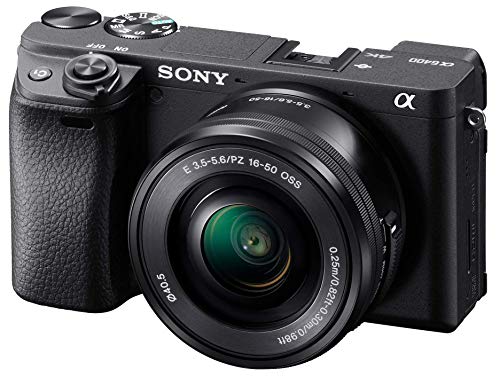
5. Sony A6400
Sony
- 20.1MP stacked back illuminated 1
- Enhanced subject capture: wide 425 Phase/ 425 contrast detection points over 84 percent of the sensor
- Fast and accurate: Up to 11Fps continuous shooting at 24.2 MP raw with crisp, clear natural colors
- Multiple movie functions: Make time lapse movies or slow/quick motion videos without post processing
- Tiltable LCD screen: customizable for vlogging, still photography or recording a professional film
- In the box: rechargeable battery (NP FW50) AC adaptor (ac uud12), shoulder strap, body cap, accessory shoe cap, eyepiece cup, micro USB cable. Metering Type: 1200 zone evaluative metering
20.1MP stacked back illuminated 1 Enhanced subject capture: wide 425 Phase/ 425 contrast detection points over 84 percent of the sensor
View on AmazonPerformance and Features
The Sony A6400 emerges as a mid-range mirrorless camera that packs a punch with its combination of performance and features.
Tailored for enthusiasts and vloggers, this camera utilizes a 24.2-megapixel APS-C Exmor CMOS sensor. Supported by the BIONZ X image processor, it delivers sharp, high-resolution images and ensures efficient performance.
Its impressive continuous shooting rate of 11 frames per second with autofocus and auto-exposure makes capturing fast-paced action a breeze.
Image Quality and Autofocus
Sony’s color science and the A6400’s sensor work in tandem to produce images that are both vibrant and detailed.
The camera handles dynamic range effectively, ensuring that both highlights and shadows retain ample detail.
A standout feature of the A6400 is its autofocus system. With 425 phase-detection and contrast-detection points, it covers almost 84% of the image area.
The introduction of the Real-time Eye AF and Real-time Tracking technologies further accentuates its focus capabilities, making subject tracking more accurate and effortless.
Video Capabilities and Build
The A6400 appeals not only to photographers but also to videographers, thanks to its 4K video recording capabilities.
Full pixel readout and no pixel binning ensure that videos are detailed and devoid of moiré and aliasing.
The flip-up screen is a boon for vloggers and content creators, allowing for easy framing when filming oneself.
On the durability front, the camera’s robust build is complemented by a magnesium alloy body and moisture and dust resistance, ensuring it’s equipped to handle rigorous use.
Sony’s A6400 is a testament to the brand’s prowess in the mirrorless market, balancing performance, imaging capabilities, and video features in a compact form factor.
Its autofocus system, in particular, sets it apart in its class, offering technologies commonly found in higher-end models.
While it may lack in-body stabilization, its myriad of features, combined with its competitive price point, makes the A6400 an enticing choice for enthusiasts, vloggers, and even some professionals on the go.

Nikon
- 20.8MP FX-Format CMOS Sensor
- EXPEED 5 Image Processor
- 3.2
- 4K UHD Video Recording at 30 fps
- Multi-CAM 20K 153-Point AF System
- Native ISO 102400, Extend to ISO 3280000
20.8MP FX-Format CMOS Sensor EXPEED 5 Image Processor
View on Amazon6. Nikon Z8
Nikon discontinued the D500 back in 2022, and its DX-format autofocus prowess never got a direct DSLR successor — instead, Nikon’s current enthusiast/pro action body is the mirrorless Z8, which packs nearly all of the flagship Z9’s tech into a smaller, lighter shell.
With its robust build, the Z8 withstands the rigors of high-speed photography and videography alike, and its APS-C crop mode still gives the extra reach the D500 was famous for.
The Nikon Z8’s full-frame stacked sensor works with the Expeed 7 image processing engine to deliver remarkable sharpness and color accuracy, a clear step up from the D500’s older Expeed 5.
Speed is at the heart of the Z8’s design.
Continuous shooting speeds reach up to 20 frames per second in RAW, double the D500’s top speed, ensuring that critical moments are never missed.
The camera boasts a wide native ISO range of 64-25,600, expandable further, allowing for shooting in virtually any lighting condition, which is crucial for the unpredictable environments we find ourselves in during shoots.
Autofocus is another feature where the Nikon Z8 excels.
It uses 3D subject-tracking with deep-learning detection across people, animals, and vehicles, delivering noticeably more reliable tracking than the D500’s 153-point phase-detect system.
Here are the camera’s key specifications:
- 45.7MP Full-Frame Stacked CMOS Sensor
- 8K UHD Video Recording at 30 fps, 4K up to 120 fps
- 3.2-inch Tilting Touchscreen LCD
Durability is also a strong point for the Z8.
It has a weather-sealed magnesium alloy body that’s ready for adverse conditions, be it dust, moisture or drops.
Equipped with a high-resolution touchscreen and capable of both Wi-Fi and Bluetooth connectivity, the Nikon Z8 suits the modern filmmaker perfectly.
Quick image transfers and remote shooting become effortless, streamlining our workflow significantly.
Battery life on the Nikon Z8 is respectable for a mirrorless body, and dual card slots (CFexpress Type B and SD) keep field use flexible when you’re away from a computer for extended periods.
7. Canon EOS 90D
Another stellar option for capturing high-speed action shots is the Canon EOS 90D.
This camera boasts a powerful 32.
5MP APS-C CMOS sensor, delivering high-resolution images that filmmakers crave for dynamic cropping in post-production.
Its ability to record 4K video without a crop factor makes it a versatile tool in a filmmaker’s arsenal.
With the Canon EOS 90D, we’re looking at impressive continuous shooting speeds of up to 11 frames per second.
Fast-moving subjects are no match for its quick and accurate autofocus system that features 45 cross-type AF points.
Combine this with a fully articulating touchscreen, and you’ve got a camera that not only excels in action scenes but also provides the flexibility needed for those tricky shots.
Here are some additional standout features:
- Dual Pixel CMOS AF – Smooth, fast, and accurate autofocus when recording videos or shooting in live view mode
- ISO Range – An expansive range of 100-25600, expandable to 51200, ensuring low-light scenes are captured with minimal noise
- Connectivity – Equipped with built-in Wi-Fi and Bluetooth, offering easy sharing and remote shooting capabilities
The battery life of the EOS 90D complements its feature set, making it reliable for extended shoots.
We appreciate the durability of its design, which includes weather-sealing for shooting in various environmental conditions.
The ergonomic build and user-friendly interface of the EOS 90D also make it a favorite among filmmakers who value comfort and intuitive controls during hectic shooting schedules.
A look into the EOS 90D’s lens compatibility reveals another reason for its popularity.
It works seamlessly with Canon’s extensive range of EF and EF-S lenses, allowing for a vast array of shooting experiences and creative expression.
Whether you’re filming an indie project or capturing high-intensity sports, the Canon EOS 90D is equipped to deliver stunning footage.
8. Sony A7R V
Sony discontinued the A7R IV a while back (it was briefly refreshed as the A7R IVA before being phased out), and the direct current-generation option in this resolution class is the Sony A7R V.
This powerhouse offers a stunning 61MP full-frame sensor which is a game-changer for capturing the finest details, the same headline resolution as the A7R IV but with a newer AI-driven processing unit behind it.
Its impressive resolution makes it a top contender for filmmakers who demand the highest quality for their productions.
Aside from its resolution, the A7R V is no slouch in the performance department.
High-speed continuous shooting at up to 10 fps with full AF/AE tracking ensures you won’t miss a beat during high-octane scenes.
The ability to capture such crisp images at these speeds is nothing short of remarkable for action sequences.
Stability is key in action shots and the Sony A7R V brings an exceptional 8-stop in-body image stabilization system, an upgrade over the A7R IV’s 5.5-stop unit.
It’s built to deliver smooth, shake-free video even in the most dynamic of circumstances.
This feature is crucial when we’re out on the field and a tripod just isn’t practical.
The autofocus system on this camera is another major player, powered by a dedicated AI processing unit for subject recognition — a meaningful step up from the A7R IV’s already-capable 567-point system.
Fast, accurate autofocus is critical in keeping up with fast-paced action and the A7R V delivers consistently.
Features that set the Sony A7R V apart include:
- Real-time Eye AF for humans, animals, and birds
- Enhanced connectivity with Wi-Fi and Bluetooth
- Dual card slots (CFexpress Type A / UHS-II SD) for ample storage and efficient workflow
Adding to all these features, the weather-sealed body makes this camera a formidable companion regardless of the condition.
It allows filmmakers the confidence to shoot in varying environments without undue concern about the camera’s welfare.
With the A7R V’s ergonomic grip and 4-axis tilting screen, long shoots become less taxing and more productive.
This camera caters to the serious filmmaker with its combination of revolutionary resolution, speed, and stabilization.
It’s hard to match the prowess of the Sony A7R V when it comes to intricate details and relentless performance during high-speed filming scenarios.
9. OM System OM-1 Mark II
Olympus’s camera division became OM System, and the E-M1 Mark III has since been superseded twice over — first by the OM-1, then by the OM-1 Mark II, which is the current flagship in this Micro Four Thirds lineup.
Its compact size is deceiving; this camera packs a punch with features that cater to the demanding needs of filmmakers.
Among its arsenal is advanced in-body image stabilization rated to 8.5 stops, up from the E-M1 Mark III’s already-strong 7-stop system.
This feature ensures that handheld shots remain steady and smooth, which is crucial when capturing high-octane sequences.
The camera’s Pro Capture mode carries over and has improved, buffering a sequence of images before the shutter is even pressed so spontaneous action is never missed.
Its weather-sealed body is nothing short of a necessity.
Filmmakers often find themselves in unpredictable conditions, and the OM-1 Mark II’s robust construction prevents the elements from disrupting the creative process.
Connectivity is seamless with built-in Wi-Fi and Bluetooth.
Transferring files or controlling the camera remotely becomes a hassle-free task, which is invaluable when filming in challenging environments.
Here are some standout qualities of the OM System OM-1 Mark II:
- High-speed shooting performance with up to 50 fps with full AF/AE tracking, and 120 fps with AF/AE locked
- A stacked 20.4MP sensor with AI-based subject detection, a generation ahead of the E-M1 Mark III’s contrast-assisted AF
- 50MP handheld high-res shot functionality, enabling remarkable detail without the need for a tripod
This model proves that great things come in small packages.
Its ability to deliver under pressure makes it a reliable tool for filmmakers looking to capture dynamic footage without the bulk of larger systems — and unlike the discontinued E-M1 Mark III, it’s the camera OM System actually sells today.

10. Nikon Z6III
The original Nikon Z6 was discontinued back in 2022, replaced first by the Z6II and now by the Z6III — the current version in Nikon’s versatile full-frame line.
Known for its versatility, the Z6III excels in both intense filmmaking scenarios and demanding photographic conditions.
What sets the Z6III apart is its partially-stacked full-frame sensor, a first for this tier of Nikon’s lineup.
This sensor ensures that each frame is captured with stunning detail and much faster readout than the original Z6, which is crucial for high-octane action sequences.
Also, the camera’s speed is a game-changer.
With a shooting speed of up to 20 fps in RAW (60 fps in JPEG), filmmakers can confidently capture the essence of movement without worrying about missing a beat — nearly double the original Z6’s 12 fps ceiling.
Let’s talk about the autofocus system – it’s a standout feature carried down from Nikon’s flagship Z9, with 3D subject-tracking AF across people, animals, and vehicles.
This extensive coverage allows for sharp focus even on subjects that are moving unpredictably.
Equally important is its adaptability to low light environments.
The Z6III’s native ISO range of 100-64,000 aids in shooting in dimly lit conditions, ensuring the camera’s performance is unhindered, regardless of lighting challenges.

From first call to signed proposal — faster
Clarify next steps, reduce ghosting, and keep momentum after the discovery call — tactics from Get More Video Clients you can use this week.
Plus, we appreciate the build quality of the Nikon Z6III:
- Robust construction able to withstand the rigors of action-packed environments
- Compact design that doesn’t compromise on handling or functionality
For connectivity, the Z6III includes built-in Wi-Fi and Bluetooth.
This ensures seamless transfer of footage which is a boon for editors awaiting content in the studio.
As filmmakers who often work to tight schedules, we understand the importance of battery life.
Rest assured, the Z6III delivers here, offering extended shooting periods before needing to recharge.
Finally, for those aiming for cinematic output, the Z6III boasts full-frame 6K video in N-RAW and ProRes RAW, along with 4K up to 120 fps.
It’s a feature that lets us step up our filmmaking game well beyond what the original Z6 offered, providing exceptional quality that meets professional standards.
11. Fujifilm X-T5
Fujifilm discontinued the X-T4 in 2022, and its replacement, the X-T5, is now the current model in the line.
When we’re on the lookout for a camera that keeps up with high-octane filming, the Fujifilm X-T5 stands out.
It’s a powerhouse with features tailored for demanding action sequences.
The X-T5 boasts in-body image stabilization (IBIS) that provides up to 7 stops of shake reduction, an improvement on the X-T4’s already-strong 6.5 stops.
This is a game changer for us filmmakers who need smooth footage without a gimbal.
With a back-illuminated 40.2MP X-Trans CMOS 5 HR sensor, the image quality is impeccable and a substantial jump in resolution from the X-T4’s 26.1MP sensor.
The X-T5 also has one of the fastest autofocus systems available, now with subject-detection AF for animals and vehicles that the X-T4 lacked.
We appreciate the X-T5 for its high-speed shooting capabilities.
It can capture 15 frames per second using the mechanical shutter and an impressive 20 fps with the electronic shutter.
The Fujifilm X-T5 stands out for action-packed filmmaking for several reasons –
- Blazing fast shutter speeds allow us to freeze motion effectively
- The three-way tilting touchscreen LCD is perfect for shooting at challenging angles
- Weather-sealed magnesium alloy body ensures durability in rough conditions
Besides, the X-T5’s film simulation modes offer a variety of cinematic looks without the need for post-processing.
Colors and tones straight out of camera look stunning and true to life.
Battery life carries over the same higher-capacity battery introduced in the X-T4, giving longer shooting times, which is essential for us during extended filming sessions.
For filmmakers who double as photographers, the X-T5’s ability to shoot 240p slow-motion in full HD is invaluable.
It’s like having a high-end cinema camera and a professional photo camera rolled into one.
We find the Fujifilm X-T5 to be a solid contender for anyone serious about capturing movement and emotion in their films.
Its versatility and performance in diverse filming environments make it a reliable choice.
12. Panasonic Lumix GH7
The GH5 has been discontinued for a couple of generations now — Panasonic has moved this video-focused line forward through the GH6 to the current GH7.
As filmmakers, we recognize the GH7 as a powerhouse in the realm of video, renowned for its robust build and impressive video capabilities.
This camera stands out with its ability to shoot open-gate 5.8K video and 4K at up to 120 frames per second, well beyond what the GH5 could manage.
Filmmakers benefit from its high resolution and smooth slow-motion capture, vital for crafting those immersive action sequences that keep audiences on the edge of their seats.
The Lumix GH7 also boasts 5-axis in-body image stabilization with an updated, more effective algorithm than the GH5’s original system.
This feature makes it easier for us to capture steady footage even when we’re in the thick of the action.
Whether we’re scaling heights or trailing a high-speed chase, our shots remain crisp and clear.
Listed below are some key aspects of the Panasonic Lumix GH7 that make it an asset for action filming:
- Durability – with its magnesium alloy body and weather-sealing
- Advanced Video Features – including internal ProRes RAW and ProRes 422 HQ recording, plus phase-detect autofocus the GH5 never had
- Connectivity – offering both Wi-Fi and Bluetooth for remote control and file transfer
- Battery Life – a high-capacity battery ensures we don’t miss those critical moments
Our personal experience with the Lumix GH7 has revealed its proficiency in delivering high-quality, professional-grade footage, without the bulk that typically comes with cinema cameras.
This makes it an excellent option for filmmakers who demand mobility without compromising on quality.
As we continue filmmaking and capturing the essence of movement and emotion, the GH7 stands as a testament to technological advancements that cater to our creative needs, including the phase-detect autofocus that finally fixed the GH5’s weakest point.
It not only handles rapid action with ease but also provides us with a plethora of features that support our storytelling.
13. Sony A6600
Moving on to another remarkable option, the Sony A6600 stands out with its excellent autofocus capabilities which are crucial for keeping action sequences in sharp detail.
Real-time Eye AF and Real-time Tracking are game-changers that empower filmmakers to capture intense sports scenes without losing focus on the subject.
It’s equipped with a robust 24.
2-megapixel APS-C sensor, ensuring high-resolution output across all your shots.
Coupled with the sensor’s capability is the renowned BIONZ X image processor, delivering high-speed performance and outstanding image quality even when filming in low-light conditions.
We can’t overlook the Sony A6600’s 5-axis in-body image stabilization system, a feature that significantly reduces camera shake.
This means even handheld footage comes out looking professional and steady, which is ideal when you’re shooting without a tripod or stabilizing gear.
The battery life on the A6600 is another strong suit.
We’re looking at the Z battery series here – known for its longevity and ability to sustain long shoots.
When you’re out in the field, a dependable battery life is priceless as it eliminates the need for constant battery swaps.
The camera’s body is designed with rigors of action filmmaking in mind:
- Durable magnesium alloy chassis
- Weather-sealed construction
The lightweight and compact frame of the Sony A6600 ensures that it remains unobtrusive, perfect for filmmakers who require agility and portability.
It doesn’t sacrifice durability or quality to achieve this convenience, making it a powerhouse in a small package.
Connectivity features of the A6600 include Wi-Fi, NFC, and Bluetooth, facilitating easy transfer of footage to other devices.
This feature set is particularly useful for action filmmakers who need to quickly move data for immediate review or post-production tasks.
The A6600 also supports high-resolution 4K video recording, capturing detail four times that of Full HD.
Pair this with its slow-motion capabilities, and you’ve got a camera that can truly do justice to dynamic and fast-paced scenes without any compromise.
14. Canon EOS R6 Mark III
The original Canon EOS R6 has been discontinued now that Canon has iterated the line twice, most recently to the EOS R6 Mark III, which is the current version worth buying.
Building on the legacy of Canon’s mirrorless innovations, the Canon EOS R6 Mark III is a powerhouse for filmmakers prioritizing speed and reliability.
Its remarkable performance ensures we catch every split-second moment with clarity.
The R6 Mark III’s 32.5-megapixel full-frame CMOS sensor — more than half again the original R6’s 20.1MP — pairs with Canon’s latest DIGIC processor for unrivaled image quality.
Even in low-light conditions, this camera maintains its prowess, making it ideal for capturing action under challenging lighting.
Key features that set the Canon EOS R6 Mark III apart include:
- Up to 40 fps continuous shooting with the silent electronic shutter, double the original R6’s ceiling
- In-body 8.5-stop image stabilization
- Dual Pixel CMOS AF II with enhanced deep-learning subject recognition
- ISO range of 100-64,000, expandable to 50-102,400
For video enthusiasts, the Canon EOS R6 Mark III does not disappoint.
It offers 7K RAW internal recording and oversampled 4K at up to 60fps, plus Full HD at up to 180fps for slow-motion effects, adding versatility to our creative toolset well beyond the original R6.
Also, the R6 Mark III supports 10-bit 4:2:2 internal recording and Canon Log, giving us plenty of latitude for post-production color grading.
With these features, the Canon EOS R6 Mark III stands out not just as a stills camera but as a formidable option for action filmmaking.
Its robust build and weather-sealing ensure the camera keeps up with our demanding shooting schedules, no matter the environment.
The user interface is intuitive, allowing us to adjust settings quickly without losing focus on the action.
Connectivity options are ample, with built-in Wi-Fi and Bluetooth enabling seamless sharing and remote control functionalities.
This integration allows for swift transfers to our devices, ensuring we keep up with the fast-paced nature of action filmmaking.
Taking everything into account, the Canon EOS R6 Mark III’s blend of speed, performance, and video capabilities makes it a top-tier choice for those looking to capture dynamic, high-quality content — and it’s the model Canon currently sells, unlike the discontinued original R6.
• Easily capture high-quality photos and videos of the action by keeping your eye on what’s happening at all times.
• Capture moments that will be gone in seconds.
• Improve your photography skills.
• Learn from professional photographers who share their secrets.
Best Camera For Action Shots – Purchase Decisions
Now let’s take a moment to look at some of the buying considerations you might have when thinking about purchasing a camera for capturing action shots.
AF System
AF stands for autofocus and this system is instrumental to the quality of your footage. Videographers looking for a professional camera will always eye the AF tracking system.
This is because it impacts how well the camera keeps track of the subject and maintains its focus without blurring out to refocus again.
Always be on the lookout for a camera with a fast and reliable AF system. It really does break or make the experience.
Telephoto Lenses
Chances are if you’re shooting action, you’ll be a good distance away from it. While having good focus is important, the camera can’t do everything on its own.
Therefore, we recommend you mount some lenses to help you get close to the action. The ideal lens for this task would be a telephoto lens.
We’ve said before that the lens makes the camera. So you should have an interchangeable lens camera. Canon has some impressive telephoto lens for their models that fit all price ranges.
Image Stabilization
You’ll have to move the camera for dynamic shots. While recording, sudden movement and shakiness can take you out of the moment.
That’s why you’ll want your camera to have image stabilization software. What it does is use an algorithm to compensate for the movement and stabilize each axis to keep the footage smooth.
If you find a camera that you really like but it doesn’t support image stabilization, we recommend you invest in a Gimbal. Trust us, it’s worth the investment to keep that footage smooth and professional.
Best Camera For Action Shots – Wrapping Up
That concludes our guide on the best cameras for action shots.
The quality of action cameras as we saw, isn’t about their specs or their megapixel counts but rather, by the strength of their AF system, availability of image stabilization, and the ability to mount telephoto lenses on them.
These are the bare minimum things a camera requires in order to be considered a good action camera. Every other feature other than that, be it 4K or slow motion, are just there for your pleasure.
Hopefully, by now you already know what you want and that our recommendations will get you on the right path. Remember that the most important thing is to always enjoy what you’re doing. Best of luck!
We hope you’ve found this article on the best camera for action shots helpful in making your purchase decision. Let us know how you got on in the comments below!
We have Gear Buyer’s Guides on every type of Filmmaking Equipment!
Expert reviews on the cameras, lenses, and tools filmmakers trust.

10 Best Video Editing Tools for Beginners in 2026

Invideo Editor vs Veed: Which One in 2026?

How to Delete a Sentence From a Video by Editing the Transcript

10 Best Higgsfield Alternatives for AI Filmmaking in 2026

Best AI Tools for Making Microdramas in 2026

Best AI Tools for Storyboarding Before a Shoot

Invideo vs. Higgsfield: Which AI Filmmaking Platform Actually Delivers in 2026

AI Filmmaking in 2026: From Idea to Final Cut in One Connected Workflow
Best Video Editing Software for Freelance Videographers
New comments are not currently accepted.
Comments