
On this pageTap to expand
Whether you're a photographer or a videographer, you might be looking to start your career (or hobby) off for a reasonable price.
Today, we take a look at the best cameras under 500 dollars.
If you’re into photography you don’t really need much gear to get started. Many photographers get some amazing photographs using just their smartphones.
Phone cameras, especially in the past couple of years, have become pretty admirable in the quality of the photos.
Sometimes it’s hard to tell the difference between a photo taken by a smartphone and a digital camera.
If, however, you want to leap from the state of an aspiring photographer to a professional one you’ll need to jump into the world of professional digital cameras.
The Best Cameras Under 500 Dollars
Now, I'm not saying you need to get some crazy gear set that costs many thousands of dollars. Chances are, if you’re just starting, you don’t make much money from photography, if any at all.
But you do need a digital camera, so we’ve compiled a list of 5 cameras that are under 500 dollars.
This guide will help you 'go pro' without digging a gigantic hole in your wallet.
1. Sony Alpha a6400
Sony discontinued the a6000 a while back, so we've updated this pick to the current entry-level model in Sony's APS-C mirrorless range: the Sony Alpha a6400.
Performance and Image Quality
The Sony Alpha a6400 stands out in the mirrorless camera market with its impressive performance and high-quality image output.
Featuring a 24.2MP APS-C Exmor CMOS sensor and BIONZ X image processor, the a6400 is capable of producing high-resolution photos with intricate details and textures.
The camera impresses with its ability to handle high ISO settings up to 32000, ensuring reduced noise and excellent low-light performance.
Continuous shooting at 11 frames per second with AF and AE tracking is a testament to the camera's swift performance, making it ideal for capturing fast-moving subjects.
Autofocus and Video Capabilities
One of the defining features of the Sony Alpha a6400 is its real-time Eye AF and real-time tracking, which combines phase and contrast detection for achieving accurate focus in a matter of milliseconds.
With 425 phase-detection points covering most of the frame, the camera ensures subjects are sharp, regardless of their position in the scene.
The a6400 also caters to videographers, offering 4K video recording (oversampled from 6K) as well as Full HD at up to 120fps, along with clean HDMI output and various video-centric features, making it a versatile tool for both photographers and filmmakers.
User Interface and Connectivity
The camera's interface is designed to be intuitive, making it a suitable option for both amateurs and seasoned photographers.
The tilting rear LCD (which flips up 180 degrees for vlogging) and OLED electronic viewfinder contribute to a comfortable and adaptable shooting experience, allowing for creative compositions and accurate previews.
In the realm of connectivity, the a6400 excels with its integrated Wi-Fi, NFC, and Bluetooth, facilitating easy sharing and remote camera control.
These features underscore the camera's appeal to a generation of photographers looking for seamless integration between their cameras and smart devices.
Battery Life and Portability
Weighing in at just 403 grams (body only), the a6400 is compact and lightweight, making it a highly portable option for travel and street photography.
With around 410 shots per charge, the a6400's battery life is a step up from older models in the range, and USB charging is supported for easy power top-ups on the go.
The Sony Alpha a6400 is a compelling option for photographers seeking a compact yet high-performing mirrorless camera.
With its impressive autofocus system, high-resolution sensor, and versatile video features, the a6400 meets the demands of a variety of shooting scenarios.
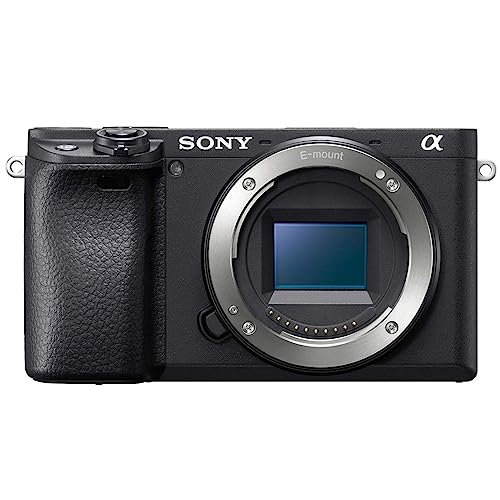
Sony
- Next Gen speed: experience the world’s fastest 0. 02 sec AF with real-time AF and object tracking
- Enhanced subject capture: wide 425 Phase/ 425 contrast detection points over 84% of the sensor
- Fast and accurate: up to 11Fps continuous shooting at 24. 2MP raw with crisp, clear natural colors
- Multiple movie functions: make time lapse movies or slow/quick motion videos without post processing
- Tiltable LCD screen: customizable for vlogging, still photography or recording a professional film
- In the box: rechargeable battery (NP-FW50) AC adaptor (ac-uud12), shoulder strap, body cap, accessory shoe cap, eyepiece cup, micro USB cable.Metering Range: -2 to 20 EV
Next Gen speed: experience the world’s fastest 0. 02 sec AF with real-time AF and object tracking Enhanced subject capture: wide 425 Phase/ 425 contrast detection points over 84% of the sensor
View on Amazon2. Canon EOS R50
Canon officially discontinued the entire EOS M (EF-M mount) line in 2023, including the M50, so today's equivalent budget pick is the RF-mount Canon EOS R50.
Image Quality and Performance
The Canon EOS R50 has carved a niche for itself with its stellar image quality and commendable performance in the mirrorless camera sector.
It houses a 24.2MP APS-C CMOS sensor paired with the DIGIC X image processor, delivering sharp, vibrant, and detailed images.
The sensor and processor work in tandem to support a wide ISO range, enabling commendable low-light performance and reduced noise levels.
The EOS R50 offers a continuous shooting rate of up to 15 fps, making it adept at capturing fast-paced action and fleeting moments with precision and clarity.
Autofocus and Video Recording
Enhanced by Canon's Dual Pixel CMOS AF II system, the EOS R50 boasts quick and accurate autofocus with subject-detection for people, animals, and vehicles, ensuring that subjects are captured sharply, even when in motion.
The touchscreen AF lets users select focus points with a swipe of their thumb, adding to the camera's intuitive usability.
In terms of video, the EOS R50 stands out with oversampled 4K recording capabilities, allowing filmmakers and content creators to capture high-resolution footage without the aggressive crop that hurt the old M50.
Vari-Angle Touchscreen
The EOS R50 is equipped with a 3.0-inch vari-angle touchscreen LCD, providing flexibility for composing shots from different angles and facilitating easy navigation through the menu.
Its electronic viewfinder offers a clear, bright view of the scene, which is especially useful in bright outdoor conditions where the LCD might be challenging to use.
The combination of the vari-angle touchscreen and the electronic viewfinder enhances the shooting experience, making the camera adaptable to various shooting environments.

Stay creative while the business side keeps up
You didn’t start a company to live in spreadsheets. This guide keeps client growth practical so you can protect time on set and in the edit.
Connectivity, Lens System, and Battery Life
With built-in Wi-Fi and Bluetooth, the Canon EOS R50 offers a range of connectivity options, facilitating seamless image sharing and remote camera control through the Canon Camera Connect app.
Crucially, it's built on Canon's current RF mount, with a growing catalog of RF and RF-S lenses (plus EF/EF-S compatibility via an adapter) — unlike the EOS M, it isn't a dead-end system.
Battery life comes in at around 310–370 shots per charge depending on shooting mode.
The Canon EOS R50 emerges as a versatile and user-friendly mirrorless camera, catering to both photography and videography enthusiasts, with a clear upgrade path the M50 no longer offers.
You may not be a professional photographer or filmmaker, but you still want a camera that is high-quality and takes amazing shots. You don't have to spend all your money on a camera when there are plenty of good ones for under 500 dollars!
The first thing to consider is the type of camera you're looking for. There's an option for everyone with point and shoot cameras, DSLR cameras, mirrorless cameras, or action cams.
If you need something easy to carry around with you every day then go with a point and shoot model. It doesn't matter if it's waterproof or has Wi-Fi capabilities; just make sure it fits your needs and budget!
3. Panasonic Lumix G100D
Panasonic has discontinued both the GX85 and its follow-up GX9, and has pulled back from small rangefinder-style Micro Four Thirds bodies generally. The current camera that fills this budget slot is the Panasonic Lumix G100D.
Solid Image Quality and 4K Capabilities
With a 20.3MP Micro Four Thirds sensor, the Panasonic Lumix G100D promises impressive image quality and detail for its class.
It's built with content creators in mind, and excels in 4K video recording, providing videographers with a versatile tool for creating high-resolution content.
Panasonic's 5-axis electronic stabilization (rather than in-body sensor-shift) keeps handheld footage smooth, which is especially noteworthy given the price point.
Directional Audio and Autofocus
One of the standout features of the Lumix G100D is its OZO Audio by Nokia, a directional 3-mic array that automatically tracks and prioritizes voice as you turn the camera — genuinely useful for solo creators recording themselves talking.
The contrast-detect autofocus system of the G100D is swift and accurate, with reliable face and eye detection, ensuring that subjects stay sharp and in focus.
Compact Design and Electronic Viewfinder
The Lumix G100D boasts a compact and lightweight design without compromising on features, making it an ideal companion for travel and vlogging.
The camera body feels solid with a comfortable grip, and the button layout is intuitive, allowing for quick adjustments on the fly.
It includes a built-in electronic viewfinder (EVF), providing a clear and bright view of the scene, which is particularly beneficial under bright sunlight when the rear screen is less visible.
Wi-Fi Connectivity and Battery Life
The Panasonic Lumix G100D features built-in Wi-Fi connectivity, allowing users to easily share images and control the camera remotely via a smartphone app.
This is especially convenient for creators who wish to transfer their footage quickly or share it on social media.
The Panasonic Lumix G100D stands out as a versatile and compact mirrorless camera with an array of features catering to both photographers and videographers.
The combination of solid image output, effective stabilization, and 4K video capabilities make it a formidable option in its class, and its bundled tripod grip is a nice touch for solo shooters.
4. Nikon Z50II
Nikon discontinued the D3500 (and its whole entry-level DSLR line) in 2022 to focus on mirrorless. The current equivalent, beginner-friendly camera is the Nikon Z50II.
High-Resolution Images and User-Friendly Interface
The Nikon Z50II shines in its ability to produce high-resolution images with its 20.9MP DX-format sensor and EXPEED 7 image processor (borrowed from Nikon's flagship bodies).
This entry-level mirrorless camera ensures detailed, sharp, and vibrant photos, making it a popular choice among photography enthusiasts looking to step up from smartphone photography.
Its user-friendly interface, combined with simplified auto and effects-driven modes, is especially helpful for beginners, providing assistance to navigate the camera settings and improve photography skills.
Compact Design and Comfortable Ergonomics
The Nikon Z50II sports a compact and lightweight mirrorless design, making it convenient for travel and prolonged handheld shooting.
The camera's ergonomics are commendable, featuring a comfortable grip, a fully articulating touchscreen, and logically placed controls, which contribute to an intuitive and pleasant shooting experience.
The sturdy construction of the Z50II ensures durability while maintaining an approachable and unobtrusive presence.
Solid Battery Life and Connectivity
The Nikon Z50II offers solid battery life for a mirrorless camera, rated for several hundred shots per charge — noticeably less than old DSLRs like the D3500, since mirrorless bodies run the sensor and EVF continuously, but still enough for a full day of casual shooting.
The camera includes built-in Wi-Fi and Bluetooth connectivity through Nikon's SnapBridge app, facilitating easy sharing and transferring of images to compatible smart devices.
Autofocus Performance and Low-Light Capabilities
The Nikon Z50II is equipped with a subject-detection autofocus system covering people, animals, and vehicles, a big step up in reliability over the D3500's basic 11-point system.
The camera performs well in low-light conditions, with a native ISO range of 100-51,200, allowing for versatility in various lighting environments.
The Nikon Z50II establishes itself as an excellent entry-level mirrorless camera, combining high image quality, user-friendly operation, and a compact design.
Its solid battery life and connectivity options add to its appeal for photographers on the move, and because it's on Nikon's current Z mount, it has a real upgrade path the discontinued D3500 no longer offers.
• High end quality for a low price.
• Wide range of different settings to choose from.
• The latest in modern technology.
5. OM System OM-D E-M10 Mark IV
The E-M10 Mark III has been superseded twice over; the current model in the line is the OM-D E-M10 Mark IV, still sold new in the US as of 2026.
Advanced Imaging Capabilities
The OM System OM-D E-M10 Mark IV stands out for its imaging capabilities, bringing a 20.3MP Four Thirds Live MOS Sensor and the TruePic VIII Image Processor to the table.
These features enable the camera to capture high-resolution stills and UHD 4K video, showcasing its versatility across various media formats.
The in-body 5-axis image stabilization is notably effective, significantly reducing camera shake, and thereby, enhancing the clarity and sharpness of images, especially in low-light conditions or when using longer lenses.
Compact and Retro Design with Intuitive Controls
Boasting a compact and retro-inspired design, the E-M10 Mark IV is not only stylish but also highly portable, making it an ideal companion for travel photographers.
The body, though compact, is well-built with an ergonomic grip, allowing for comfortable handling.
The camera's control layout is intuitive, with dials and buttons strategically positioned for ease of access.
Additionally, the flip-down touchscreen adds another layer of convenience, providing quick adjustments to settings, effortless image review, and easy selfie framing.
High-Speed Performance and Advanced Shooting Modes
Speed is another forte of the OM System OM-D E-M10 Mark IV.
The camera exhibits fast autofocus and a continuous shooting rate of 8.7 fps, making it well-suited for capturing fast-moving subjects.
Advanced shooting modes such as Silent Mode, Live Composite, and 4K Time Lapse demonstrate the camera's capability to adapt to creative shooting scenarios.
The Advanced Photo Mode is particularly user-friendly, offering guidance to users on utilizing these features to their full potential.
Electronic Viewfinder and Wi-Fi Connectivity
Equipped with a 2.36m-dot electronic viewfinder, the E-M10 Mark IV offers a bright and clear view, aiding in precise composition and focus.
The presence of built-in Wi-Fi is another commendable feature, allowing seamless image sharing and remote camera control via a connected smartphone or tablet.
This connectivity feature proves beneficial for photographers looking to share their work instantly or operate the camera from a distance.
The OM System OM-D E-M10 Mark IV is a compact yet powerful mirrorless camera, excelling in imaging capabilities, design, and speed.
The array of advanced shooting modes, coupled with effective image stabilization and intuitive controls, make it a strong contender in its category.
The addition of an electronic viewfinder and Wi-Fi connectivity further elevate its appeal to photographers seeking a balance of style, functionality, and convenience.

OM SYSTEM
- 20 MP Live MOS Sensor
- Always-on connection and background connection via Bluetooth & OI Share Smartphone app
- Flip-down monitor and dedicated Selfie mode. Selfie mode automatically turns on when monitor is flipped down
- In-Body 5-Axis Image Stabilization capable of 4.5 shutter speed steps of compensation
- 16 Art Filters (31 types). Includes new Instant Film for a nostalgic feel
- Digital zoom: 2.0 multiplier_x
20 MP Live MOS Sensor Always-on connection and background connection via Bluetooth & OI Share Smartphone app
View on Amazon6. Canon EOS R100
Canon has discontinued the EOS Rebel SL3 / EOS 250D DSLR, and its whole camera lineup has moved to the RF mount, so today's equivalent budget contender is the Canon EOS R100.
This model is one of the smallest, lightest mirrorless cameras Canon makes, a feature filmmakers appreciate for its portability during shooting.
The R100 doesn't skimp on quality with its 24.1-megapixel APS-C sensor, delivering vivid and detailed images.
It also uses Canon's Dual Pixel CMOS AF system, known for its fast and smooth autofocus performance in live view, a critical aspect for capturing sharp video.
For those looking to dip their toes into 4K, the R100 does not disappoint.
It provides 4K video recording (albeit from a cropped region of the sensor), making it suitable for creating cinematic content without the hefty price tag.
What stands out with this camera is its user-friendly interface – perfect for beginners – and a growing catalog of RF and RF-S lenses, plus EF/EF-S compatibility via an adapter for the more experienced.
Here are some key benefits:

Sound sharp on your next discovery call
A printable checklist built for video company owners: what to ask, what to listen for, and how to qualify leads without sounding robotic.
- Lightweight and compact, making it ideal for long shooting days
- Simple menu system that simplifies navigation and adjustments
- Access to Canon's current lens mount rather than a discontinued one
Equipped with a battery that lasts a respectable number of shots for its class, the R100 ensures that you can get through most shooting schedules without the anxiety of running low on power.
Wi-Fi connectivity also simplifies the sharing and transferring of your footage.
It's a camera that meets the demands of dynamic shooting schedules and various filming environments, ensuring you have the tools necessary for your creative expression, without being stuck on a mount Canon has already stopped developing for.
7. Fujifilm X-T50
Fujifilm discontinued the X-A7 back in 2020 (barely a year after launch), and its budget-friendly hybrid tier has since consolidated around the Fujifilm X-T50.
With an impressive 40.2-megapixel APS-C sensor at its core, this camera is a juggernaut for filmmakers who want stills resolution to match their video chops.
Its sleek, retro design isn't just for show; it's lightweight and highly portable, with in-body image stabilization the X-A7 never had.
Perfect for those impromptu shoots or on-the-go vlogging.
One striking feature is the X-T50's tilting touchscreen, paired with a dedicated Film Simulation dial.
It makes framing shots and dialing in a look a breeze.
Besides, the camera boasts a wide native ISO range of 125-12800.
It provides exceptional low-light performance, which is vital for filming in varied lighting conditions.
The X-T50 also delivers on the video front – capturing stunning 6.2K footage, well beyond the 4K the X-A7 topped out at.
It records 4K at up to 60fps, giving budding filmmakers ample quality for their narratives or documentaries.
Here are some of the features filmmakers will love about the Fujifilm X-T50:
- Subject-detection autofocus system with face/eye detection
- Full HD recording at up to 240fps for slow-motion effects
- Diverse selection of film simulation modes, including the newer Reala Ace
also, Wi-Fi and Bluetooth capabilities Help easy content transfer.
They prove indispensable when sharing clips with collaborators or social media.
The X-T50 is compatible with Fujifilm's full range of X-mount lenses, an ecosystem that's only grown since the X-A7's day.
This compatibility expands creative possibilities and refines the filmmaking experience.
We understand the need for a camera that can keep up with dynamic and demanding filming.
The Fujifilm X-T50 rises to that challenge with its combination of power, versatility, and convenience.
8. Panasonic Lumix FZ80D
Panasonic discontinued the weather-sealed FZ300, and its direct budget-superzoom successor is the Panasonic Lumix FZ80D.
This ruggedly built bridge camera offers filmmakers a host of features that ensure it punches well above its weight class.
The Lumix FZ80D is renowned for its 4K video capabilities and an 18.1-megapixel sensor.
Ideal for travel and casual adventure filmmaking, its long reach makes it a versatile companion when you can't get physically close to a subject.
Its huge 60x zoom lens (20-1200mm equivalent) goes far beyond the FZ300's 24x range, though the tradeoff is a variable f/2.8-5.9 aperture rather than the FZ300's constant f/2.8.
This is especially useful when you're trying to capture scenes at a distance, from wildlife to architecture details.
Another standout feature is the 5-axis Hybrid Optical Image Stabilization.
It minimizes camera shake, which is essential when you're on the move and don't have the time to set up a tripod.
For features that benefit the modern filmmaker:
- Post Focus and Focus Stacking modes for creative control after the shot
- 4K Photo mode for grabbing stills from video footage
- Wi-Fi connectivity for easy transfer of your creations to your devices or the cloud
Equipped with a live viewfinder and a 3-inch free-angle touchscreen, the Lumix FZ80D provides you with the tools needed for creative framing and monitoring.
Let's remember, exceptional videos are born from the capability to adapt to your environment and harness the full potential of your camera's feature set.
The Lumix FZ80D offers this adaptability, making it a standout contender for filmmakers who want a huge zoom range without very costly.
9. Sony ZV-1 II
Sony has trimmed its RX100 line down to just two current models (the VII and VA), and neither is a budget option any more, so the RX100 III is best replaced with Sony's current large-sensor budget compact aimed squarely at creators: the ZV-1 II.
It's a powerhouse of photography that slides comfortably into the realm of filmmaking with its robust features and pocketable design.
This compact marvel comes equipped with a 1-inch 20.1MP Exmor R sensor, granting our films vivid clarity and low-light prowess.
The 18-50mm equivalent lens with an f/1.8-4 range is wider than the old RX100 III's 24-70mm, which is a real advantage for vlogging and cramped interiors.
The Sony ZV-1 II stands out with its impressive video capabilities:
- Records oversampled 4K at up to 30fps, plus Full HD at up to 120fps for smooth slow motion
- A dedicated "Product Showcase" autofocus mode that instantly shifts focus to an object held up to the lens
Our creative ventures thrive with the ZV-1 II's fully articulating touchscreen.
It offers an accurate, real-time preview of our shots, ensuring our desired outcomes are within reach before we even hit record.
Fast, reliable real-time Eye AF and versatile shooting modes cement this camera's status as a filmmaker's ally.
Venturing into the world of independent cinema or embarking on the production of short films, the ZV-1 II's background defocus button and manual control ring Help on-the-fly adjustments.
This camera allows us to tailor exposure and focus with precision, freeing us to focus on storytelling.
Our audio setup is also given due consideration with the built-in three-capsule directional microphone and a Multi Interface Shoe for external mics.
By enabling the attachment of external microphones, we refine our sound qualities to match the high standards of our visuals.
We're confident that filmmakers on a budget will find the ZV-1 II an invigorating addition to their toolkit, packed with features often found in higher-end models.
It elevates our productions without very costly.
10. Canon Powershot SX70 HS
Note: Canon has discontinued the SX70 HS, and as of this update hasn't shipped a direct successor, though a replacement has been rumored for some time. Remaining new stock is still available from some retailers; check current availability before buying.
As filmmakers, we're always on the hunt for gear that balances cost with performance.
The Canon Powershot SX70 HS strikes that balance, offering functionality that belies its sub-$500 price tag.
Weighing in on its merits, this model boasts a powerful 65x optical zoom lens.
This feature is ideal for capturing shots that require a tight focus from distances that would make other cameras falter.
The SX70 HS doesn't skimp on video quality.
It records 4K video, ensuring that our footage meets contemporary standards for high-resolution content.
plus, this camera provides us with a 20.
3 Megapixel CMOS sensor coupled with Canon's DIGIC 8 Image Processor.
Our films benefit from the enhanced image quality and reduced noise, particularly in low-light conditions.
Let's hone in on some of the features that make the SX70 HS a sensible choice for filmmakers on a budget:
- 4K video recording and 4K time-lapse movie
- High-speed Continuous Shooting up to 10 fps
- Built-in 0.39-type OLED Electronic Viewfinder with approx. 2.36 million dots
- Reliable Autofocus System with Face Detection
What makes the SX70 HS truly filmmaker-friendly is its swivel LCD screen and comfortable ergonomics.
The vari-angle screen enables us to frame our shots from challenging angles.
This flexibility is a boon when shooting in confined spaces or aiming to capture unique perspectives.
The Canon Powershot SX70 HS wraps these impressive specifications within a body that’s light enough to carry all day.
We appreciate the inclusion of built-in Wi-Fi and Bluetooth for easy sharing and remote shooting.
These connectivity options streamline our workflow, letting us transfer footage to our devices without fuss.
11. Nikon Coolpix P1100
Nikon has discontinued the Coolpix B700 (and its more recent P950), consolidating its superzoom bridge cameras into a single current model: the Nikon Coolpix P1100.
It's a superb choice for filmmakers who seek maximum reach, offered at a price well above the old B700's but with a reach far beyond it.
This camera comes equipped with a 125x optical zoom lens (24-3000mm equivalent), enabling you to capture fine details from very far afar.
The zoom capability opens a world of possibilities for shooting documentaries or wildlife films where subjects cannot be disturbed.
Another striking feature is the Coolpix P1100's 4K UHD video recording capacity.
It allows us to produce higher quality content while keeping everything in a single, un-interchangeable lens body.
Plus, with a 16-megapixel sensor, it ensures your shots are not just zoomed — they're detailed too, even if resolution is more modest than newer APS-C options.
The Nikon Coolpix P1100 supports RAW files, a big plus for post-production flexibility.
Capturing in RAW means we have more control in editing, allowing us to fine-tune our images to exacting standards.
It also boasts Wi-Fi and Bluetooth for seamless connectivity – ensuring that our creative workflow is as efficient as possible.
For those of us who need to shoot for extended periods, the camera's large battery is a lifesaver:
- The battery charges quickly, minimizing downtime between shots.
- Provides ample power to capture those long, uninterrupted takes that are essential for certain film scenes.
Ergonomically designed, the P1100 fits comfortably in our hands, making it ideal for lengthy filming sessions, though its size and weight are noticeably larger than the old B700.
The camera's user-friendly interface ensures we won't miss a beat while navigating through settings, even if we're relatively new to filmmaking.
12. Ricoh GR IIIx
Fujifilm discontinued the XF10 years ago and hasn't replaced it with a direct successor at that price point, so for a pocketable fixed-lens compact we're pointing you toward the current benchmark in this category: the Ricoh GR IIIx. It runs above our "under $500" ceiling, but nothing else matches its combination of size and image quality, so it earns a spot for anyone willing to stretch the budget slightly.
At the heart of the GR IIIx lies a 24.2-megapixel APS-C sensor – larger than what you'd find in most pocketable compacts – which ensures detailed images and robust performance in low light.
The charm of the Ricoh GR IIIx extends to its color profiles, including the beloved "Positive Film" and monochrome presets that offer a cinematic feel straight out of camera, a boon for filmmakers looking to minimize post-production work.
Its 26.1mm fixed lens, equivalent to 40mm on full-frame, provides a natural, slightly tighter field of view than the old XF10's 28mm-equivalent lens, ideal for street scenes and environmental portraits.
Even with its compact size, the GR IIIx doesn't skimp on stills quality:
- In-body image stabilization, something the XF10 never had
- A macro mode capable of focusing just centimeters from the lens
Ease of use is a staple with the Ricoh GR IIIx's touchscreen interface and built-in Wi-Fi/Bluetooth connectivity – making the transfer of footage to devices a breeze.
And with its film simulation-style Image Control presets, your creative expression finds new heights.
Packing all these features in a sleek and lightweight body, the GR IIIx proves to be a formidable ally for filmmakers who tend to shoot guerrilla-style or on the go.
It's a testament to Ricoh's commitment to quality in the premium compact category, even if it costs more than the old XF10 did.
13. OM System OM-5 Mark II
Olympus's PEN E-PL9 was succeeded by the E-PL10, and OM System has since paused new PEN-branded releases entirely (with a revival teased for late 2026). In the meantime, the closest current compact, retro-styled Micro Four Thirds body from OM System is the OM-5 Mark II.
As filmmakers, we're always on the lookout for gear that balances cost and performance.
The OM System OM-5 Mark II stands out as a prime example, hitting that sweet spot with flair.
Crafted for creatives who demand quality without very costly, this camera is a testament to OM System's commitment to portability and functionality.
It boasts a 20.4-megapixel Live MOS sensor and in-body 5-axis image stabilization (rated up to 7.5 stops), ensuring your footage is sharp and steady — a significant step up from the E-PL9's 3-axis system.
The OM-5 Mark II isn't just about great video; it's designed with a rugged, weather-sealed body that can handle far more abuse than the E-PL9 ever could.
Its compact form factor belies a powerhouse that can record crisp 4K video, plus computational modes like Live ND and handheld high-res shot.
Let's not overlook the camera's intuitive touchscreen and simplified interface – perfect for filmmakers who need to operate on the fly.
Connectivity is seamless with built-in Wi-Fi and an easy smartphone pairing process, thanks to the OM Image Share app.
This allows for effortless sharing of your cinematic creations and remote camera control.
Offering an array of computational photography modes, the OM System OM-5 Mark II further blurs the line between still photography and videography, enhancing its appeal to hybrid shooters:
- Art Filters for creative in-camera effects
- Live Composite and high dynamic range modes
While this camera doesn't replace a full professional setup, it's a fantastic tool for indie filmmakers and content creators, especially those shooting outdoors in unpredictable weather.
With its mix of portability, versatility, and quality, the OM-5 Mark II is a brilliant companion for those who love to capture stories without the constraints of bulky equipment.
14. Panasonic Lumix ZS200D / TZ200D
Note: Panasonic has retired the original ZS200/TZ200 model number in favor of the near-identical ZS200D/TZ200D, so look for that name when shopping — the camera itself is essentially unchanged.
Continuing our Try to uncover the best cameras under 500 dollars, we can't overlook the Panasonic Lumix ZS200D, also known as the TZ200D.
This compact powerhouse manages to squeeze in a 1-inch sensor, providing filmmakers with a substantial boost in image quality.
The ZS200’s 15x optical zoom lens gives a versatile range that's hard to find in this price bracket.
We appreciate the freedom it offers when shooting various scenes without sacrificing video quality.
Its ability to record 4K video makes it a strong contender for those who need high-resolution footage on a budget.
One of the key features we love is the Lumix ZS200's intuitive control layout.
It allows for quick adjustments, ensuring we stay in the moment and capture it as it unfolds.
Built-in Wi-Fi and Bluetooth ensure that we can share our work effortlessly, wherever we are.
Here’s a snapshot of what the Panasonic Lumix ZS200 brings to the table –
- 20.1-megapixel High Sensitivity MOS sensor
- Leica DC Vario-Elmar 24-360mm lens
- 4K video recording at 30p or 24p
- 5-axis Hybrid Optical Image Stabilization
Compact yet feature-rich, the Lumix ZS200 is a testament to Panasonic's commitment to quality.
Its blend of portability and performance ensures that we can deliver professional-looking results in a wide array of filming environments.
With the ZS200D in our kit, we're well-equipped to bring our cinematic visions to life.
Best Cameras Under 500 – Conclusion
There’s a great variety of budget suitable cameras out there for you if you want to start taking photography seriously.
You don’t need to get the latest and most expensive equipment to take high-resolution pictures anymore.
Digital camera manufacturers are more aware now that there’s a market for novice photographers who want to get into the field, but don’t have the budget for the costly professional level cameras.
So, they’ve all been offering affordable cameras with great features at competitive prices. Even if these cameras listed in this guide don’t do it for you, you can still find the right camera for you if you do enough research.
We hope you've found this post on the best cameras under 500 dollars useful. Have a budget camera suggestion that we missed out in this list? Drop some wisdom by leaving a comment in the comment section below.
We have Gear Buyer's Guides on every type of Filmmaking Equipment!
Find the perfect gear for your next production.

10 Best Video Editing Tools for Beginners in 2026

Invideo Editor vs Veed: Which One in 2026?

How to Delete a Sentence From a Video by Editing the Transcript

10 Best Higgsfield Alternatives for AI Filmmaking in 2026

Best AI Tools for Making Microdramas in 2026

Best AI Tools for Storyboarding Before a Shoot

Invideo vs. Higgsfield: Which AI Filmmaking Platform Actually Delivers in 2026

AI Filmmaking in 2026: From Idea to Final Cut in One Connected Workflow
Best Video Editing Software for Freelance Videographers


New comments are not currently accepted.
2 comments