
On this pageTap to expand
If you work in real estate, you know the value of a good image or video. But do you know what the best camera for real estate is?
Properties can either be the most eye-catching and attractive places or the dingiest scariest dungeons depending on how you shoot them and what you use.
It is important especially in this post-pandemic world where people are more likely to check the pictures and decide before taking a chance on coming themselves.
Therefore, it stands to reason that you’ll want the best equipment to get you the best image.

What Is Real Estate Videography?
Real estate videography is the art of filming a property for sale with the intention of marketing it to potential buyers.
The goal is to capture all aspects of the home and make it appealing so that viewers will want to purchase it.
Real estate videographers capture the essence and beauty of a property by showing off its best angles.
They’re usually hired to produce marketing materials for a home that will be shown on television or online, but they can also be employed to provide footage that buyers may want to review before making an offer.
Video can offer a much more convincing sales platform than just photos alone.
Now, you might be asking yourself, “What’s the best camera I can get for real estate?”
Well, there’s no one answer. That’s why today, we’ve compiled a guide on cameras for real estate. We’ll be talking about what you need to consider before buying one.
Additionally, we’ll take a look at some of our favorite recommendations in this area.
Best Camera For Real Estate
Now that the intro’s out of the way, let’s jump right into our list!
| Camera | Best for | Key spec |
|---|---|---|
| Canon EOS R8 | Affordable full-frame stills and video | 24.2MP full-frame; 4K oversampled from 6K |
| Nikon Z6III | Virtual tours | 24.5MP full-frame; internal 6K |
| Panasonic Lumix FZ80D | Simple all-in-one zoom | 18.1MP, 60x zoom, 1/2.3-inch sensor |
| Canon EOS R100 | Beginners on a budget | 24.1MP; 4K with a crop |
| Nikon D850 | High-detail stills | 45.7MP; 4K |
| Sony Alpha a7 III | Mixed indoor light | 24.2MP full-frame |
| Fujifilm X-T5 | Color and detail | 40.2MP APS-C; in-body stabilization |
| Sony Alpha a6400 | Compact APS-C | 24.2MP APS-C; 4K |
| OM System OM-5 Mark II | Small weather-sealed body | 20.4MP Micro Four Thirds; 6.5-stop IBIS |
| Canon EOS R6 Mark III | Higher-resolution full-frame | 32.5MP full-frame |
1. Canon EOS R8
Canon has discontinued the EOS 6D Mark II. The affordable full-frame mirrorless body you can buy now is the EOS R8.
This camera comes with a full-frame CMOS sensor that clocks at 24.2MP, and unlike the 6D Mark II, it shoots full 4K video (oversampled from 6K) rather than being capped at 1080p.
Therefore, the image and video quality on this camera are both pristine. The sharp image quality retains all the details of a scene.
The R8 is compatible with Canon’s current RF lenses, and via an adapter, the same EF glass the 6D Mark II used — so existing Canon shooters keep their lens investment.
The camera is also equipped with a vari-angle touchscreen that offers an excellent display, more flexible than the 6D Mark II’s fixed screen.
The camera has built-in Wi-Fi which makes transferring files from it to your computer a matter of a few button presses.
It’s an invaluable feature, considering you’ll need to view how the pictures look on a computer screen before posting.
If what you need is a full-frame camera that can shoot great-looking pictures and videos that won’t burn a hole in your wallet, the R8 is the body you can buy now. Canon announced the EOS R8 Mark II on September 15, 2026, with in-body stabilization the original R8 does not have, and expected availability in late October.

2. Nikon Z6III
Nikon has moved this line on from the Z6II to the Z6III, and it’s now the current pick. For real estate photographers more interested in shooting great virtual tours of their apartments, high-quality video capabilities are the most important factor. For this, we think there’s no better camera to recommend than the Nikon Z6III.

Learn alongside your current client work
One email per day. Unsubscribe anytime. Keep the parts that work and ignore the rest.
The Z6III has a 24.5MP full-frame sensor and can shoot 6K video internally, an upgrade over the Z6II’s 4K-only recording.
That extra resolution headroom is more likely to be something you have fun experimenting with outside work, rather than a feature important for real estate photography, but it’s a nice bonus.
The Nikon Z6III is a great consideration even if you’ve used professional cameras before. It offers compatibility with F-mount Nikkor lenses via the FTZ II adapter, so if you’re into Nikon, you’ll have no problem transitioning to this mirrorless gem.
The Nikon Z6III has a bright, blackout-free electronic viewfinder which will make it clear what the picture will look like. The picture will be displayed on the vari-angle touchscreen.
Both of these features, in conjunction with simplified controls, make this one of the finest cameras for real estate photography.
How To Create Real Estate Videos
Every real estate agent knows that a video is worth 1,000 words. It’s true!
When you’re looking to buy or sell property, nothing can replace seeing the home in person.
But it’s not always possible for buyers and sellers to be there all the time. That’s where an amazing real estate video comes in handy.
In a world where people are glued to their smartphones and tablets, it is no wonder that social media has become one of the biggest platforms for advertising real estate.
Real estate videos make it possible to showcase properties and attract potential buyers with just a few clicks of an app.
-
Shoot videos in high definition or, ideally, 4K.
-
Keep your videos short and snappy.
-
Use high-quality, professional equipment to film the video.
-
Create a script for any voiceover or interviews you have in the video.
-
Make sure there is enough light when filming indoors and outdoors.
-
Use a tripod to stabilize your camera and reduce shake and blur.
-
Include shots of the property’s exterior as well as interior spaces.
-
Add audio that captures the space’s ambiance or tells a story about it.
-
Consider adding text overlays with information about features or amenities.
-
Get close-up shots, but also show the property from a distance.
-
Include natural sounds and music in your video.
-
Show off any features that make this property unique or stand out.
3. Panasonic Lumix FZ80D
Panasonic has discontinued the original FZ80 and replaced it with the FZ80D. Stepping away from Canon and Nikon for a moment, let’s talk about Panasonic. The Lumix FZ80D is a bridge between the capabilities of mirrorless cameras and the simplicity of point and shooters.
The FZ80D is equipped with the same 18.1MP sensor as its predecessor, now paired with a sharper LCD and electronic viewfinder. It also includes a strong lens that gives you the ability to zoom up to 60x.
Panasonic has brought image stabilizing into the table. It prevents shakiness and makes every shot count.
USB-C charging is now built in, an upgrade the original FZ80 didn’t have. The FZ80D does not include Wi-Fi, so plan on moving files with a card reader. Its 1/2.3-inch sensor is also a limit in low light, which is where a lot of indoor real estate shooting happens.
This is one of the best cameras for home staging. You’ll need no aid from a pro. In fact, you could take it out of the box, charge it and head to town, take all the images you need without looking at a manual.
4. Canon EOS R100
The Canon EOS Rebel T6 has been discontinued for years, and Canon no longer develops new DSLRs at all. We couldn’t help but recommend two Canons for this guide, so our second choice is the EOS R100, Canon’s current cheapest RF-mount mirrorless camera and the closest thing to a T6 successor. This entry-level camera is aimed mainly at novice photographers looking to upgrade from their phones.
The R100 functions well as a camera for real estate. It is light and easy to carry around. The LCD screen is lit well and that makes it easy to read in sunlight.
The camera is also equipped with an electronic viewfinder that helps you frame shots better — something the T6’s optical finder couldn’t match for a live exposure preview.
The Canon EOS R100 offers some great features in this compact package. While it’s not full-frame, we believe it makes up for it with its low price.
That’s not to say the picture quality is weak or anything.
Far from it, the R100 is a capable camera that can shoot great-looking images at 24.1 megapixels — considerably more resolution than the T6’s 18MP — and offers 4K video recording (with a crop), well beyond the T6’s Full HD ceiling. So, if you’re not looking to spend a lot on a full-frame, this is the perfect alternative.
You’ll also have Wi-Fi connectivity for easier file transfers. This camera is built for beginners and you can see it in its simple controls and intuitive menus design.
It’ll also last you a while, the battery life is long enough to last you a whole day of shooting.
There are some drawbacks that come with the lower price tag, of course. For one, there are no touch controls on the LCD, and the kit lens selection is more limited than the old EF lineup — though Canon’s RF-S lenses continue to expand.
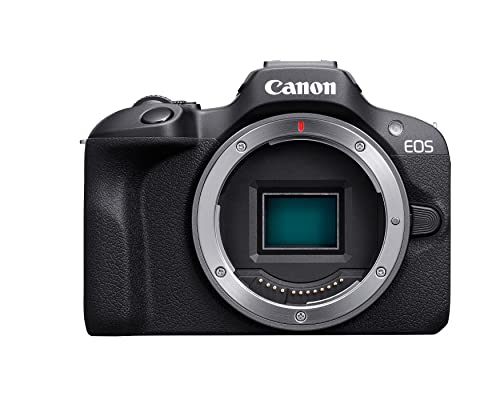
- Compact, lightweight EOS R series camera with an affordable price
- Smallest and lightest camera body in the EOS R series1 built for excellent mobility
- High image quality with a 24.1 Megapixel CMOS (APS-C) sensor and DIGIC 8 processor
- Dual Pixel CMOS AF covering a wide area2 up to 143 zones with auto subject detection and Eye Detection AF available with Servo AF.
- Continuous capture of up to 6.5 shots per second when set to One-Shot AF
5. Nikon D850
The Nikon D850 is sure to blow anyone’s mind with its 45.7megapixels sensor. This is something rarely any competition could offer.
Not only that, the D850 offers 4K video recording. The build quality and long battery life here are something to admire. All of this serves to make this the ultimate camera for real estate photography.
You can use the D850 to shoot professional-grade indoor photos. You can also record some crisp and high-quality virtual tours of the estates using this camera.
Regardless of how you use it, the D850 is guaranteed to give amazing results.
Not only that, you can capture great outdoor pictures thanks to the ruggedness and weather seals of this D850.
So, if you’re in an area with harsh weather conditions, you’ll have no problem getting to work with this camera.
You’ll also have no problem doing long shooting days since the battery life is long enough to not need any charge during the day.
Of course, all these impressive features will set you back a little. But thanks to the quality performance and solid build, you won’t need another camera any time soon.

Nikon
- Nikon designed back side illuminated (BSI) full frame image sensor with no optical low pass filter
- 45.7 megapixels of extraordinary resolution, outstanding dynamic range and virtually no risk of moiré
- Up to 9 fps1 continuous shooting at full resolution with full AF performance
- 8k6 and 4k time lapse movies with new levels of sharpness and detail; file system : DCF 2.0, exif 2.31, Pict bridge
- Tilting touchscreen, focus shift shooting mode, outstanding battery performance and much more; total pixels: 46.89 million
- 4K Ultra HD video recording, slow motion up to 120 FPS at 1080p
Nikon designed back side illuminated (BSI) full frame image sensor with no optical low pass filter 45.7 megapixels of extraordinary resolution, outstanding dynamic range and virtually no risk of moiré
View on Amazon6. Sony Alpha a7 III
The Sony Alpha a7 III is a remarkable camera for real estate photography, blending high resolution with exceptional dynamic range.
Its 24.2 MP full-frame sensor captures intricate details, essential for showcasing property features.
The a7 III excels in various lighting conditions, ensuring interiors are vividly rendered, even in low light.
Its advanced autofocus system swiftly focuses on different parts of a property, providing crisp, clear images.
The camera’s dynamic range impressively highlights both shadows and highlights, a crucial aspect in real estate photography where lighting can vary greatly.
Its compact size belies its power, making it a superb choice for real estate professionals who need quality and portability.
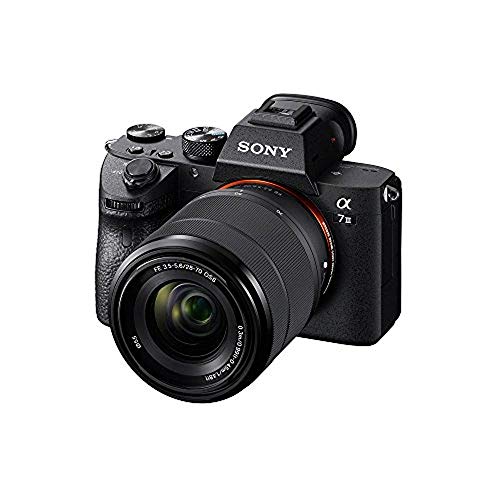
Sony
- Advanced 24.2MP BSI Full-frame Image Sensor w/ 1.8X readout speed Advanced 24.2MP Back-Illuminated 35mm Full-frame Image Sensor
- 15-stop dynamic range, 14-bit uncompressed RAW, ISO 50 to 204,800
- Up to 10fps Silent or Mechanical Shutter with AE/AF tracking
- 693 phase-detection / 425 contrast AF points w/ 93% image coverage
- In the box: SEL2870 lens, Lens hood, Lens cap, Lens rear cap, Rechargeable Battery (NP-FZ100), AC Adapter (AC-UUD12), Shoulder strap, Body cap, Accessory shoe cap, Eyepiece cup, Micro USB cable
- Sensor Type : 35mm full frame (35.6×23.8mm), Exmor R CMOS sensor
Advanced 24.2MP BSI Full-frame Image Sensor w/ 1.8X readout speed Advanced 24.2MP Back-Illuminated 35mm Full-frame Image Sensor 15-stop dynamic range, 14-bit uncompressed RAW, ISO 50 to 204,800
View on Amazon7. Fujifilm X-T5
Fujifilm has discontinued the X-T4; its successor, the Fujifilm X-T5, stands out in the real estate photography realm with its stunning image quality and color reproduction.

Turn one job into three — a simple follow-up map
Referrals and repeat buyers are the quiet engine of great video companies. The free guide shows how to prompt them without feeling awkward.
The 40.2MP APS-C sensor — a big jump over the X-T4’s 26.1MP — combined with Fuji’s legendary color science, produces images with rich, true-to-life colors, perfect for showcasing property interiors and exteriors.
Its in-body image stabilization ensures sharp images, crucial when shooting hand-held in various lighting conditions.
The X-T5 is also admired for its classic design and intuitive controls, making it a joy to use for lengthy real estate photoshoots.
For those who value aesthetics as well as performance, the X-T5 is a top contender.
8. Sony Alpha a6400
Sony discontinued the original a6000, and it still sells the a6100 as the lower APS-C body. The Sony Alpha a6400 is the step up Sony still lists at this level, and it is an excellent option for real estate photographers who need a high-performing yet budget-friendly camera.
Its 24.2 MP APS-C sensor provides great image quality, capturing the fine details of a property, and its autofocus system uses Sony’s Real-time Eye AF and Real-time Tracking, a real step up from the a6000’s original AF algorithm.
The a6400’s compact and lightweight design makes it ideal for shooting in different locations.
Despite its size, it offers fast autofocus and continuous shooting modes, useful for capturing multiple angles and aspects of real estate, plus 4K video that the a6000 never had.
Its ease of use and versatility make the a6400 a great choice for both seasoned photographers and those new to real estate photography.
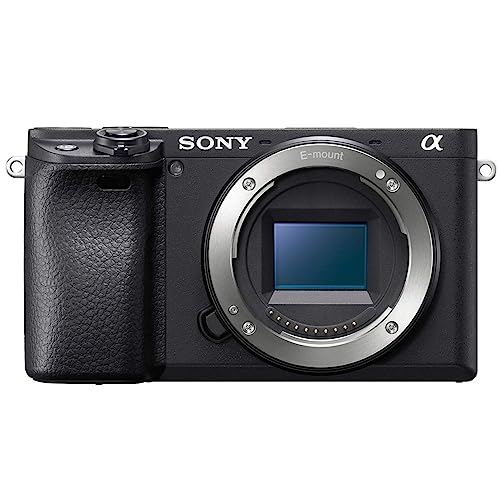
Sony
- Next Gen speed: experience the world’s fastest 0. 02 sec AF with real-time AF and object tracking
- Enhanced subject capture: wide 425 Phase/ 425 contrast detection points over 84% of the sensor
- Fast and accurate: up to 11Fps continuous shooting at 24. 2MP raw with crisp, clear natural colors
- Multiple movie functions: make time lapse movies or slow/quick motion videos without post processing
- Tiltable LCD screen: customizable for vlogging, still photography or recording a professional film
- In the box: rechargeable battery (NP-FW50) AC adaptor (ac-uud12), shoulder strap, body cap, accessory shoe cap, eyepiece cup, micro USB cable.Metering Range: -2 to 20 EV
Next Gen speed: experience the world’s fastest 0. 02 sec AF with real-time AF and object tracking Enhanced subject capture: wide 425 Phase/ 425 contrast detection points over 84% of the sensor
View on Amazon9. OM System OM-5 Mark II
Olympus’s camera division is now OM System. The E-M5 Mark III was succeeded by the OM-5, and the current body in that line is the OM-5 Mark II, a powerhouse packed in a micro four-thirds format, ideal for real estate photography.
Its 20.4 MP sensor, combined with in-body image stabilization rated to 6.5 stops in the body, or 7.5 stops with Sync IS, delivers sharp, high-resolution images.
The OM-5 Mark II’s weather-sealed body, rated IP53 when used with a splashproof lens, is perfect for shooting in varied environments, ensuring durability and reliability.
It offers Handheld High Res Shot, which can be particularly useful in creating striking images of properties.
The compact size and the extensive lens selection of the Micro Four Thirds system make it a versatile choice for capturing diverse real estate scenes.
10. Canon EOS R6 Mark III
Canon has discontinued the original EOS R; the Canon EOS R6 Mark III is a formidable camera in the field of real estate photography, offering superb image quality with its full-frame sensor.
The 32.5 MP sensor captures images with high resolution, exceeding the original EOS R’s 30.3MP count, making every detail of a property stand out.
Its impressive autofocus system, with deep-learning subject recognition, ensures sharp focus across various scenes, from spacious interiors to detailed exterior shots.
The R6 Mark III’s ability to handle high dynamic range scenes is a significant advantage in real estate photography, where lighting conditions can be challenging.
The ergonomic design and user-friendly interface make it a pleasure to use during long photoshoots.
Things To Consider Before Buying
So, you’re considering purchasing a camera for shooting real estate video or taking amazing images from a photography standpoint?
Now let’s take a deep dive into your purchasing considerations. Because you need to know the important pointers before wading in!
Sensor Size
If you followed this or any other website’s guides on cameras, you’ll know that sensor size is crucial in choosing your camera. For the uninitiated, there are two dominant sensor formats: full-frame and APS-C.
A full-frame sensor will get you superior picture quality because the sensor’s size is big (physically speaking) and can fit in more information. They also cost more than their counterpart.

On the other hand, cropped sensors have a decreased image quality simply because the physical space of the sensor is smaller. They are also cheaper.
For real estate photography, we recommend you go for a full-frame sensor camera. On top of great image quality, the sensor can capture more light, this is instrumental for indoor shooting. The OM-5 Mark II and FZ80D on this list are smaller-sensor exceptions, chosen for size or zoom rather than the same indoor light gathering.
Lighting is the most important aspect indoors, as it directly impacts how the space looks.
Also, with full-frame sensors comes bigger lens support which will enable you more freedom and creativity. We said it before, and we’ll say it again, the lens you use is half the equation when it comes to good photography.
Lens Choice
The type of lens you use can have a drastic effect on the image. For real estate photography, you’ll need a few different types.
For instance, you’ll want to use a wide-angle lens for spacious living rooms to capture the whole landscape.
That’s why the cameras with wider lens support are what you’ll want. Canon and Nikon are probably the most supported camera brands, both by third-party manufacturers and the companies themselves.
Video Capabilities
While video wasn’t necessary in the past for real estate photographers, after the pandemic, people are more likely to want a virtual tour of the place. Therefore, you’ll want a camera that can shoot adequate video.
Some cameras can shoot in 4K. However, high resolution isn’t necessary for real estate listing. At most, you’ll need full 1080p HD and image stabilization so that the footage looks sharp smooth. So, aim for a camera that can do this, just don’t focus on it too much.
Best Camera For Real Estate – Wrap Up
That concludes our guide on the best cameras for real estate. Hopefully, by now you’ll have a solid idea of what you need and want. Remember that camera, regardless of its features and spec should only be impressive if they serve what you need.
4K is nice to have, but it costs more than full HD and if you have no use for it, why buy a 4K camera? Remember that sensor sizes matter more than megapixel counts.
Also, lens support is instrumental to the value of a camera.
After all, why would you buy a camera that’s hard to find a lens for?
Finally, what matters most is that the real estate looks its best when captured by the camera.
I really hope this guide to the best camera for real estate has helped you in making a purchase decision. When you shoot your first real estate video, come back and let us know in the comments!
We have Gear Buyer’s Guides on every type of Filmmaking Equipment!
From entry-level to cinema-grade — we cover all the gear you need.

10 Best Video Editing Tools for Beginners in 2026

Invideo Editor vs Veed: Which One in 2026?

How to Delete a Sentence From a Video by Editing the Transcript

10 Best Higgsfield Alternatives for AI Filmmaking in 2026

Best AI Tools for Making Microdramas in 2026

Best AI Tools for Storyboarding Before a Shoot

Invideo vs. Higgsfield: Which AI Filmmaking Platform Actually Delivers in 2026

AI Filmmaking in 2026: From Idea to Final Cut in One Connected Workflow
Best Video Editing Software for Freelance Videographers


New comments are not currently accepted.
10 comments