
On this pageTap to expand
You might be new to video production and filmmaking, or you may be more established. Either way, every now and then, you have to find a new laptop for video editing. It’s at this point that you might wonder: what is the best laptop for video editing?
For the longest time, when someone thought of editing video digitally, images of immense machines chock full of the industry’s most pricey mechanisms sprang to mind. There has always been a good reason for these thoughts.
For decades, musty and gloomy rooms were filled to the rafters with thousands of dollars of equipment in the world of superior editing.
With today’s technological advancements streamlining and boosting the power of laptops, all of that is changing.
The biggest benefit to using a laptop for editing is being able to edit while on the run, as opposed to being chained to a desk.
The Best Laptops for Video Editing
CPU and memory are the two most important features to keep at the top of your list whilst choosing the best laptop for video editing.
Along with these, there are some other basic features on which we’ll base our analysis of the capacity of laptops suitable for video editing.
Display specifications are important to consider when you are expecting to do advanced editing work; for example, coloring correction and grading.
Along with the display, a handy and comfortable keyboard is also taken into consideration as the keyboard’s shortcuts improve your workflow greatly.
Without further ado, here’s our guide to the best video editing laptops that money can buy:
How to pick an editing laptop
Pick guide
What kind of edit workload?
Colour grading / HDR work
Display firstMacBook Pro 16, Aero 17 HDR, StudioBook
Heavy 4K timelines + effects
CPU + RAM firstMacBook Pro 16 M1 Pro/Max, ZBook Fury, XPS 15
Travel / run-and-gun
13-15 inch classMacBook Pro 13, Prestige 15, Spectre
Windows plugin / GPU-heavy apps
Dedicated GPUROG Zephyrus, Helios, Creator 17
CPU and memory still sit at the top of the list. Display comes next if you are grading, not just cutting.
Gear picks at a glance
| # | Laptop |
|---|---|
| 1 | Apple MacBook Pro (16-inch, M5 Pro/Max) |
| 2 | Dell 16 Premium (formerly XPS 15) |
| 3 | Microsoft Surface Laptop (15-inch) |
| 4 | Razer Blade 16 |
| 5 | ASUS ROG Zephyrus G15 |
| 6 | HP Spectre x360 (15-inch) |
| 7 | Acer Predator Helios Neo 16 AI |
| 8 | MSI Creator A16 AI+ |
| 9 | Lenovo ThinkPad P1 (current generation) |
| 10 | Gigabyte Aero X16 |
| 11 | ASUS ProArt P16 |
| 12 | HP ZBook Fury G11 (16-inch) |
| 13 | MSI Prestige 16 AI Evo |
| 14 | Apple MacBook Pro (14-inch, M5) |
1. Apple MacBook Pro (16-inch, M5 Pro/Max) Review
Performance and Chip Architecture
Apple's transition from Intel to its custom silicon marked a significant shift in the computing landscape, and the original M1 Pro/Max 16-inch MacBook Pro was the machine that proved it.
Apple has since moved the line forward through the M2, M3, and M4 generations, and the current model is the MacBook Pro (16-inch, M5 Pro/Max) – the M1 Pro/Max configuration is no longer sold new.
The M5 Pro and M5 Max chips widen the performance gap further still, with more CPU and GPU cores and a faster Neural Engine than the original M1 silicon offered.
Whether it's video editing, 3D modeling, or software development, the MacBook Pro delivers consistently snappy performance, now with meaningfully faster export and render times than the M1 generation.
Display and Audio Experience
The Liquid Retina XDR display carries over as a standout feature of the 16-inch MacBook Pro, with a mini-LED panel that supports ProMotion adaptive refresh rates up to 120Hz.
This ensures smoother animations and scrolling and enhances the overall experience for professionals working in design and video.
Deep blacks, bright whites, and a punchy contrast ratio rival many high-end external monitors.
The six-speaker sound system and studio-quality three-microphone array remain excellent for on-the-go recording and calls.
Design and Connectivity
Apple has always placed a premium on design, and the MacBook Pro is no exception.
The aluminum chassis feels both premium and sturdy, with MagSafe charging, an HDMI port, and physical function keys carried over from the redesign that first appeared alongside the M1 Pro/Max models.
The current generation adds Thunderbolt 5 connectivity, a real-world speed upgrade over the Thunderbolt 4 ports on the M1 models for shuttling large video files.
The 16-inch MacBook Pro with M5 Pro/Max chips is Apple's current statement of intent for creative professionals – it's powerful, efficient, and offers battery life that many competitors can only dream of, making it the go-to laptop for power users today.
2. Dell 16 Premium Review
Performance and Internals
Dell retired the XPS name entirely at CES 2025, folding it into a unified "Dell Premium" line – what used to be the XPS 15 is now the Dell 16 Premium, and it's still often viewed as a direct competitor to Apple's MacBook Pro in the Windows ecosystem.
One of the primary reasons for this comparison is its exceptional performance.
The current lineup comes with Intel Core Ultra processors and can be paired with NVIDIA RTX 50-series graphics, a substantial jump over the GTX 1650 Ti that shipped in the old XPS 15.
This potent combination ensures that whether you're editing high-resolution video, multitasking with demanding applications, or diving into some light gaming, the Dell 16 Premium doesn't break a sweat.
Complementing its raw power is up to 64GB of RAM and multiple terabytes of PCIe SSD storage, which guarantee swift boot times and efficient multitasking.
Display and Visuals
Dell hasn't skimped on the display front either.
The Dell 16 Premium offers a 4K+ OLED touch display option running at up to 120Hz, a meaningful step up from the XPS 15's older LCD panels.
Bezels remain minimal for an immersive viewing experience, and the OLED option delivers deep blacks and wide color coverage, making it a favorite among graphic designers and video editors.
Build Quality and Features
The build quality of the Dell 16 Premium echoes the premium craftsmanship the XPS name was known for.
The CNC-machined aluminum body offers durability and elegance, the keyboard remains comfortable for prolonged typing sessions, and the precision touchpad is responsive and well-sized.
Port selection includes multiple Thunderbolt 4 ports, a full-sized SD card reader, and a 3.5mm headphone jack.
The Dell 16 Premium has successfully carried the old XPS 15's niche forward into Dell's new branding, combining robust performance with a stellar display in a sophisticated design.
If one is seeking a Windows alternative to the MacBook Pro today, the Dell 16 Premium is the model to look for – not the discontinued XPS 15 nameplate.

Your first paying video clients — where to look first
If you’re early in the journey, start here: realistic channels, simple outreach, and what to say when someone says “send me a quote.”
Best Laptop for Video Editing
What Are Laptops For Video Editing?
If you’re a filmmaker or videographer, you most likely find yourself needing to edit video footage on the fly, whilst traveling or catching up at a coffee shop in a random city.
Laptops for video editing can come in handy when you’re on the go and have to take your laptop with you.
They also make an excellent second computer, especially if you don’t need a lot of processing power or memory.
Laptops are a popular choice for video editing. They’re portable, more powerful than ever before and affordable.
3. Microsoft Surface Laptop (15-inch) Review
Performance and Versatility
Microsoft retired the Surface Book line years ago – it was replaced first by the Surface Laptop Studio, which has itself since been discontinued – so the detachable Surface Book 3 is no longer something we can point readers toward.
The current flagship in Microsoft's lineup is the Surface Laptop, now built around Qualcomm's Snapdragon X2 Elite platform, which trades the old Intel/NVIDIA combo for an ARM-based chip that runs cooler, lasts longer on battery, and still handles video editing, graphic design, and everyday creative work comfortably.
Microsoft has moved away from the detachable tablet form factor entirely in favor of a traditional clamshell, prioritizing battery life and thinness over the Surface Book's split-screen party trick.
Display and Creativity Tools
The Surface Laptop still ships with a sharp, color-accurate PixelSense touch display in a 3:2 aspect ratio, carrying forward what made the Surface Book's screen a favorite among creative professionals.
Surface Pen support remains for note-taking and fine digital-art work, though the standalone Surface Dial accessory that shipped alongside the Book 3 has since been discontinued.
Build, Keyboard, and Battery Life
Crafted with precision, the Surface Laptop keeps the premium metal chassis Microsoft's Surface line is known for, with a comfortable keyboard and a large, responsive trackpad.
Battery life is where the switch to Snapdragon silicon really shows: Microsoft rates the current Surface Laptop well past what the dual-battery Surface Book 3 could manage, without needing a detachable tablet half to do it.
For professionals and creatives who want Microsoft's current premium laptop rather than a discontinued detachable design, the Surface Laptop is the one worth considering today.
4. Razer Blade 16 Review
Performance and Hardware Configuration
Razer discontinued the 15-inch Blade line, folding its mid-size laptop into the Blade 16, which now stands as Razer's answer to the demands of professionals and creatives who want more than the brand's typical gaming focus.
Under the hood, it comes armed with the latest Intel Core Ultra or AMD processors, ensuring swift performance across a multitude of demanding tasks.
This is paired with current-generation NVIDIA GeForce RTX 50-series graphics – a substantial leap over the Quadro RTX 5000 that shipped in the old Studio Edition.
With up to 64GB of DDR5 RAM and multi-terabyte NVMe SSD options, it's an absolute beast for 3D rendering, high-resolution video editing, and other GPU-intensive workloads.
Display and Visual Output
One of the shining facets of the Razer Blade 16 is its display.
A mini-LED or OLED panel option running at up to 4K resolution delivers wide color coverage and deep blacks, ensuring the accuracy professionals in graphic design, photography, and video editing need.
The dual-mode display technology on higher configurations even lets users switch between a high-refresh QHD+ mode and a full 4K mode depending on the task.
Design, Build, and Additional Features
Razer's design philosophy of "performance meets elegance" is evident in the Blade 16.
The CNC-machined aluminum chassis, now down to roughly 15mm thick, provides a sleek, premium feel while ensuring durability.
Per-key RGB backlighting remains customizable via Razer Synapse.
On the connectivity front, the Blade 16 offers Thunderbolt 4/5, USB-C, USB-A, HDMI 2.1, and an SD card reader, ensuring professionals have all the necessary inputs and outputs they might require.
The Razer Blade 16 successfully carries the old Studio Edition's mission forward – powerful hardware in a sophisticated design – and it's the model actually available to buy today.
5. ASUS ROG Zephyrus G15 Review

Performance and Internal Configuration
The ASUS ROG Zephyrus G15 showcases the perfect blend of gaming prowess and portable design, characteristic of the Zephyrus lineup.
Anchoring its impressive performance is the powerful AMD Ryzen 9 5900HS processor, which, when coupled with up to an NVIDIA GeForce RTX 3080, delivers gaming and multitasking capabilities that few laptops can match.
This dynamo of a machine can handle the latest AAA gaming titles, intensive rendering, and multitasking with ease, all while maintaining surprisingly low temperatures.
Complementing the raw power, it offers up to 48GB of DDR4 RAM and 2TB of NVMe PCIe 3.0 SSD storage, ensuring both speed in application responsiveness and ample storage for games, software, and media.
Display and Gaming Experience
When it comes to the visuals, the ROG Zephyrus G15 doesn’t skimp. Boasting a 15.6-inch Quad HD display with a 165Hz refresh rate, the laptop promises ultra-smooth gaming sequences, making it especially appealing for competitive gamers.
The Pantone-validated screen ensures color accuracy, and with a 3ms response time, ghosting is virtually non-existent.
The Adaptive-Sync technology further ensures that screen tearing is minimized, providing a seamless gaming experience.
For content creators and professionals, the 100% DCI-P3 color gamut is a boon, guaranteeing accurate color representation essential for editing tasks.
The combination of gaming features with creative-focused specifications makes the G15 a versatile machine for varied user needs.
Design, Thermals, and Features
Design-wise, the Zephyrus G15 retains a sleek and stylish look, contrasting with many bulky gaming laptops.
The magnesium-alloy body feels premium, and the prismatic dot design on the lid adds a touch of elegance.
Despite its slim profile, the laptop features a comprehensive cooling system, including multiple heat pipes, vents, and self-cleaning fans.
This ensures the device stays relatively cool even under intensive workloads, a feat given its compact build.
On the audio front, the Dolby Atmos-tuned speakers are a revelation, producing rich and immersive sound.
Port selection is generous, providing ample connectivity options, and the precision touchpad and comfortable keyboard with a dedicated number pad enhance usability.
Finally, the battery life, often a sore point for many gaming laptops, is commendable on the G15, making it usable for on-the-go tasks without constant worry about charging.
The ASUS ROG Zephyrus G15 can be summed up as a masterclass in balancing power, design, and versatility.
Whether you’re a hardcore gamer, a content creator, or someone seeking a powerful all-rounder, the G15 rises to the occasion.
While premium features demand a premium price, the myriad of capabilities and superior performance can easily justify the investment for those in search of excellence.
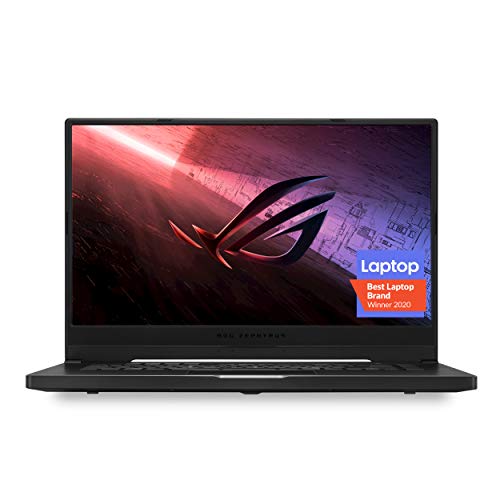
ASUS
- NVIDIA GeForce RTX 2060 6GB GDDR6 with ROG Boost (Base: 982MHz, Boost: 1198MHz, TDP: 80W)
- AMD Ryzen 7 4800HS processor (up to 4.2GHz)
- 15.6” 240Hz 3ms IPS-Type Full HD (1920x1080) PANTONE Validated display
- 16GB 3200MHz DDR4 RAM | 1TB PCIe NVMe M.2 SSD | Backlit Precision Gaming Keyboard | Windows 10 Professional
- 0.8” thin, 4.85 lbs ultraportable form-factor
NVIDIA GeForce RTX 2060 6GB GDDR6 with ROG Boost (Base: 982MHz, Boost: 1198MHz, TDP: 80W) AMD Ryzen 7 4800HS processor (up to 4.2GHz)
View on AmazonBest Laptop for Video Editing
Advantages of Using Laptops For Video Editing
• The power and performance you need for editing videos.
• Ideal for editing videos on the go.
• Compete with professional video editors by using state-of-the-art software
• Light and easy to carry, laptops are perfect traveling companions whether by flight, train or car.
• Great for taking to meetings, showing clients work on the go and more.
• Portable enough to carry around in a backpack.
6. HP Spectre x360 (15-inch) Review

HP
- 【2 in 1 3K+(3072 x 1920) Display】: 16-inch diagonal, 3K+ (3072 x 1920), multitouch-enabled, IPS, edge-to-edge glass, micro-edge. 3072 x 1920 resolution delivers incredible details and lifelike colors. And with touch, you can control your PC right from the screen. Plus keep your eyes comfortable with adaptive color and EyeSafe Certified low blue light panels.
- 【11th Generation Intel Core i7-11390H Processor】: Intel Evo platform powered by 11th Generation Intel Core i7-11390H. Brings the perfect combination of features to make you unstoppable. Get things done fast with high performance, instant responsiveness and best-in-class connectivity.
- 【16GB DDR4-3200 RAM& 512GB PCIe SSD】 16GB DDR4-3200 high-bandwidth RAM to smoothly run multiple applications and browser tabs all at once, 512GB PCIe SSD for ample storage space. Get up to 15x faster performance than a traditional hard drive. Original Seal is opened for upgrade ONLY. We do provide a 1-year standard warranty on upgraded RAM/SSD. Bundled with MOUSE PAD.
- 【Features】1. HP GlamCam: an intelligent 5MP camera that provides lighting correction, auto frame and beauty mode, you can keep your focus on what you’re saying, not what you look like.2. HP Fast Charge: Go from 0 to 50% charge in approximately 45 minutes. 3. Wi-Fi 6E : Enjoy faster speeds, improved performance. 4. It also helps protect your privacy with walk away recognition, attention tracking, shoulder surfing protection, privacy camera shutter, mute mic button and built-in fingerprint reader.
- 2 Thunderbolt 4 with USB4 Type-C 40Gbps signaling rate (USB Power Delivery, DisplayPort 1.4, HP Sleep and Charge); 1 SuperSpeed USB Type-A 10Gbps signaling rate (HP Sleep and Charge); 1 HDMI 2.0b; 1 AC smart pin; 1 headphone/microphone combo
【2 in 1 3K+(3072 x 1920) Display】: 16-inch diagonal, 3K+ (3072 x 1920), multitouch-enabled, IPS, edge-to-edge glass, micro-edge. 3072 x 1920 resolution delivers incredible details and lifelike colors. And with touch, you can control your PC right from the screen. Plus keep your eyes comfortable with adaptive color and EyeSafe Certified low blue light panels. 【11th Generation Intel Core i7-11390H Processor】: Intel Evo platform powered by 11th Generation Intel Core i7-11390H. Brings the perfect combination of features to make you unstoppable. Get things done fast with high performance, instant responsiveness and best-in-class connectivity.
View on AmazonPerformance and Internals
The HP Spectre x360 series has long been a hallmark of versatility and performance in HP’s lineup, and the 15-inch variant takes things a notch higher.
The heart of the machine is powered by up to the latest Intel Core i9 processors and NVIDIA’s GeForce GTX GPUs.
This combination ensures the Spectre x360 is more than adept at handling professional tasks, from intensive photo and video editing to 3D modeling, without any hiccups.
Alongside the powerful CPU and GPU, the machine boasts up to 32GB of DDR4 RAM and super-fast NVMe SSD storage options, ensuring applications launch swiftly and multitasking remains fluid.
The overall performance package aligns with what one would expect from a premium-tier laptop, making it suitable for both professionals and everyday users seeking power.
Display and Convertibility
The display is undeniably one of the standout features of the Spectre x360. With options for OLED 4K panels, the 15-inch display offers vibrant colors, deep blacks, and crisp details.
This is particularly beneficial for content creators, as the screen covers a wide color gamut, ensuring color accuracy for tasks like photo editing or graphic design.
The touchscreen capability further elevates the user experience, responding swiftly to taps and swipes.
True to its name, the x360’s hinge allows the screen to fold back entirely, enabling several modes of use, from the traditional laptop stance to tent mode for presentations, or completely flat as a tablet.
The included HP Tilt Pen is an added advantage for artists and note-takers, offering a seamless and precise inking experience.
Design, Build, and Additional Features
Aesthetically, the HP Spectre x360 is a masterpiece.
The gem-cut design, angular corners, and sleek profile make it stand out in a crowd.
Crafted from a single piece of aluminum, the chassis feels robust and exudes a premium aura.
This build quality extends to the keyboard, which offers a comfortable typing experience with good key travel.
The trackpad is large and responsive, ensuring precise gesture controls.
Port selection on the Spectre x360 is commendable, including Thunderbolt ports for high-speed data transfers and charging.
Perhaps one of the most striking features is the privacy enhancements – a dedicated webcam kill switch and a mic mute button provide an added layer of security and peace of mind for users.
The HP Spectre x360 (15-inch) beautifully marries form with function.
For those in search of a versatile, powerful, and aesthetically pleasing laptop, the Spectre x360 stands tall as a prime contender.
Its premium features, top-notch performance, and unique design elements justify its positioning in the higher tier of the laptop market, making it a worthwhile investment for both professionals and power users.
7. Acer Predator Helios Neo 16 AI
Update: the original Predator Helios 300 has been through several generations since this guide first covered it; the current model in that value-focused tier is the Predator Helios Neo 16 AI.
The Predator Helios Neo 16 AI garners significant attention for the same reason its predecessor did: a compelling balance of power and price, making it a heavyweight in the value bracket.
It's packed with an Intel Core Ultra 9 processor and an NVIDIA GeForce RTX 5070 Ti GPU, a substantial leap over the RTX 2060 that shipped in the original Helios 300, providing plenty of firepower for demanding edits.
The 16-inch 2.5K IPS display running at up to 240Hz is both vibrant and color-accurate, a key factor for those meticulous about visual fidelity in their edits, and the higher refresh rate makes for a smoother workflow when scrubbing high-frame-rate footage.
Long editing sessions require plenty of storage and memory, and here's where the Helios Neo 16 AI shines:
- RAM – up to 32GB DDR5
- Storage – up to 2TB NVMe SSD with an additional slot for easy upgrades
Connectivity includes HDMI 2.1, Thunderbolt/USB-C, and multiple USB-A ports, ensuring seamless data transfer and the ability to connect to multiple external displays.
The build quality is robust, with a metal-reinforced chassis that can take the knocks of travel and the strains of an on-location edit.
Considering the thermal demands of video editing, Acer's updated AeroBlade 3D Fan cooling keeps performance optimal even under heavy loads.
While it may not be the lightest laptop to carry around, the Helios Neo 16 AI's sturdiness and reliability make it a solid candidate for video editors looking for a potent yet relatively budget-friendly option.

Build trust before you talk price
The checklist includes rapport builders and clarifying questions so prospects feel heard — and you leave with what you need to quote accurately.
8. MSI Creator A16 AI+
Update: MSI has retired the Creator 17 nameplate; the current model in MSI's content-creation line is the Creator A16 AI+.
For 4K video editing, the Creator A16 AI+ is a genuine powerhouse designed to cater to the needs of professional video editors.
It carries forward the mini-LED-adjacent OLED display tradition the Creator line built its reputation on, offering exceptional brightness and color accuracy that bring every frame to life.
Its hardware specs are equally compelling. Under its sleek exterior:
- AMD Ryzen AI 9 365 processor
- NVIDIA GeForce RTX 4060/4070 graphics (configuration-dependent)
- Up to 32GB LPDDR5x RAM
This combination gives real-time preview and rendering plenty of headroom, a substantial step up from the 10th Gen Core i7/RTX 2080 SUPER pairing the original Creator 17 shipped with.
It's capable of handling complex layers and effects in programs like Adobe Premiere Pro or DaVinci Resolve without compromise.
Storage starts at 1TB NVMe SSD, with additional M.2 slots available for expansion – a setup well suited to managing large video files with speedy access.
Connectivity is crucial for a seamless editing workflow, and the Creator A16 AI+ packs enough ports for most peripherals:
- USB-C / Thunderbolt
- HDMI
- SD card reader
Each port makes it simple to transfer footage, connect to multiple displays, or hook up external storage without batting an eye.
The well-engineered cooling system ensures the machine stays cool under pressure, so editors can focus on the work rather than worrying about overheating-related throttling.
9. Lenovo ThinkPad P1 (current generation)
Update: Lenovo discontinued the ThinkPad X1 Extreme line after Gen 5 (2022) and folded its role into the ThinkPad P1 workstation series, which continues to receive new generations.
If we're talking about a high-performing laptop that meets the needs of video editing professionals, the ThinkPad P1 has to be part of the conversation.
This machine blends durability, portability, and power, making it well suited to editors who need to work on the go.
Under the hood, the current ThinkPad P1 boasts specs that can handle a heavy workload: recent Intel Core processors paired with NVIDIA RTX-series professional or GeForce graphics, a substantial step up from the 11th Gen Intel/RTX 3080 pairing the old X1 Extreme Gen 4 shipped with.
The 16-inch display offers up to 4K resolution for precise color grading and detailed previews, with Dolby Vision HDR support for a vivid, immersive editing experience.
Storage and memory remain strong points for this line, with configurations offering multiple terabytes of storage and up to 64GB of memory, so running out of space or facing lag during intensive editing sessions isn't a practical concern.
The slim profile and robust build quality are just the cherries on top, giving editors confidence that the device can withstand the rigors of travel or on-site editing.
Connectivity includes Thunderbolt 4, HDMI 2.1, and an SD card reader.
For video editors who prioritize a mix of performance, display quality, and durability in their laptops, the ThinkPad P1 ticks all the right boxes – it's the direct successor to the X1 Extreme's role in Lenovo's lineup, not a discontinued dead end.
10. Gigabyte Aero X16
Update: Gigabyte has moved the Aero line to a 16-inch form factor; the current model is the Aero X16, succeeding the Aero 17 HDR.
For high-resolution video editing projects, the Aero X16 is a strong pick. It stands out with a vivid WQXGA display running up to 165Hz, providing filmmakers with a bright, accurate color gamut essential for editing fine detail into every frame.
Under the hood, it's equipped with an AMD Ryzen AI 9 HX 370 processor and an NVIDIA GeForce RTX 5070 GPU that work in tandem to churn through 4K edits and demanding post-production tasks – a substantial jump over the Core i9/RTX 3080 pairing in the old Aero 17 HDR.
Storage and memory remain strong for a seamless editing experience: configurations offer up to 32GB of DDR5 memory and multiple SSD slots for ample storage.
Connectivity is also a key factor for editors on the move, with the Aero X16 offering a range of ports including USB-C/Thunderbolt, HDMI, and card readers depending on configuration.
The Aero X16 doesn't compromise on build quality either, with an ultra-thin, lightweight chassis (roughly 16.75mm thick) that's simultaneously sturdy and portable – notably slimmer than the older Aero 17 HDR.
As for battery life, expect to plug in for longer, GPU-intensive sessions, but for on-the-go editing, this laptop provides a decent balance between performance and mobility, making it an attractive option for video professionals always in action.
11. ASUS ProArt P16
Update: ASUS has retired the StudioBook naming for its top creator laptops in favor of the ProArt P-series; the current comparable model is the ProArt P16.
The ASUS ProArt P16 is a powerhouse crafted specifically for creatives who demand precision and performance.
With hardware optimized for intensive tasks, it stands out as a robust tool for video editing.
Under the hood, the ProArt P16 packs a significant punch – equipped with an AMD Ryzen AI 9 HX 370 processor and NVIDIA GeForce RTX 5070 graphics, a substantial leap over the Intel Xeon/Quadro RTX 3000 pairing in the old StudioBook Pro 17, tackling even the most demanding editing software with ease.
The display remains a standout: a 16-inch 3K OLED touchscreen running at 120Hz, delivering crisp, accurate visuals with wide color coverage well suited to precise color grading.
- Display – 16-inch 3K OLED touchscreen, 120Hz
- Processor – AMD Ryzen AI 9 HX 370
- Graphics – NVIDIA GeForce RTX 5070
Design-wise, ASUS has struck a balance between form and function.
The sleek, slim profile makes it portable, while the durable construction ensures it can withstand the rigors of travel.
Multiple connectivity options are available, including Thunderbolt, USB-C, HDMI, and an SD card reader, making it effortless to transfer large video files or connect to various peripherals.
Storage space is another area where the ProArt P16 shines, with configurations offering up to multiple terabytes of fast PCIe SSD storage – essential for editing high-resolution footage.
For filmmakers, every second counts when piecing together a narrative or crafting that perfect scene.
The ASUS ProArt P16 isn't just a tool; it's a partner in the creative process, providing the speed, reliability, and precision needed to bring your visions to life.
12. HP ZBook Fury G11 (16-inch)
Update: HP has moved the ZBook Fury through several generations since the G7; the current model is the ZBook Fury G11.
When it comes to a workstation that balances performance with mobility, the HP ZBook Fury G11 stands out in the market.
This powerhouse is designed to handle the most intensive video editing tasks without breaking a sweat.
Packed with high-end components, the ZBook Fury remains a top choice for professionals who require unwavering reliability and speed.
This generation comes with recent Intel Core i9 processors and NVIDIA RTX Ada-series professional graphics, a meaningful step up from the 10th Gen Intel/Quadro pairing on the old G7, providing the muscle for editing 4K video, applying complex effects, and rendering projects swiftly.
One of the laptop's most impressive features remains its DreamColor display, covering a billion colors – ensuring what you see is what your audience gets.
Key aspects of this video editing workhorse:
- Processor options include recent-generation Intel Core i9
- Graphics choices include the NVIDIA RTX Ada-series professional lineup
- RAM configurable up to a substantial capacity for demanding, multi-app workflows
The laptop is also built to prioritize user-friendly interfaces and connectivity, with an abundance of ports so editors aren't left searching for dongles.
Storage remains a strength, with dual Thunderbolt ports and options for RAID-configured SSDs, so footage and projects can be stored and accessed with incredible speed whether editing on set or in the studio.
HP has continued designing the ZBook Fury line with the creative professional in mind, and the current G11 generation keeps that mission intact with meaningfully updated internals.
13. MSI Prestige 16 AI Evo
Update: MSI has moved its Prestige line onto newer 16-inch models with current-generation processors; the Prestige 15 with 10th Gen Intel silicon is no longer sold new.
Designed with the creative professional in mind, the Prestige 16 AI Evo stands out as a pivotal tool for video editors.
This laptop offers a compelling combination of portability and performance that can cater to the needs of filmmakers on the go.
Equipped with recent Intel Core Ultra processors – a significant leap over the 10th Gen Core i7 in the old Prestige 15 – it doesn't skimp on power.
Graphic-intensive tasks are handled seamlessly thanks to integrated Intel graphics or an available discrete GPU depending on configuration, a boon for rendering and live editing.
The WQXGA display brings an immersive viewing experience, making it easier to spot subtle details in edits, and color accuracy remains a strength, with coverage close to 100% of the sRGB gamut.
One of the key strengths of this laptop is its battery life, essential for on-site editing without the constant need for a power source, and the lightweight design ensures it can be carried around without significant burden.
Storage solutions remain versatile, with fast NVMe SSD technology and configuration options for expanded storage without sacrificing speed.
These features together make the Prestige 16 AI Evo a strong contender for video editors who value efficiency, color fidelity, and the flexibility to work from various locations without performance constraints.
14. Apple MacBook Pro (14-inch, M5)
For editors who want Apple's ecosystem in a smaller, more portable chassis, the 14-inch MacBook Pro rounds out this guide.
Apple discontinued the 13-inch MacBook Pro entirely back in 2023, retiring both the Touch Bar and the smaller chassis in favor of a single, more capable 14-inch model – so the 13-inch M1 configuration is no longer something to shop for new.
Among the creative community, the MacBook Pro has always been a staple, and for good reason.
The current base 14-inch model runs on Apple's M5 chip, which redefines what we expect from laptop performance even further than the original M1 did.
It ensures that video editing tasks, especially those handled in Final Cut Pro or Premiere Pro, are executed with a level of smoothness that rivals desktop setups.
What stands out with this model are several key features that cater specifically to filmmaking professionals:
- Impressive battery life that outlasts many competitors, allowing for extended editing sessions without the need for a power source.
- A Liquid Retina XDR display offering true-to-life colors and HDR support, which is essential when precision in color grading is paramount – a genuine upgrade over the standard Retina panel on the old 13-inch model.
- Fast integrated storage solutions ensuring quick access to footage and seamless playback.
In terms of connectivity, the 14-inch MacBook Pro improves on the old 13-inch model with Thunderbolt 5 ports and the return of full-size HDMI and an SD card slot, both of which the discontinued 13-inch model lacked.
Its compact size doesn't compromise on screen real estate, making it an excellent option for editors on the move.
The macOS ecosystem lends itself effortlessly to video editing workflows, and with the robustness of the hardware and the optimized performance of software, the current MacBook Pro is a powerhouse that continues to push the boundaries of portable video editing.
Compatibility with a wide range of professional software ensures that editors have the tools they need at their fingertips, and the MacBook Pro's ability to handle complex timelines and high-resolution video files makes it a dependable choice for demanding editing projects.
It bridges the gap between portability and power, standing as a true workhorse in the world of film production.
A Final Word On the Best Laptop For Video Editing
If you are a newbie to video editing, the choices available for purchase can be confusing for sure. One thing to remember is that there will never be one single best laptop for video editing that perfectly fits the needs of every editor.
Editing video is supplied intensive and laptops have finally stepped up to the plate by becoming strong and supple enough to stand up to the task.
Sure, they are way pricier than your basic laptop, but when you want the best laptop for editing video, any of the above will do a commendable job for you.
The most important reason for using a laptop for video editing has always been that you can easily edit on the go.
Whether you’re at client’s workplace, on a flight or working out of a hotel – with a lightweight laptop you go edit on the move.
Sure, you’ll want a bigger, more robust machine like the 27inch iMac at home for video editing. But if you’re after something that’s great for on-the-go editing, then the laptops listed here are great.
Huge CPUs are no longer the be all and end all for video editors. What should you be looking for to find the best laptop for video editing? A vital portion of the comparison will be the display, RAM, processor, and storage. However, the most critical part of shopping for a video editing laptop is that it is specialized enough to fit the needs specific to your working conditions.
Other considerations in a final decision which video editing laptop you choose:
- the requirements of your clients or co-workers,
- the amount of workflow you have, and of course,
- your budget.
All of these are important factors in the final decision. There is no one single best laptop for editing video, but I hope this guide has given your more confidence in choosing the one that is right for you.
If you need other gear recommendations, then we have an article on beginner’s video production equipment here, as well as a listing of beginner, advanced and other gear lists right here.
Did I miss one? Which laptop do you use to edit video? Let us know in the comments below.
We have Gear Buyer’s Guides on every type of Filmmaking Equipment!
Find the perfect gear for your next production.

10 Best Video Editing Tools for Beginners in 2026

Invideo Editor vs Veed: Which One in 2026?

How to Delete a Sentence From a Video by Editing the Transcript

10 Best Higgsfield Alternatives for AI Filmmaking in 2026

Best AI Tools for Making Microdramas in 2026

Best AI Tools for Storyboarding Before a Shoot

Invideo vs. Higgsfield: Which AI Filmmaking Platform Actually Delivers in 2026

AI Filmmaking in 2026: From Idea to Final Cut in One Connected Workflow
Best Video Editing Software for Freelance Videographers


New comments are not currently accepted.
22 comments