
On this pageTap to expand
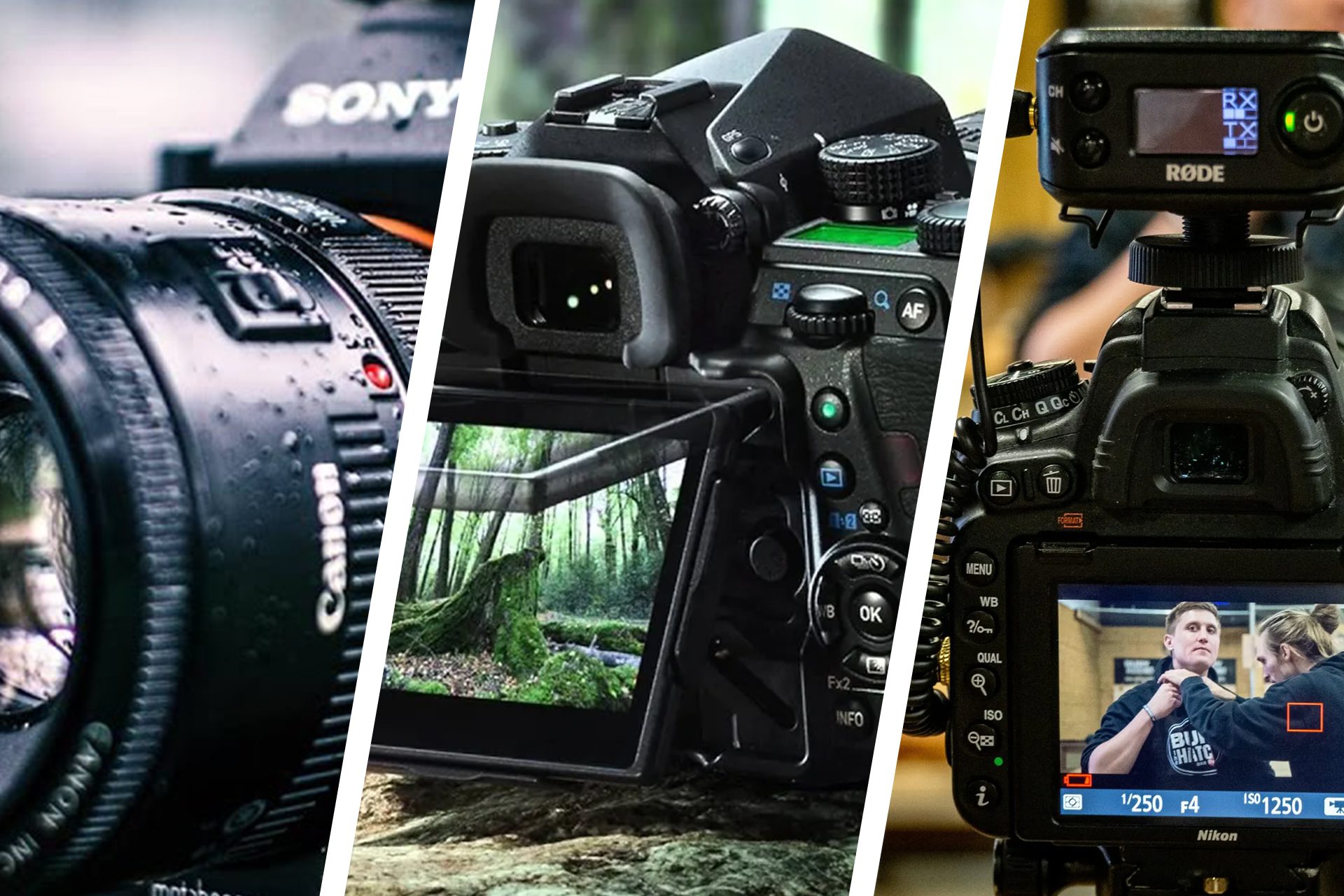
Often when filmmakers want to make the transition from novice to professional they upgrade their compact or home video camera to a DSLR. But what is the best DSLR for filmmaking right now?
That is because they are the apex of digital camera tech on the market.
Not only do DSLRs offer great image quality and speed, but their designs are also intuitive and are a nice transition from simple cameras to more customizable and sophisticated devices.
That’s great right? If I want to be serious about filmmaking I’ll need a DSLR. So, what’s the problem? Well, while high image quality is retained across the board on all DSLRs, each camera is built for a specific purpose.
Due to this, many photographers find themselves lost when looking up DSLRs for purchase.
That’s why today we’ve compiled a guide for anyone interested in buying a DSLR for filmmaking. We will cover what you need to consider before buying.
We will also list a number of our favorite recommendations. Regardless of your needs or budget, you’ll find a DSLR here that’ll do the job.

Want a calendar that actually feels booked?
The same guide thousands of video owners use to turn sporadic inquiries into a healthier mix of repeat work and referrals — practical, no fluff.
The Best DSLR for Filmmaking
Let's take a deep dive into what we consider the current best DSLRs for filmmaking.
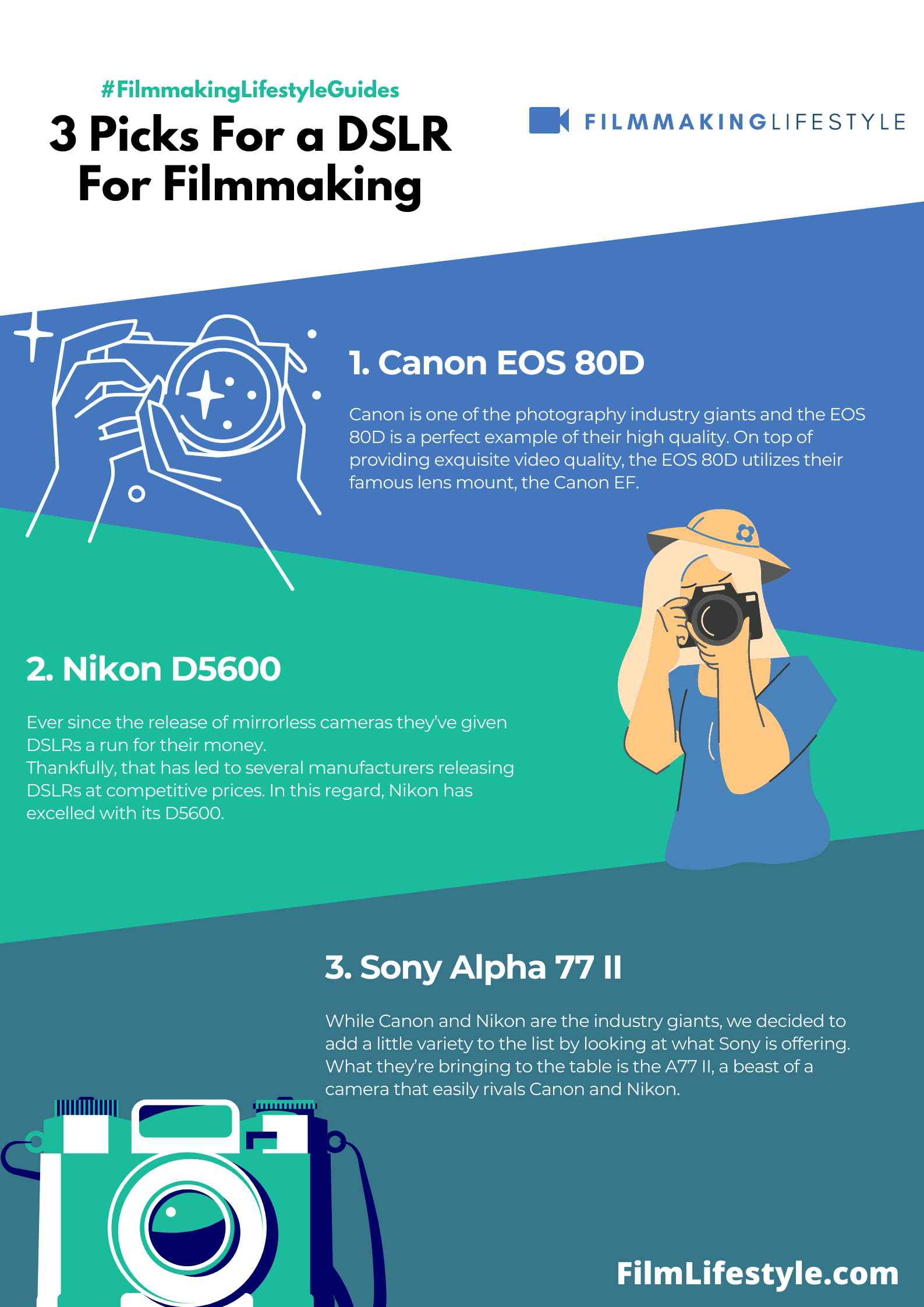
1. Canon EOS 80D
Canon is one of the photography industry giants and the EOS 80D is a perfect example of their high quality. On top of providing exquisite video quality, the EOS 80D utilizes their famous lens mount, the Canon EF.
Therefore, you’ll have no problem finding a lens for this camera. There are hundreds of options available to you.
In terms of pricing, the EOS 80D is a steal. Instead of building a camera with a full-frame sensor, Canon opted to relegate that duty to the lens.
Therefore, they could price their camera at a reasonable price that won’t burn a hole in your pocket.
One of the key features of the EOS 80D is the new trick auto-focus. According to Canon, you’ll be able to select a subject on the LCD screen and the camera will automatically track it and keep it in focus.
In addition to this, the image stabilization will help a lot with handheld work in smoothening the footage.
The battery life of the EOS 80D is impressively long. Other features include your SD card slot and built-in Wi-Fi which will be handy when it comes to file transfers to other devices.
Overall, the Canon EOS 80D is an impressive camera with a plethora of features that come at a friendly price tag. This is perhaps our number 1 recommendation for anyone looking into getting their first DSLR.
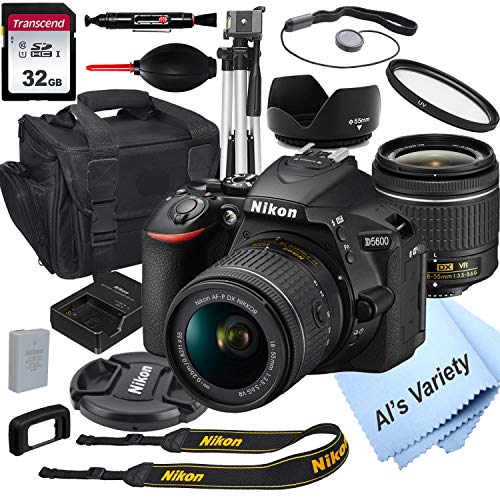
2. Nikon D5600
Ever since the release of mirrorless cameras they’ve given DSLRs a run for their money.
Thankfully, that has led to several manufacturers releasing DSLRs at competitive prices. In this regard, Nikon has excelled with its D5600.
Ever since its release, the D5600 has been an in-demand powerhouse and a valid choice for those wanting to shoot digital at a reasonable price.
Nikon’s D5600 is equipped with a 24.2-megapixel CMOS sensor and the company’s own EXPEED 4 image processor.
Nikon is probably also offering the benchmark of full HD video recording. The D5600 can shoot 1080p video at 60fps. Mighty impressive, in our opinion.
While you won’t get 4k, what you’ll have instead is videos that are small in size, upload quickly, and have top-notch quality.
The D5600 comes at a decent price tag that won’t burn a hole in your wallet. Since you’ll only get the camera and nothing else, we advise you to check out the many lens kits available. You can buy a beginner's lens kit for a little more money.
If you’re not impressed by the lens variety offered, the D5600 is a versatile camera, so you can choose from many lenses online until you build your personal collection.
Filmmaking is not an easy job. It takes a lot of time, effort, and dedication to get the best shot for your film.
If you're starting out in filmmaking, it's important that you know what type of camera will work best with your budget and needs.
DSLR cameras are perfect for those who want to take their filmmaking skills up a notch without breaking the bank.
Not only do they provide cinematic quality footage, but they also come with a variety of lenses that can capture various angles and perspectives.
3. Sony Alpha 77 II
While Canon and Nikon are the industry giants, we decided to add a little variety to the list by looking at what Sony is offering. What they’re bringing to the table is the A77 II, a beast of a camera that easily rivals Canon and Nikon.
Sony has chosen to equip the A77 II with a 24.3 megapixels APS-C Exmor CMOS sensor. Also, they are offering both full-HD 1080p and 4K video shooting.
What this means is that you’re getting top-notch image and video quality, especially for those of you disappointed in the absence of 4K in the last offering.
Sony is not settling for just giving you great video quality, they also added a plethora of interesting features. For one, there’s something called 4D FOCUS.
It’s a new tech developed by Sony to reduce disruptions when using autofocus. Furthermore, the A77 II has Wi-FI built-in for a more streamlined sharing experience.
If you have no interest in owning a recognizable brand of cameras and you’re more interested in owning a DSLR that can take stunningly beautiful videos, the A77 II is the camera for you.

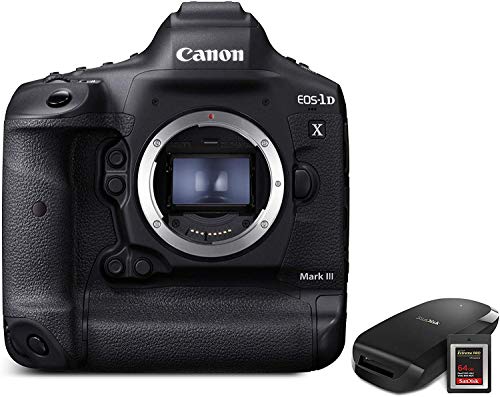
4. Canon EOS-1D X Mark III
Back to Canon and this time we have a high-end camera for those really looking for top-notch performances out of their device. With the EOS-1D X Mark III Canon is targeting hardcore videographers with its state-of-the-art DSLR. So what is Canon offering?
For one, you can choose from a sea of lenses due to Canon’s widespread support. The EOS-1D X Mark III can shoot video in 4K. Moreover, it has the ability to record MP4 videos at the same time on a second memory card.
In terms of image stabilization, the Mark III utilizes Movie Digital IS. This means the image is stabilized from 5-axis instead of the usual 4. This in turn leads to some of the best stabilization on the market today.
All in all, this is a top choice for hardcore videographers seeking the best DSLRs on the market regardless of price. As a final tip, we recommend you use a tripod for this beefy monster of a camera.
Canon
- High Image Quality with New 20. 1 Megapixel Full-frame CMOS Sensor Combined with Newly Designed low Pass Filter.
- New DIGIC X Image Processor with an ISO range of 100-102400; Expandable to 50-819200 .
- New 191-point AF System Capable of Tracking the Subjects Head and Face using Deep Learning Technology.
- Dual Pixel CMOS AF for Fast and Accurate Auto Focus using up to 3869 Manual AF Positions and up to 525 Automatic Positions.
- Use the EOS Utility Webcam Beta Software (Mac and Windows) to turn your Canon camera into a high-quality webcam, or do the same using a clean HDMI output.
- Video Capture Resolution: 4K Uhd 2160P
High Image Quality with New 20. 1 Megapixel Full-frame CMOS Sensor Combined with Newly Designed low Pass Filter. New DIGIC X Image Processor with an ISO range of 100-102400; Expandable to 50-819200 .
View on Amazon• DSLR cameras are much cheaper than professional level ones.
• DSLRs are better for filming purposes because of their low angle feature.
• The image quality on a DSLR is the same or close to what you would see in movies.
• It is easier and more comfortable to film with a DSLR camera.
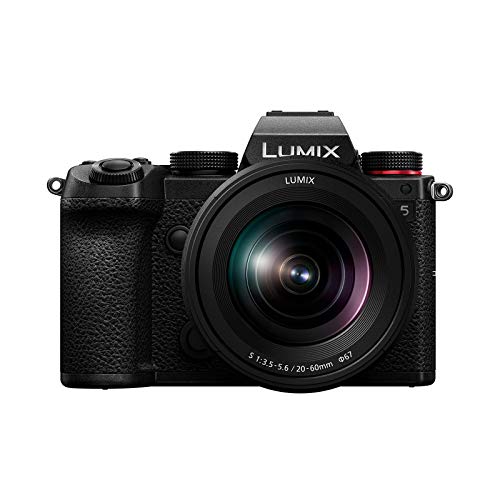
5. Panasonic Lumix S5
For our last offering, we’ll look at another brand that’s neither Canon nor Nikon (try saying that five times). The Panasonic Lumix S5 is a crafty little camera that offers a lot for a decent asking price. It’s the perfect camera if you check your expectations at the door.
And keen observers will say that this isn't strictly a DSLR camera, and they'd be riht. But we felt an overwhelming need to include this mighty mirrorless camera at the end of this list anyway. Because, perhaps you want to go mirrorless, after all.
The Lumix comes with a 24.3MP full-frame CMOS sensor and has the ability to shoot 4K video at 60 frames.
This makes the S5 a top choice for videographers out there. Panasonic has packed more under the hood to convince you that the S5 is a serious contender for the best budget-friendly pro filmmaking camera.
The S5 comes with dual card slots which ensures that you never run out of space when recording storage demanding 4K. If you’re into shooting in the wilderness or in harsh weather conditions, you’re in luck.
The S5 is a sturdy camera thanks to its weather-sealed build. Moreover, it’s also surprisingly light which makes it easily portable.
Overall, this one comes highly recommended if you’re in need of a high-quality, budget-friendly DSLR that can withstand harsh weather.
The only downside is you don’t get as many lens options as a Canon or Nikon. However, for the asking price, it is more than worth it.
Panasonic
- A LIGHTWEIGHT, POWERFUL HYBRID CAMERA FOR VIBRANT STILL PHOTOGRAPHY AND CINEMATIC VIDEO: Realize your creative vision with extraordinary 4K 60p, 10-bit video, FHD 180fps Slow Motion option as well as 4:3 Anamorphic support.
- DETAILED PHOTO AND VIDEO THAT WILL DELIGHT ENTHUSIASTS AND EXPERTS ALIKE: Capture content in impressive high quality with 96MP High Resolution mode, Dual Native ISO to minimize noise in high sensitivity and V-Log/V-Gamut with 14-plus stop dynamic range.
- IMPROVED, HIGH-PRECISION AUTOFOCUS AND POWERFUL IMAGE STABILIZATION: Improved autofocus includes detection of the head as well as eyes, face and body, to capture subjects with ease and precision. 5-axis Dual I.S. 2 enables 6.5-stop slower shutter speed.
- EXPANDED FEATURES OFFER NEW LEVELS OF CREATIVITY: Use Live View Composite mode to instantly create a stunning image out of several live shots to capture fireworks or a starry sky
A LIGHTWEIGHT, POWERFUL HYBRID CAMERA FOR VIBRANT STILL PHOTOGRAPHY AND CINEMATIC VIDEO: Realize your creative vision with extraordinary 4K 60p, 10-bit video, FHD 180fps Slow Motion option as well as 4:3 Anamorphic support. DETAILED PHOTO AND VIDEO THAT WILL DELIGHT ENTHUSIASTS AND EXPERTS ALIKE: Capture content in impressive high quality with 96MP High Resolution mode, Dual Native ISO to minimize noise in high sensitivity and V-Log/V-Gamut with 14-plus stop dynamic range.
View on Amazon6. Nikon D850
The Nikon D850 is an exceptional DSLR for filmmaking, offering high-resolution 4K video recording and outstanding image quality.
Its full-frame sensor is renowned for its wide dynamic range and excellent low-light performance, essential for cinematic shooting.
The D850’s time-lapse and slow-motion video capabilities provide additional creative options.
Its rugged build and weather-sealing make it a reliable tool for outdoor and on-location shoots.
The Nikon D850 is favored by filmmakers who require a versatile camera that excels in both stills and video.

Build trust before you talk price
The checklist includes rapport builders and clarifying questions so prospects feel heard — and you leave with what you need to quote accurately.
7. Sony Alpha a7S III
The Sony Alpha a7S III is a powerhouse in the realm of DSLR filmmaking.
Designed specifically with video in mind, it features a full-frame sensor optimized for high sensitivity and minimal noise, perfect for low-light environments.
The camera supports 4K recording at high frame rates, offering exceptional detail and smooth motion.
The a7S III’s advanced autofocus system, including real-time eye tracking, is a game-changer for maintaining focus in dynamic scenes.
Its in-body stabilization and articulated touchscreen enhance its usability for handheld shooting and vlogging.
The Sony a7S III is a top choice for filmmakers seeking a high-end camera that delivers professional-grade video quality.
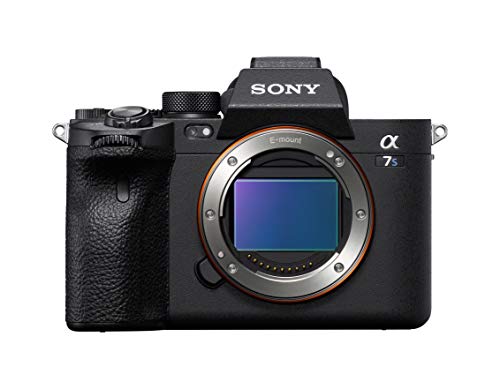
Sony
- 12.1MP1 Exmor R sensor, optimized for 4K, sensitivity and speed.Bluetooth : version 5.0
- New BIONZ XR processing engine delivers 8x more processing power2
- Low noise images with ISO up to 409,6003 and 15 plus stop dynamic range4
- Up to 4K 120p5 10-bit 4:2:2 and full pixel readout in all rec. modes
- Up to 4K 120p5 in XAVC S (AVC), XAVC HS (HEVC) and XAVC S-I (All-I)
- Video capture resolution: 4K UHD 2160p. Operating Temperature- 32 - 104 degrees F / 0 - 40 degrees C
12.1MP1 Exmor R sensor, optimized for 4K, sensitivity and speed.Bluetooth : version 5.0 New BIONZ XR processing engine delivers 8x more processing power2
View on Amazon8. Canon EOS 5D Mark IV
The Canon EOS 5D Mark IV continues to be a favorite among filmmakers for its reliability and robust feature set.
It offers 4K video recording and a full-frame sensor that produces beautiful, cinematic footage.
The 5D Mark IV is known for its color accuracy and skin tones, making it particularly suitable for narrative and documentary work.
Its Dual Pixel CMOS AF provides smooth and accurate focusing for video.
The camera’s versatility, coupled with its sturdy build, makes it a go-to choice for filmmakers who need a dependable camera for a variety of shooting conditions.
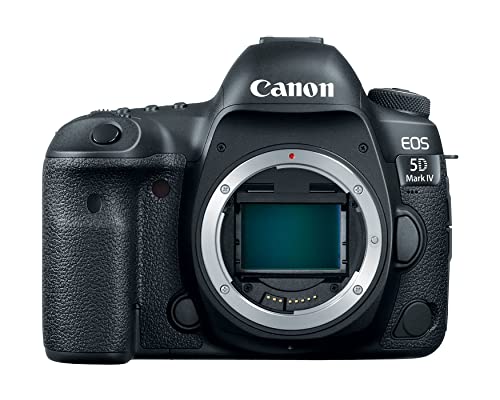
Canon
- High Image Quality: EOS 5D Mark IV digital 4K camera features a 30.4 megapixel full-frame CMOS sensor for versatile shooting in nearly any light; delivers exceptional results with efficiency and ease
- Powerful Image Processor: High-performance DIGIC 6+ Image Processor allows for improved speed with up to up to 7.0 fps continuous shooting speed; 4K digital camera with ISO range 100-32000, expandable up to 50-102400
- High-Speed Shooting: Capture 4K Motion JPEG video at 30 or 24 frames per second; multiple video options include Full HD up to 60 fps, and HD up to 120 fps — an ideal 4K camera for video recording
- Advanced Autofocus: This digital video camera features superb Dual Pixel CMOS AF for responsive and smooth AF during video or live view shooting; LCD monitor has a full touchscreen interface, including selection of AF area
- Built-in Wi-Fi Capability: Enable wireless functions, such as file viewing and transfer, by connecting to Wi-Fi quickly and seamlessly, and exchange data with other Wi-Fi compatible Canon cameras. Using the Canon Camera Connect app, you can also transfer files to your mobile device to browse and share on social media.
High Image Quality: EOS 5D Mark IV digital 4K camera features a 30.4 megapixel full-frame CMOS sensor for versatile shooting in nearly any light; delivers exceptional results with efficiency and ease Powerful Image Processor: High-performance DIGIC 6+ Image Processor allows for improved speed with up to up to 7.0 fps continuous shooting speed; 4K digital camera with ISO range 100-32000, expandable up to 50-102400
View on Amazon9. Pentax K-1 Mark II
The Pentax K-1 Mark II is an underrated gem in the DSLR filmmaking world. It features a 36.4 MP full-frame sensor, offering high-resolution video recording with exceptional detail.
The K-1 Mark II’s in-body image stabilization is highly effective, providing steady footage in handheld scenarios.
Its weather-sealed body is built to endure challenging environments, making it suitable for adventure and outdoor filmmaking.
The unique Pixel Shift Resolution mode offers enhanced detail and color accuracy, beneficial for post-production processes.
The Pentax K-1 Mark II is a solid choice for filmmakers who value image quality and durability.
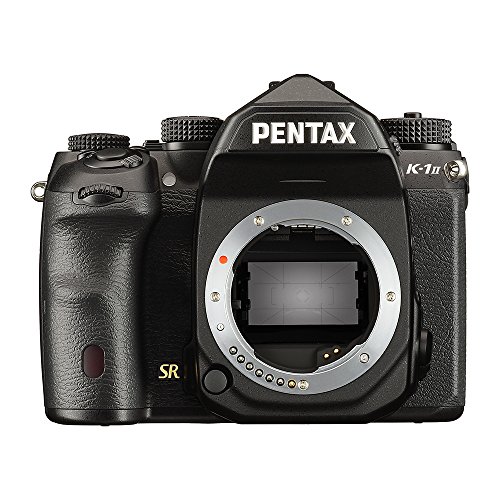
Pentax
- 36 MP AA filter less shake reduction sensor with APS C crop mode for compatibility with Pentax k mount lenses
- Hand Held Pixel Shift Resolution that allows 4 images to be complied into an superior image with increased color rendition and sharpness
- Engine Accelerometer for reduced image noise, faster focusing and increased image sharpness
- Magnesium Alloy, Weather Resistant body for every demanding situation
- Astro tracer extended exposure mode with reduced star trails
36 MP AA filter less shake reduction sensor with APS C crop mode for compatibility with Pentax k mount lenses Hand Held Pixel Shift Resolution that allows 4 images to be complied into an superior image with increased color rendition and sharpness
View on AmazonWhat to Consider Before Buying
There are a few things any self-respecting DSLR owner needs to consider before purchasing a camera. The following on what we consider to be the key aspects to look out for when buying a DSLR camera for filmmaking.
Lenses
One of the main points of making the transition to DSLRs is the ability to use and change lenses. If you know anything about cinematography, you’ll know that the choice of lens heavily affects how your film looks like.
With that in mind, you’ll need to make sure that whatever camera you’re buying has wide first and third-party lens support. Usually, the big manufacturers like Nikon and Canon will have the most support.
Accessory Support
This goes hand in hand with lens support. You’ll want a camera that has wide accessory support. Why get a camera that’s only compatible with a handful of third-party accessory manufacturers.
This goes double if you already have accessories. It would be wise to read which camera supports those accessories.
At a minimum, make sure your camera supports external flash add-ons and battery grips. The latter offers a firmer and comfier grip on the camera in addition to longer battery life and more versatility when it comes to camera controls.
Sensor Size
For this one, you’ll have to distinguish between two types of sensors: full-frame and cropped. With a full-frame sensor, you’ll get better image quality the sensor’s size is big (physically speaking) and can fit in more information.
On the other hand, cropped sensors have a decreased image quality simply because the physical space of the sensor is smaller.
The trade-off happens here in terms of budget. Full-frame sensor cameras will always cost more. So the question here is if they’re within your budget or not.
Image Stabilization
This is a useful feature that most digital cameras have built-in nowadays. Image stabilization reduces shakiness and frantic camera jitter by using algorithms that calculate which axis is being uneven and returns it to a stable state.
While you can get a gimbal to further help stabilize the image during handheld photography, we say there’s no trade-off, always go for a camera that incorporates digital image stabilization.
Best DSLR for Filmmaking – Conclusion
So that’s all for our comprehensive guide on the best DSLR cameras for your filmmaking needs.
Remember, the best camera is the camera that suits your needs and budget. As long as you get enough lens and accessory options, image stabilization, and match the sensor size to your budget, you will have no problem finding the camera for you.
Or maybe you want to go for a mirrorless camera.
Whatever camera you choose, we only have two words for you: good luck! We hope you've found this guide to the best DSLR for filmmaking super helpful. Did we miss out your favorite DSLR camera? Let us know in the comments below.
We have Gear Buyer's Guides on every type of Filmmaking Equipment!
From entry-level to cinema-grade — we cover all the gear you need.

10 Best Video Editing Tools for Beginners in 2026

Invideo Editor vs Veed: Which One in 2026?

How to Delete a Sentence From a Video by Editing the Transcript

10 Best Higgsfield Alternatives for AI Filmmaking in 2026

Best AI Tools for Making Microdramas in 2026

Best AI Tools for Storyboarding Before a Shoot

Invideo vs. Higgsfield: Which AI Filmmaking Platform Actually Delivers in 2026

AI Filmmaking in 2026: From Idea to Final Cut in One Connected Workflow
Best Video Editing Software for Freelance Videographers

New comments are not currently accepted.
2 comments