
On this pageTap to expand
There are many types of cameras out there, but knowing what’s the best professional camera is key for those who want to take their photography to the next level.
And everyone’s best possible camera is different depending on their specific circumstances and use case.
Of course, professional photographers and videographers need more than just an expensive camera in order to have success in their profession, they also need:
- quality training,
- skills,
- artistic vision, and
- technical knowledge about the industry such as copyright laws or editing software.
With these factors considered, a good quality DSLR or mirrorless camera is recommended because of its versatility in creativity.
There are also many other factors including budget and skill level. This article will give some tips on how to figure this all out.
Best Professional Camera – Our List
Without further ado, let’s jump right in!
Compare before you scroll
| # | Product |
|---|---|
| 1 | Canon EOS R5 Mark II |
| 2 | Canon EOS R1 |
| 3 | Canon EOS 5D Mark IV (discontinued) |
| 4 | Canon EOS R6 Mark III |
| 5 | Nikon Z9 |
| 6 | Nikon Z8 |
| 7 | Nikon Z7 II (superseded by Z8) |
| 8 | Sony A1 II |
| 9 | Sony A9 III |
| 10 | Sony A7R V |
| 11 | Fujifilm X-T5 |
| 12 | Fujifilm GFX100S II |
| 13 | Panasonic Lumix S1R II |
| 14 | Panasonic Lumix GH7 |
| 15 | OM System OM-1 Mark II |
| 16 | Olympus OM-D E-M1X (discontinued) |
1. Canon EOS R5 Mark II
Update: the original Canon EOS R5 has been succeeded by the EOS R5 Mark II, Canon's current full-frame mirrorless flagship for hybrid photo/video work.
The Canon EOS R5 Mark II is a full-frame mirrorless camera (not a DSLR -- Canon's RF-mount system, like the rest of the industry, has moved to mirrorless) that comes with a significantly improved autofocus system, a refined ergonomic body, and more.
It has a new 45-megapixel back-illuminated, stacked sensor paired with Canon's current DIGIC Accelerator processing, enabling a 30fps electronic shutter and genuinely fast readout speeds. The camera uses Canon's RF lens mount, with EF lenses supported via an adapter.
Some of this camera's top features are:
- Up to 8K RAW internal video recording, with oversampled 4K up to 60fps
- Advanced wireless connectivity
- An improved, brighter EVF
What makes this camera different from others? Its stacked sensor design gives it dramatically faster readout than the original R5, virtually eliminating rolling-shutter distortion for both stills and video -- a meaningful step up rather than an incremental refresh.
2. Canon EOS R1
Update: Canon retired the DSLR-based 1D X line; the EOS R1, launched in 2024, is the direct mirrorless successor and Canon's current flagship for sports and photojournalism.
The Canon EOS R1 is an advanced mirrorless camera from Canon, and it's a powerhouse.
The R1 has a 24.2-megapixel stacked sensor built for speed over resolution, an ISO range up to 102400 (expandable further), and continuous shooting up to 40fps electronically, with pre-capture buffering that grabs frames from before the shutter is fully pressed.
The Canon EOS R1 also comes with built-in Wi-Fi and an eye-control autofocus system that lets the camera track where the photographer is looking through the viewfinder -- a genuinely new capability, not something the 1D X Mark III offered.
Canon is known for their workhorse cameras in the industry, which has been used by professionals such as photographers, videographers, cinematographers, and many more for years, and the R1 continues that tradition in the mirrorless era.
The Canon EOS R1 is one of the best professional cameras of its class in the world, with class-leading autofocus and shooting speed for fast-moving sports and news work.
The Canon EOS R1 also records 6K video internally. It's a very powerful camera that will allow you to do some of your best work.
3. Canon EOS 5D Mark IV (discontinued)
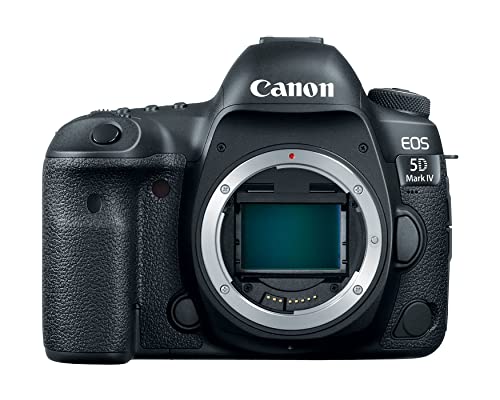
Update: Canon has discontinued the EOS 5D Mark IV in Japan and most global markets as it nears its 10th anniversary, though Canon USA has continued selling remaining stock in the US, Canada, and Latin America. Treat this as a closeout/secondhand pick rather than an ongoing product line -- for a currently-sold full-frame body in this tier, the Canon EOS R6 Mark III (covered below) is the direct modern equivalent.
The Canon EOS 5D Mark IV offered a 30.4 MP sensor, a 61-point autofocus system, and Dual Pixel CMOS AF for fast focusing in Live View mode as well as during video shooting -- features that made it one of the most popular DSLRs of its era.
The EOS 5D Mark IV represented a blend of tradition and modernity with advanced technologies including a 29-point cross-type AF system, a 63-zone dual-layer metering system, and built-in Wi-Fi and NFC connectivity.
With an ISO range up to 102400 (expandable to 204800 in H mode), the CMOS sensor delivers high-resolution images with excellent color reproduction and low noise, and dual card slots (CF and SD) provide reliable, redundant storage for stills.
Canon
- High Image Quality: EOS 5D Mark IV digital 4K camera features a 30.4 megapixel full-frame CMOS sensor for versatile shooting in nearly any light; delivers exceptional results with efficiency and ease
- Powerful Image Processor: High-performance DIGIC 6+ Image Processor allows for improved speed with up to up to 7.0 fps continuous shooting speed; 4K digital camera with ISO range 100-32000, expandable up to 50-102400
- High-Speed Shooting: Capture 4K Motion JPEG video at 30 or 24 frames per second; multiple video options include Full HD up to 60 fps, and HD up to 120 fps — an ideal 4K camera for video recording
- Advanced Autofocus: This digital video camera features superb Dual Pixel CMOS AF for responsive and smooth AF during video or live view shooting; LCD monitor has a full touchscreen interface, including selection of AF area
- Built-in Wi-Fi Capability: Enable wireless functions, such as file viewing and transfer, by connecting to Wi-Fi quickly and seamlessly, and exchange data with other Wi-Fi compatible Canon cameras. Using the Canon Camera Connect app, you can also transfer files to your mobile device to browse and share on social media.
High Image Quality: EOS 5D Mark IV digital 4K camera features a 30.4 megapixel full-frame CMOS sensor for versatile shooting in nearly any light; delivers exceptional results with efficiency and ease Powerful Image Processor: High-performance DIGIC 6+ Image Processor allows for improved speed with up to up to 7.0 fps continuous shooting speed; 4K digital camera with ISO range 100-32000, expandable up to 50-102400
View on AmazonBest Professional Camera
What Are Professional Cameras?
The first thing to know about professional cameras is that they are more and not less expensive than consumer models.
You can find a good DSLR for under $1,000 but in general, the difference between an entry-level camera and a pro model will be at least double.
A big factor influencing price is the choice of the lens: most prosumer or amateur lenses have a fixed focal length whereas pro lenses offer you lots of focal length options as well as more professional level lenses.
4. Canon EOS R6 Mark III
Update: Canon has moved the R6 line through two further generations since the original; the current model is the EOS R6 Mark III.
The Canon EOS R6 Mark III is an innovative camera that has a lot of features that make it a really great option for photographers. One major feature is the fully articulating touchscreen LCD, which makes it easier to shoot and edit photos on the go.

Stay creative while the business side keeps up
You didn’t start a company to live in spreadsheets. This guide keeps client growth practical so you can protect time on set and in the edit.
This camera also has many features for advanced photography, including focus peaking, HDR shooting, and more.
It was designed with the photographer in mind and features a full-frame sensor with Canon's latest Dual Pixel CMOS AF II system, high-frame-rate 4K video recording, and full compatibility with Canon's RF lens lineup (with EF lenses supported via adapter), which makes it perfect for both professionals and enthusiasts alike.
It's no secret that photography has become a hobby for many people and professionals alike.
It's also not surprising to hear that Canon is one of the most popular brands in the world for cameras and lenses, and they continue to deliver with this high-end camera.
5. Nikon Z9
Update: Nikon discontinued the D6 -- and, with it, the D-series DSLR flagship line entirely -- in 2025. The Nikon Z9 is now Nikon's mirrorless flagship and has been since 2021, with no DSLR successor planned.
The Nikon Z9 is a professional mirrorless camera with an integrated vertical grip built directly into the body, along with a fully articulating touchscreen LCD monitor for viewing photos in the field.
The Z9 shoots up to 20 frames per second in RAW with its electronic shutter (with no mechanical shutter at all -- a first for a Nikon flagship), and its stacked sensor design effectively eliminates rolling shutter distortion.
The Z9 is a very high-end camera that packs powerful features that will make your photography look like you really know what you're doing.
It comes with Nikon's most advanced autofocus system, using 3D subject tracking and AI-based subject detection to lock onto and follow subjects quickly.
The Nikon Z9 is a professional mirrorless camera that features an FX-format, full-frame stacked sensor delivering both high resolution and high speed.
It also shoots internal 8K RAW video, something no Nikon DSLR was ever capable of.
The Nikon Z9 is one of the most powerful cameras Nikon has ever released. It's an extremely high-end model with a price tag to match, but it will be worth every penny for those who want to shoot in low light or take up photography or videography as a serious profession.
6. Nikon Z8
Update: Nikon has discontinued the D850 DSLR; the Z8 is its widely-recognized mirrorless successor, essentially packing the Z9's flagship sensor and processing into a smaller, D850-sized body.
The Nikon Z8 features a 45.7MP stacked sensor, 8K video recording, and the same advanced autofocus system as the flagship Z9.
The Z8 is the perfect blend of compact ergonomic design and performance-driven technology that will make your photography experience even more enjoyable than before.
It produces high-quality still images as well as 8K video with no crop, and unlike the D850, doesn't require additional accessories to unlock continuous AF or time-lapse photography -- both are built in.
The Nikon Z8 is a camera with a 45.7-megapixel stacked sensor, giving it dramatically faster readout and less rolling shutter distortion than the D850's sensor ever could. It shoots up to 20fps in RAW, 4K video at 60p oversampled from 8K, and Full HD at up to 120fps.
Nikon's Z8 offers photographers a multitude of features that will surely excite them, all in a body roughly the size and weight of the D850 it succeeds.
7. Nikon Z7 II
Update: the Z7 II was Nikon's second-generation high-resolution mirrorless camera (not its first -- that was the original Z7, released in 2018), and it has since been effectively superseded by the Nikon Z8, which packs flagship Z9-level speed and autofocus into a similarly sized body. The Z7 II remains a capable, lower-cost option if found at a discount, but the Z8 (covered above) is the current pick in this resolution class.
This is a great option for anyone who wants to shoot with an interchangeable lens and doesn't want to deal with all the bulkiness of DSLR cameras anymore.
The sensor on the Z7 II can shoot at 10fps with 12-bit RAW, or 5fps when shooting full 14-bit RAW files.
The Nikon Z7 II has a 45.7 MP full-frame sensor to produce stunning stills and 4K video at up to 60fps (with a slight crop at 60p).
It also includes built-in Wi-Fi connectivity for instant sharing on social media sites as well as remote shooting control through a smartphone or tablet using the SnapBridge app.

Nikon
- Every little detail matters. 45.7MP. Powerful AF performance. NIKKOR Z lenses. Intuitive functionality. The most sophisticated tool for high resolution imaging.
- Subject acquisition with speed and precision. 3.3x more buffer capacity than the original Z 7. Faster continuous shooting. Improved AF performance and functionality.
- Dual card slots (CFexpress/XQD and UHS-II SD). Flexibility and peace of mind when shooting important moments or on assignment, such as wedding and event photography. Comfortable. Durable. Intuitive. Z 7II’s exterior and interior have been thoughtfully designed to be handled and used with max comfort and ease of operation.
- Vertical Grip Ready. Now compatible with the new vertical battery grip for those in need of more power and easier shutter operation when shooting vertically. 4K UHD 60p video. Smoother action, smoother camera motion and the ability to slow down 4K UHD footage in post. USB-C constant power and charging. Never run low on power during livestreams, video shoots and timelapses.
- One mount accepts them all. Compatible with a growing line of NIKKOR Z lenses as well as approx. 360 F-mount NIKKOR lenses with FTZ mount adapter (sold separately).
- Max focal length : 0.95 Millimeters
Every little detail matters. 45.7MP. Powerful AF performance. NIKKOR Z lenses. Intuitive functionality. The most sophisticated tool for high resolution imaging. Subject acquisition with speed and precision. 3.3x more buffer capacity than the original Z 7. Faster continuous shooting. Improved AF performance and functionality.
View on Amazon8. Sony A1 II
Update: the original Sony A1 has been succeeded by the A1 II, Sony's current flagship hybrid stills/video body.
Sony's A1 II mirrorless camera features a 50MP stacked CMOS sensor and takes some very impressive photos and video.
The specs remain excellent, with 8K/30p video recording with Log and 4K RAW video out over HDMI, plus improved autofocus refined from Sony's latest A9 III and A7R V generation cameras.
With these capabilities, it's clear why Sony's current flagship stays on every professional photographer's wishlist.
It really is an impressive addition to Sony's range of cameras. It's not surprising that videographers, in particular, have continued moving toward Sony cameras in large numbers, often favoring them for their video capabilities and cinematic "look."
9. Sony A9 III
Update: Sony has released the A9 III since this guide originally covered the A9 II -- and it's a genuine technological leap, not an incremental refresh: it's the first full-frame camera with a global shutter sensor, eliminating rolling shutter distortion entirely.
The Sony A9 III offers 4K video, up to 120fps blackout-free continuous shooting, and a full-frame sensor. With these features, you can take high-quality photos and videos for any occasion.
Sony has been a major force in the camera industry for decades and remains one of the most innovative companies in the space, and the A9 III's global shutter sensor is a genuine industry first among full-frame cameras.
The A9 III is a full-frame mirrorless digital camera with a 24.6 MP sensor that provides professional photographers with an uncompromising amount of detail alongside blistering speed.
This sleek piece of machinery offers numerous features including:
- 4K video capture with no rolling shutter artifacts thanks to the global shutter design
- 5-axis in-body image stabilization
- Up to 120fps continuous shooting with full AF/AE tracking and dual card slots (both CFexpress Type A/SD compatible)
The Sony A9 III is a genuinely category-defining camera thanks to its global shutter sensor, alongside improved autofocus and image stabilization.
It features an advanced AI-based autofocus system for fast, reliable subject tracking in all conditions.
The 5-axis image stabilization works to reduce the effects of handheld camera shake by up to several stops -- it's never been easier to shoot handheld footage without blur or judder.
It has an excellent low-light sensor, which can take pictures without using flash and still produce amazing images.
10. Sony A7R V
Update: Sony has released two further generations since the A7R IV -- the A7R V and, most recently, the A7R VI -- with the A7R V remaining an excellent, slightly more affordable current option in this lineup.
Sony's A7R V is a powerhouse of an instrument with more megapixels than you can shake a stick at. It has an excellent sensor that gives photographers unmatched dynamic range and sharpness.
The Sony A7R V is one of the most powerful cameras on the market today, which should come as no surprise given Sony's long history in electronics and digital imaging technology -- the Sony name itself derives from the Latin "sonus" (sound), reflecting the company's audio-electronics roots.
The A7R V is a full-frame mirrorless camera. It features a 61MP sensor, a dedicated AI processing unit for subject recognition and tracking autofocus, and 8K video recording (oversampled to sharp 4K).
The ISO ranges from 100 all the way up to 32000 natively (expandable further), which means you'll have plenty of headroom when shooting indoors. All these features make this camera especially suited to landscape, studio, and high-resolution commercial photographers, though its autofocus system is capable enough for wildlife and sports work too.
The autofocus system on this model is a meaningful step up from the A7R IV thanks to the dedicated AI processing unit. There are still limitations to what types of lenses deliver its full resolving power, but if you're looking for something high-resolution and versatile, the Sony A7R V is an excellent choice.
11. Fujifilm X-T5
Update: Fujifilm has released the X-T5 since this guide originally covered the X-T4, with a substantially higher-resolution sensor and Fujifilm's current-generation processor.
The Fujifilm X-T5 features a 40.2MP APS-C sensor -- a significant resolution jump over the X-T4's 26.1MP sensor -- 4K video recording at up to 30fps (oversampled from 6.2K), and an ISO range of 125-12800 native.
This means photographers can shoot at night without any additional lighting equipment, or capture crisp images in low light settings when using high sensitivity levels for the best possible quality photo.
The camera also has enhanced autofocus capabilities for both stills and video, with improved face/eye detection AF performance carried over and refined from the X-T4's already-strong phase-detection system.
One of the X-T5's best features is its low-light performance, which allows shooting without flash in both indoor and outdoor conditions, now paired with meaningfully more resolution for cropping and large prints. If you're ready for an upgrade from the X-T4 or earlier models, this is the current pick in Fujifilm's X-T line.
12. Fujifilm GFX100S II
Update: Fujifilm has released the GFX100S II, an updated version of the original GFX 100S with a newer sensor and processor.
The Fujifilm GFX100S II is a camera that will bring back the art of film photography. The camera has a medium-format sensor -- physically larger than the full-frame sensors in every other camera on this list -- and can shoot up to 8fps with RAW files, an improvement over the original 100S.
This improved capture speed makes this a great option for capturing action shots where you want to freeze motion while still working with medium-format image quality.
You'll also get excellent dynamic range and color accuracy by using this camera, because it's designed for professional photographers who need uncompromising image quality.
The Fujifilm GFX100S II is a medium-format camera that captures the world in stunning detail. It has a 102MP sensor and is made to be paired with Fujinon GF lenses of different focal lengths, which can be customized for your needs.
The GFX100S II is an interchangeable lens camera that offers professionals and enthusiasts alike the opportunity to capture their work or everyday life beautifully in all its glory.
The only downside? Its price tag may be out of reach for many consumers who are looking for professional-level equipment but don't have deep pockets.
What makes the GFX100S II so special? Its medium-format sensor with no low-pass filter allows it to capture sharper, more detailed images than any full-frame camera in its class.
This means you can print out your photos much larger without them getting pixelated or blurry.
If you are looking for a camera that will give you the highest possible image quality, especially for large prints, this may be the right camera for you.
13. Panasonic Lumix S1R II
Update: Panasonic released the S1R II in 2025 as the direct successor to the original S1R, with a new sensor and Panasonic's first 8K video capability in this line.
Lumix cameras are known for their high quality and durability, and the Panasonic Lumix S1R II is no exception.
It has a new 44.3-megapixel back-illuminated sensor, a notable technology upgrade over the original S1R's older sensor design despite the slightly lower resolution number, with meaningfully better autofocus and low-light performance.
The shutter speed range on this camera covers long exposures down to 60 seconds up through fast mechanical and electronic shutter speeds, with built-in functions such as time-lapse mode that let photographers automate long-exposure or interval sequences without losing detail to camera shake, thanks to strong in-body stabilization.
The Panasonic Lumix S1R II is a high-end mirrorless camera designed for professional photographers. The camera features Panasonic's first 8K video recording in this series, along with a substantially improved phase-detection autofocus system that replaces the original S1R's contrast-only Depth From Defocus (DFD) system.
The in-body stabilization system uses five axes for shake control and offers several stops of compensation. Panasonic has also included a robust suite of video tools that will allow you to create cinema-quality footage right out of the box.
The Panasonic Lumix S1R II is designed for professional photographers who want more control over their photos in low-light conditions, as well as those who enjoy taking long exposures of waterfalls or other nature scenes that require longer shutter speeds than what can be achieved with handheld photography alone.

Discovery calls that win corporate & branded work
Align with marketing stakeholders faster: stakeholder map, success metrics, and approval paths — distilled into a practical checklist.
The camera's touch screen allows users to change settings quickly and easily while outdoors or in bright sunlight, without having to bring up the menu on the LCD monitor, which can obscure your view when shooting in live mode.
14. Panasonic Lumix GH7
Update: Panasonic has released two further generations since the GH5 (the GH6 and, most recently, the GH7 in 2024); the GH7 is the current model in this video-focused Micro Four Thirds line.
The Panasonic Lumix GH7 is a mirrorless camera that has some of the best qualities of DSLRs and mirrorless cameras.
It's compact, lightweight, and contains extensive video recording capabilities, including internal Apple ProRes RAW recording and 32-bit float audio -- features far beyond anything the original GH5 offered.
The Panasonic Lumix GH7 continues the GH line's reputation as a video-first hybrid camera. With phase-detection autofocus (a first for the GH series, replacing the GH5's older contrast-based system) and a flexible, mountable design, this camera is perfect for anyone looking to up their video production game.
The GH7 shoots up to 5.7K video and supports open-gate recording, capturing the sensor's full height for maximum flexibility when reframing for different aspect ratios in post.
This means it produces footage with far more resolution and post-production flexibility than the GH5 ever could, along with genuinely reliable continuous autofocus for video -- one of the GH5's biggest limitations.
With its ability to shoot in difficult lighting conditions, such as indoors or at night, it's an excellent tool for any filmmaker looking to take their work to a professional level.
The GH7 also offers a customizable interface, allowing you to choose your own settings and shortcuts for greater personalization.
15. OM System OM-1 Mark II
Update: Olympus's camera division was spun off into OM Digital Solutions (branded OM System), and the E-M1 Mark III has been succeeded by the OM System OM-1 Mark II, the current flagship in this Micro Four Thirds lineup.
The OM System OM-1 Mark II is a Micro Four Thirds camera with a 20.4MP stacked sensor, 5-axis image stabilization, a high-resolution EVF with 100% coverage, and 4K video at up to 60fps -- a meaningful step up from the E-M1 Mark III's 30fps cap.
This camera will give you crisp images time after time. It also supports an optional battery grip with dual control dials for easier handling of exposure settings.
The autofocus system uses AI-based subject detection to lock on quickly and stay locked on long enough to get the shot, a notable improvement over the E-M1 Mark III's contrast-assisted system.
The stacked 20.4MP Micro Four Thirds sensor resolves detail with faster readout and better rolling-shutter control than the previous generation's sensor, while maintaining excellent dynamic range for the sensor size.
The camera body has been refined with a robust magnesium alloy exterior to withstand heavy use in all types of conditions.
It also includes multiple customizable buttons for quick access to favorite settings and features, as well as dual SD card slots for increased file storage capacity and reduced reload times, which means you can shoot continuously without ever missing an opportunity.
A high-resolution tilting OLED touchscreen LCD monitor makes viewing images on location easier than ever.
OM System has carried Olympus's decades of Micro Four Thirds engineering forward, and with new advancements coming out every year, it's no surprise that they remain at the forefront of compact professional imaging technology.

16. Olympus OM-D E-M1X (discontinued)
Update: the E-M1X has been discontinued, and OM System has not released a direct successor in this integrated-vertical-grip form factor -- the OM System OM-1 Mark II (covered above) is now the brand's flagship and covers most of the E-M1X's intended use cases in a smaller body. Treat this as a used/secondhand pick.
The Olympus OM-D E-M1X was a camera capable of shooting at up to 60 frames per second with AF tracking. It features an OLED viewfinder and a 3-inch multi-touch display screen for reviewing images or controlling the camera's settings.
The OM-D E-M1X shoots 4K UHD video at up to 30p and Full HD at up to 120fps, with high-speed continuous shooting.
The body of the camera is even more rugged than the standard E-M1 line, which makes it appealing for those who want a tough camera body with an integrated vertical grip and don't want to give up any other features.
The Olympus OM-D E-M1X was designed for the professional photographer or filmmaker who wanted always-ready, weather-sealed durability.
The OM-D E-M1X also features a TruePic VIII dual-processor engine, which delivers strong image quality when shooting fast-moving subjects.

OM SYSTEM
- 20. 4 MP live MOS sensor with dual Tropic VIII image Processors
- 5 Axis sync is provides 7.5 EV Stops of compensation, the world's most effective stabilization performance
- Hand held High Res shot mode provides 50MP images with no stabilizing gear. ISO sensitivity AUTO ISO (default) low (approx.64) ‐ 6400 with customizable default and upper limit (200 6400). Manual ISO LOW (approx.64, approx.100), 200 25600 (adjustable in 1/3 or 1 EV steps)
- Live ND provides the effects of an ND filter without the need to use a filter
- Multi selector (joystick) on both the vertical and horizontal shooting positions for quick selection of the AF area
- 60 FPS (s aft), 18 fps (c aft tracking) continuous shooting with the silent electronic shutter
20. 4 MP live MOS sensor with dual Tropic VIII image Processors 5 Axis sync is provides 7.5 EV Stops of compensation, the world's most effective stabilization performance
View on AmazonThings To Look For When Choosing A Professional Camera
If you’re looking for a camera, there are many things to consider.
The sensor size is one of the most important factors when choosing a professional camera because it will impact what type of lens can be used and how much light your camera will need in order to function properly.
Other considerations include:
- weight,
- battery life,
- zoom capability and
- cost.
Choosing an appropriate lens for your specific needs is also essential as lenses that offer different ranges often have vastly different price tags.
Finally, if you plan on shooting any video or photo content on location outside, then weatherproofing should be taken into consideration as this can help protect against dust and moisture damage which could result in expensive repairs later down the line.
Before you make a decision about which camera to purchase, there are some things that you should look for.
I’ve listed a number of important points below:
- What do the reviews say?
- How much does it cost?
- Can you afford it?
- Does the manufacturer offer any warranties or guarantees on their product?
- What is included in the warranty/guarantee and what is not covered by it?
- How long is the warranty valid for (battery, lens, etc.)?
- Can I upgrade my equipment if now advancements come along?
Choosing a professional camera is a big decision. You want to be sure the quality of your work will reflect well on you and, as such, it requires some consideration.
What Is The Best Camera To Use For Professional Photography?
The best camera for professional photography is not always the newest and most expensive one on the market.
Rather, it’s a matter of determining your needs and budget before making a purchase.
When it comes to professional photography, the camera that you use is of the utmost importance.
The quality of your photos will be determined by what type of camera you have and how well you know how to operate it. There are many different models out there, but each has its own advantages and disadvantages for various types of shooting situations.
Choosing one can seem like a daunting task at first glance. However, with enough research and an understanding of your needs as a photographer, this decision becomes much easier.
Best Professional Camera: What Is The Highest Quality Camera?
The camera is an integral part of any production. Professionals use a lot of these to get the best shots, but if you are just starting out, the number and quality can be overwhelming. Luckily for you, we've put together this guide on some of the top cameras on the market today!
The question of what is the highest quality camera is a difficult one to answer. There are many factors to consider and not every photographer will need or want the same features in their camera.
However, there are some commonalities that can help you narrow down your search for the perfect camera.
Here are some things to look out for when considering a new high-quality professional camera:
- megapixels,
- zoom capability,
- lens aperture size/focal length,
- sensor type/size (full-frame offers the best low-light performance and shallow depth of field, but APS-C, Micro Four Thirds, and medium-format sensors are all capable of genuinely professional results too, as this guide's picks show),
- video capabilities (4K video capture).
Ultimately it’s up to you to decide which criteria matter most and how much they will affect your photography experience with this specific model or any other.
You’ll also need to look into lens mount type, which will dictate what kind of lenses you can use on your camera.
This is important because it determines how wide your photo or video will have to be before cropping it down later on when editing it in an image-editing program like Photoshop or Lightroom.
There are so many different cameras out there on the market right now that can produce high-quality photos and we’ve featured our favorites here.
Best Professional Camera: Is Canon Or Nikon Better?
Which of the top two most well-known camera manufacturers is better: Canon or Nikon?
Like everything in technology, a large part of this answer lies in what your circumstances and use case are. Let's take a look.
The first thing to note is that both companies offer a range of products for different budgets. Both companies have entry-level cameras as well as more high-end professional offerings, and both have fully transitioned their current lineups to mirrorless -- Canon's RF mount and Nikon's Z mount are now where both companies focus new development, with their older DSLR lines (Canon EF, Nikon F) largely discontinued or in maintenance mode.
Canon's current entry-level mirrorless line is the EOS R100/R50 series, while Nikon's equivalent is the Z30/Z50 II series -- both far more capable than the DSLRs (like the old Rebel T6i or D3400) this guide once recommended for beginners.
For enthusiasts who want more manual control and higher resolution, Canon's EOS R6 Mark III and Nikon's Z8 (both covered above) are the current picks in that tier.
And then there are the flagship professional offerings covered here: the Canon EOS R1 and the Nikon Z9, Canon and Nikon's current mirrorless flagships for sports, wildlife, and photojournalism.
Choosing the best camera for your needs is not easy. There are many factors to consider, such as which lens ecosystem you want to invest in, what types of photography you'll be doing (landscape, portraits, sports, etc.), and more.
And let's not forget Sony, Fujifilm, Panasonic, and OM System -- all covered in this guide -- each with their own strengths. Many filmmakers in particular have moved toward Sony cameras in large numbers, due in part to their strong video performance and cinematic look.
Which Is the Best Professional Camera Format?
The 3 main sensor formats used across today's professional cameras are full-frame, APS-C, and Micro Four Thirds (medium format also exists at the high end, as covered by the Fujifilm GFX system above).
Full-frame cameras have larger sensors than APS-C or Micro Four Thirds cameras and generally produce sharper images with more detail in low-light conditions compared to smaller-sensor formats.
The downside is that full-frame bodies and lenses are typically more expensive than APS-C or Micro Four Thirds equivalents, since they use larger, more expensive sensor and lens elements.
Choosing between formats comes down to a real trade-off: full-frame for maximum image quality and low-light performance, APS-C for a strong balance of quality and portability at a lower price, and Micro Four Thirds for the most compact, lightweight systems -- particularly popular for run-and-gun video work.
First off, what is your budget? Most people will recommend a Canon or Nikon full-frame body if you have more money to spend on a complete system of lenses and accessories.
Sony has been making waves in this space too, offering great cameras at competitive prices alongside their own impressive, high-performance lens lineup.
A new professional camera can be an expensive investment, so it's important to know what you're looking for and how much you're willing to spend. You need a camera that will work well with your photography style and your specific set of needs.
We hope you’ve enjoyed this guide to the best professional camera on the market. Do you have anymore questions about cameras? Hit us up in the comments just below here.
We have Gear Buyer’s Guides on every type of Filmmaking Equipment!
Find the perfect gear for your next production.

10 Best Video Editing Tools for Beginners in 2026

Invideo Editor vs Veed: Which One in 2026?

How to Delete a Sentence From a Video by Editing the Transcript

10 Best Higgsfield Alternatives for AI Filmmaking in 2026

Best AI Tools for Making Microdramas in 2026

Best AI Tools for Storyboarding Before a Shoot

Invideo vs. Higgsfield: Which AI Filmmaking Platform Actually Delivers in 2026

AI Filmmaking in 2026: From Idea to Final Cut in One Connected Workflow
Best Video Editing Software for Freelance Videographers

New comments are not currently accepted.
2 comments