
On this pageTap to expand
Sergio Leone stands as a towering figure in the history of cinema, a director whose influence extends far beyond the confines of Italian filmmaking into the very fabric of global popular culture. Born in Rome in 1929, Leone carved out a unique space for himself with his unmistakable style and narrative vision.
His name is synonymous with the Spaghetti Western, a genre he helped redefine and elevate from pulp to art. Far from merely replicating the American Western tradition, Leone reinvented it, infusing his films with grand operatic drama, moral ambivalence, and a cinematic language marked by deliberate pacing and visual poetry.

Leone’s career spanned three decades, from the early 1950s through the mid-1980s, during which he created some of the most enduring and influential films in cinema history. Works like A Fistful of Dollars, The Good, the Bad and the Ugly, and Once Upon a Time in the West stand as testaments to his genius for blending mythic storytelling with gritty realism. His final major film, Once Upon a Time in America, broadened his reach into epic crime storytelling, showing his capacity for scale and emotional depth beyond the Western frontier.
Leone’s films are often celebrated not just for their storytelling, but for the atmospheric power of their visuals and the unforgettable scores by Ennio Morricone, which together create an immersive experience that redefined genre filmmaking. His work has inspired countless filmmakers worldwide, and his style remains a benchmark for directors seeking to marry style with substance.
Editing Rhythm and Narrative Shape

One of Sergio Leone’s most distinctive contributions to cinema lies in his approach to editing and narrative pacing. Unlike the rapid-fire cuts common in many action or Western films, Leone preferred a deliberate, almost meditative rhythm.
His editing often stretches moments to their breaking point, allowing tension to build through long, carefully composed takes. This patience draws viewers into the film’s emotional core and heightens the impact of violence and confrontation.
The way he shapes narrative in films like The Good, the Bad and the Ugly is exemplary. The famous three-way standoff in the climactic scene is a masterclass in timing, where the editor’s hand guides the audience through shifting perspectives and rising suspense. Leone frequently uses extreme close-ups—on eyes, hands, and weapons—intercut with expansive wide shots of the surrounding landscape, weaving a visual tapestry that is part psychological, part epic.
This editing rhythm also serves to underline the mythic quality of his stories. The slow build and sudden bursts of action echo the operatic structure Leone admired, where characters’ fates seem propelled by forces larger than themselves.
His narrative construction often defies conventional pacing, opting instead for an ebb and flow that mirrors the unpredictable nature of the frontier lives he depicted.

Sound sharp on your next discovery call
A printable checklist built for video company owners: what to ask, what to listen for, and how to qualify leads without sounding robotic.
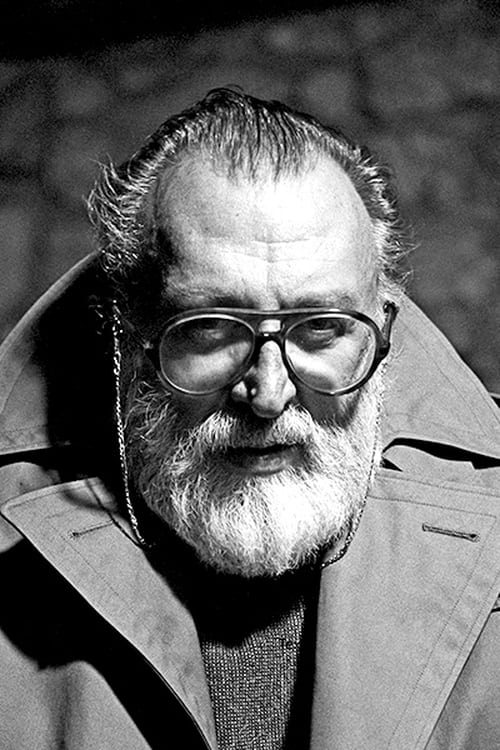
Filmmaker quote“When I was young, I believed in three things: Marxism, the redemptive power of cinema, and dynamite. Now I just believe in dynamite.”
Sergio Leone
Themes That Keep Returning
Leone’s films are saturated with themes that resonate deeply with audiences and critics alike. Central among these is the ambiguity of good and evil.
Unlike the traditional Westerns that clearly delineate heroes and villains, Leone’s characters often inhabit moral grey zones, their motives complex and their loyalties shifting. This nuanced approach challenges viewers to question simplistic notions of heroism.
The passage of time and the harsh realities of survival also recur throughout Leone’s work. Whether it’s the relentless chase for gold in The Good, the Bad and the Ugly or the twilight of the Old West in Once Upon a Time in the West, there is a palpable sense of history moving inexorably forward, indifferent to individual lives and desires.
Family ties, revenge, and betrayal form the emotional backbone of many narratives, especially in Once Upon a Time in America, where memories and the weight of the past haunt the characters. Leone’s films explore the idea that the quest for power or redemption often comes at a devastating personal cost.

- Moral ambiguity and the unstable nature of heroism
- The inexorable march of time and historical change
- Loneliness, survival, and the cost of violence
- Memory, nostalgia, and the inescapability of the past
- Mythmaking and the construction of legend
What Filmmakers Can Learn From Them
Sergio Leone’s work offers invaluable lessons to filmmakers about the power of style in storytelling. He demonstrates that pacing and atmosphere are not mere embellishments but fundamental narrative tools.
The way Leone uses silence and sound, close-ups and widescreen compositions teaches directors how to manipulate audience expectations and emotions.
His films also stress the importance of mythic storytelling in contemporary cinema. Leone’s Westerns show how genre conventions can be transformed to say something new about society and human nature.
This reinvention encourages filmmakers to push beyond formulaic structures and seek personal expression within popular genres.
Moreover, his collaboration with composers and editors reminds filmmakers to cultivate strong creative partnerships, recognizing that film is inherently a collaborative art form. Leone’s integration of music and visual rhythm highlights the synergy between cinematic elements that can elevate a film from mere entertainment to timeless art.
Studio Years vs Independent Years
Leone’s early career was marked by work within the studio system in Italy, where he developed his skills on a variety of projects, including peplum films like The Colossus of Rhodes. However, it was during the 1960s that he truly broke free, working with relatively modest budgets to create his Spaghetti Westerns. These films, notably A Fistful of Dollars and For a Few Dollars More, were produced by smaller Italian studios but gained tremendous international success.
In this independent phase, Leone enjoyed greater artistic control, allowing him to experiment with form and content. His films from this period are characterized by bold stylistic choices and narrative innovation.
The later years of his career saw Leone tackling more ambitious projects like Once Upon a Time in America, which was produced with substantial international backing. This film reflected his evolution toward epic storytelling, though it also showed the challenges of balancing personal vision with the demands of larger studio involvement.
- Early studio work: Apprenticeship and genre experimentation
- 1960s independent phase: Creative freedom and stylistic innovation
- 1980s epics: Larger scale productions with broader scope
Recurring Actors and Creative Chemistry
Leone’s films are notable for their consistent use of certain actors who became iconic through their collaborations with him. Clint Eastwood, who starred in the Dollars Trilogy, became the quintessential Man with No Name, embodying Leone’s vision of the enigmatic antihero.
Eastwood’s laconic presence and understated performance perfectly matched Leone’s restrained storytelling style.
Another key figure is Lee Van Cleef, whose sharp, intense demeanor added layers to the morally complex characters in For a Few Dollars More and The Good, the Bad and the Ugly. Henry Fonda’s casting as a villain in Once Upon a Time in the West subverted his established screen persona and deepened the film’s thematic resonance.
In Once Upon a Time in America, Leone worked with Robert De Niro and James Woods, actors capable of capturing the emotional depth and moral ambiguity Leone sought to portray in his sprawling narrative. The chemistry among these actors brought authenticity and weight to Leone’s ambitious storytelling.

A practical playbook for people who sell & shoot
Short chapters you can skim between jobs: how to stay visible to buyers, follow up without cringe, and keep the pipeline honest.
Collaborators: Writers, DPs, Editors, Composers

Leone’s collaborations were instrumental in shaping his films. Ennio Morricone’s scores are inseparable from Leone’s cinematic world, offering haunting melodies that elevate tension and emotion to operatic heights.
Morricone’s compositions are often structured like leitmotifs, giving characters and themes musical identities.

On the visual side, cinematographers like Tonino Delli Colli played a crucial role in realizing Leone’s vision. Their use of widescreen compositions, natural lighting, and detailed close-ups created the textured, immersive look so characteristic of Leone’s Westerns.

Editors such as Eugenio Alabiso contributed to the director’s distinctive narrative rhythm, maintaining the slow build and explosive release that define Leone’s style. Their work was integral to balancing the epic scope with intimate moments.
- Ennio Morricone – Composer, musical architect of Leone’s films
- Tonino Delli Colli – Cinematographer, master of Leone’s visual style
- Eugenio Alabiso – Editor, key to narrative pacing and tension
- Screenwriters including Sergio Donati and Luciano Vincenzoni – Shaping morally complex narratives
Worldview, Politics, and Subtext
Leone’s films, while often set in mythic pasts, engage deeply with contemporary concerns and political undercurrents. His revisionist Westerns critique the romanticized notion of American expansion and manifest destiny, exposing the brutality and greed underlying frontier mythology.
His portrayal of violence is never gratuitous but instead a commentary on its cyclical and corrosive nature. The shifting alliances and betrayals found in his films mirror the instability and moral ambiguity of modern political realities, suggesting skepticism toward simplistic ideologies.
Once Upon a Time in America extends this subtext into the realm of American capitalism and organized crime, exploring themes of power, loyalty, and the corrupting influence of wealth. Leone’s worldview is often melancholic, reflecting a nostalgia for lost innocence alongside a recognition of human frailty and societal decay.
Place in National Cinema and Film History
Within Italian cinema, Sergio Leone occupies a unique position. Although his international success sometimes overshadowed his national identity, his films are foundational to the Spaghetti Western genre, a movement that revitalized Italian cinema in the 1960s and 1970s.
Leone’s ability to fuse Italian filmmaking sensibilities with American genre conventions created a new cinematic language that resonated worldwide.
Historically, Leone is credited with reshaping the Western genre and influencing generations of filmmakers—from Quentin Tarantino to Martin Scorsese. His innovations in narrative structure, visual style, and sound design expanded what genre films could achieve artistically.
Leone’s legacy is felt not only in Westerns but across the cinematic landscape, inspiring directors to embrace bold stylistic choices and to explore the moral complexities of their characters. His films remain essential viewing for understanding the evolution of modern cinema.
A Final Note
Sergio Leone’s body of work stands as a monumental achievement—an enduring fusion of myth, style, and substance. His films challenge, captivate, and haunt, offering a vision of cinema that is both grand and intimate.
For students of film, Leone is a masterclass in the power of editing, the potency of music, and the art of storytelling that transcends genre.
Exploring Leone’s filmography is to engage with the pulse of a cinematic legend whose influence continues to ripple through the decades. From the dusty plains of the Spaghetti Western to the shadowy streets of New York’s underworld, his films offer a timeless meditation on humanity’s contradictions and the stories we tell to make sense of them.
Want to keep going with more cinema craft?
Related on Filmmaking Lifestyle

Read next: Albert Mkrtchyan: The Films That Define a Vision, David Fincher: The Films That Define a Vision, and Denis Villeneuve: The Films That Define a Vision.
Explore the work of cinema's greatest directors.

Kei Ishikawa: The Art of Directing, In One Career

Osamu Dezaki: A Visual Language Worth Studying

Ermanno Olmi: Themes, Technique, and Legacy

Juraj Herz: The Essential Breakdown

Orson Welles: A Visual Language Worth Studying

Zoltan Fabri: The Career That Changed the Medium

Barry Jenkins: A Complete Introduction

Tom Tykwer: A Complete Introduction

Ari Aster: A Director's Style in Focus


New comments are not currently accepted.
Comments