
On this pageTap to expand
If you’ve ever set out to blaze a trail by shooting your own short film, you’ll know that your camera choice is a huge part of your project. Have you ever wondered what the best camera for making short films is?
As a novice filmmaker, one of the first stepping stones for honing your skills is making short films. Thanks to their short length and less complex nature, you can make a short film faster and for cheap. The benefit of this is getting to learn more about filmmaking.
A short film, though, is the same as any film. It requires the right equipment to make it.
You can have the best idea, script, actors, and crew, but if the tools you’re using to make the film aren’t up to par, you won’t be able to bring your vision to life.

Best Camera For Short Films – In Brief
While many tools are required to make a good short film, the most essential is the camera.
Film, after all, is a visual medium. Therefore, if you don’t have a good camera to capture what’s on the screenplay, the project is doomed from the start.
This raises the question, “What camera should I buy to make short films?”
To that, we answer, it depends. What we mean is that there is no overall best camera but several options to choose from. The choice you make has to reflect your needs and what you want to accomplish.
That’s why we compiled a guide on the best cameras for making short films. We’re going to be talking about the things you should consider before buying one. We’ll also discuss the things a camera should have and finally recommend some of our favorites.
Best Cameras For Short Films – The List
For this list, we are considered all types of cameras with a balance between budget and features. So without further ado, let’s dive in.
The complete shortlist
| Pick |
|---|
| Sony A7S III |
| Blackmagic Pocket Cinema Camera 6K |
| Panasonic Lumix GH7 |
| Sony FX30 |
| RED Komodo-X |
| Canon EOS R5 Mark II |
| Canon EOS C200 |
| Fujifilm X-T5 |
| Nikon Z6III |
| Sony FX3 |
| Panasonic Lumix S1H |
| Blackmagic URSA Mini Pro 4.6K G2 |
| Sigma BF |
| Sony Alpha A7 IV |
| Budget |
| Ease Of Use |
| Sensor Size |
| Stabilization |
| Sound |
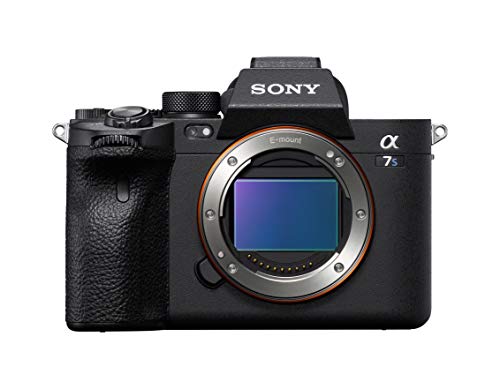
1. Sony A7S III
Sony
- 12.1MP1 Exmor R sensor, optimized for 4K, sensitivity and speed.Bluetooth : version 5.0
- New BIONZ XR processing engine delivers 8x more processing power2
- Low noise images with ISO up to 409,6003 and 15 plus stop dynamic range4
- Up to 4K 120p5 10-bit 4:2:2 and full pixel readout in all rec. modes
- Up to 4K 120p5 in XAVC S (AVC), XAVC HS (HEVC) and XAVC S-I (All-I)
- Video capture resolution: 4K UHD 2160p. Operating Temperature- 32 - 104 degrees F / 0 - 40 degrees C
12.1MP1 Exmor R sensor, optimized for 4K, sensitivity and speed.Bluetooth : version 5.0 New BIONZ XR processing engine delivers 8x more processing power2
View on AmazonSensor and Image Quality
The Sony A7S III is a full-frame mirrorless camera that emphasizes superior performance in low-light conditions, featuring a 12.1-megapixel Exmor R CMOS sensor.
Despite the seemingly modest pixel count, the camera excels in capturing exceptional dynamic range and low-noise imagery, especially in dimly lit scenarios.
Moreover, its sensor is back-illuminated, which significantly improves sensitivity and noise performance.
The camera also provides an astounding ISO range of 80-102,400, expandable up to 40-409,600, thereby offering unparalleled flexibility in various lighting conditions.
Video Capabilities
A standout feature of the A7S III is its video recording prowess.
The camera offers 4K video at up to 120fps, with 10-bit 4:2:2 internal recording.
It supports various professional-grade video formats, such as XAVC S, XAVC HS, and XAVC S-I.
The inclusion of a full-sized HDMI port is a welcome addition for video professionals.
Additionally, the camera features 16-bit RAW output via HDMI, making it a compelling option for cinematographers.
The improved overheating management system also ensures longer shooting durations without interruptions.
Autofocus and Usability
The camera is equipped with a Fast Hybrid AF system, which includes 759 phase-detection points and 425 contrast-detection points, covering approximately 92% of the image sensor.
This system works in tandem with the Real-time Eye AF for both humans and animals, delivering fast and precise autofocus performance.
In terms of ergonomics, the A7S III has made significant strides over its predecessor, with a more robust grip, improved button layout, and the inclusion of a fully articulating 3-inch touchscreen display.
These changes provide an intuitive and user-friendly experience, thus accelerating the workflow for both photographers and videographers.
To summarize, the Sony A7S III stands as a benchmark in the realm of full-frame mirrorless cameras, especially when low-light performance and video recording capabilities are paramount.
While it may not cater to those seeking ultra-high-resolution photography, its low megapixel count is a considered trade-off for extraordinary sensitivity and dynamic range.
The revamped ergonomics and comprehensive video features make it a versatile tool for a wide array of creative endeavors.
In essence, the A7S III offers an impressive blend of performance, flexibility, and usability, fulfilling the needs of serious photographers and filmmakers alike.
Sony
- 12.1MP1 Exmor R sensor, optimized for 4K, sensitivity and speed.Bluetooth : version 5.0
- New BIONZ XR processing engine delivers 8x more processing power2
- Low noise images with ISO up to 409,6003 and 15 plus stop dynamic range4
- Up to 4K 120p5 10-bit 4:2:2 and full pixel readout in all rec. modes
- Up to 4K 120p5 in XAVC S (AVC), XAVC HS (HEVC) and XAVC S-I (All-I)
- Video capture resolution: 4K UHD 2160p. Operating Temperature- 32 - 104 degrees F / 0 - 40 degrees C
12.1MP1 Exmor R sensor, optimized for 4K, sensitivity and speed.Bluetooth : version 5.0 New BIONZ XR processing engine delivers 8x more processing power2
View on Amazon2. Blackmagic Pocket Cinema Camera 6K
Blackmagic Design
- Effective sensor size 23 10 x 12 99 millimeter (super 35)
- Shooting resolutions 6144 x 3456 (6K) up to 50 fps/ 6144 x 2560 (6K 2 4 1) up to 60 fps/ 5744 x 3024 (5 7K 17 9) up to 60 fps/ 4096 x 2160 (4K DCI) up to 60 fps/ 3840 x 2160 (Ultra HD) Up To 60 fps/ 3728 x 3104 (3 7K 6 5 anamorphic) up to 60 fps/ 2868 x 1512 (2 8K 17 9) up to 120 fps/ 1920 x 1080 (HD) Up To 120 fps
- Maximum sensor frame rate Dependent on resolution and codec selected Project frame rates of 23 98 24 25 29 97 30 50 59 94 and 60 FPS supported off-speed frame rates up to 60 fps in 6K 2 4 1 120 fps in 2 8K 17 9 and 1080H
- Video inputs None/ video outputs 1x HDMI type a
Effective sensor size 23 10 x 12 99 millimeter (super 35) Shooting resolutions 6144 x 3456 (6K) up to 50 fps/ 6144 x 2560 (6K 2 4 1) up to 60 fps/ 5744 x 3024 (5 7K 17 9) up to 60 fps/ 4096 x 2160 (4K DCI) up to 60 fps/ 3840 x 2160 (Ultra HD) Up To 60 fps/ 3728 x 3104 (3 7K 6 5 anamorphic) up to 60 fps/ 2868 x 1512 (2 8K 17 9) up to 120 fps/ 1920 x 1080 (HD) Up To 120 fps
View on AmazonBuild and Design
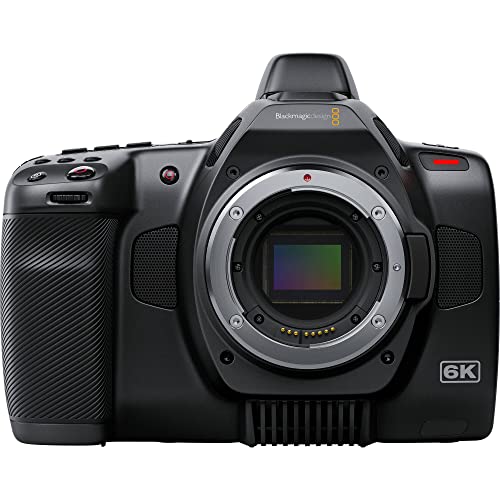
The Blackmagic Pocket Cinema Camera 6K, often abbreviated as BMPCC 6K, is a cinematic marvel encapsulated in a compact body.
At first glance, the camera boasts a design that marries ergonomic considerations with professional-grade features.
The polycarbonate carbon fiber composite body not only ensures durability but also keeps the device relatively lightweight, a crucial aspect for handheld shooting.
Dominated by a 5-inch touchscreen display at the rear, the BMPCC 6K provides users with an intuitive interface and crystal-clear live view, enhancing the filming experience.
Performance and Image Quality
Delving into the heart of its capabilities, the BMPCC 6K impresses with its Super 35-sized sensor, which plays a pivotal role in delivering stunning 6K footage.
The camera supports 13 stops of dynamic range, ensuring that details are retained in both shadows and highlights.
Coupled with its native EF lens mount, filmmakers can harness a vast array of lenses, broadening creative possibilities.
The true essence of BMPCC 6K lies in its color science.
Footage rendered showcases lifelike colors, rich details, and cinematic depth, which, when combined with its RAW recording capabilities, offers post-production flexibility like few others in its category.
Connectivity and Features
Beyond its filming prowess, the BMPCC 6K is rife with features that cater to modern filmmakers’ needs.
From standard ports such as HDMI and mini XLR to the USB-C expansion port for direct recording to external drives, the camera ensures seamless connectivity.
The dual native ISO up to 25,600 is a boon for low-light conditions, ensuring reduced noise and clearer footage.
Additionally, the camera comes equipped with professional audio support, multiple internal neutral density (ND) filter options, and even Blackmagic’s DaVinci Resolve Studio for post-production, underscoring its comprehensive offering.
The Blackmagic Pocket Cinema Camera 6K emerges not just as a camera but a comprehensive filmmaking tool.
It’s a testament to what’s achievable when high-end cinema technology is condensed into a portable, accessible form.
For independent filmmakers, content creators, and even professionals looking for a versatile secondary camera, the BMPCC 6K stands as a compelling choice.
With its powerful sensor, superior color reproduction, and a suite of features tailored for modern cinematography, it ensures that every frame captured resonates with cinematic brilliance.
Blackmagic Design
- Effective sensor size 23 10 x 12 99 millimeter (super 35)
- Shooting resolutions 6144 x 3456 (6K) up to 50 fps/ 6144 x 2560 (6K 2 4 1) up to 60 fps/ 5744 x 3024 (5 7K 17 9) up to 60 fps/ 4096 x 2160 (4K DCI) up to 60 fps/ 3840 x 2160 (Ultra HD) Up To 60 fps/ 3728 x 3104 (3 7K 6 5 anamorphic) up to 60 fps/ 2868 x 1512 (2 8K 17 9) up to 120 fps/ 1920 x 1080 (HD) Up To 120 fps
- Maximum sensor frame rate Dependent on resolution and codec selected Project frame rates of 23 98 24 25 29 97 30 50 59 94 and 60 FPS supported off-speed frame rates up to 60 fps in 6K 2 4 1 120 fps in 2 8K 17 9 and 1080H
- Video inputs None/ video outputs 1x HDMI type a
Effective sensor size 23 10 x 12 99 millimeter (super 35) Shooting resolutions 6144 x 3456 (6K) up to 50 fps/ 6144 x 2560 (6K 2 4 1) up to 60 fps/ 5744 x 3024 (5 7K 17 9) up to 60 fps/ 4096 x 2160 (4K DCI) up to 60 fps/ 3840 x 2160 (Ultra HD) Up To 60 fps/ 3728 x 3104 (3 7K 6 5 anamorphic) up to 60 fps/ 2868 x 1512 (2 8K 17 9) up to 120 fps/ 1920 x 1080 (HD) Up To 120 fps
View on Amazon
3. Panasonic Lumix GH7
Build and Design
The Panasonic Lumix GH7 is an embodiment of technical excellence and ergonomic design, specifically tailored for videographers and photographers who demand high-quality output in a compact form, succeeding the long-running (and now discontinued) GH5 as Panasonic’s flagship Micro Four Thirds video camera.
The camera boasts a robust magnesium alloy body, ensuring resilience against the elements while retaining a weight that doesn’t burden the user.
Furthermore, the GH7’s splash, dust, and freeze-proof design guarantee its utility across diverse shooting environments.

Build trust before you talk price
The checklist includes rapport builders and clarifying questions so prospects feel heard — and you leave with what you need to quote accurately.
A notable feature is its fully articulating touchscreen, which aids in composing shots and navigating the extensive feature set with ease.
Performance and Image Quality
Equipped with a 25.2-megapixel sensor, the GH7 promises and delivers sharp, detailed images.
However, where the GH7 truly shines is in its video capabilities.
It records 5.7K open-gate video at up to 30fps, with internal Apple ProRes 422 HQ and ProRes RAW recording to a CFexpress Type B card, alongside 10-bit 4:2:2 C4K/4K up to 60fps and 4K120 recording to SD, giving videographers ample color data for post-production.
The 5-axis in-body stabilization is a godsend, ensuring steady footage even in challenging shooting scenarios.
Combining these features with Panasonic’s V-Log and phase-detection autofocus, the GH7 emerges as a videographer’s dream.
Connectivity and Features
The GH7 is replete with connectivity options catering to modern-day requirements.
A CFexpress Type B slot alongside an SD card slot ensures uninterrupted recording, and the full-size HDMI port is a welcome inclusion for external monitoring and recording.
On the wireless front, Bluetooth and Wi-Fi facilitate seamless connectivity with other devices and remote operation.
Support for 32-bit float audio recording, a first for the GH line, is a standout feature that redefines what’s possible with a mirrorless camera.
In summary, the Panasonic Lumix GH7 stands as an epitome of what a mirrorless camera can achieve in the realms of both videography and photography.
Its combination of cutting-edge video features, high-resolution imaging, and a robust design make it an irresistible offering for professionals and enthusiasts alike.
For those looking to venture into high-end filmmaking without stepping up to a dedicated cinema camera, or photographers seeking a versatile tool that doesn’t compromise on quality, the GH7 undoubtedly emerges as a top contender.
Its release not only continued Panasonic’s reputation in the camera industry but also set new benchmarks for what a mirrorless camera should encompass.
Short films are a creative and quick way to tell your story. They can be used for anything from commercials to documentaries, but they all have one thing in common – the length of their running time.
A short film typically runs between 1 and 20 minutes long, while a feature-length film could run anywhere from 90 minutes up to 2 hours or more. The purpose of the short film is to entertain and provoke thought, rather than make money at the box office as larger films do.
In fact, many shorts are made by filmmakers who want to test their skills in filmmaking and storytelling before investing too much time and money into a full-length feature.
Short films can also serve as an introduction to talented directors or actors who might not have been noticed otherwise because they weren’t given enough screen time in other productions.
4. Sony FX30
Build and Design
The Sony FX30, part of Sony’s Cinema Line and the natural successor to the FS5 series now that Sony has moved that lineup off the market, boasts a design that combines portability with functionality.
Aimed at videographers and filmmakers who desire mobility without compromising on features, its lightweight body and ergonomic design make handheld shooting a breeze.
The chassis exudes Sony’s signature robustness, ensuring the camera withstands the rigors of on-location filming.
The compact, boxy design, with a full complement of mounting points, offers users the flexibility to adapt the camera to diverse shooting scenarios and cages.
Performance and Image Quality
Powering the FX30 is a Super 35mm APS-C sensor that promises exceptional image fidelity. One of the camera’s standout features is its color science, Sony’s S-Cinetone profile, derived from the same color pipeline as Sony’s flagship Venice cinema camera.
This ensures that the FX30 delivers richer mid-tones, more accurate color reproduction, and a softer tonal look out of the box.
The capability to shoot up to 4K at 120fps with a Super 35mm crop is impressive, rendering buttery-smooth slow-motion sequences.
The inclusion of S-Log2 and S-Log3, plus 10-bit 4:2:2 internal recording, promises a broad dynamic range, providing filmmakers with flexibility in grading and achieving their desired look.
Connectivity and Features
Sony has packed the FX30 with a suite of professional features that cater to the needs of modern filmmakers.
In-body 5-axis stabilization stands out, offering smoother handheld footage without requiring an external gimbal.
On the connectivity front, the camera doesn’t disappoint, with full-size HDMI output, dual card slots (including CFexpress Type A), and a multi-interface shoe for direct digital audio.
Active mode digital stabilization, which further steadies handheld footage at a slight crop, provides a unique advantage when shooting run-and-gun without a rig.
To encapsulate, the Sony FX30 emerges as a compelling choice for those seeking a balance between high-end features and a compact form factor, at the most affordable price point in Sony’s Cinema Line.
Whether it’s for documentaries, events, or indie films, the camera caters to a broad spectrum of videographers with its feature set.
The advancements in color science, combined with a genuine Super 35mm cinema sensor, make the FX30 a worthy successor to the FS5 line and a testament to Sony’s commitment to pushing the boundaries of what’s possible in the realm of digital cinema.
It’s a camera that beckons filmmakers to envision, capture, and create with no reservations.
5. RED Komodo-X
Build and Design
The RED KOMODO-X represents a significant departure from the traditional design ethos of older RED cameras, and has now succeeded the original KOMODO in RED’s lineup entirely.
Compact and tailored for more versatile shooting scenarios, the KOMODO-X sports a boxy form factor, making it a suitable candidate for gimbal or drone use.
Despite its relatively smaller stature, the build quality remains uncompromisingly robust, with a design that feels premium to the touch.
The top-facing touchscreen, while not expansive, offers a crisp and intuitive interface, simplifying camera operations in demanding environments.
Performance and Image Quality
At the heart of the KOMODO-X lies a redesigned 6K Super 35mm global-shutter sensor, which carries the legacy of RED’s image quality forward while pushing frame rates well past the original KOMODO, up to 6K at 80fps and 4K at 120fps.
The ability to record in REDCODE RAW ensures that filmmakers have the maximum flexibility in post-production, with an impressive dynamic range to capture every nuance.
The colors are vivid, the details razor-sharp, and the overall image quality is what one would expect from a brand that has consistently set industry standards.
The global shutter is another highlight, eliminating the “jello effect” commonly seen with rolling shutters and ensuring crisp capture during fast action sequences.
Connectivity and Features
RED has ensured that the KOMODO-X isn’t just about stellar image quality; it’s also about ensuring the camera integrates seamlessly into modern production workflows.
With standard ports like the 12G-SDI output and the 3.5mm microphone input, it offers familiar connectivity options.
Wireless control and preview via the RED Control app is a futuristic touch, enabling unparalleled convenience for the user.
Phase-detection autofocus, a departure from older RED cameras, is a much-welcomed addition, making the KOMODO-X more accessible to solo operators or situations where manual focus isn’t feasible.
In summation, the RED KOMODO-X is a cinematic powerhouse disguised in a compact body.
While it retains the core essence of what makes RED cameras iconic, it also ventures into new territories, offering features more tailored for today’s diverse filming requirements.
Whether you’re an indie filmmaker looking to step up your game, or a professional seeking a reliable B-camera, the KOMODO-X fits the bill.
It is a testament to RED’s vision of the future of cinematography – a blend of uncompromised quality, innovative features, and a design that resonates with the demands of contemporary filmmaking. RED cameras aren’t typically sold through Amazon, so check RED’s official store or an authorized cinema dealer for current pricing and availability.
• Learn how to make a short film from script writing to shooting the film.
• Gain knowledge and skills in this diverse field of filmmaking.
• Get a crash course on the process so you can start making films yourself.
• Discover new creative and problem solving skills.
• Learn how to direct while also telling a story.
6. Canon EOS R5 Mark II
Build and Design
Canon’s EOS R5 Mark II, which has now replaced the original R5 as Canon’s flagship high-resolution mirrorless camera, is a striking embodiment of the brand’s commitment to mirrorless technology.
With a design that carries the legacy of Canon’s ergonomic brilliance, the camera feels intuitive and familiar in the hands of EOS system users.
The magnesium alloy body ensures ruggedness and durability, while the well-laid-out buttons and dials guarantee ease of operation.
Additionally, the vari-angle touchscreen LCD makes composing shots and navigating the menu a seamless experience, while the OLED electronic viewfinder presents a clear and lifelike view of the scene.
Performance and Image Quality
At the heart of the EOS R5 Mark II is a new 45-megapixel full-frame back-illuminated stacked CMOS sensor that promises staggering levels of detail alongside a much faster readout speed than its predecessor.
This high-resolution prowess is complemented by the DIGIC Accelerator co-processor, which ensures fast performance and superior image quality across diverse lighting scenarios.
The R5 II’s ability to shoot 8K RAW video at up to 60fps sets new benchmarks in the realm of mirrorless cameras, offering filmmakers unparalleled detail and post-production flexibility.
The camera’s in-body image stabilization (IBIS), offering up to 8.5 stops of shake correction, further enhances both photo and video capture, ensuring sharpness even in challenging conditions.
Connectivity and Features
Canon has equipped the EOS R5 Mark II with a plethora of connectivity options, addressing the requirements of both professional photographers and videographers.
Dual card slots (CFexpress Type B and UHS-II SD) offer flexibility in storage and backup. Wi-Fi and Bluetooth capabilities ensure seamless image transfer and remote camera control.
A significant highlight is the camera’s autofocus system, with an updated Dual Pixel CMOS AF II and the addition of Eye Control AF carried over from Canon’s sports flagship.
Its subject-recognition autofocus and ability to focus in very low light make the R5 II stand out as one of the best in autofocus performance, nailing focus swiftly and accurately.
In essence, the Canon EOS R5 Mark II represents a significant leap for Canon in the mirrorless segment, combining a high-resolution sensor with groundbreaking video capabilities.
It caters to a broad spectrum of creative professionals, from photographers craving detail-laden shots to filmmakers setting their sights on 8K horizons.
While it is undeniably a powerhouse, it is also a testament to Canon’s vision for the future of photography and filmmaking.
For those looking to invest in a camera that epitomizes the convergence of stills and motion, the EOS R5 Mark II emerges as an unmissable contender.
7. Canon EOS C200
When it comes to filmmaking, the Canon EOS C200 stands out as a formidable competitor.
It’s renowned for its remarkable ability to capture crisp 4K footage, a result of its Super 35mm CMOS sensor.
The C200 excels with its Canon RAW Light format, which allows for capturing high-quality raw files that are smaller in size.
This feature is a game-changer for post-production workflow, enabling us to balance quality and efficiency.
Other standout features include – Dual Pixel CMOS AF technology – ensuring our shots are tack-sharp
- An impressive 15 stops of dynamic range – revealing detail in the shadows and highlights
- Built-in ND filters – a lifesaver for controlling exposure without sacrificing depth of field
The versatility of the C200 is evident in its design.
Its compact size makes it ideal for gimbal or handheld shooting, enriching our ability to capture scenes in a dynamic and intimate style.
Usability is another strong point for this camera.
The touch screen LCD allows for quick changes on the fly, a boon when time is critical and we need to act fast.
Besides, the wide compatibility with EF lenses opens up a galaxy of creative options.
The vast array of quality glass available to us through the Canon ecosystem invites us to paint our stories with light in countless ways.
The EOS C200 has earned its stripes in the field on productions ranging from commercial spots to indie short films.
Its reliability and durability under a variety of shooting conditions are just as important as its technical capabilities.
Looking at the C200 through the lens of a filmmaker concerned not only with capturing beautiful images but also with practicality and efficiency, it’s clear why this camera has become a mainstay.
It offers a robust set of features that, when utilized to their full potential, can turn the most challenging shooting scenarios into stunning cinematic pieces.

8. Fujifilm X-T5
Stepping into the realm of Fujifilm, the X-T5 emerges as a powerhouse for filmmakers seeking a robust, mirrorless camera, having taken over from the now-discontinued X-T4 as Fujifilm’s flagship X-T body.
It’s recognized for its stunning film simulation modes, which mimic classic film stocks with precision.
This camera garners respect for its in-body image stabilization (IBIS), rated for up to 7 stops of correction and ensuring smooth footage even when on the go.
The X-T5’s 40-megapixel APS-C sensor and ability to shoot up to 6.2K video internally further solidify its position as a top choice for creating dynamic short films.
What sets the X-T5 apart is its unique blend of features tailored for videography:
- High-capacity battery life – essential for extended shoots,
- A three-way tilting touchscreen – for versatile shot composition,
- Enhanced subject-detection autofocus system – keeping our subjects sharp.
For those of us keen on obtaining high-quality slow-motion footage, the X-T5 doesn’t disappoint.
It offers Full HD recording at up to 240fps, providing that super slow-motion effect that can elevate any short film project.
The combination of portability, performance, and film-like quality makes the Fujifilm X-T5 a compelling contender.
Its user-friendly interface aligns with our philosophy of blending efficiency with creativity.

Fujifilm
- Putting stability in your hands: A huge part of creating great photos or videos is making sure you are in the right place at the right time – and that often means making handheld images to get to the heart of the action. X-T4’s state-of-the-art, five-axis In-Body Image Stabilization (IBIS) provides up to 6.5 stops of image stabilization to make sure that, even in the midst of all the excitement, your images remain steady and sharp. Combine this with the new four-axis digital image stabilizer, and you have lots of room to maneuver.
- Performance you can rely on: For any serious image maker, having a tool that can be relied upon to perform flawlessly whenever it is required is extremely important. For this reason, X-T4 features a newly developed mechanical shutter that is the fastest and most robust in the history of the X series. Not only can it make images at 15 frames per second, but it is also rated for 300,000 actuations 2. When you combine this with its larger capacity battery that is capable of up to 600 frames per charge 2, X-T4 has the power and the durability to give you the peace of mind that you’ll never miss the perfect opportunity.
- Find the best angle for your story: When chasing the perfect image, versatility is key, so the last thing you want is to be hampered by awkward angles. The 1.62 million pixel vari-angle touchscreen LCD featured on X-T4 can be adjusted to make it visible from a wide range of positions. This not only gives you a high-quality monitor to frame with, but also provides quick and simple controls when you need them most. On the flip side, there are times when you need to minimize the light and distractions that a screen can create. That’s why X-T4’s LCD has been designed to easily fold away so it is completely hidden from view, leaving the updated 3.69 million pixel/100fps electronic viewfinder to help you focus on the moment at hand.
- When your story needs movement: The modern image maker is blurring the lines between photography and videography, and X-T4 has been designed to celebrate this new generation of hybrid creativity. With the simple flick of a switch, movie mode is activated, meaning X-T4 is capable of recording both professional-level DCI 4K/60p and Full HD/240p super slow-motion video. It is also possible to record F-Log footage in 10-bit color, straight to the card. What’s more, the innovative AF-C subject tracking works in low-light conditions down to -6EV and the camera’s use of a new, high capacity battery lets you push your creative limits.
- Powerful image manipulation made easy: For over 85 years, Fujifilm has produced photographic films that have been used by some of the world’s best-known moviemakers to create some of the world’s most successful movies. This legendary reputation in color science is celebrated with their hugely popular selection of Film Simulations, which digitize some of the industry’s most iconic films and puts them right at your fingertips. X-T4 introduces Eterna Bleach Bypass, the newest addition to this much-loved collection of film simulation modes available in the X Series product line, which creates a beautiful de-saturated, high-contrast look that any image-maker will find irresistible.
Putting stability in your hands: A huge part of creating great photos or videos is making sure you are in the right place at the right time – and that often means making handheld images to get to the heart of the action. X-T4’s state-of-the-art, five-axis In-Body Image Stabilization (IBIS) provides up to 6.5 stops of image stabilization to make sure that, even in the midst of all the excitement, your images remain steady and sharp. Combine this with the new four-axis digital image stabilizer, and you have lots of room to maneuver. Performance you can rely on: For any serious image maker, having a tool that can be relied upon to perform flawlessly whenever it is required is extremely important. For this reason, X-T4 features a newly developed mechanical shutter that is the fastest and most robust in the history of the X series. Not only can it make images at 15 frames per second, but it is also rated for 300,000 actuations 2. When you combine this with its larger capacity battery that is capable of up to 600 frames per charge 2, X-T4 has the power and the durability to give you the peace of mind that you’ll never miss the perfect opportunity.
View on Amazon9. Nikon Z6III
In the ever-evolving world of filmmaking, the Nikon Z6III has emerged as the camera to beat for creators eyeing a perfect blend of quality and affordability, having succeeded the original Z6 and Z6II as Nikon has moved on from those older bodies.
Known for its robust build and exceptional image quality, this camera brings a lot to the table for those passionate about crafting short films.
It’s equipped with a 24.5MP full-frame partially-stacked sensor, a first for a full-frame mirrorless camera, that renders deep color depth and dynamic range essential for a cinematic look while dramatically reducing rolling shutter.
The Z6III offers video features that rival much more expensive cinema cameras.
It shoots full-width 6K video internally in 12-bit N-RAW and ProRes RAW HQ at up to 60fps, plus 4K UHD oversampled from that 6K capture and full HD at high frame rates for slow motion, making it versatile for various filmmaking styles.
The 10-bit N-Log and RAW output give us plenty of room for color grading in post-production.
Plus, with in-body stabilization, the footage turns out smooth without requiring additional gimbals.
Transitioning between scenes is seamless thanks to the EXPEED 7 processor and its high-speed autofocus system.
It swiftly locks onto subjects, which is invaluable for maintaining visual consistency.
Nikon’s reputation for excellent low-light performance holds strong in the Z6III.
We can push the ISO without concerning ourselves too much with noise, which is great for shooting in natural settings or low-light environments.
Key features of the Nikon Z6III that filmmakers appreciate are:
- Full-frame 24.5MP partially-stacked sensor,
- Internal 6K N-RAW and ProRes RAW HQ recording up to 60fps,
- 4K UHD and slow-motion Full HD recording,
- In-body 5-axis stabilization,
- 10-bit N-Log picture profile.

Want a calendar that actually feels booked?
The same guide thousands of video owners use to turn sporadic inquiries into a healthier mix of repeat work and referrals — practical, no fluff.
Connectivity never poses a problem as this camera provides Wi-Fi and Bluetooth for seamless transfer of our footage to other devices.
Pair this with the FTZ II adapter, and we gain compatibility with a vast array of Nikon F lenses.
This feature alone immensely expands creative possibilities allowing us to pick and choose optics that best fit the mood of our short film.
Our findings indicate that the Nikon Z6III is not just a capable stills camera but also a serious contender for filmmakers.
It’s essential for us to recognize that equipment doesn’t make the filmmaker but having the right tool certainly helps in unleashing creative potential.
The Nikon Z6III could very well be that tool for many indie filmmakers, providing high-end features without the price tag of a dedicated cinema camera.
10. Sony FX3
In our quest for the perfect camera for short film production, we must discuss the Sony FX3.
It’s not just another camera on the block – it’s a powerhouse tailored for the filmmaker.
The design of the FX3 is the first thing that catches the eye.
It’s rugged yet lightweight, allowing for handheld shooting without the usual fatigue.
Its features are a testament to Sony’s understanding of a filmmaker’s needs.
We’re talking about features like:
- 10.2MP full-frame sensor,
- 4K recording at up to 120fps,
- S-Cinetone color profile for that cinematic look,
- In-body stabilization that smooths out your shots.
The FX3’s autofocus is nothing short of revolutionary.
It locks onto subjects with an accuracy that ensures the focus remains where it’s needed, vital for keeping your story on track.
Low light is no obstacle either. The FX3 excels where others struggle, rendering noiseless footage that preserves detail and mood.
It’s this adaptability that makes it suitable not just for well-lit studios but for any shooting scenario you might face. The camera’s user interface is particularly filmmaker-friendly.
It offers intuitive controls and customizable buttons, ensuring that your shooting process is as seamless as possible.
Connectivity is a breeze with the FX3.
It comes equipped with advanced options like Wi-Fi and USB-C, making it easy to transfer footage or control your camera remotely.
The added benefit of dual CFexpress Type A/SD card slots means you’ll rarely worry about storage mid-shoot.
With the Sony FX3, you’re not just getting a camera.
You’re arming yourself with a flexible tool capable of bringing your cinematic vision to life, with a feature set that rivals even the most expensive counterparts.

Sony
- 4K full-frame sensor w/ 15+ stop dynamic range and high sensitivity
- S-Cinetone for expressive cinematic look inspired by VENICE colorimetry
- Up to 4K 120p 10-bit 4:2:2 and full pixel readout in all recording modes
- Compact cage free design w/ ¼”-20 mounting points and XLR top handle
- Uninterrupted 4K 60p recording with inbody cooling fan
4K full-frame sensor w/ 15+ stop dynamic range and high sensitivity S-Cinetone for expressive cinematic look inspired by VENICE colorimetry
View on Amazon11. Panasonic Lumix S1H
As we jump deeper into the landscape of cameras suitable for short film production, the Panasonic Lumix S1H stands out as a serious contender.
Renowned for its video-centric design, this full-frame mirrorless camera embraces the needs of filmmakers with a host of features that ensure high-quality footage.
The Lumix S1H is a pioneer, being the first camera to be certified by Netflix for original content creation.
Filmmakers appreciate its 6K resolution capability, which provides the flexibility for reframing in post-production or delivering 4K final products with enhanced detail.
Stills are also supported –
- 24.2MP resolution for photographers branching into video,
- High-resolution mode to combine multiple images into a single 96MP photograph.
When shooting, reliability is key.
Panasonic’s Dual Native ISO technology ensures exquisite performance in a variety of lighting situations by minimizing noise at both low and high sensitivities.
This feature, coupled with the camera’s exceptional dynamic range, guarantees that our captured scenes retain detail in both shadows and highlights.
Our internal recording doesn’t disappoint with 10-bit 4:2:2 up to 30p and a range of format choices.
The Lumix S1H boasts V-Log/V-Gamut with 14+ stops of dynamic range which is comparable to the color science of the Panasonic Cinema VariCam heritage.
Durability is a given –
- Weather-sealed magnesium alloy body withstands challenging shooting environments,
- Dual SD card slots for uninterrupted recording.
High-resolution recording in a robust and versatile body positions the Lumix S1H as an asset on set.
And with an industry-leading 5.76-million-dot OLED electronic viewfinder and a free-angle touch screen LCD, framing our story becomes an immersive and precise experience.
Collaboration possibilities are expanded with advanced connectivity features.
The camera’s full-size HDMI port and compatibility with L-Mount lenses sourced from Leica, Panasonic, and Sigma offer creative freedom.
Plus, with Wi-Fi support and a user-friendly interface, the S1H seamlessly integrates into our workflow.

Panasonic
- Newly designed full frame sensor – 24 2MP full-frame MOS sensor offers a wide dynamic range and sharp natural expression at high sensitivity settings
- 6K 10-BIT VIDEO – Includes full-area 3 2 6K24p C4K(4 096 x 2 160) and anamorphic modes
- Dual native ISO – offers the advantages of very high sensitivity for low-light shoots while suppressing noise levels allowing the camera to switch from a standard sensitivity to a higher sensitivity with almost no noise degradation
- V-log/v-gamut – features a wider 14 plus Stops of dynamic range which are compatible with the Cinema VariCam look to capture everything from shadows to highlights
- Rugged Mirrorless camera design – dust/splash/freeze-resistant design withstands heavy field use under harsh conditions for high mobility
Newly designed full frame sensor – 24 2MP full-frame MOS sensor offers a wide dynamic range and sharp natural expression at high sensitivity settings 6K 10-BIT VIDEO – Includes full-area 3 2 6K24p C4K(4 096 x 2 160) and anamorphic modes
View on Amazon12. Blackmagic URSA Mini Pro 4.6K G2
Turning our attention to the Blackmagic Ursa Mini Pro 4.6K G2, we’re looking at a powerhouse designed with the indie filmmaker in mind.
It strikes an impressive balance between price and performance, providing cinematographers with a tool that doesn’t compromise on quality.
One of its most remarkable features is the super 35mm 4.6K sensor with 15 stops of dynamic range.
It captures rich, detailed images that can handle post-production rigors – including color grading and effects work – with ease.
This camera is a workhorse in various shooting conditions thanks to its robust, user-friendly design.
Our filmmakers appreciate the built-in ND filters for on-the-fly adjustments and the interchangeable lens mount for a wide variety of optics.
The ability to record in various formats is another key advantage of the Ursa Mini Pro 4.6K G2.
Whether you’re looking for the pristine quality of RAW or the convenience of ProRes, this camera has you covered.
Audio recording hasn’t been neglected either, with professional-grade preamps for capturing high-fidelity sound.
This means we can rely less on external recorders and keep our rig as streamlined as possible.
And connectivity isn’t an issue with the plethora of ports available – from 12G-SDI outputs to XLR audio inputs.
This ensures that the Ursa Mini Pro seamlessly integrates into our existing production setups.
We find the Blackmagic Ursa Mini Pro 4.6K G2 to be an exceptional choice for creating cinematic short films.
With its feature-rich profile and versatile performance, it empowers us to bring our short films to life with stunning visuals and immersive audio.

Blackmagic Design
- Effective Sensor Size: 25.34 x 14.25 millimeter (Super35)
- Lens Mount: EF mount included. Interchangeable with optional PL, B4 and F lens mounts
- Lens Control: Electronic control via EF mount pins or 12pin broadcast connector for compatible lenses
- Dynamic Range: 15 Stops
- Shooting Resolutions: 4608 x 2592, 4608 x 1920 (4.6K 2.40:1), 4096 x 2304 (4K 16:9), 4096 x 2160 (4K DCI), 3840 x 2160 (Ultra HD), 3072 x 2560 (3K Anamorphic), 2048 x 1152 (2K 16:9), 2048 x 1080 (2K DCI), 1920 x 1080
Effective Sensor Size: 25.34 x 14.25 millimeter (Super35) Lens Mount: EF mount included. Interchangeable with optional PL, B4 and F lens mounts
View on Amazon13. Sigma BF
In the realm of compact cinema cameras, the Sigma BF deserves a spotlight for its groundbreaking design and capabilities, having taken over from the now-discontinued Sigma fp and fp L as Sigma’s minimalist full-frame option.
Machined from a single block of aluminum into a unibody design, the Sigma BF is a game-changer for filmmakers who prioritize portability and a distinctive, ultra-minimal control layout without compromising on quality.
The beauty of the Sigma BF lies in its versatility and adaptability to various shooting conditions.
It’s an ideal companion for guerrilla filmmakers and those looking to shoot with minimal equipment.
The camera’s robust build and 230GB of built-in storage enable extended shooting sessions without juggling memory cards, useful for those spontaneous or prolonged takes that short films often require.
Key features include:
- Full-frame 24.6-megapixel BSI sensor,
- Electronic image stabilization for video (no in-body stabilization),
- 6K and 4K UHD internal recording,
- Director’s Viewfinder mode for simulating different angles,
- L-Mount compatibility for a wide selection of lenses.
With the Director’s Viewfinder mode, we can emulate the shooting styles of cinema cameras like the ARRI Alexa Mini and the Sony Venice.
This aids us in previsualizing scenes before the actual shooting begins, saving us invaluable time on set.
Another advantage is the Sigma BF’s built-in storage and USB-C external recording. It allows us to keep the rig streamlined, which can be vital for achieving that distinct look or style specific to our short film projects.
The BF also supports 12-bit CinemaDNG recording for those who require the highest quality footage for post-production color grading.
Cinema-grade quality packaged in a body that won’t weigh us down during those dynamic shooting days – that’s what the Sigma BF brings to the table.
It challenges the notion that high-performance cameras need to be bulky, giving us the freedom to capture our vision wherever it takes us.
14. Sony Alpha A7 IV
When it comes to an intersection of high-end features and affordability, the Sony Alpha A7 IV emerges as a formidable player, having taken over from the now-discontinued A7 III as Sony’s do-it-all full-frame hybrid.
It’s a camera that captures stunning visuals without the staggering price tag often associated with professional filmmaking gear.
The A7 IV comes equipped with a 33MP full-frame sensor, providing remarkable high-resolution content that’s essential for post-production cropping and compositing.
But it’s not just the sensor that filmmakers appreciate – it’s the astounding low-light performance which opens up a world of creative possibilities.
Another aspect we can’t overlook is the camera’s advanced autofocus system.
This isn’t just standard fare; the A7 IV’s 759 phase-detection points ensure that even during complex scenes, focus remains razor-sharp, a necessity for maintaining the viewer’s immersion.
Beyond the tech specs, ergonomic design strengthens its position as a top contender for short film production.
Extended shoots aren’t just doable—they’re comfortable thanks to the A7 IV’s grip and intuitive control layout.
As filmmakers, we appreciate the myriad features that allow us to push creative boundaries:
- 10-bit 4:2:2 4K video up to 60p – for vivid, gradeable dynamic range.
- 5-axis in-body image stabilization – to smooth out those unplanned jitters.
- Dual card slots (one CFexpress Type A/SD combo) – making data management on-set seamless.
The Sony Alpha A7 IV isn’t just about capturing images; it’s about redefining what’s possible for filmmakers on a budget.
With robust construction and weather-sealing, you’re well-equipped to take your storytelling from controlled studio environments to the unpredictability of the great outdoors.
Best Camera For Short Films – Buying Considerations
Let’s take a look at some of the primary purchasing considerations you’ll need to make when contemplating buying a video camera for your short films.
Budget
This is the number one consideration anyone should make. Even great filmmakers have to consider the budget first. When it comes to cameras, you’ll want to balance features with price.
For instance, you could be more interested in shooting action-heavy sequences. This calls for an action camera with advanced autofocus systems and image stabilization. These cameras will cost more than a basic interchangeable lens camera.
Do you want your short film to have the same quality as the latest theatrical releases? You should consider 4K capable cameras, which will cost more than a full HD camera.
Ease Of Use
filmmaking can be stressful. Therefore, a big part of production is problem-solving. One area where you don’t want any trouble is your camera.
It must be easy to use, especially for beginners. Handling must be comfortable since you’re going to spend a lot of time with it.
Pay attention to controls and menus. They should be streamlined and easy to reach and figure out. It should be relatively simple to access sound settings, exposure, and white balance.
Additionally, make sure the format your camera records in is compatible with the editing software you invested in.
You have no idea how many beginners get great footage to find out the format is incompatible with their paid software. This ends up setting them back a few more hundred dollars for compatible software.
Sensor Size
We’ve established many times that there are two popular formats here. Full-frame and APS-C or cropped sensor. Forget about the latter, you’ll want a full-frame if you’re planning on making films.
Full-frame offers superior quality, more detailed, and sharper images. Additionally, it performs better in low light situations which will likely be the case for a novice filmmaker.
Since you’ll likely not spend a lot on lighting equipment, this sensor will do some of the heavy lifting.
Stabilization
if you’re shooting static scenes with no camera movement, set your camera on a tripod. If you plan more dynamic shots, get a camera stabilizer like a gimbal.
If you can’t afford either, make sure the camera has a built-in image stabilizer common in cameras nowadays.
Sound
Finally, make sure that your camera has an external mic and headphone port. This will help you capture better audio and listen to what you are recording. Sound is critical, so don’t skimp on this aspect.
Best Camera For Short Films – Wrapping up
This concludes our guide on the best Cameras for making short films. Hopefully, by now, you’ll have gained a better idea of what type of camera you want.
Remember that as long as the camera is within your budget, has lens and accessory support, produces high-quality video, and is easy to use, it’ll be perfect for you.
Additional features like 4K, digital (not accessory) stabilization and cinema modes are just luxuries that come with a higher price tag.
You can make a wonderful short film on any of the cameras we listed. So check them out, find the camera for you and make your film.
We hope you’ve found our guide on the best camera for short films useful in your quest to find a great camera to shoot your short with.
How have you found the process of producing short films? Let us know your experience in the comments just below here.
We have Gear Buyer’s Guides on every type of Filmmaking Equipment!
We have Gear Buyer's Guides on every type of Filmmaking Equipment!

10 Best Video Editing Tools for Beginners in 2026

Invideo Editor vs Veed: Which One in 2026?

How to Delete a Sentence From a Video by Editing the Transcript

10 Best Higgsfield Alternatives for AI Filmmaking in 2026

Best AI Tools for Making Microdramas in 2026

Best AI Tools for Storyboarding Before a Shoot

Invideo vs. Higgsfield: Which AI Filmmaking Platform Actually Delivers in 2026

AI Filmmaking in 2026: From Idea to Final Cut in One Connected Workflow
Best Video Editing Software for Freelance Videographers


New comments are not currently accepted.
2 comments