
On this pageTap to expand
If you are a photographer or filmmaker asking which camera to buy, begin with the work you need it to do—not a universal ranking.
The best cameras to buy are the ones that fit your needs. A camera is a tool, not an end-all-be-all.
Decide whether your priorities are stills, video, portability, autofocus, resolution, lens choice, or ruggedness, and set a complete-system budget before making a purchase.
DSLRs use an optical viewfinder and can offer excellent battery life and a deep used-lens market. Mirrorless cameras provide an electronic preview and now dominate new interchangeable-lens development. Neither design is automatically better, and body size or price depends on the particular camera and lens.
This list contains both current retail options and older cameras that may make sense used or at a substantial discount. Availability and prices change quickly, so compare the body, the lenses you will actually need, batteries, storage media, and any video accessories as one package.
Let’s take a look!
Best Camera To Buy
Without further ado, let’s begin our list of the best cameras to buy.
2026 current picks (start here)
| Pick | Best for | Why it leads now |
|---|---|---|
| Sony FX3 | Dedicated video / cinema-leaning | Full-frame video body with pro IO, active cooling, and a workflow that still defines indie and commercial sets |
| Canon EOS R5 C | Hybrid photo + video | Cinema EOS + photo modes in one RF body—full write-up below |
| Panasonic Lumix S5IIX | Value full-frame hybrid | PDAF, Open Gate, unlimited recording—full write-up below |
Currency note (September 2026): lead with the three above when buying new for filmmaking. The longer list below is still useful—proven bodies, used-market staples, and hybrids that taught a generation of shooters. Treat older models as secondary or used picks, not the default 2026 retail buy.
Gear picks at a glance (full list)
| Pick | Notes (2026) |
|---|---|
| Sony FX3 | Lead video body — full write-up below |
| Canon EOS R5 C | Lead Canon hybrid cinema — full write-up below |
| Panasonic Lumix S5IIX | Lead value full-frame hybrid — full write-up below |
| Canon EOS R5 | Still excellent hybrid; prefer R5 II / R5 C if buying new |
| Sony A7R IV | Stills-resolution monster; video-first buyers should look at FX3 / A7S III |
| Nikon D850 | Great used stills DSLR; mirrorless has largely moved on for video |
| Fujifilm X-T4 | Strong APS-C hybrid; X-T5 / X-H2S are the newer siblings |
| Sony A6400 | Compact APS-C workhorse; A6700 is the current step-up |
| Panasonic Lumix GH5 | MFT video classic; GH6 / GH7 and S5IIX are modern successors |
| Canon EOS M50 Mark II | Entry compact—fine used; new buyers usually want R50 / R8 class |
| Olympus OM-D E-M10 Mark IV | Travel MFT; OM System continues the line |
| Nikon Z6 II | Solid full-frame hybrid; Z6 III is the current refresh |
| Panasonic Lumix S5 | Still strong used; S5II / S5IIX are the current PDAF models |
| Canon EOS 90D | Late DSLR stills option |
| Sony A7C | Compact full-frame; A7C II / A7CR are newer |
| Fujifilm X100V | Fixed-lens classic; X100VI is current |
| Nikon Z7 II | High-res Z stills hybrid |
| Canon Powershot G7 X Mark III | Pocket vlogging compact |
| Nikon Z5 | Entry full-frame Z |
| Fujifilm GFX 100 | Medium-format resolution play |
| Canon EOS 1DX Mark III | Pro sports DSLR flagship |
1. Sony FX3

Sony
- 4K full-frame sensor w/ 15+ stop dynamic range and high sensitivity
- S-Cinetone for expressive cinematic look inspired by VENICE colorimetry
- Up to 4K 120p 10-bit 4:2:2 and full pixel readout in all recording modes
- Compact cage free design w/ ¼”-20 mounting points and XLR top handle
- Uninterrupted 4K 60p recording with inbody cooling fan
4K full-frame sensor w/ 15+ stop dynamic range and high sensitivity S-Cinetone for expressive cinematic look inspired by VENICE colorimetry
View on AmazonDesign and video role
The Sony FX3 is the camera most filmmakers on this site should start with when the job is video first. It sits in Sony’s Cinema Line: a compact full-frame body aimed at handheld, gimbal, and documentary work rather than stills-driven hybrid shooting.
Active cooling supports long takes, the chassis is built around video ergonomics (cage-friendly, clear tally, flexible LCD), and the I/O includes dual XLR / 3.5 mm audio so you are not stuck re-recording dialogue from a camera mic. That alone separates it from most stills hybrids that still treat audio as an afterthought.
Image and workflow
A 10.2MP full-frame sensor prioritises low noise and strong 4K over megapixel stills. You get 4K up to 120 fps, S-Cinetone for usable skin tones straight out of camera, and S-Log / S-Gamut options when you need grade latitude. In-body stabilisation helps run-and-gun; Dual Base ISO behaviour is part of why the FX3 remains a rental and owner favourite years after launch.
Who should buy it in 2026
Choose the FX3 when interviews, commercial spots, short films, or client video are the main product and stills are secondary. Pair it with G-mount / E-mount glass you already own or rent. If you need a stills-first hybrid with cinema modes, look at the R5 C below instead of forcing the FX3 to be a wedding stills camera.
Sony
- 4K full-frame sensor w/ 15+ stop dynamic range and high sensitivity
- S-Cinetone for expressive cinematic look inspired by VENICE colorimetry
- Up to 4K 120p 10-bit 4:2:2 and full pixel readout in all recording modes
- Compact cage free design w/ ¼”-20 mounting points and XLR top handle
- Uninterrupted 4K 60p recording with inbody cooling fan
4K full-frame sensor w/ 15+ stop dynamic range and high sensitivity S-Cinetone for expressive cinematic look inspired by VENICE colorimetry
View on Amazon2. Canon EOS R5 C
Hybrid cinema / photo body
The Canon EOS R5 C is the RF-mount answer when you refuse to carry two cameras. A dedicated switch flips between full photo EOS R5 behaviour and Cinema EOS video modes, including internal Cinema RAW Light, serious codec options, and active cooling for long form that the original R5 struggled with in heavy video use.
You keep Dual Pixel CMOS AF, a 45MP full-frame sensor for stills, and RF lens access—then unlock cinema-oriented recording, timecode, and unlimited recording behaviour that wedding, documentary, and branded-content shooters actually need.
When it beats the FX3
Pick the R5 C when stills quality matters as much as video (events, hybrid commercial days, RF glass already owned) or when your clients expect Canon colour and Cinema EOS workflows. Pick the FX3 when the day is almost entirely moving image and you want Sony’s Cinema Line ergonomics and XLR-first audio.
Treat the original EOS R5 (still listed later) as a strong used / photo-leaning body; for new hybrid cinema buys in 2026, the R5 C is the clearer Canon lead.
3. Panasonic Lumix S5IIX
Value full-frame hybrid
The Lumix S5IIX is the “serious for less” full-frame pick: phase-detect hybrid AF (the upgrade that fixed Panasonic’s old AF reputation), strong IBIS with Active I.S., fan-assisted unlimited recording, and a video feature set that punches above its street price—Open Gate options, high-bitrate internal codecs, ProRes / RAW-over-HDMI pathways depending on mode, and SSD recording support for leaner media workflows.
The 24.2MP full-frame sensor is a balanced stills/video compromise. V-Log / V-Gamut gives grade room; L-mount glass (Panasonic, Sigma, Leica) keeps system cost flexible.
Who it is for
Choose the S5IIX when you want current PDAF, Open Gate framing flexibility, and hybrid stills without FX3 or R5 C pricing. The non-X S5II is the sibling if you do not need the X’s deeper video/streaming toolkit; the older S5 (listed later) remains a fine used body but is no longer the new-buy recommendation.
4. Canon EOS R5
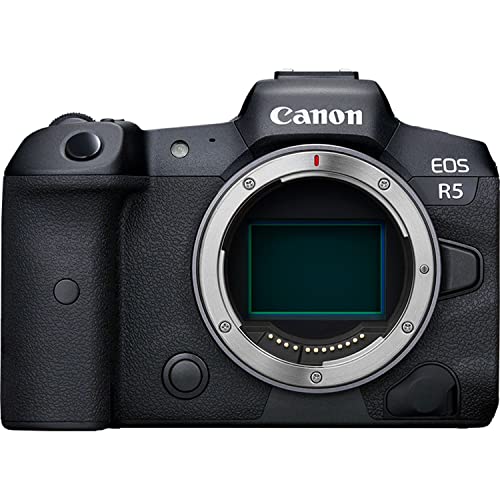
Canon
- High Image Quality: Canon EOS R5 8K digital camera features a stacked, back-side illuminated 45-megapixel full-frame CMOS sensor for phenomenal low-light performance, image clarity and level of detail
- Powerful Image Processor: DIGIC X image processor with an ISO range of 100-51200; expandable to 102400x; powers 8K capture, enhances detail, reduces noise and more with high speed and efficiency
- High-Speed Shooting: High-speed continuous shooting of up to 12 fps with mechanical shutter and up to 20 fps using electronic (silent) shutter — a large step-up in our EOS R-series line of mirrorless cameras
- Superb Autofocus: Dual pixel CMOS AF with 1,053 AF points; covers approximately 100% area; subject tracking of people, animals and vehicles using deep learning technology; features Eye Control AF capability to enable photographers to select focus points simply by looking at them
- High-Resolution Video Capture: 8K RAW, 4K up to 120fps Internal Recording in all Formats, with Auto Focus — stellar 8K camera for video recording
High Image Quality: Canon EOS R5 8K digital camera features a stacked, back-side illuminated 45-megapixel full-frame CMOS sensor for phenomenal low-light performance, image clarity and level of detail Powerful Image Processor: DIGIC X image processor with an ISO range of 100-51200; expandable to 102400x; powers 8K capture, enhances detail, reduces noise and more with high speed and efficiency
View on AmazonImage Quality and Performance
The Canon EOS R5 has created ripples in the camera industry with its remarkable 45MP full-frame CMOS sensor and DIGIC X image processor.
This dynamic combination delivers outstanding image quality, capturing rich details and vibrant colors in every shot.
The camera supports up to 20 fps continuous shooting, making it a top choice for action and wildlife photography.
One of its major highlights is the ability to record 8K video at 30fps, ushering in a new era for videographers and content creators aiming for unparalleled video clarity.
Features and User Experience
Canon has pushed the envelope further by incorporating advanced features that elevate the user experience.
The EOS R5 boasts the next-generation Dual Pixel CMOS AF II system, ensuring rapid and precise autofocus across nearly the entire sensor.
This technology, combined with 1,053 automatically selected AF zones, guarantees that subjects remain sharp even in challenging scenarios.
The camera also offers 5-axis in-body image stabilization, compensating for up to 8 stops, which is revolutionary for handheld shooting.
The high-resolution OLED electronic viewfinder provides a clear, bright view, facilitating accurate shot composition.
Design and Build
The design philosophy of the EOS R5 revolves around ergonomic excellence.
Its grip is contoured to fit comfortably in the hand, ensuring stability during prolonged shooting sessions.
The magnesium alloy body is not only lightweight but also robust, with weather-sealing that offers protection against dust and moisture.
The intuitively placed buttons and dials, coupled with the fully articulating touchscreen, further simplify the shooting process, allowing photographers to make on-the-fly adjustments with ease.
Canon’s EOS R5 stands as a testament to the brand’s commitment to innovation and excellence.
With groundbreaking features such as 8K video recording, advanced autofocus, and unparalleled stabilization, it sets a new benchmark for mirrorless cameras.
Whether you’re a professional photographer, a budding videographer, or someone who desires the best in imaging technology, the EOS R5 promises to exceed expectations.
This camera not only meets the demands of modern photography and videography but, in many ways, anticipates the future of the craft.
2026 note: still an outstanding hybrid body—especially used—but if you are buying Canon RF new primarily for video-heavy days, prefer the R5 C (above) or current R5 Mark II class over the original R5.
5. Sony A7R IV
Update: Sony has released two further generations since the A7R IV (the A7R V and, most recently, the A7R VI); the A7R IV remains a capable, lower-cost stills-resolution option, especially used, but the A7R V is the current pick if buying new in this resolution tier.

Image Quality and Performance
Sony’s A7R IV has rightfully claimed its spot in the limelight with an impressive 61MP back-illuminated full-frame CMOS sensor.
This resolution, the highest among full-frame mirrorless cameras, results in astonishingly detailed and crisp images.
The BIONZ X image processor boosts the camera’s capabilities, allowing up to 10 fps continuous shooting with full AF/AE tracking.
In terms of video, the A7R IV offers 4K video recording with full pixel readout, ensuring videographers achieve top-notch clarity and color accuracy in their projects.
Features and User Experience
The A7R IV brings forth advanced Real-time Eye AF and Real-time Tracking, drastically enhancing autofocus performance.
This ensures that even when capturing fast-moving subjects, the focus remains razor-sharp.
Sony has also introduced a multi-interface shoe with a digital audio interface, paving the way for high-quality sound recording without the need for external connectors.
The camera’s viewfinder deserves special mention: the 5.76-million dot UXGA OLED Tru-Finder is one of the highest resolutions available, offering a clear, vibrant display and aiding in precise shot framing.
Design and Build
A significant draw of the A7R IV is its user-centric design.
It features an enhanced grip for better handholding and improved button design for intuitive operation.
Durability is also a major plus; its robust construction comprises magnesium alloy and is dust and moisture resistant.
The camera also boasts dual UHS-II SD card slots, ensuring efficient storage management and backup options.
Additionally, its connectivity options, including wireless PC remote connectivity and FTP wireless transfer, add to the seamless user experience.
The Sony A7R IV is an epitome of what modern mirrorless cameras should aim for. Its colossal resolution, advanced autofocus capabilities, and user-friendly design make it a standout choice for professional photographers and serious enthusiasts.
With every release, Sony continues to redefine the benchmarks of camera technology, and the A7R IV is no exception.
It’s a camera that promises not only to meet but also to exceed the demands of contemporary photography and videography.
6. Nikon D850
Update: Nikon has discontinued the D850; its mirrorless successor is the Nikon Z8, which carries the same resolution-class sensor with dramatically faster readout and autofocus. The D850 remains a genuinely capable used stills camera, but mirrorless has moved on for video and continuous shooting.

Nikon
- Nikon designed back side illuminated (BSI) full frame image sensor with no optical low pass filter
- 45.7 megapixels of extraordinary resolution, outstanding dynamic range and virtually no risk of moiré
- Up to 9 fps1 continuous shooting at full resolution with full AF performance
- 8k6 and 4k time lapse movies with new levels of sharpness and detail; file system : DCF 2.0, exif 2.31, Pict bridge
- Tilting touchscreen, focus shift shooting mode, outstanding battery performance and much more; total pixels: 46.89 million
- 4K Ultra HD video recording, slow motion up to 120 FPS at 1080p
Nikon designed back side illuminated (BSI) full frame image sensor with no optical low pass filter 45.7 megapixels of extraordinary resolution, outstanding dynamic range and virtually no risk of moiré
View on AmazonImage Quality and Performance
The Nikon D850, boasting a 45.7MP full-frame BSI CMOS sensor, is a testament to Nikon’s commitment to top-tier image quality.

From feast-or-famine toward predictable income
No magic promises — just a clearer pipeline rhythm from the Get More Video Clients guide so work feels less random month to month.
This resolution captures an astounding level of detail, making it ideal for large prints and cropping.
Coupled with the EXPEED 5 image processor, the camera delivers clean images across its ISO range, which can be expanded from 32 to 102400.
With its capability of shooting up to 7 fps or 9 fps with the MB-D18 battery grip, capturing fast-moving subjects crisply is never an issue.
Its 4K UHD video capabilities, using the full width of the sensor, further attest to its multimedia versatility.
Features and User Experience
Autofocus is where the D850 truly shines. Its 153-point AF system, including 99 cross-type points, ensures that subjects are tracked and captured with razor-sharp precision.
Nikon’s 3D tracking system works seamlessly, especially in challenging light conditions.
A highlight feature is the camera’s Focus Shift mode, ideal for focus stacking in macro photography.
For those who want to shoot in silence, the D850 offers a silent shooting mode using its electronic shutter in live view, which is invaluable for wildlife or event photography.
Design and Build
A noticeable design trait of the D850 is its ergonomic build.
The deep grip ensures comfortable handholding, even during prolonged shooting sessions.
The body is a sturdy combination of magnesium alloy and carbon fiber materials, making it both durable and lightweight. It’s weather-sealed, ensuring protection against dust and moisture.
The illuminated buttons are a boon for low-light operations, and its 3.2-inch tilting touchscreen LCD offers flexibility in shot composition.
For storage, the dual slots accept one SD card and one XQD card; Nikon later added CFexpress Type B support to the XQD slot through firmware.
The Nikon D850 is a workhorse, suitable for nearly every type of photography—be it landscape, portrait, wildlife, or events.
Its perfect amalgamation of high resolution, robust autofocus system, and rugged build make it a top contender in the DSLR realm.
It’s an ideal camera for professionals and serious hobbyists looking for a tool that doesn’t compromise on any front.
The D850 stands as a testament to Nikon’s prowess in delivering consistent photographic excellence.
7. Fujifilm X-T4
Update: Fujifilm has released the X-T5 (and the video-leaning X-H2S) since this entry was written; the X-T4 remains a strong APS-C hybrid, especially used, but the X-T5's substantially higher-resolution sensor makes it the current pick if buying new.

Image Quality and Performance
The Fujifilm X-T4 is equipped with a 26.1MP APS-C X-Trans CMOS 4 sensor, a hallmark of Fujifilm’s commitment to pristine image quality. Paired with the X-Processor 4, the camera exhibits vibrant colors, capturing the essence of Fujifilm’s acclaimed film simulations.
Its ISO range, stretching from 160 to 12800, ensures flexibility in diverse lighting conditions, while retaining impressive noise control.
A standout feature is its capacity to shoot continuous bursts at 15 fps with the mechanical shutter, making it formidable for action photography.
The X-T4’s 4K video recording at 60 fps and Full HD at 240 fps makes it a versatile tool for videographers as well.
Features and User Experience
On the autofocus front, the X-T4 boasts a 425-point hybrid AF system that covers almost the entire frame.
This ensures lightning-fast AF speeds and reliable tracking, even with rapidly moving subjects.
The camera’s in-body image stabilization (IBIS) system offers up to 6.5 stops of shake correction, a godsend for handheld shooting in low light and for stabilizing video footage.
Additionally, the X-T4 brings forth a new film simulation mode, ETERNA Bleach Bypass, which adds a unique cinematic flair to images and videos.
Design and Build
The design ethos of the X-T4 pays homage to the classic SLRs, with its top panel dials and retro aesthetics.
The magnesium alloy body feels robust and is sealed at 63 points, providing dust and moisture resistance.
Fujifilm has also made significant improvements in the battery department, introducing a new battery that boosts the camera’s stamina to approximately 500 shots per charge.

The 3-inch fully articulating touchscreen LCD is not only great for composing shots from challenging angles but also proves beneficial for vlogging and selfies.
The Fujifilm X-T4 is an embodiment of the perfect fusion of modern technology with vintage charm.
While it carries forward the legacy of its predecessors, it introduces compelling new features like enhanced IBIS, faster burst shooting, and an improved battery.
These, combined with Fujifilm’s signature color science, make the X-T4 an enticing proposition for both photographers and videographers.
It stands as a testament to Fujifilm’s relentless pursuit of crafting cameras that resonate with the heart and soul of creatives.
8. Sony A6400
Update: Sony has released the A6700 since this entry was written; the A6400 remains a solid compact APS-C workhorse, especially used, but the A6700 is the current step-up if buying new.
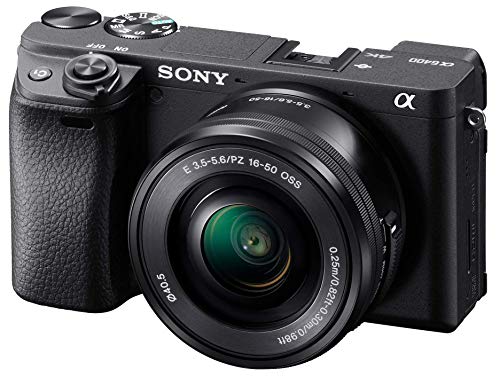
Sony
- 20.1MP stacked back illuminated 1
- Enhanced subject capture: wide 425 Phase/ 425 contrast detection points over 84 percent of the sensor
- Fast and accurate: Up to 11Fps continuous shooting at 24.2 MP raw with crisp, clear natural colors
- Multiple movie functions: Make time lapse movies or slow/quick motion videos without post processing
- Tiltable LCD screen: customizable for vlogging, still photography or recording a professional film
- In the box: rechargeable battery (NP FW50) AC adaptor (ac uud12), shoulder strap, body cap, accessory shoe cap, eyepiece cup, micro USB cable. Metering Type: 1200 zone evaluative metering
20.1MP stacked back illuminated 1 Enhanced subject capture: wide 425 Phase/ 425 contrast detection points over 84 percent of the sensor
View on AmazonImage Quality and Performance
The Sony A6400, featuring a 24.2MP APS-C Exmor CMOS sensor, promises impressive clarity and color accuracy.
Partnered with the BIONZ X image processor, it demonstrates exceptional speed and performance.
The camera supports an ISO range of 100-32000, which is expandable to 102400 for still images, ensuring commendable low-light capabilities. Furthermore, the A6400 impresses with its swift 11 fps continuous shooting, which is ideal for capturing fast-moving subjects.
On the video front, it supports 4K recording and offers full pixel readout and no pixel binning, ensuring sharp, detailed footage.
Features and User Experience
One of the significant highlights of the A6400 is its autofocus system.
Sporting a 425-point phase-detection and 425-point contrast-detection system, it claims to have the world’s fastest AF acquisition time at 0.02 seconds.
The Real-time Eye AF and Real-time Tracking features ensure that subjects remain sharply in focus, even during dynamic movement.
For vloggers and content creators, the 180° tiltable LCD screen is a boon, making it easier to frame oneself while recording.
The intuitive menu system and customizable buttons further enhance the overall user experience.
Design and Build
With its compact form factor, the A6400 is perfect for photographers on the move.
It boasts a robust magnesium alloy body, ensuring durability while maintaining lightweight characteristics.
Weather-sealing is a welcome addition, providing resistance against dust and moisture.
The electronic viewfinder (EVF) is sharp and offers a real-time shooting experience with minimal lag.
The ergonomics, although compact, are thoughtfully designed to ensure a comfortable grip and easy access to dials and controls.
The Sony A6400 stands as a formidable mid-range mirrorless camera, bridging the gap between enthusiasts and professionals.
Its cutting-edge autofocus capabilities, combined with excellent image quality and video prowess, make it a compelling choice for a range of photography styles.
Whether you’re an aspiring vlogger, a travel enthusiast, or a seasoned photographer, the A6400 proves to be a reliable companion, delivering performance that punches above its weight.
9. Panasonic Lumix GH5
Update: Panasonic has released two further generations since the GH5 (the GH6 and, more recently, the GH7); the GH5 remains an MFT video classic, especially used, but the GH6/GH7 and the S5IIX (covered above) are the modern successors.

Panasonic
- Professional photo and video: 20.3 Megapixel micro four thirds sensor with no low pass filter to capture sharp images with a high dynamic range and artifact free performance
- Splash or Freeze Proof Design: Freeze proof to 10 degrees the durable magnesium alloy body withstands heavy use in the field; Splash or dust proof construction with weather sealing on every Joint, dial and button
- Dual image stabilization: 5 axis dual image stabilization corrects all lenses, including classic lenses not equipped with O. I. S, to eliminate Blur and nearly eliminate body and lens shake in both photo and 4K video recording
- 4K video capture: Records silky smooth 4K 60P by 50P (QFHD 4K: 3840 x 2160 ; MOV or MP4) video with internal 4: 2: 2 10 bit 4K video recording, Plus exclusive 6K photo and 4K post focus records photos up to 60Fps
- Connectivity and Ports: 3.5 millimeter audio port, connect to devices with USB 3.0, an external monitor or external Recorder with a full size HDMI port; Available Twin SD card slots (UHS II U3 compatible)
Professional photo and video: 20.3 Megapixel micro four thirds sensor with no low pass filter to capture sharp images with a high dynamic range and artifact free performance Splash or Freeze Proof Design: Freeze proof to 10 degrees the durable magnesium alloy body withstands heavy use in the field; Splash or dust proof construction with weather sealing on every Joint, dial and button
View on AmazonImage Quality and Performance
The Panasonic Lumix GH5, boasting a 20.3MP Micro Four Thirds sensor, takes a significant leap in terms of image quality from its predecessor.
The absence of the low-pass filter ensures sharper images with greater detail retention.
Powered by the Venus Engine, the GH5 offers an impressive ISO range up to 25600 for photos and 12800 for video, catering well to low-light conditions.
When it comes to performance, the camera excels with its 12 fps burst shooting, ensuring that fleeting moments are captured with precision.
Features and User Experience
Arguably the main attraction of the GH5 is its video capabilities. It offers 4K video recording at 60p/50p, a feature rarely seen in its price range.
The 10-bit 4:2:2 internal recording ensures rich color detail, making it a favorite among videographers.
For stabilization, the 5-axis in-body stabilization system stands out, ensuring smooth footage even in handheld scenarios.
The camera also boasts an impressive 225-point autofocus system, making subject tracking efficient and accurate.
The large OLED Live View Finder (LVF) with a 3.6M-dot resolution ensures a clear, real-time view of your frame.
Design and Build
The Lumix GH5 is built with the needs of professional photographers and videographers in mind. Its magnesium alloy full die-cast front and rear frame make it both rugged and durable.
The camera also benefits from weather sealing, making it splash, dust, and freeze-resistant.
The dual SD card slots ensure ample storage and backup options.
Its ergonomic design, complemented by the intuitive button layout, provides a user-friendly experience, ensuring quick adjustments even in the heat of the moment.
The Panasonic Lumix GH5 carves its niche in the realm of mirrorless cameras, especially for those focused on videography.
Its robust build, coupled with top-tier video features and reliable performance, makes it a compelling choice for professionals and enthusiasts alike.
Whether you’re shooting a documentary, capturing a wildlife expedition, or covering a wedding, the GH5 promises to deliver results that exceed expectations, standing as a testament to Panasonic’s commitment to quality and innovation.
10. Canon EOS M50 Mark II
Update: Canon has discontinued the EF-M mount this camera used; new buyers looking for a Canon compact should look at the RF-mount EOS R50 or R8 instead. The M50 Mark II remains a fine used entry-level option.
Image Quality and Performance
The Canon EOS M50 Mark II, equipped with a 24.1MP APS-C CMOS sensor, delivers vibrant and detailed images.
Its DIGIC 8 image processor ensures speedy performance, effective noise reduction, and superb color reproduction.
The camera offers an ISO range of 100-25600, making it versatile for various lighting conditions.
The M50 Mark II reaches up to 7.4fps with continuous autofocus. That is useful for casual action, although its buffer and tracking are not designed to replace a dedicated sports body.
Features and User Experience
The camera records 4K UHD, but the mode applies a substantial crop and uses contrast-detection autofocus rather than Dual Pixel CMOS AF. Dual Pixel autofocus is available for Full HD and still-image Live View, so buyers prioritizing 4K tracking should understand this limitation.
For Full HD recording and stills, Dual Pixel CMOS AF provides smoother focus than the camera's cropped 4K mode.
The camera also includes Eye Detection AF, which proves invaluable for portraiture, ensuring sharp focus on the subject’s eyes.
The vari-angle touchscreen LCD is a boon for vloggers and those shooting from challenging angles, granting an intuitive interface and easy navigation.
Design and Build
Compact yet sturdy, the EOS M50 Mark II is designed for on-the-go shooting.
It’s lightweight, making it an attractive option for travel and street photographers.
The camera body feels solid in the hand, with a comfortable grip ensuring stability during handheld shooting.
The electronic viewfinder (EVF) with 2.36 million dots offers a clear and bright view, allowing for precise framing and composition.
Additionally, its built-in Wi-Fi and Bluetooth capabilities facilitate seamless sharing and remote camera control.
The Canon EOS M50 Mark II stands as a noteworthy option for those venturing into the mirrorless camera world or seeking a reliable secondary camera.
While it excels in many aspects, it particularly shines for content creators and vloggers, thanks to its video capabilities and user-friendly features.
Balancing performance, design, and versatility, the M50 Mark II reinforces Canon’s reputation in the realm of innovative imaging solutions.
Whether you’re capturing daily life, creating content, or exploring landscapes, this camera promises a satisfying and creative photographic experience.
11. Olympus OM-D E-M10 Mark IV
Update: Olympus's camera division was spun off into OM Digital Solutions (branded OM System), which continues the Micro Four Thirds line this camera belongs to. The E-M10 Mark IV remains a strong compact travel option, especially used.

OM SYSTEM
- 20 MP Live MOS Sensor
- Always-on connection and background connection via Bluetooth & OI Share Smartphone app
- Flip-down monitor and dedicated Selfie mode. Selfie mode automatically turns on when monitor is flipped down
- In-Body 5-Axis Image Stabilization capable of 4.5 shutter speed steps of compensation
- 16 Art Filters (31 types). Includes new Instant Film for a nostalgic feel
- Digital zoom: 2.0 multiplier_x
20 MP Live MOS Sensor Always-on connection and background connection via Bluetooth & OI Share Smartphone app
View on AmazonImage Quality and Performance
The Olympus OM-D E-M10 Mark IV sports a 20.3MP Micro Four Thirds sensor, ensuring high-resolution image capture with a rich tonal range.
Coupled with the TruePic VIII image processor, the camera delivers clean and sharp photos even in low-light conditions.
The extended ISO range of 100-25600 offers flexibility in various environments.
Its electronic-shutter high-speed mode reaches about 15fps; the high mechanical-shutter rate is about 8.7fps, and continuous-autofocus modes are slower. Those distinctions matter for moving subjects and for scenes vulnerable to electronic-shutter distortion.
Additionally, the camera’s in-body 5-axis image stabilization ensures that images remain blur-free even during handheld shooting.
Features and User Experience
One of the standout features of the E-M10 Mark IV is its autofocus system.
With 121 contrast-detect AF points, it achieves focus rapidly and accurately.
The camera’s face and eye detection capabilities prove invaluable for portraiture, ensuring that the subject remains tack sharp.
The tilting touchscreen LCD is not only beneficial for framing shots but also provides a responsive interface for menu navigation and image review.
On the video front, the camera offers 4K video recording, making it suitable for vloggers and casual videographers.
Design and Build
A fusion of classic aesthetics with modern functionality, the OM-D E-M10 Mark IV boasts a sleek yet robust build.
Its compact and lightweight design ensures that it’s travel-friendly, catering to photographers on the move.
Despite its compactness, the camera offers a comfortable grip, and the strategically placed dials and buttons provide an intuitive shooting experience.
Connectivity options like Wi-Fi and Bluetooth further enhance the user experience, simplifying image sharing and remote camera operation.
The Olympus OM-D E-M10 Mark IV stands out as an attractive option for both beginners and seasoned photographers.
It beautifully blends superior imaging capabilities with a user-centric design, all packed in a compact body.
Whether you’re documenting daily moments, embarking on a travel adventure, or diving into street photography, the E-M10 Mark IV won’t disappoint.
It offers a blend of performance, versatility, and style, making it a worthy addition to any photographer’s kit.
12. Nikon Z6 II
Update: Nikon has released the Z6 III since this entry was written; the Z6 II remains a solid full-frame hybrid, especially used, but the Z6 III is the current refresh if buying new.
Image Quality and Performance
The Nikon Z6 II boasts a 24.5MP full-frame BSI CMOS sensor, ensuring that users capture images with exceptional detail and dynamic range.
Partnered with the EXPEED 6 Image Processing Engine, this camera provides consistent performance even in challenging lighting conditions.
With an ISO range that stretches from 100-51200, the Z6 II is well-suited for both brightly lit and low-light environments.
The impressive 14fps burst shooting capacity ensures that fast-action moments aren’t missed, while its dual EXPEED 6 processors help handle data efficiently, reducing bottlenecks and ensuring quick performance throughout.
Features and User Experience
Focusing capabilities in the Nikon Z6 II have been notably enhanced.
The 273-point hybrid autofocus system is not only fast but also remarkably accurate.
Eye-detection AF is a boon for portrait photographers, ensuring critical focus on subjects’ eyes whether they’re humans or animals.
For video enthusiasts, the Z6 II offers 4K UHD recording at 60p, providing filmmakers with crisp, high-resolution footage.
A key improvement over its predecessor is the introduction of dual card slots— one CFexpress (Type B)/XQD and one SD UHS-II— providing users with more storage flexibility and backup options.
Design and Build
When it comes to design, the Z6 II retains much of the build and ergonomics of its predecessor.
The sturdy magnesium alloy body is both durable and weather-sealed, ensuring that the camera can withstand the challenges of outdoor shooting.
The large electronic viewfinder offers a clear, bright view, while the touchscreen LCD at the back ensures intuitive navigation and easy image review.
The positioning of dials and buttons feels natural, allowing photographers to make quick adjustments without taking their eye off the subject.
The Nikon Z6 II solidifies its place as a reliable and versatile camera for a range of photographic pursuits.
While it builds on the foundation set by its predecessor, the Z6 II introduces several improvements that cater to the evolving needs of modern photographers.
From its enhanced AF system to the inclusion of dual card slots, Nikon has addressed many of the pain points from the original Z6.
Whether you’re a dedicated stills photographer, an avid videographer, or someone who juggles both, the Z6 II is an investment that promises consistent and high-quality results.
13. Panasonic Lumix S5
Update: Panasonic has released the S5II and S5IIX (the latter covered above) with phase-detect autofocus since this entry was written; the original S5 remains strong used, but the S5II/S5IIX are the current PDAF models if buying new.

Panasonic
- A LIGHTWEIGHT, POWERFUL HYBRID CAMERA FOR VIBRANT STILL PHOTOGRAPHY AND CINEMATIC VIDEO: Realize your creative vision with extraordinary 4K 60p, 10-bit video, FHD 180fps Slow Motion option as well as 4:3 Anamorphic support.
- DETAILED PHOTO AND VIDEO THAT WILL DELIGHT ENTHUSIASTS AND EXPERTS ALIKE: Capture content in impressive high quality with 96MP High Resolution mode, Dual Native ISO to minimize noise in high sensitivity and V-Log/V-Gamut with 14 plus stop dynamic range.
- IMPROVED, HIGH-PRECISION AUTOFOCUS AND POWERFUL IMAGE STABILIZATION: Improved autofocus includes detection of the head as well as eyes, face and body, to capture subjects with ease and precision. 5-axis Dual I.S. 2 enables 6.5-stop slower shutter speed.
- EXPANDED FEATURES OFFER NEW LEVELS OF CREATIVITY: Use Live View Composite mode to instantly create a stunning image out of several live shots to capture fireworks or a starry sky
A LIGHTWEIGHT, POWERFUL HYBRID CAMERA FOR VIBRANT STILL PHOTOGRAPHY AND CINEMATIC VIDEO: Realize your creative vision with extraordinary 4K 60p, 10-bit video, FHD 180fps Slow Motion option as well as 4:3 Anamorphic support. DETAILED PHOTO AND VIDEO THAT WILL DELIGHT ENTHUSIASTS AND EXPERTS ALIKE: Capture content in impressive high quality with 96MP High Resolution mode, Dual Native ISO to minimize noise in high sensitivity and V-Log/V-Gamut with 14 plus stop dynamic range.
View on AmazonImage Quality and Performance
The Panasonic Lumix S5 is equipped with a 24.2MP full-frame CMOS sensor, ensuring that users enjoy high-resolution imagery characterized by rich details and vibrant colors.
The camera’s sensor benefits from a wide ISO range of 100-51200, expandable to 50-204800, making it versatile in varied lighting conditions.
Powered by the Venus Engine, the Lumix S5 delivers not only in terms of image quality but also in speed, offering a 7fps continuous shooting rate.
Its 5-axis in-body stabilization further ensures that shots remain sharp even when shooting handheld in challenging conditions.
Features and User Experience
Where the Lumix S5 truly shines is in its video capabilities.
The camera supports 4K 60p/50p video recording in a 4:2:0 10-bit color profile, with the option to output 4K 60p/50p 4:2:2 10-bit over HDMI.
Moreover, Panasonic’s full V-Log/V-Gamut profile is installed and is rated for more than 14 stops of dynamic range. It gives experienced users a flexible grading image, although correct exposure and a managed color workflow are still required.
On the autofocus front, the S5 employs a contrast-detect AF system, further enhanced by Panasonic’s DFD (Depth from Defocus) technology.
While it might not be the fastest system in the market, it is reliable and features face, eye, body, and animal detection capabilities.
Design and Build
The design of the Lumix S5 seems to prioritize compactness and portability without compromising on durability.
It’s noticeably smaller and lighter than many of its full-frame peers, making it a top choice for photographers and videographers on the move.

Spot red flags before you sign
Use the same prompts we use to catch vague briefs, scope creep bait, and timeline traps — all in one short discovery framework.
Despite its compact size, it retains a rugged build, featuring a weather-sealed body that’s resistant to dust, splashes, and cold temperatures.
The ergonomic grip ensures comfortable handling, while the vari-angle touchscreen LCD and high-resolution electronic viewfinder offer flexibility in composing shots.
The Panasonic Lumix S5 presents itself as a well-rounded mirrorless camera that caters to both photographers and videographers.
While it offers commendable still image quality, it is its video capabilities that truly set it apart in its price bracket.
The compact yet durable design makes it ideal for travel and outdoor enthusiasts.
For those seeking a versatile full-frame camera that doesn’t break the bank, the Lumix S5 is a worthy contender that punches well above its weight in the ever-competitive camera market.
14. Canon EOS 90D
Update: Canon has largely wound down new APS-C DSLR development in favor of its RF-mount mirrorless line; the 90D remains a late, capable DSLR stills option, especially for buyers already invested in EF lenses.
Image Quality and Performance
The Canon EOS 90D, boasting a 32.5MP APS-C CMOS sensor, delivers images that are high in resolution, capturing intricate details and nuances.
This resolution is a significant jump from its predecessor and sets a new standard for APS-C DSLRs. Paired with Canon’s DIGIC 8 image processor, the 90D ensures that photos are not only sharp but also exhibit vibrant colors and minimal noise.
The camera’s ISO range stretches from 100-25600, expandable to 51200, catering to varied lighting scenarios.
With a swift continuous shooting rate of 10fps, capturing fast-moving subjects becomes more accessible and efficient.
Features and User Experience
One of the standout features of the EOS 90D is its autofocus system. With 45 cross-type AF points and Canon’s Dual Pixel CMOS AF for Live View shooting, focus acquisition is both rapid and accurate.
The latter ensures smooth and efficient focus during video recording and when using the LCD.
Speaking of video, the 90D supports 4K recording at 30fps without cropping, a notable improvement over many predecessors in Canon’s lineup.
The camera’s interface is user-friendly, with a fully articulating touchscreen LCD offering an intuitive experience, further complemented by a bright and clear optical viewfinder.
Design and Build
When handling the EOS 90D, it’s evident that Canon prioritized ergonomics.
The camera feels substantial without being overly bulky, ensuring a confident grip during extended shooting sessions.
Built to last, the camera’s construction features weather-sealing to protect against dust and moisture, allowing users to shoot in less than ideal conditions without much worry.
Physical controls and buttons are strategically placed, ensuring quick adjustments without diving deep into menus, proving beneficial for those who need to make rapid changes on the go.
Conclusion
The Canon EOS 90D emerges as a robust contender in the APS-C DSLR segment.
With its combination of high-resolution imaging, versatile video capabilities, and a reliable autofocus system, it caters to a wide range of photographers, from enthusiasts to seasoned professionals.
Its ergonomic design and durable build quality further solidify its place as a camera that can be relied upon in various shooting scenarios.
For those invested in Canon’s ecosystem and seeking an APS-C DSLR that brings modern features to the table, the EOS 90D is a compelling choice.
15. Sony A7C
Update: Sony has released the A7C II and higher-resolution A7CR since this entry was written; the original A7C remains a compact full-frame option, especially used, but the newer models are the current picks if buying new.

Image Quality and Performance
The Sony A7C, carrying a 24.2MP full-frame Exmor R CMOS sensor, promises excellent image quality consistent with Sony’s esteemed lineup.
Backed by the BIONZ X image processor, it delivers detailed, vibrant images with a broad dynamic range.
The ISO range spans from 100 to 51200, allowing flexibility in varied lighting conditions.
Noise control is impressive, ensuring clean images even at higher ISO settings.
Its continuous shooting capability, clocking in at 10fps, ensures that fast-paced action is captured with ease and precision.
Features and User Experience
Autofocus stands as one of the A7C’s standout features.
The camera boasts 693 phase-detection points and 425 contrast-detection areas, guaranteeing swift and precise focus.
With Real-time Eye AF and Real-time Tracking, subjects remain sharp even when in motion, a boon for wildlife and sports photographers.
On the video front, the A7C offers 4K video recording with full-pixel readout and no pixel binning, ensuring high-resolution footage.
The camera’s user interface is intuitive, while the vari-angle touchscreen LCD offers flexibility for shooting from unconventional angles.
Design and Build
Sony’s A7C breaks away from the typical design ethos of the A7 series, leaning towards a more compact form factor reminiscent of the A6000 series.
This compactness does not compromise the camera’s robustness, with its magnesium alloy body offering durability.
It’s also weather-sealed, making it resistant to dust and moisture.
Despite its small size, the A7C provides a comfortable grip and features a well-thought-out button layout, ensuring quick access to essential settings without a deep menu dive.
Sony’s A7C is an impressive fusion of performance and portability.
Offering the advantages of a full-frame sensor in a compact body, it caters to photographers and videographers who require top-tier performance without the bulk of traditional full-frame cameras.
Its autofocus capabilities and video prowess make it versatile across various shooting scenarios.
For those in search of a compact, full-frame camera that doesn’t skimp on features or performance, the A7C proves to be an exceptional choice in Sony’s mirrorless lineup.
16. Fujifilm X100V
Update: Fujifilm has released the X100VI since this entry was written, with a substantially higher-resolution sensor and in-body stabilization the X100V lacks; the X100V remains a beloved fixed-lens classic, especially used, but the X100VI is the current model if buying new.

Fujifilm
- Great photography every day, everywhere: X100V features a newly designed, incorporated 23 millimeter F2 lens, ensuring you preserve those special moments at maximum resolution with minimal distortion. It also offers an improved close focusing performance compared to previous X100 models, and, for the first time in the X100 line, you can keep making images even in the toughest conditions when you attach the optional adapter ring with the weather-sealing protection lens (sold separately). This outstanding lens retains the same slim line design as other X100 models, so it retains compatibility with existing WCL and TCL lens attachments.
- Designed for quality and speed: From fleeting holiday moments and family celebrations to hard-hitting visual stories and ever-changing city streets, X100V has been designed to always deliver exceptional image and video quality. Creating a tool this capable takes powerful technology; That’s why Fujifilm’s state-of-the-art X-Trans CMOS 4 sensor and X-processor 4 combination sits at this camera’s core. Pairing this exceptional, 26.1MP, back-side illuminated sensor and powerful quad-core CPU results in incredible quality, wide dynamic range, lightning-fast processing and precision AF performance, right down to -5EV.
- Two ways to see an Image: To truly convey the magic of a scene, you need to be immersed in the moment and X100V’s advanced hybrid viewfinder gives you everything you need to do exactly that. At the flick of a switch, you can change between the X100V’s 0.52x magnification optical viewfinder (OVF), which uses parallax-correcting frame lines to let you see outside the shot, and it’s 3.69M-dot OLED electronic viewfinder (EVF), which gives you a real-time preview of your exposure. You can even get the best of both worlds by using the electric rangefinder function (ERF) to activate a mini EVF display within the OVF window.
- Frame the perfect image: X100V has been specifically tailored for photographers who are never without a camera by their side and always ready to frame a moment. The two-way, tilting LCD touchscreen is a perfect example of Fujifilm’s tailored design. This new technology within the X100V offers quick, intuitive controls and makes struggling to frame images from difficult angles a thing of the past. Furthermore, when folded flat it fits seamlessly into the camera’s slim line body, and in doing so, this sophisticated LCD touchscreen finds the perfect balance between functionality and portability.
- Movies on the move: The X100V allows you to explore a whole new world of image making with the ability to create stunning 4K video at 30 frames per second. Additionally, super slow-motion footage can be recorded using the camera’s full HD/120p setting, so you can relive details that would otherwise be missed by the naked eye. This professional-level quality is backed up by Fujifilm’s outstanding color reproduction technology and unique selection of in-camera film simulation modes, while those who need more fidelity can record 10-bit, 4:2:2 color via the HDMI port.
Great photography every day, everywhere: X100V features a newly designed, incorporated 23 millimeter F2 lens, ensuring you preserve those special moments at maximum resolution with minimal distortion. It also offers an improved close focusing performance compared to previous X100 models, and, for the first time in the X100 line, you can keep making images even in the toughest conditions when you attach the optional adapter ring with the weather-sealing protection lens (sold separately). This outstanding lens retains the same slim line design as other X100 models, so it retains compatibility with existing WCL and TCL lens attachments. Designed for quality and speed: From fleeting holiday moments and family celebrations to hard-hitting visual stories and ever-changing city streets, X100V has been designed to always deliver exceptional image and video quality. Creating a tool this capable takes powerful technology; That’s why Fujifilm’s state-of-the-art X-Trans CMOS 4 sensor and X-processor 4 combination sits at this camera’s core. Pairing this exceptional, 26.1MP, back-side illuminated sensor and powerful quad-core CPU results in incredible quality, wide dynamic range, lightning-fast processing and precision AF performance, right down to -5EV.
View on AmazonImage Quality and Performance
The Fujifilm X100V comes equipped with a 26.1MP X-Trans CMOS 4 APS-C sensor paired with the X-Processor 4.
Together, they provide stunning image clarity, vibrant colors, and a wide dynamic range.
The renowned Fujifilm film simulations, with the added Classic Neg mode, further enhance the color rendition, making each shot unique and reminiscent of classic film stocks.
The camera handles low light admirably, thanks to its native ISO range of 160 to 12800, expandable from 80 to 51200.
Continuous shooting is available at 11fps, ensuring the capture of fleeting moments with precision.
Features and User Experience
The X100V’s autofocus system is a significant upgrade from its predecessor.
With 425 phase-detection points covering almost the entire sensor, the camera ensures quick and accurate focus.
Face and Eye Detection features are also enhanced, offering better tracking even in complex environments.
Video capabilities are not left behind, as the X100V offers 4K recording at 30fps.
The two-way tilting touchscreen LCD is a welcome addition, granting more flexibility while shooting.
The camera’s interface is intuitive, with dials and controls that give a tactile, classic camera feel while ensuring ease of use.
Design and Build
Fujifilm’s X100V carries the series’ legacy of retro aesthetics paired with modern functionality.
The camera’s aluminum body feels sturdy and refined, with the redesigned ISO and shutter speed dials adding to the premium feel.
It now boasts improved weather resistance (when used with the AR-X100 adapter ring and the PRF-49 protection filter), making it more versatile for outdoor shoots.
The fixed 23mm f/2 lens has been redesigned, ensuring better resolution and lower distortion, while still offering that beloved 35mm equivalent field of view.
The Fujifilm X100V represents a refined blend of style, functionality, and image quality.
As a compact camera, it punches above its weight, delivering images that could rival those from more extensive systems.
The enhancements in autofocus, video capabilities, and the overall build make it a compelling choice for street photographers, travel enthusiasts, and anyone seeking a blend of vintage aesthetics with modern technology.
The X100V stands as a testament to Fujifilm’s commitment to continuous improvement, offering a camera that is both a joy to use and capable of delivering exceptional results.
17. Nikon Z7 II
Update: Nikon has effectively superseded the Z7 II with the Z8, which packs flagship Z9-level speed and autofocus into a similarly sized body. The Z7 II remains a capable high-resolution stills hybrid, especially used.

Nikon
- Every little detail matters. 45.7MP. Powerful AF performance. NIKKOR Z lenses. Intuitive functionality. The most sophisticated tool for high resolution imaging.
- Subject acquisition with speed and precision. 3.3x more buffer capacity than the original Z 7. Faster continuous shooting. Improved AF performance and functionality.
- Dual card slots (CFexpress/XQD and UHS-II SD). Flexibility and peace of mind when shooting important moments or on assignment, such as wedding and event photography. Comfortable. Durable. Intuitive. Z 7II’s exterior and interior have been thoughtfully designed to be handled and used with max comfort and ease of operation.
- Vertical Grip Ready. Now compatible with the new vertical battery grip for those in need of more power and easier shutter operation when shooting vertically. 4K UHD 60p video. Smoother action, smoother camera motion and the ability to slow down 4K UHD footage in post. USB-C constant power and charging. Never run low on power during livestreams, video shoots and timelapses.
- One mount accepts them all. Compatible with a growing line of NIKKOR Z lenses as well as approx. 360 F-mount NIKKOR lenses with FTZ mount adapter (sold separately).
- Max focal length : 0.95 Millimeters
Every little detail matters. 45.7MP. Powerful AF performance. NIKKOR Z lenses. Intuitive functionality. The most sophisticated tool for high resolution imaging. Subject acquisition with speed and precision. 3.3x more buffer capacity than the original Z 7. Faster continuous shooting. Improved AF performance and functionality.
View on AmazonImage Quality and Performance
The Nikon Z7 II builds upon the strengths of its predecessor, boasting a 45.7MP BSI CMOS sensor which, combined with the dual EXPEED 6 image processors, ensures impeccable image quality.
Photographers will appreciate the dynamic range, detail resolution, and color accuracy this camera delivers.
The native ISO range spans from 64 to 25600, with an expanded setting going down to ISO 32, making it suitable for a diverse range of lighting conditions.
Its continuous shooting mode has been improved, now reaching 10fps, providing ample speed for most scenarios.
Features and User Experience
A significant enhancement in the Z7 II is the improved autofocus system. With 493 phase-detection autofocus points, it covers 90% of the frame, ensuring accurate focus across a vast area.
Eye-detection and animal-detection autofocus features have also seen refinements, making them more reliable.
On the video front, the Z7 II offers 4K UHD recording at 60fps, a boon for videographers looking for smooth footage.
The camera’s in-body image stabilization system further ensures both stills and videos remain sharp, compensating for up to 5 stops.
User experience is rounded off with dual card slots, accommodating both CFexpress (Type B) and SD UHS-II cards, increasing storage flexibility and data safety.
Design and Build
Maintaining the sleek design of its predecessor, the Nikon Z7 II feels solid in the hand, thanks to its magnesium alloy construction.
It’s weather-sealed, providing resilience against dust, moisture, and the elements, perfect for outdoor shoots.
The 3.2-inch tilting touchscreen LCD offers clear visuals and intuitive controls.
The OLED electronic viewfinder, with a 3.69 million dot resolution, provides a crisp, bright, and natural view of the scene, assisting photographers in framing and reviewing shots with precision.
The Nikon Z7 II emerges as a worthy successor in the Z series lineup, addressing many of the first-generation model’s limitations.
Its superb image quality, enhanced autofocus capabilities, and video improvements make it an enticing option for professionals and enthusiasts alike.
With its robust build and user-friendly features, it stands as a reliable companion for a diverse range of photographic ventures.
For those seeking a high-resolution mirrorless camera that strikes a balance between performance, build, and functionality, the Z7 II is undeniably a strong contender.
18. Canon Powershot G7 X Mark III
Image Quality and Performance
The Canon PowerShot G7 X Mark III stands out with its 20.1MP 1-inch stacked CMOS sensor, ensuring detailed images with impressive clarity.
The sensor, when paired with the DIGIC 8 Image Processor, provides a native ISO range from 100 to 12800, ensuring optimal performance even in low-light conditions.
This compact camera delivers sharp, vibrant photos that rival many DSLRs in its category.
For continuous shooting, it manages a notable 20fps, making it suitable for capturing fast-moving subjects, from bustling city streets to sports events.
Features and User Experience
One of the key attractions of the G7 X Mark III is its ability to shoot uncropped 4K video, making it an excellent choice for vloggers and content creators.
The added benefit of a 3.5mm microphone input ensures better audio quality for video recordings.
The camera also boasts a built-in ND filter, proving useful for controlling exposure, especially during bright days.
The vertical video shooting capability is another nifty feature, catering directly to social media enthusiasts.
A standout feature is the camera’s ability to live stream directly to YouTube, a boon for on-the-go content creators.
Design and Build
Compact yet robust, the G7 X Mark III’s design prioritizes portability and durability.
Its sleek metal body feels sturdy and is complemented by its 3-inch tilting touchscreen LCD, which makes framing, shooting, and playback exceptionally user-friendly.
The lens offers a versatile 24-100mm equivalent focal range with an f/1.8-2.8 aperture, ideal for a variety of shooting scenarios, from wide-angle landscapes to telephoto close-ups.
The camera also incorporates a pop-up electronic viewfinder, a welcome feature for those who prefer a more traditional shooting experience.
Conclusion
Canon’s PowerShot G7 X Mark III is a compelling proposition for photographers and videographers seeking a compact yet powerful camera.
With its impressive image quality, 4K video capabilities, and features tailored to modern content creators, it addresses the needs of today’s multimedia world.
Whether for travel, vlogging, or everyday photography, this camera offers a blend of performance, versatility, and convenience that few in its category can match.
For those in search of a pocketable powerhouse, the G7 X Mark III is undoubtedly worth considering.
19. Nikon Z5
The Nikon Z5 is a 24.3MP full-frame mirrorless camera aimed at photographers entering Nikon’s Z system. Its 273-point hybrid autofocus system covers about 90 percent of the frame, and its five-axis in-body vibration reduction is rated at up to five stops with a compatible Z lens.
Two UHS-II SD card slots provide inexpensive backup or overflow storage. The camera records 4K UHD at up to 30p, although the substantial 4K crop makes it less attractive for wide-angle video; its 4.5fps maximum burst rate also places it behind faster sports-oriented bodies.
The original Z5 remains a capable stills-first entry point when discounted, but Nikon has since introduced the Z5II. Compare their autofocus, video, and price differences rather than assuming the older body is the newest model.

Nikon
- 24.3MP Full-Frame Mirrorless Camera | Nikon’s most compact, lightweight full-frame interchangeable lens Z series camera
- Outstanding Image Quality | Sharp, lifelike details, vibrant colors and great low-light performance
- 4K/30p and 1080/60p Video Recording | Crisp, smooth videos with shallow depth of field; USB power delivery; HDMI output
- Eye-Detection Autofocus | Automatically locks onto the eyes of people, dogs and cats and tracks them as they move around the frame
- 5-Axis In-Body Image Stabilization | Capture steady handheld videos and sharp photos; shoot at slower shutter speeds in low light without causing camera blur
- Built-in WiFi and Bluetooth | Use Nikon’s free SnapBridge app to share photos and control the camera with a compatible smartphone or tablet
24.3MP Full-Frame Mirrorless Camera | Nikon’s most compact, lightweight full-frame interchangeable lens Z series camera Outstanding Image Quality | Sharp, lifelike details, vibrant colors and great low-light performance
View on Amazon20. Fujifilm GFX100
The original Fujifilm GFX100 is a mirrorless medium-format camera built around a 43.8 × 32.9mm, 102MP Bayer sensor. It pairs phase- and contrast-detection autofocus with five-axis in-body stabilization and shoots at up to 5fps—not the 51.4MP sensor, optical finder, or Sony A7 III hardware previously described here.
Its detachable 5.76-million-dot electronic viewfinder, dual batteries, large body, and high-resolution files suit deliberate studio, landscape, archival, and commercial work more than lightweight travel. It records DCI 4K or UHD 4K at up to 29.97p and offers 14- or 16-bit RAW capture.
Fujifilm now lists this model as discontinued. It can still be compelling on the used market when maximum resolution and the G-mount system justify its size and workflow demands, but it is neither a current release nor a sensible beginner default.

Fujifilm
- The Fujifilm GFX 100 pairs a newly-developed back-illuminated 102MP imaging sensor with our blazingly fast x processor 4 processing engine to create a combination capable of outputting 16-bit images with amazing color fidelity, rich shadow detail, and incredible dynamic Range.
- Body: made of magnesium alloy, making it lightweight and very robust. GFX 100 is weather sealed at 95 points (including the electronic viewfinder) helping it withstand extreme conditions of dust, moisture and low temperatures.
- Horizontal and Vertical Body Operation: built in vertical grip, it is the first FUJIFILM camera to have this integrated design.
- 55mm diagonal length large format (43. 8 x 32. 9mm) has paved the way for ultra high image resolution.
- X-Processor 4: FUJIFILM's latest image processing engine to quickly optimize the data from the fast, high resolution image sensor.
The Fujifilm GFX 100 pairs a newly-developed back-illuminated 102MP imaging sensor with our blazingly fast x processor 4 processing engine to create a combination capable of outputting 16-bit images with amazing color fidelity, rich shadow detail, and incredible dynamic Range. Body: made of magnesium alloy, making it lightweight and very robust. GFX 100 is weather sealed at 95 points (including the electronic viewfinder) helping it withstand extreme conditions of dust, moisture and low temperatures.
View on Amazon21. Canon EOS-1D X Mark III
Canon announced the EOS-1D X Mark III in 2020 as a professional full-frame DSLR for news, sports, and wildlife work. It uses a 20.1MP CMOS sensor and DIGIC X processor, not a 50.6MP sensor or the older DIGIC 6+ processor.
Through its optical viewfinder it can shoot at up to 16fps; in Live View, its mechanical or electronic shutter reaches up to 20fps with autofocus and exposure tracking. Its rugged integrated-grip body, long battery life, wired networking, and 191-point viewfinder AF system were designed for demanding professional delivery rather than portability.
The camera records internally to two CFexpress cards and supports 5.5K RAW and oversampled 4K options. Those capabilities remain useful, but Canon has retired the DSLR-based 1-series line entirely in favor of the mirrorless EOS R1 (2024), which now holds the flagship sports/photojournalism role. Buyers should weigh the 1D X Mark III's size, specialist price, and aging EF-mount future against the R1 if buying new, though the 1D X Mark III remains a capable used option for photographers already invested in EF glass.

Cameras And Kit Lenses
Many of the bodies above are sold bundled with a "kit lens," typically a moderate wide-to-short-telephoto zoom (commonly in the 18-55mm or 24-105mm equivalent range, depending on system), though some kits instead include a compact prime.
The usual trade-off with a kit lens is a slower variable aperture rather than an inability to zoom -- kit lenses are genuinely useful for everyday photography like family gatherings, vacations, or general use, and are a reasonable way to start before investing in faster or more specialized glass. Check the exact lens bundled with the body rather than assuming all kits are equivalent, since the same camera is often sold with different kit lens options.
How To Choose The Best Camera For You
Start from the work, not the spec sheet: decide whether stills or video matters more, how much you'll shoot in low light, whether you need fast continuous autofocus for action or wildlife, and how much weight and bulk you're willing to carry.
From there, sensor size and lens ecosystem narrow the field. Full-frame sensors (covered by most of the flagship and hybrid bodies above) give the best low-light performance and shallowest depth of field, APS-C and Micro Four Thirds bodies trade some of that for smaller, cheaper systems, and medium format (the Fujifilm GFX line) trades speed and portability for maximum resolution and dynamic range.
Budget matters beyond the body price -- factor in the lenses you'll actually need, extra batteries, memory cards, and any audio or stabilization accessories as one complete-system cost, not just the camera itself.
What Is The Best Camera To Buy For A Beginner Photographer?
What camera should a beginner photographer buy? The answer depends less on headline specifications than on budget, intended subjects, and willingness to learn manual controls.
For a true beginner on a budget, an entry-level APS-C mirrorless body -- something in the Canon EOS R50/R100 or Sony A6400 class from this guide -- offers a strong balance of image quality, autofocus that does most of the work automatically, and a lower price than full-frame systems.
If landscapes, architecture, or general everyday shooting are the priority, that same entry-level body with its kit lens covers most needs; photographers who find themselves consistently drawn to portraits or events may want to prioritize a body with strong eye/face-detection autofocus, several of which are covered in this guide.
See our full beginner photographer's guide for more specific recommendations by budget and use case.
In addition to considering which type of photography interests you most, weigh price, weight, and the lens ecosystem you're buying into -- the body is only the start of the system you'll build over time.
We have Gear Buyer’s Guides on every type of Filmmaking Equipment!
Expert reviews on the cameras, lenses, and tools filmmakers trust.

10 Best Video Editing Tools for Beginners in 2026

Invideo Editor vs Veed: Which One in 2026?

How to Delete a Sentence From a Video by Editing the Transcript

10 Best Higgsfield Alternatives for AI Filmmaking in 2026

Best AI Tools for Making Microdramas in 2026

Best AI Tools for Storyboarding Before a Shoot

Invideo vs. Higgsfield: Which AI Filmmaking Platform Actually Delivers in 2026

AI Filmmaking in 2026: From Idea to Final Cut in One Connected Workflow
Best Video Editing Software for Freelance Videographers


New comments are not currently accepted.
Comments