
On this pageTap to expand
Paolo Sorrentino emerged from the vibrant cityscape of Naples with a singular cinematic voice that blends visual opulence with a meditation on existential despair and human frailty. Since his debut in the early 2000s, he has carved a niche that is at once deeply Italian and unmistakably universal, navigating themes that resonate well beyond his homeland. His films feel like ornate frescoes: grand in scale but attentive to the minute details of character and atmosphere. Sorrentino’s work resists straightforward categorization, weaving together satire, drama, and poetic imagery into compositions as lush as they are unsettling.
Working within a cinematic tradition that reveres its auteurs, Sorrentino channels influences ranging from the baroque excess of Federico Fellini to the meticulous composition of Michelangelo Antonioni, filtered through his own contemporary sensibility. His style is instantly recognizable, marked by long, fluid tracking shots, vibrant color palettes, and an expressive use of music that turns scenes into almost operatic set pieces. This formal virtuosity is always in service of probing themes such as the decadence of old age, the vacuity of power, and the eternal human search for meaning amid disillusionment.
Viewed through the prism of his career, Sorrentino’s films often dwell on characters who are confronting their own obsolescence or grappling with a profound internal void, from the aging writer in The Great Beauty to the retired conductor in Youth. His cinematic language is one of elegy and excess, where moments of quiet introspection sit alongside flamboyant sequences pulsing with life and color. It is this duality—the melancholy and the spectacle—that defines his oeuvre and cements his reputation as one of Italy’s most distinctive contemporary filmmakers.


The Films That Best Represent Their Style

A definitive entry point into Paolo Sorrentino’s work is The Great Beauty (2013), a film that encapsulates his visual and thematic preoccupations. The story follows Jep Gambardella, a journalist and bon vivant in Rome whose search for meaning amid the city’s glittering social scene becomes a poignant reflection on aging and lost youth. The film’s sumptuous cinematography, combined with its incisive satire of Italian high society, perfectly illustrates Sorrentino’s ability to marry grandeur with intimate emotion.
Another essential film is Il Divo (2008), a biopic of the enigmatic Italian politician Giulio Andreotti. Here, Sorrentino’s flair for blending political intrigue with psychological portraiture comes to the fore. The film’s sharp visual style and rhythmic editing create a hypnotic experience that reveals the contradictions of power and corruption, themes that recur throughout his work.
Youth (2015) continues the exploration of aging and reflection, focusing on two elderly men grappling with their legacies in a luxury Swiss spa. The film’s dreamlike sequences and lush landscapes underscore the tension between memory and mortality, a hallmark of Sorrentino’s poetic sensibility.
The director’s more personal The Hand of God (2021), a semi-autobiographical coming-of-age story set in Naples, delves into his own roots with warmth and nostalgia. It is a quieter, more grounded film yet still imbued with the visual richness and emotional depth that characterize his style.
Other key works include The Consequences of Love (2004), which marks Sorrentino’s breakthrough with its cool, precise mood; This Must Be the Place (2011), a contemplative road movie starring Sean Penn; and the two-part Loro (2018), a satirical study of Silvio Berlusconi’s influence on Italian society.
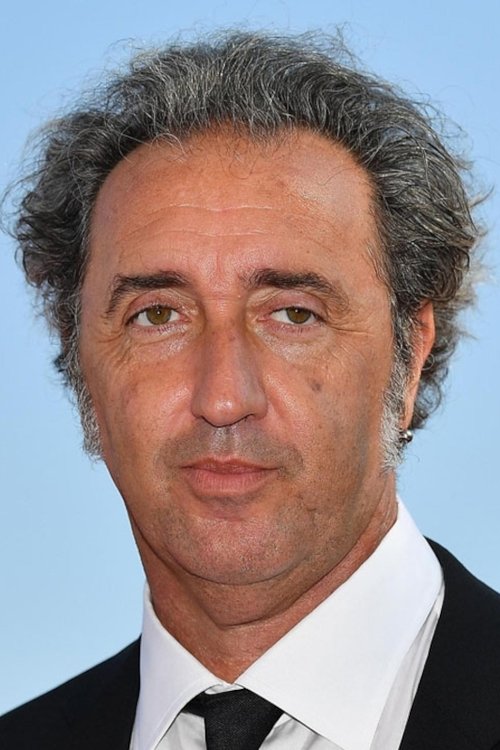
Cinematographer quote“The way I work with my cinematographer is not based on general principles, but the ideas are triggered by the locations where we shoot.”
Paolo Sorrentino
Worldview, Politics, and Subtext

Sorrentino’s films often serve as baroque commentaries on decadence and decline, particularly within the context of contemporary Italy. His worldview is suffused with a sense of melancholy towards the erosion of cultural and moral values but resists outright cynicism. Instead, there is an undercurrent of yearning for beauty and transcendence even amid moral decay.
Politics in Sorrentino’s cinema is never merely topical; it is filtered through layers of symbolism and personal drama. In Il Divo and Loro, political figures are portrayed with a mix of grotesque caricature and tragic complexity, exposing the theatricality and loneliness of power. The subtext often critiques the vacuity behind public personas and the compromises inherent in political life.
Beyond politics, his films explore universal human conditions—aging, memory, loneliness, and the search for meaning. The recurring motif of decadence is not confined to any one culture but reflects a broader existential crisis. His characters frequently confront the tension between appearance and reality, public performance and private despair.
- The personal is intertwined with the political, framed through poetic and often surreal imagery.
- Decadence is portrayed as both allure and trap, revealing the characters’ vulnerabilities.
- There is a persistent meditation on time and the ephemeral nature of beauty and fame.

Turn one job into three — a simple follow-up map
Referrals and repeat buyers are the quiet engine of great video companies. The free guide shows how to prompt them without feeling awkward.
Early Life and Formative Influences

Born in Naples in 1970, Paolo Sorrentino grew up in a city with a rich cultural and cinematic history that unmistakably shaped his artistic sensibility. Naples, with its vibrant street life, contradictions, and deep-rooted traditions, often surfaces as a character in his work, most notably in The Hand of God. His early exposure to both the grandeur and grit of his environment seeded the themes of beauty and decay that permeate his films.
Sorrentino began his career working in television and as a writer before transitioning to feature films. His early work reflects a keen interest in narrative experimentation and a fascination with complex characters often caught between worlds. He has cited influences ranging from Italian masters such as Federico Fellini and Michelangelo Antonioni to international auteurs like Robert Altman and Martin Scorsese. This eclectic admixture informs his style: a blend of baroque excess, introspective character study, and cinematic spectacle.
His narrative approach owes much to literary and visual traditions that prize atmosphere and mood, with a particular emphasis on the visual construction of scenes. Sorrentino’s influences bring a formal rigor combined with an emotional openness that lends his films their distinctive melancholy and grandeur.
Recurring Actors and Creative Chemistry
Sorrentino has cultivated lasting relationships with a cadre of actors who seem to embody his cinematic world. Toni Servillo stands out as his muse, delivering some of the director’s most iconic performances, from the enigmatic Jep Gambardella in The Great Beauty to the complex Giulio Andreotti in Il Divo. Servillo’s ability to convey subtle emotional shifts and command presence suits Sorrentino’s stylized, operatic tone perfectly.
Other recurrent collaborators include Michael Caine, who starred in Youth and brought a gravitas and vulnerability essential to Sorrentino’s meditations on age and memory. Fabrizio Bentivoglio and Sabrina Ferilli also frequently appear, reinforcing a sense of ensemble and continuity across his filmography.
This stable of actors enables Sorrentino to explore variations on themes of loneliness, power, and longing with a consistent creative chemistry. Their performances often balance theatricality and nuance, essential to the director’s blend of satire and pathos.
- Toni Servillo: central collaborator and frequent lead
- Michael Caine: brought international presence and depth
- Fabrizio Bentivoglio and Sabrina Ferilli: supporting regulars enhancing continuity
Studio Years vs Independent Years
Sorrentino’s trajectory has oscillated between independent art-house cinema and more prominent studio-backed productions, allowing him to refine his signature style while expanding his thematic scope. His early films, like The Consequences of Love and The Family Friend, were intimate, low-budget projects that revealed his penchant for psychological complexity and visual daring.
As his reputation grew, he transitioned into more ambitious productions such as Il Divo and The Great Beauty, which enjoyed wider distribution and critical attention. These films benefited from larger budgets and resources, enabling the director to fully realize his lush visual style and operatic storytelling.
More recently, Sorrentino has balanced large-scale films with projects closer to his personal history, like The Hand of God, which retains an intimate, semi-autobiographical quality even as it engages with broader cultural themes.
His ventures into television with The Young Pope and The New Pope represent a further expansion, allowing him to explore serialized storytelling with the same visual ambition and thematic depth that mark his cinema.

Stop under-scoping jobs on the discovery call
The Discovery Call Checklist walks you through the questions that surface scope, budget, and timeline — before you send a quote you’ll regret.
Genre Patterns and Left Turns
While Sorrentino’s films share a common language, he resists genre confinement. His work often blends elements of drama, satire, biopic, and even road movie, forging a unique hybrid style. For example, Il Divo is a political thriller that becomes a psychological and visual tour de force, while This Must Be the Place is a melancholic road movie with a fairy-tale quality.
His recent forays into television with The Young Pope and its sequel showcase a willingness to embrace serialized narratives and explore religious and political power through surreal and symbolic imagery.
Sorrentino also occasionally takes unexpected detours. The upcoming La Grazia (2025) promises a fresh angle on his thematic concerns, while Parthenope (2024) reconnects with his Neapolitan roots in a contemporary setting.
- Political biopics and social satire (Il Divo, Loro)
- Poetic meditations on aging and memory (The Great Beauty, Youth)
- Personal and autobiographical narratives (The Hand of God)
- Surreal and symbolic television drama (The Young Pope, The New Pope)
Where It Leaves Us
Paolo Sorrentino stands as a towering figure in contemporary Italian cinema, a director whose work defies easy classification while remaining deeply rooted in his cultural heritage. His films offer a rich tapestry of visual splendor and existential inquiry, inviting viewers to contemplate the paradoxes of beauty and decay, power and vulnerability.
As he continues to evolve, Sorrentino’s commitment to exploring the complex intersections of personal identity, societal change, and artistic expression suggests a filmmaker who remains both restless and profoundly engaged. Whether through the grand operatic sweep of The Great Beauty or the intimate warmth of The Hand of God, his cinema remains a vital voice, one that challenges and enchants in equal measure.
For students of film, Sorrentino’s oeuvre offers a masterclass in marrying formal innovation with deeply human storytelling. His ability to craft images that linger like poetry and narratives that pulse with emotional truth ensures his place in the pantheon of modern auteurs. As his career unfolds, the world watches with anticipation for the next visual and thematic marvel from this singular director.
Ready for another director deep dive?
Related on Filmmaking Lifestyle
Read next: Alejandro Amenabar: How the Director Shapes Meaning, Alfonso Cuaron: How the Director Shapes Meaning, and Amat Escalante: How the Director Shapes Meaning.
Study the masters — explore our Director profiles.

Kei Ishikawa: The Art of Directing, In One Career

Osamu Dezaki: A Visual Language Worth Studying

Ermanno Olmi: Themes, Technique, and Legacy

Juraj Herz: The Essential Breakdown

Orson Welles: A Visual Language Worth Studying

Zoltan Fabri: The Career That Changed the Medium

Barry Jenkins: A Complete Introduction

Tom Tykwer: A Complete Introduction

Ari Aster: A Director's Style in Focus


New comments are not currently accepted.
Comments