
On this pageTap to expand
For a videographer trying to make a name for themselves, one of the best ways to start is by filming music videos. In this article, we’re going to cover what we believe are the best cameras for shooting music videos.
Music videos used to be the domain of big-name bands backed by big record labels, but with the advent of YouTube and other mediums of sharing media over the internet, these barriers have started to blur.
For a band that is looking to make a name for themselves and get noticed, putting out a music video is a great way to get exposure. It’s also a great way for a filmmaker to show off his skills and build his or her own reputation.
Best Cameras for Shooting Music Videos
What Are Cameras For Shooting Music Videos?
A music video typically consists of filmed performances of bands or other recording artists.
The videos are often created to accompany songs, but they may be for advertising purposes or as short films.
The type of camera used to shoot a music video depends on many factors including budget, location, lighting conditions, and more.
Shooting in an outdoor setting with low light will require a different setup than shooting indoors with natural light. You might not need that RED!
In order to create a great music video, you need to find a band you are willing to work with and grow together on their way to stardom.
If you shoot a good video for them that gets attention, you are not just helping the band’s career but your own. The band could end up recommending you to other bands or someone could notice your abilities and hire you directly – either for another music video or for a different type of video production project.
Filming music videos has a wide variety of benefits to the filmmaker / videographer:
- The chance to hit it lucky and work with a band or artist that makes it huge.
- Exposure to the music industry and other bands / artists.
- A road into other income streams within the music industry.
- Gets your work out there and helps you secure other types of video production work.
Shooting Music Videos
One of the first steps to getting started with shooting music videos is to get the right equipment to shoot good footage of the band or artist.
It may sound counterintuitive but, for shooting a music video, the audio is actually not that important. The reason for this is simple: for a music video, the audio is usually only added during the editing process.
So recording sound during the shoot isn’t often of much importance. The band often mimes to the recorded version of the song playing live, and the audio is synced up in post-production.
So for the actual shoot itself, you don’t need to worry about microphones or any other type of audio recording equipment.
What you do need is to capture good visuals. And in order to do that, you need a good camera for shooting music videos.
One of the key features you need in a camera for shooting music videos is low light performance. You’re going to be shooting in a lot of low light environments, especially if you’re mostly shooting rock music and similar genres.
So we’ll focus on low light performance as one of the key attributes we’re judging these cameras by in the reviews that follow.
In this post, we’re going to share with you a list of some of the best cameras for shooting music videos. Take a look and decide which fits your budget and shooting needs.

Stay creative while the business side keeps up
You didn’t start a company to live in spreadsheets. This guide keeps client growth practical so you can protect time on set and in the edit.
Best Cameras For Shooting Music Videos
Here are our Top Cameras For Shooting Music Videos:
1. Sony ZV-1 II
Panasonic's LX5 has been discontinued for years and is no longer sold new, so we've swapped it for a compact that's built for exactly this kind of run-and-gun, low-light work: the Sony ZV-1 II.
It packs a 1-inch, 20.1MP sensor and a bright 18-50mm equivalent f/1.8-4 zoom, giving you plenty of light-gathering ability for underlit venues and atmospheric performance shots.
The wide end is genuinely wide (18mm equivalent), which is handy for cramped stages and tight rehearsal spaces, and it records oversampled 4K video with Sony's reliable autofocus tracking.
Its small size and flip-out screen also make it a great secondary "B-cam" to grab candid behind-the-scenes footage while your main camera handles the performance.

- Ultra-wide 18-50mm1 zoom lens gets it all in the frame
- Large 1.0-type sensor for professional results even in low-light
- Wide aperture F1.8-4.0 lens for beautifully defocused backgrounds
- Clear audio with directional 3-Capsule mic and wind screen accessory
- Stay in focus with Real-time autofocus tracking and Eye-AF
2. Nikon Z50II
Nikon discontinued the D5200 (and the entire D5000 DSLR line) years ago, so today's equivalent pick is the Nikon Z50II, its current DX-format mirrorless.
It has a 20.9-megapixel APS-C sensor and Nikon's newer autofocus system, borrowed from the higher-end Z8/Z9, with subject-detection for people and eyes, plus animals and vehicles. It does not detect instruments.

The Z50II records oversampled 4K video at up to 30fps (with a crop at 60fps), and its fully articulating touchscreen makes it easy to frame shots from almost any angle during a dynamic shoot.
It also has an in-camera HDR-style highlight/shadow control and a dedicated "Picture Control" system for getting usable stills of the band straight out of camera, useful for promo shots as well as the video itself.
3. Sony Alpha a6400
Sony discontinued the a6000 a while back, but it kept the same budget-mirrorless spirit alive in the a6400, which is still a current model in Sony's APS-C lineup.
It shoots 4K video (oversampled from 6K) as well as Full HD at up to 120fps for slow motion, and it's a genuinely good option for music videos thanks to its small size, interchangeable lens support, and reliable stabilization when paired with a gimbal.
The a6400 has a 24.2-megapixel APS-C CMOS sensor and performs well in low light, with a native ISO range that extends to 32000.
Its real-time Eye AF and subject tracking lock onto singers and performers moving around the stage, so you're far less likely to lose focus on fast, unpredictable action during a shoot.
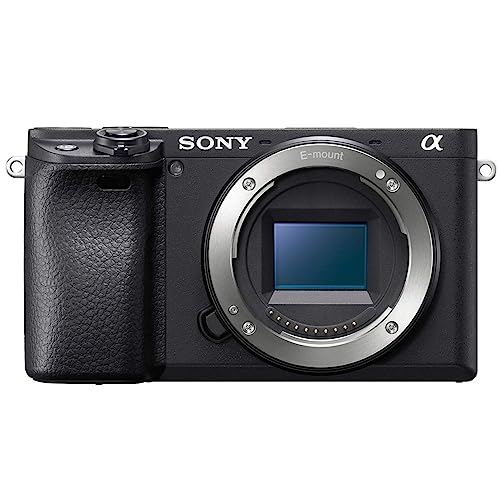
Sony
- Next Gen speed: experience the world’s fastest 0. 02 sec AF with real-time AF and object tracking
- Enhanced subject capture: wide 425 Phase/ 425 contrast detection points over 84% of the sensor
- Fast and accurate: up to 11Fps continuous shooting at 24. 2MP raw with crisp, clear natural colors
- Multiple movie functions: make time lapse movies or slow/quick motion videos without post processing
- Tiltable LCD screen: customizable for vlogging, still photography or recording a professional film
- In the box: rechargeable battery (NP-FW50) AC adaptor (ac-uud12), shoulder strap, body cap, accessory shoe cap, eyepiece cup, micro USB cable.Metering Range: -2 to 20 EV
Next Gen speed: experience the world’s fastest 0. 02 sec AF with real-time AF and object tracking Enhanced subject capture: wide 425 Phase/ 425 contrast detection points over 84% of the sensor
View on Amazon
4. Canon EOS R50
The original Canon EOS M was a 2012 mirrorless camera on Canon's now-abandoned EF-M mount, which Canon officially discontinued in 2023 — it's no longer sold new and has no upgrade path. Canon's current entry-level mirrorless line is the RF-mount EOS R50.
The R50 shoots oversampled 4K video and has Canon's Movie Servo AF combined with Dual Pixel CMOS AF II, giving continuous, reliable focus tracking on moving subjects, which is handy when you're trying to capture clear footage of a singer or band members moving around on stage.
It has a 24.2-megapixel CMOS sensor and is compatible with Canon's growing lineup of RF and RF-S lenses, plus EF/EF-S glass via an adapter, so you're not locked into a dead-end system the way EOS M shooters were.
5. Fujifilm X-T5
The X-T2 has long been discontinued and superseded twice over; the current flagship in Fujifilm's X-T line is the X-T5. It's capable of shooting 6.2K, 4K, and Full HD video.
In 4K, the shooting rate goes up to 60fps, while Full HD can be recorded at up to 240fps for slow motion. Video is saved in MOV/H.265 or H.264 on SD, SDHC, or SDXC cards.
The X-T5 has a 40.2-megapixel APS-C sensor, a native ISO range of 125 to 12,800, and Fujifilm's latest subject-detection autofocus, which recognizes faces, eyes, and several other subject types. You can switch freely between manual and continuous autofocus.
Like its predecessors, the X-T5 is built tough: it's dust- and moisture-resistant with weather sealing throughout the body, and it's freeze-resistant down to 14 degrees Fahrenheit, so it'll hold up on an outdoor shoot in cold weather just as well as the X-T2 did.
What Do You Want In a Camera For Shooting Music Videos?
When shooting a music video, the camera must be able to shoot in low light. It may also need to zoom in and out quickly.
Wide stage shots usually need something wider than 30mm, often a 16-24mm full-frame equivalent, while detailed closeups can go up to about 100mm.
A good camera needs to record an industry-standard resolution such as 4K. Full-frame helps in low light, but it is not required: the 1-inch, Micro Four Thirds, and APS-C cameras in this list can all do that.
And don’t forget a few interchangeable lenses, as they allow you to adjust your shots and create a dynamic feel in your music video.
6. OM System OM-1 Mark II
The E-M1 Mark II has been discontinued for a while (Olympus's camera business is now OM System), and its true successor is the OM-1 Mark II.
This 20.4MP mirrorless camera captures video footage in DCI 4K and UHD 4K, with C4K/4K available at up to 60fps for smoother action.
It has an updated autofocus system with subject-detection AI covering people, animals, and vehicles, plus in-body stabilization rated to 8.5 stops, which makes it an excellent choice for shooting multiple moving subjects — handy when covering an action-heavy music video.

The OM-1 Mark II is also a strong choice for outdoor shoots: its sealed shell is moisture- and dustproof, and it's freezeproof down to about 14 degrees Fahrenheit.

7. Nikon Z6III
Nikon discontinued the D500 back in 2022 and hasn't made a DX-format DSLR flagship since; today its high-speed, action-oriented body is the full-frame mirrorless Z6III.

Build trust before you talk price
The checklist includes rapport builders and clarifying questions so prospects feel heard — and you leave with what you need to quote accurately.
The Z6III is a 24.5-megapixel mirrorless camera released by Nikon in 2024. It's the current mid-tier flagship of Nikon's Z-series lineup.
The Z6III shoots video in 6K RAW, 4K, and Full HD, with internal 4K recording at up to 60fps (120fps in a DX crop) for smoother motion or slow-mo.
The camera has a native ISO range of 100 to 64,000, which lets it capture sharp, clean images in the kind of dim venues typical of live music shoots.
Its autofocus system uses Nikon's latest subject-detection AI across 273 or more points, making it excellent at tracking performers moving unpredictably around a stage. It has a robust magnesium alloy shell with moisture and dust sealing, which is helpful for outdoor shoots.
Tips For Shooting Music Videos
• Learn the basics of shooting a music video.
• Get expert tips on camera rigs, editing software, and more!
• Gain knowledge of industry terminology such as lens distortion, f-stop/aperture, focal length, etc. This will come in handy when communicating with your DP.
• Great for all aspiring videographers.
8. Panasonic Lumix GH7
The GH2 is a 2010 camera, long since discontinued and many generations behind; the current model in this lineage is the Panasonic Lumix GH7.
This 25.2-megapixel mirrorless camera can shoot 5.8K 4:3 open-gate, 5.7K 17:9, 4K, and Full HD. In 4K, you can shoot footage at up to 120 frames per second, while in Full HD it goes up to 240 frames per second for slow motion.
Panasonic has equipped this camera with phase-detection autofocus (a first for the GH line) alongside its latest processing engine, giving more reliable subject tracking and better noise control. The Lumix GH7 has a native ISO range of 100 to 51,200.
For the videographer on the move, which you have to be when shooting music videos, the GH7's 5-axis Dual I.S. 2 anti-shake system will definitely come in handy. This image stabilization system delivers up to 7.5 stops of correction, letting you shoot smooth handheld footage without a gimbal.
9. Canon EOS 5D Mark IV
The ever-reliable 5D Mark IV. A real workhorse of a camera!
The Canon EOS 5D Mark IV is the last model of Canon’s 5D line. It dates to 2016, and Canon still sells it new in some regions, including the United States, though it has been discontinued in others. If you can afford it though, treat it as a stills workhorse: its 4K video is a heavy crop.
The Canon EOS 5D Mark IV has Canon’s 30.4 megapixel full-frame sensor, which allows it to capture clear and detailed video footage.
The camera records DCI 4K at 24 to 30 frames per second from a center crop of about 1.74x, Full HD at up to 60 frames per second, and HD at up to 120 frames per second.
Full HD and HD can be saved as MOV or MP4; 4K is MOV Motion JPEG only. Files go on a CF card or an SD card – the Mark IV has slots for both. And, let me tell you, that’s super handy.
The camera also has a 61-point autofocus system and uses dual pixel CMOS AF. You can either manually focus your shots or use the autofocus to smoothly track multiple subjects on the move.
This camera’s stills native ISO range is 100 to 32,000. In 4K, the normal range is 100 to 12,800.
The Canon EOS 5D has a magnesium alloy shell, making it quite sturdy but still lightweight, weighing only 31.39 ounces.
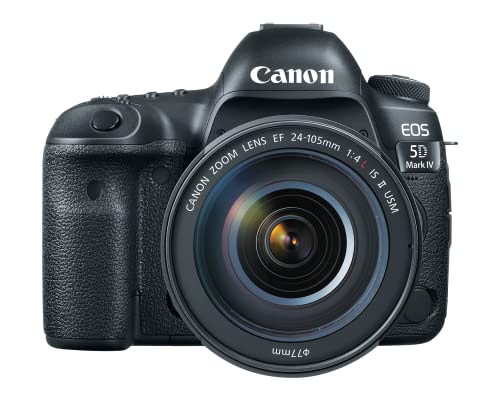
Canon
- 30.4 MP full-frame CMOS sensor for versatile shooting. Aspect ratio 3:2
- Up to 7.0 frames per second continuous shooting speed
- 61-point AF system with 41 cross-points for expanded vertical coverage
- Providing approximately 12 stops of dynamic range, even in low light
- 4K video recording at 30p or 24p and in-Camera still frame grab of 8.8MP images. Weight: Approx. 31.39 ounces, 890 grams (Including battery, CF card and SD memory card). Approx. 28.22 ounces, 800 grams (Body only, without battery, card, body cap and eyecup). Compatible Lenses: Canon EF Lenses (excluding EF-S and EF-M lenses)
- Touchscreen LCD monitor. Providing approximately 12 stops of dynamic range, even in low light
30.4 MP full-frame CMOS sensor for versatile shooting. Aspect ratio 3:2 Up to 7.0 frames per second continuous shooting speed
View on AmazonBest Cameras For Shooting Music Videos – Conclusion
As with any camera purchase you make, looking carefully at a few things will help when choosing which camera to buy for shooting music videos.
Here are a few things to consider:
- The type of projects you’ll be working on.
- Your particular budget (something that’s very specific to you).
- Any pre-existing lenses that you have.
The last question is quite important because you might want to integrate your new camera with your pre-existing lenses. This is always a cheaper option.
However, with a large number of lens mounts for all types of camera, lens, and situation, it’s never been easier to combine a non-proprietary lens with a camera.
Case in point: just look at all the people using Canon EF lenses on Sony cameras these days.
We hope this article on the best cameras for shooting music videos has helped you choose the right camera for you and your project. Whatever you shoot with your camera, be it music videos or something else, we wish you all the best!
Did we miss out your favorite camera for using on music video projects? Let us know what you use in the comments below.
We have Gear Buyer’s Guides on every type of Filmmaking Equipment!
From entry-level to cinema-grade — we cover all the gear you need.

10 Best Video Editing Tools for Beginners in 2026

Invideo Editor vs Veed: Which One in 2026?

How to Delete a Sentence From a Video by Editing the Transcript

10 Best Higgsfield Alternatives for AI Filmmaking in 2026

Best AI Tools for Making Microdramas in 2026

Best AI Tools for Storyboarding Before a Shoot

Invideo vs. Higgsfield: Which AI Filmmaking Platform Actually Delivers in 2026

AI Filmmaking in 2026: From Idea to Final Cut in One Connected Workflow
Best Video Editing Software for Freelance Videographers


New comments are not currently accepted.
26 comments