
On this pageTap to expand
Ah, the best drone ever! Surely that's an impossible task? Let's see!
Drones are a great way to bring an aerial perspective to your photos and videos. There are many different types of drones, but here is our list of the best drones on the market.
Drones have been increasing in popularity over recent years due to their affordability and accessibility.
They're not just fun toys – they can also be used for professional purposes such as filming weddings or sporting events!
What Are Drones?
Drones are an unmanned aerial vehicle (UAV) that can fly autonomously or be remotely controlled. They can carry out a number of tasks such as surveillance, search and rescue operations.
They are often used in the fields of journalism, filmmaking or agriculture. Drones have become widely popular due to their ease-of-use and low cost.
Best Drone Ever
What is the best drone ever? And what key features should you look for in a drone?
This article will answer these questions and more.
There are many different types of drones out there, but we'll be focusing on the most popular quadcopter models.
I'm sure you regularly ask yourself questions like these:
- What's your favorite feature in a drone?
- Do you like having GPS capabilities so that it can return to home if needed?
- Or is it important to have 4K video recording capability?
Whatever your preference might be, there are plenty of options available. The key is finding which one suits you best!
| Drone | Best for | Key spec |
|---|---|---|
| DJI Mavic 4 Pro | Portable flagship imaging | Triple camera, 6K, about 51 min |
| Autel EVO II Pro V3 | Rugged one-inch imaging | 6K and 4K/60, about 40 min |
| Antigravity A1 | 360 aerial capture | 8K 360, 249 g with the standard battery |
| HOVERAir X1 Pro | Hands-free tracking | 1/1.3-inch sensor, 4K, no controller required |
| DJI Inspire 3 | Cinema production | Full-frame 8K ProRes RAW, about 28 min |
| Parrot Anafi USA | Zoom and inspection | 32x zoom, 4K HDR, about 32 min |
| DJI Mini 5 Pro | Compact imaging | 1-inch sensor, 4K/60 HDR, 36 min; 249.9 g standard battery |
| PowerEgg X Wizard | Water takeoff, secondhand | 3-in-1 body with waterproof housing; discontinued new |
| Yuneec Typhoon H3 | Leica camera, closeout | 1-inch sensor, 4K/60, six rotors |
| DJI Air 3S | Mid-range dual camera | 1-inch wide plus medium tele, 4K/60 HDR |
| DJI Neo 2 | Pocket follow shots | 1/2-inch sensor, 4K/60 (4K/100 with a controller) |
| Hubsan Zino Pro Plus | Budget filming | 4K/30, rated up to 43 min |
| Freefly Alta X | Heavy-lift cinema | Folding quad with a higher payload than the Alta 8 |
| DJI Flip | Guarded flying near people | Under 249 g, 4K/60, 31 min |
1. DJI Mavic 4 Pro
A New Benchmark in Drone Imaging
The DJI Mavic 2 Pro made its name years ago, but DJI has since moved the flagship line on twice over, and the Mavic 4 Pro is now the drone that inherits that "best aerial imaging" crown.
It carries a triple-camera system built around a Hasselblad-tuned main sensor, capturing 6K video and stills with the kind of dynamic range that used to require a dedicated cinema camera.
The result is a genuine step up in image quality over anything the Mavic 2 generation could produce, while keeping the same folding, travel-friendly form factor DJI is known for.
Advanced Flight and Safety Features
Safety and ease of use remain paramount in DJI's design philosophy, and the Mavic 4 Pro pushes it further with omnidirectional obstacle sensing and DJI's latest APAS collision-avoidance system.
ActiveTrack now handles complex subject tracking with far more precision than the 2.0 version found on older Mavics, and flight time has climbed to roughly 51 minutes per battery, letting pilots stay airborne substantially longer to nail the shot.
Enhanced Hyperlapse and Panorama Modes
Hyperlapse and panorama shooting remain a tap-and-go affair, but the processing behind them has improved considerably, producing cleaner stitches and smoother motion than earlier Mavic hardware could manage.
For filmmakers who want the current pinnacle of portable DJI imaging, the Mavic 4 Pro is the drone worth considering today.

2. Autel Robotics EVO II Pro V3
Precision Imaging and Enhanced Performance
DJI's Phantom line, which once set the standard for this kind of fixed-body, gimbal-stabilized consumer drone, has been discontinued for years, and DJI never released a true successor.
The role of a rugged, professional-grade one-inch-sensor drone is now filled well by the Autel Robotics EVO II Pro V3, which pairs a 1-inch 20MP CMOS sensor with a mechanical shutter for sharp aerial photos, 6K video, and 4K up to 60fps.
Its adjustable aperture keeps images clean and detailed even in tricky lighting.
Advanced Obstacle Sensing and Flight Features
Safety remains a priority here too. The EVO II Pro V3 uses omnidirectional obstacle sensing across all sides, giving pilots confidence in complex environments without relying on a single-plane system.
Dual satellite positioning keeps hovering precise, and Autel's moonlight algorithm helps the drone handle low-light flights that would trip up older hardware.
Quieter Propulsion System and Extended Flight Time
The V3's propulsion system is noticeably quieter than earlier Autel and DJI hardware from the Phantom era, and its battery delivers around 40 minutes of flight time – a meaningful jump over what the old fixed-body Phantoms could manage.
The EVO II Pro V3 consolidates Autel's position as the go-to alternative to DJI's ecosystem, with rugged build quality, strong imaging, and reliable safety features.
For filmmakers who want Phantom-style precision imaging without buying discontinued hardware, the EVO II Pro V3 is the current, verified choice.
3. Antigravity A1
A Genuinely New Category: 8K 360 Aerial Capture
The Antigravity A1 (from Insta360's Antigravity brand) is the first drone built specifically for full 360-degree aerial video, capturing 8K 360 footage at 30fps, 5.2K at 60fps, or 4K at 100fps from a dual-lens camera system.

Stay creative while the business side keeps up
You didn’t start a company to live in spreadsheets. This guide keeps client growth practical so you can protect time on set and in the edit.
Rather than framing a shot in the air, pilots capture everything around the drone at once and reframe the perfect angle afterward in post-production -- a fundamentally different workflow from any other drone in this list.
FPV-Style Flying With Immersive Goggles
The A1 pairs with dedicated Vision Goggles (dual Micro-OLED displays with Pancake optics) and a motion-sensitive Grip controller, giving it an FPV-style flying experience alongside its 360 capture.
Compact and Regulation-Friendly
At 249g with the standard battery, the A1 stays under the sub-250g weight threshold that exempts it from registration requirements in many regions.
Flight time runs up to 24 minutes on the standard battery, or up to 39 minutes with the optional high-capacity battery -- respectable for a drone this new, though shorter than dedicated single-lens camera drones in this list.
For filmmakers who want to shoot first and decide on framing later, or who are curious about 360 aerial video as a genuinely new creative tool, the Antigravity A1 is worth a look.
4. HOVERAir X1 Pro
Pioneering Autonomy in Aerial Craft
Skydio made its name on autonomous, self-flying drones, but the company exited the consumer market entirely in 2023 to focus on enterprise and public-safety clients, and the Skydio 2 is no longer sold or supported for everyday filmmakers.
The HOVERAir X1 Pro has since become the go-to autonomous, hands-free drone for creators.
It launches from the palm of your hand, uses onboard AI and computer vision to track and frame a subject automatically, and needs no controller at all for most shots.
Aesthetics and Camera Quality
The X1 Pro is compact and pocketable, a different design philosophy from Skydio's larger quadcopter body, but it delivers where it counts: a 1/1.3-inch sensor shooting 4K video with solid dynamic range and clean low-light performance for its size.
User Experience and Integration
Everything is designed around one-tap automation – Follow, Orbit, Zoom Out, and Bird's Eye modes handle the flying so creators can focus on the moment.
An optional handheld remote is available for pilots who want manual control.
For anyone who loved the idea behind the Skydio 2 – a drone that flies itself – the HOVERAir X1 Pro is the current, actively supported way to get that experience.
5. DJI Inspire 3
Next-Level Filmmaking Capabilities
DJI discontinued the Inspire 2 back in 2022, and its true successor, the Inspire 3, is now the drone that carries the "professional aerial cinema platform" torch.
It's built for cinematographers who need more than a prosumer camera drone can offer.
The dual-battery system provides roughly 28 minutes of flight time per set, and the airframe is designed to keep working through demanding, multi-take production days.
Unparalleled Camera and Imaging Systems
The Inspire 3's built-in Zenmuse X9-8K Air camera is a genuine leap over anything the swappable X5S/X7 setup on the Inspire 2 could produce – a full-frame sensor shooting up to 8K in ProRes RAW or CinemaDNG (those RAW formats need a separate license; H.264 tops out at 4K), with far greater dynamic range and low-light performance than the older CineCore 2.1 processing pipeline.
A built-in RTK module also adds centimeter-level positioning accuracy for repeatable, precise flight paths.
Advanced Flight Features and Safety
Safety has improved substantially too, with omnidirectional obstacle sensing replacing the two-sided system on the Inspire 2.
Spotlight Pro and ActiveTrack carry over and work more reliably, letting a single operator handle complex camera moves that once needed a dedicated pilot and camera operator.
For professional filmmakers who want the current, actively supported flagship in DJI's cinema line, the Inspire 3 is the investment worth making today.
6. Parrot Anafi USA Drone
Cutting-Edge Imaging Capabilities
The Parrot Anafi USA is a standout drone, particularly known for its exceptional imaging features.
Designed for both consumers and professionals, it boasts a 32x zoom camera, enabling users to capture detailed images without compromising the drone's position or safety.
This 4K HDR camera can tilt 180° vertically, allowing for unique overhead shots.
Its infrared capabilities further expand its use cases, making night-time or low-light shooting a viable option, especially valuable for professional inspections or search and rescue missions.
Extended Flight Time and Performance
One of the notable strengths of the Anafi USA is its impressive flight time.
With a single charge, this drone offers a commendable 32 minutes of flight, ensuring users have ample time to capture the desired footage or complete inspections.
Its lightweight design, coupled with a powerful propulsion system, provides both stability in flight and the ability to reach higher speeds, making it versatile for various scenarios, from calm cinematography to more dynamic shoots.
Advanced Features for Professionals
The Parrot Anafi USA isn't just designed for casual users; professionals will find an array of features tailored for more advanced operations.
Its secure digital transmission system ensures that all captured footage remains confidential, a crucial factor for defense or security applications.
Additionally, the drone offers geofencing capabilities, ensuring operators can set boundaries for safer flights.
With its automated flight modes, even less experienced pilots can achieve expert-level cinematography or complete complex inspection missions.
The Parrot Anafi USA is a remarkable blend of advanced imaging technology, extended flight capabilities, and features tailored for professionals.
Whether it's for cinematography, inspections, or more advanced defense operations, the drone excels in delivering top-notch performance.
Its combination of versatility, security, and ease of use makes it a worthy contender in the market, especially for those seeking a mix of professional features in a consumer-friendly package.
7. DJI Mini 5 Pro
Compact Yet Powerful Imaging
The DJI Mini 2 has been out of production for a while now, superseded by several generations of mini drones. The current flagship in that sub-250g class is the DJI Mini 5 Pro, and it's a different league of imaging entirely.
It packs a 1-inch CMOS sensor – something no earlier Mini ever had – into an airframe rated at 249.9 g with the standard battery (actual weight can vary by a few grams, and the heavier Plus battery is over 250 g), capturing 4K/60fps HDR video and 50MP stills with real depth and dynamic range.
Extended Flight Time and Ease of Use
Flight time has climbed dramatically too: the Mini 5 Pro delivers around 36 minutes per battery, well past what the Mini 2 could manage, and adds omnidirectional obstacle sensing that the Mini 2 never had at all.
The DJI Fly app keeps the same beginner-friendly onboarding, so newcomers can still get airborne quickly.
Remarkable Transmission and Range
DJI's O4+ transmission system replaces the older OcuSync 2.0 found on the Mini 2, with a rated range of about 20 km under FCC rules and about 10 km under CE rules in ideal conditions, and it holds a cleaner signal in cluttered environments.
The Mini 5 Pro proves that the "great things come in small packages" idea has only gotten more true with time – it out-shoots and out-flies the Mini 2 in every meaningful way while staying just as travel-friendly.
It's the current pick for anyone who wants Mini-class portability without giving up serious imaging performance.
8. PowerVision PowerEgg X Wizard
Update: the PowerEgg X Wizard has been discontinued and is no longer sold new through major retailers as of 2026 -- treat this as a secondhand-only pick. The standard PowerEgg X is the same generation of hardware, so leftover stock of either version is old inventory, not a current production drone.
Versatile and Transformative Design
The PowerVision PowerEgg X Wizard is not just any drone; it’s a multi-purpose aerial device that can transform based on user requirements.
At its core, the PowerEgg X is a drone, a handheld gimbal camera, and a tripod-mounted camcorder.
This 3-in-1 design is facilitated by its modular setup, allowing users to easily switch between the drone and the AI camera mode.
Its distinctive egg-shaped design ensures it stands out, but it's not just for aesthetics; this design contributes to its portability and compact nature.
Water and Weather Resistant Features
A significant selling point for the PowerEgg X Wizard is its water and weather resistance capabilities.
It comes with a waterproof housing and pontoons, enabling it to take off from and land on water, a feature rare in the drone market.
This makes it ideal for capturing water sports or exploring lakes and oceans.
Moreover, its water-resistant feature ensures that it can fly in light rain, giving users more flexibility in unpredictable weather conditions.
Advanced AI Capabilities
The drone's AI capabilities enhance its camera functions.
The AI Face Recognition technology ensures that subjects remain in the center of the frame, making it perfect for vlogging and dynamic shoots.
Additionally, the AI tracking mode can lock and track subjects, ensuring smooth cinematic shots.
The SyncVoice feature is another innovative addition, allowing users to narrate in real-time, capturing voiceover and ambient sound simultaneously.
The PowerVision PowerEgg X Wizard is truly a revolutionary piece of equipment, pushing the boundaries of what a drone can offer.
Its ability to seamlessly transition between a drone, handheld, and tripod-mounted camera makes it a versatile tool for content creators and hobbyists alike.
Combined with its unique waterproof features and advanced AI capabilities, it offers an unrivaled drone experience.
Whether you're filming water-based adventures or capturing daily vlogs, the PowerEgg X Wizard is a game-changer in aerial technology.
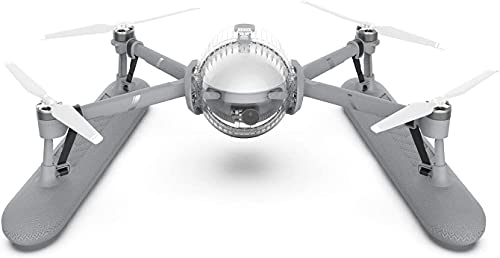
PowerVision
- 【Stunning 4K60FPS footage】: Capture high-definition aerial footage with crystal-clear detail and smooth motion at 60 frames per second.
- 【Dual-mode functionality】: Enjoy the versatility of two modes in one device, with a handheld gimbal mode for stabilized shots on the ground and a drone mode for soaring through the air.
- 【Intelligent features for creative shooting】: Use slow-motion and time-lapse effects to add creative flair to your footage, and take advantage of the SyncVoice patent technology to add audio to your aerial shots.
- 【Advanced obstacle avoidance and landing protection】: With visual sensors that detect obstacles and landing conditions, the PowerEgg X can avoid collisions and land with precision and safety.
- 【Long-range transmission and flight control】: Control the drone and transmit real-time video up to 6 kilometers away, with wind resistance up to level 5 for stable, controlled flight. Plus, use the intelligent app editor to easily create and share your videos with the world.
【Stunning 4K60FPS footage】: Capture high-definition aerial footage with crystal-clear detail and smooth motion at 60 frames per second. 【Dual-mode functionality】: Enjoy the versatility of two modes in one device, with a handheld gimbal mode for stabilized shots on the ground and a drone mode for soaring through the air.
View on Amazon9. Yuneec Typhoon H3
Update: Yuneec has discontinued the Typhoon H3, and most major retailers show it as out of stock; remaining inventory may still turn up at some retailers, but treat this as a closeout pick rather than an ongoing product line.
Collaborative Excellence with Leica
The Yuneec Typhoon H3 stands out in the world of drones due to its collaboration with Leica, a renowned name in camera technology.
The product of this partnership is the ION L1 Pro camera, which the drone is equipped with.
The camera boasts a 1-inch CMOS sensor, capable of taking 20MP stills and 4K videos at 60fps.
The inclusion of Leica ensures that the images and videos produced are of top-notch quality, with excellent color accuracy and sharpness.
The collaboration highlights Yuneec's commitment to providing professional-grade aerial photography tools.
Six-Rotor Safety and Stability
Unlike most consumer drones that come with four rotors, the Typhoon H3 is equipped with six. This hexacopter design not only provides added stability in flight, especially in windy conditions but also acts as a safety measure.
Should one rotor fail, the drone can still maintain flight with the remaining five.
This provides peace of mind for users, especially when flying in challenging environments or during long sessions.
Advanced Flight Features
Yuneec has packed the Typhoon H3 with several intelligent flight modes, making it suitable for both beginners and experienced pilots.
Modes like Waypoint and Orbit allow for automated flight patterns, while Follow Me and Curve Cable Cam enable dynamic tracking shots.
The drone also has a no-fly zone feature, ensuring it doesn’t wander into restricted areas.
The retractable landing gear is another plus, ensuring a 360-degree unobstructed view, which is essential for panoramic shots.
The Yuneec Typhoon H3 is a testament to what can be achieved when two industry leaders collaborate.
With Leica's expertise in camera technology and Yuneec's prowess in drone manufacturing, the Typhoon H3 is a compelling option for those seeking professional-grade aerial photography and videography.
Its safety features, combined with its advanced flight modes, ensure that it's not just about image quality; the flying experience itself is intuitive and reassuring.
In a crowded drone market, the Typhoon H3 distinguishes itself as a premier choice for enthusiasts and professionals alike.
10. DJI Air 3S
Stellar Camera Performance
The DJI Air 2S was a genuine standout in its day, but DJI has since released two further Air generations, and the Air 3S is now the current mid-range flagship.
It steps up to a dual-camera system: a 1-inch CMOS wide sensor alongside a dedicated medium-tele lens, capturing 4K/60fps HDR video and 50MP stills with noticeably better detail and dynamic range than the Air 2S's single-sensor setup.

Build trust before you talk price
The checklist includes rapport builders and clarifying questions so prospects feel heard — and you leave with what you need to quote accurately.
Intelligent Flight Modes
MasterShots, FocusTrack, and SmartPhoto all carry over from the Air 2S and work more reliably with the newer processing hardware.
The dual-camera setup also opens up framing options – switching between wide and tele focal lengths mid-shoot – that the Air 2S simply couldn't offer.
Robust Obstacle Sensing
Safety has improved too: the Air 3S carries omnidirectional obstacle sensing built on DJI's newer LiDAR-assisted system, a meaningful step past the four-sided sensors on the Air 2S, and it pairs with the latest APAS for smarter obstacle avoidance in complex environments.
For anyone who liked what the Air 2S offered, the Air 3S delivers the same balance of portability and performance with a genuinely better camera and safer flight system behind it.
11. DJI Neo 2
A Leap in Camera Capabilities
Autel discontinued its entire consumer EVO Nano and Lite series in mid-2025, including the EVO Lite+, as the company shifted its focus entirely to enterprise drones – so it's no longer a product filmmakers can actually buy new.
In its place, the DJI Neo 2 has become the drone of choice for anyone who wants a genuinely pocketable flyer without sacrificing image quality: a 1/2-inch sensor shooting 4K/60fps, or 4K/100fps when a remote or motion controller is attached.
Intuitive Flight Performance
What sets the Neo 2 apart is that it needs no controller at all to fly – it launches from your palm, tracks a subject automatically, and lands back in your hand.
Follow and other automated modes are built in, and an optional RC-N3 or motion controller is available for pilots who want more direct control. Waypoint missions are not supported.
Enhanced Safety Features
Safety is handled by omnidirectional vision sensing plus forward-facing LiDAR and downward infrared detection, a notably more advanced setup than earlier lightweight drones offered.
Return-to-home functionality is standard, bringing the drone back automatically on low battery or lost connection.
For creators who want an EVO Lite+-style blend of image quality and ease of use in a currently sold, actively supported package, the DJI Neo 2 is the drone worth choosing today.
12. Hubsan Zino Pro Plus
The Hubsan Zino Pro Plus may not be the first name that springs to mind when talking about aerial cinematography, but it's a capable budget option that filmmakers should consider.
Its accessible price point makes it an attractive choice for those starting out or in need of a backup drone.
Flight performance is a highlight: a rated flight time of up to 43 minutes is outstanding for continuous shooting, and a live video transmission range of up to 8km gives pilots plenty of room to capture expansive or remote scenes.
Here are some standout features:
- 4K video resolution at 30fps for crisp aerial shots
- 3-axis gimbal stabilization – ensuring smooth footage even in unpredictable winds
- Smart flight modes – including Waypoint, Orbit, and Follow Me, each enhancing the filming experience
Safety is handled by automatic return-to-home functions, and an obstacle avoidance system adds an extra layer of protection during flight.
The controller is intuitive, and its companion app integrates seamlessly, facilitating real-time editing and sharing.
This drone might not be stealing the spotlight just yet, but it offers a sophisticated package at a genuinely budget-friendly price.
13. Freefly Alta X
Freefly discontinued the Alta 8 and Alta 8 Pro back in 2022, replacing them outright with the Alta X, which now does everything the Alta 8 did – and more.
It's a heavy-lift cinema drone built with professional productions in mind, and unlike the eight-rotor Alta 8, it uses a quad-rotor design that folds down to roughly 30% of its footprint while carrying up to 175% of the Alta 8's payload.
That makes it far easier to transport between locations without sacrificing lifting power for cinema-grade camera packages.
This drone isn't just about the muscle; it runs on Freefly's own flight controller for precise, repeatable flight patterns, and advanced users get the same pinpoint accuracy that made the Alta line a favorite on professional sets.
Key features that make the Alta X stand out:
- Quad-rotor design with a folding frame for easier transport
- Higher payload capacity than the discontinued Alta 8
The Alta X keeps the quick-release mechanism and rapid-deployment philosophy that made the Alta 8 popular, while being engineered to fly at higher altitudes and in tougher weather.
Real-time video feed remains dependable for monitoring footage on the fly.
In the realm of high-impact, professional aerial filmmaking, the Alta X is now the drone that brings strength, sophistication, and control together – and it's the one currently in production and supported by Freefly. It's sold directly through Freefly Systems and specialty drone retailers rather than Amazon.
14. DJI Flip
The DJI Mavic Air 2 was a genuine standout when it launched, but DJI has released three further Air generations since, and the Mavic Air 2 itself has long been out of production.
For filmmakers who want that same blend of power and portability today, the DJI Flip is a fresher, better fit: a sub-249g drone that captures 4K video at up to 60fps with a 1/1.3-inch sensor, built into a distinctive propeller-guarded design that makes it safer to fly around people.
Here are key features that set the Flip apart:
- Full propeller-guard housing – safer for close-proximity and indoor flying
- 31-minute max flight time on a single battery
- O4 transmission technology – reliable, long-range video transmission up to 13km
Given its intelligent shooting functions, the DJI Flip empowers filmmakers to unleash their creativity without being bogged down by technical constraints.
Palm takeoff and landing mean it can launch without a flat surface, and Follow Me and other automated modes keep subjects framed effortlessly.
The DJI Fly app interface is intuitive, simplifying flight and filming so we can focus on capturing breathtaking aerial shots.
The practicality of the DJI Flip extends to its portability – its compact, guarded body makes it an even more travel-friendly option than the older Mavic Air 2 for filmmakers who are constantly on the move.
Drone Regulations And Safety
Drones are used well beyond hobby flying today -- videography, photography, agriculture, construction, mapping, and package delivery all rely on them -- but flying legally means knowing the basic rules first.
In the US, any drone weighing over 250 grams (about half a pound) must be registered with the FAA, whether you're flying recreationally or commercially. Nearly every camera drone in this guide clears that threshold except the sub-250g models specifically called out above (the DJI Neo 2, DJI Flip, and Antigravity A1 with its standard battery). The Mini 5 Pro is rated 249.9 g with the standard battery, but DJI notes the real weight can vary by a few grams and the Plus battery is heavier, so check registration before you fly.
Flying without registering, or interfering with manned aircraft operations, carries serious penalties -- including substantial fines and, in the most serious cases, criminal charges. Recreational flyers should also follow the FAA's TRUST safety test requirement and stay within visual line of sight and altitude limits (generally 400 feet above ground level) unless operating under a commercial Part 107 certificate with specific waivers.
Best Small Drones
For pilots prioritizing size and portability, the DJI Neo 2, DJI Flip, and DJI Mini 5 Pro (all covered above) are the strongest picks in this guide.
The Neo 2 and Flip both stay under the 250g registration threshold while still shooting genuinely good 4K footage, and the Mini 5 Pro pushes further with a 1-inch sensor in a still-compact airframe for pilots who want the best possible image quality without stepping up to a full-size drone.
Best Drones For Pros
For professional work, the DJI Inspire 3 and Freefly Alta X (both covered above) are the strongest picks in this guide, built specifically around cinema production needs rather than casual flying.
The Inspire 3 suits solo operators and small crews who need a full-frame cinema camera on a drone platform with RTK positioning for repeatable flight paths, while the Freefly Alta X is built for heavier camera packages and larger productions that need serious lifting capacity. For rugged, professional-grade stills and video work without a full cinema budget, the Autel Robotics EVO II Pro V3 is a strong middle ground.
Is There a Better Drone Than DJI Drones?
DJI remains the dominant name in consumer and prosumer drones, and for most filmmakers its current lineup (the Mavic 4 Pro, Air 3S, Mini 5 Pro, Neo 2, Flip, and Inspire 3, all covered above) is the strongest all-around option for image quality, flight software, and safety features.
That said, DJI isn't the only serious choice. Autel Robotics' EVO II Pro V3 is a genuinely competitive alternative for pilots who want a rugged, professional-grade drone outside DJI's ecosystem, Freefly's Alta X leads for heavy-lift cinema work that's beyond what any DJI drone is designed for, and the Antigravity A1 offers a genuinely different 360-degree capture format DJI doesn't make at all. Which is "better" comes down to your specific use case rather than any one brand winning outright.
What Drones Do Professionals Use?
Professional drone use spans a wide range of jobs, and the right drone depends heavily on the work:
- Professional photographers and cinematographers shooting footage that's otherwise difficult or impossible to capture with ground-based equipment typically reach for the DJI Inspire 3 or Freefly Alta X for cinema-grade work, or the Mavic 4 Pro for lighter, faster-turnaround shoots
- Real estate and construction professionals mapping properties or job sites often use rugged, reliable all-rounders like the Autel EVO II Pro V3
- Search-and-rescue teams and agricultural operators prioritize long flight time and thermal/low-light performance over raw resolution
For example, a real estate agent might use an aerial mapping drone with video capabilities while an electrician inspecting infrastructure would likely choose a rugged, obstacle-sensing quadcopter built for repeated, precise flights rather than a lightweight consumer model.
What Drone Has The Best Video Quality?
Among the drones in this guide, the DJI Inspire 3 has the strongest video quality outright, thanks to its full-frame Zenmuse X9-8K Air camera shooting ProRes RAW -- genuinely comparable to a dedicated cinema camera.
For pilots who don't need a full cinema rig, the DJI Mavic 4 Pro's Hasselblad-tuned triple-camera system is the best video quality available in a portable, folding drone, and the DJI Mini 5 Pro brings a 1-inch sensor with real dynamic range into a Mini-class body rated at 249.9 g on the standard battery. Sensor size is the biggest factor driving these differences: a larger sensor captures more light per pixel, which directly improves resolution, dynamic range, and low-light performance, and it's why the 1-inch-and-larger sensor drones in this list consistently outperform smaller-sensor models on footage quality.
Best Drone Ever – Wrapping Up
As a drone enthusiast, I'm always looking for the best drones on the market. But narrowing down one drone as the best drone ever is admittedly hard. And I think you've seen evidence of that in this list of the best drones.
We've included many great drone models here. The best drone for you will depend largely on your use cases and your specific requirements.
We hope our guide to the best drone ever has been instructional and helped aid you in making a buying decision. Can we help you with anything else related to drones? Let us know in the comments below.
We have Gear Buyer's Guides on every type of Filmmaking Equipment!
Upgrade your kit — browse our complete Video Gear guides.

10 Best Video Editing Tools for Beginners in 2026

Invideo Editor vs Veed: Which One in 2026?

How to Delete a Sentence From a Video by Editing the Transcript

10 Best Higgsfield Alternatives for AI Filmmaking in 2026

Best AI Tools for Making Microdramas in 2026

Best AI Tools for Storyboarding Before a Shoot

Invideo vs. Higgsfield: Which AI Filmmaking Platform Actually Delivers in 2026

AI Filmmaking in 2026: From Idea to Final Cut in One Connected Workflow
Best Video Editing Software for Freelance Videographers


New comments are not currently accepted.
Comments